
Zone heat that installs in an afternoon, no chimney required.
From Hamlin to Griffithsville to the hollows off Route 3, electric fireplaces give Lincoln County homes real supplemental warmth without gas lines, venting, or a masonry chimney. Find the right unit and get matched with a trusted local dealer.
Every Project Starts From One of These Five Situations
No gas main out here. Electric fills the gap.
Lincoln County sits in climate zone 4A with a solid winter heating season and average winter lows near 23°F—cold enough for a real heating season, but nowhere near the extremes of a place like Duluth, MN, where the winter heating load runs twice as high. Much of the county's housing stock is older frame houses and manufactured homes spread across small communities like Hamlin, West Hamlin, Harts, and Midkiff, and there's no natural gas main serving most of the county. That combination—real winter cold, dispersed rural housing, no gas infrastructure—is exactly where electric fireplaces earn their keep.
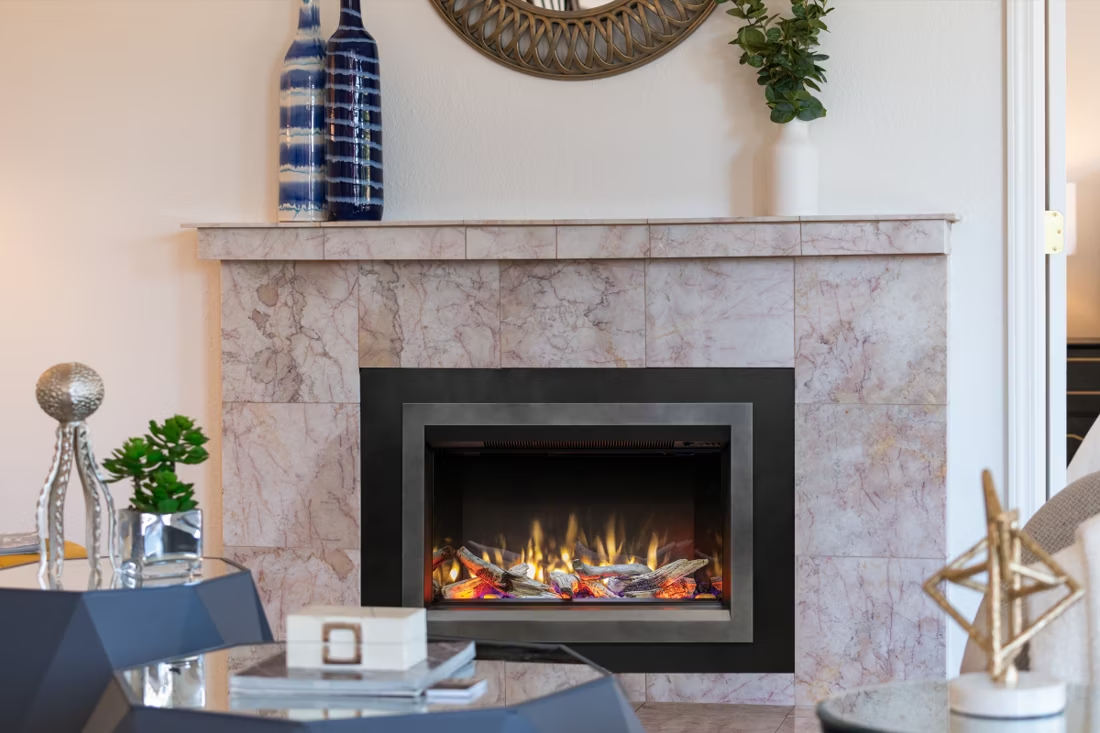
An electric insert or built-in unit plugs into a standard outlet or ties into a dedicated 240-volt circuit, and it heats a single room fast without touching your existing heat source, your chimney, or your gas line (because most homes here don't have one). For manufactured and modular homes especially—common throughout Lincoln County—electric is often the only realistic zone-heat upgrade that doesn't involve structural changes or a propane tank. Appalachian Power serves most of the county's electric accounts, and running costs for a typical unit are modest compared to whole-house electric baseboard heat.
Three steps. No salesperson until you're ready.
Tell us about your project
Your zip code, your situation, and the fuel you're leaning toward—or let the answers point you to one.
See what's actually available
The brands dealers within 100 miles genuinely carry—real options, never a catalog mirage.
Get your dealer & Project Guide
A trusted local dealer, plus the free Project Guide & Parts List that names every component of the job.
Frequently Asked Questions
How much does an electric fireplace installation cost in Lincoln County?
A plug-in electric insert or freestanding stove that uses an existing outlet typically runs $150 to $600 installed, since there's no venting, gas line, or chimney work involved. A built-in wall unit or mantel-style fireplace that requires new framing and a dedicated 240-volt circuit runs higher, usually $1,200 to $3,500, depending on whether an electrician needs to run new wiring from your panel. For older Lincoln County homes with dated electrical panels, budget extra if the panel itself needs upgrading to handle a larger unit—a local dealer or electrician can tell you during a walkthrough whether your existing service will support it.
Is an electric fireplace enough heat for a Lincoln County winter, or just supplemental?
For most homes, electric works best as zone heat for a specific room rather than a whole-house solution. With average winter lows around 23°F and a solid winter heating season, Lincoln County has a genuine heating season, but electric resistance heat is expensive to run at whole-house scale. Where electric fireplaces shine is heating the room you actually live in—a living room or den—so you can turn down a central system or supplement wood heat elsewhere in the house. Homeowners using wood as their primary or supplemental source (common here given the local oak, hickory, and cherry supply) often add an electric unit in a bedroom or add-on room that the wood stove doesn't reach well.
Do I need a permit to install an electric fireplace in Lincoln County?
Usually not for a plug-in insert or freestanding unit—since there's no venting, gas line, or structural chimney work, most jurisdictions treat it like installing any other major appliance. If you're adding a built-in unit that requires a new dedicated circuit, the electrical work itself should be pulled and inspected by a licensed electrician per the National Electrical Code, and larger structural changes (cutting into a wall, building a new surround) may require a permit through the Lincoln County building office. A local dealer can tell you up front whether your specific project crosses that line.
Will my electric fireplace still work during a power outage?
No—and this is worth being honest about. Electric fireplaces require power to run the heating element, blower, and flame effect, so they go dark the moment the power does. In a county like Lincoln, where winter ice storms can knock out Appalachian Power service for hours or days in the more rural hollows, that's a real limitation. If backup heat during outages matters to you, pair an electric fireplace for everyday convenience with a wood stove or insert for the nights the power actually goes out—a lot of local homes run both.
What's the best electric fireplace option for a manufactured or mobile home?
Plug-in inserts and freestanding electric stoves are usually the best fit for manufactured and modular homes, which make up a significant share of housing in Lincoln County. They don't require cutting into walls rated for structural loads, they don't need venting through a roof that's often not built to accommodate it, and most units run fine on a standard 120-volt outlet. Larger built-in wall units are possible but typically need a licensed electrician to confirm the home's wiring and panel can support the added draw—something worth checking before you fall in love with a specific model.
Can I install an electric insert into my existing fireplace opening?
Yes—if you have an existing masonry or prefab fireplace that's no longer used, an electric insert is one of the simplest conversions available. It slides into the existing opening, uses a standard or dedicated outlet depending on the model, and requires no chimney liner, no venting, and no gas line. For Lincoln County homes with an old, unused wood fireplace that's more trouble than it's worth, this is often the lowest-cost way to get a working heat source and a working focal point back in that room.
How much does it cost to run an electric fireplace with Appalachian Power rates?
Most electric fireplaces draw around 1,500 watts on the heat setting, which costs roughly 15 to 25 cents per hour to run depending on current Appalachian Power residential rates—noticeably cheaper than running a whole-house electric furnace to heat the same square footage. Running one for several hours a night in a single room during Lincoln County's coldest stretches typically adds a modest amount to a monthly bill, especially compared to relying on baseboard heat for the same space. Ask your local dealer about the wattage on any specific model you're considering, since output varies.
Electric vs. wood—which makes more sense for my Lincoln County home?
Wood—burning local oak, hickory, maple, or cherry—offers the most heat per dollar and keeps working when the power goes out, which matters given how ice storms can affect service in the county's more rural stretches. It does mean chimney maintenance, ash cleanup, and physically handling firewood. Electric offers instant on-off convenience, zero venting or chimney requirements, and a clean installation in almost any room, but it stops working the moment the power does and costs more to run than wood as a primary heat source. Many Lincoln County households end up with both: wood for the bulk of the heating season and reliability, electric for convenience in a room the wood stove doesn't reach.
What's the difference between an electric fireplace, insert, and stove?
An electric fireplace is typically a built-in or wall-mounted unit designed to look like a traditional fireplace, often with a mantel surround. An electric insert is sized to slide into an existing fireplace opening, replacing an unused wood or gas firebox. An electric stove is a freestanding unit styled like a traditional wood stove but running on electricity, and it can go almost anywhere near an outlet. For most Lincoln County homes with an existing but unused fireplace opening, an insert is the simplest upgrade; for a bare wall or a home without an existing hearth, a built-in fireplace or freestanding stove is the more practical choice.
Can I put a TV above my fireplace?
Yes—with an asterisk. Fireplaces are hot and TVs don't like heat. Either put a mantel between them to deflect rising warmth, or choose a fireplace with heat-management technology that creates a cool zone on the wall above—the wall stays around 125 degrees, barely warm, while the room still gets full heat. If you like clean lines and don't want a mantel, heat management is the answer.
Do electric fireplaces actually produce heat?
Yes—most put out around 4,800–5,000 BTUs from a standard outlet, which comfortably warms a bedroom, office, or den as a comfort-zone heater. What they won't do is carry a whole house the way wood, gas, or pellet can. Think of electric as ambiance-first with honest supplemental heat: flames on with no heat in July, flames plus warmth in January.
How much should I budget for a fireplace?
For an average home—covering the fireplace, the vent pipe, and basic installation—a budget between $3,900 and $5,500 gives you a lot of options across wood, gas, and pellet. By the time you add finish work, gas line, and electrical, the average complete installation lands between $5,000 and $12,000 all-in. In a remodel or new build, a good rule is to put about 2.5% of the total project cost toward the fireplace.
Does a fireplace add value to my home?
On average, a fireplace adds back to the home about the same amount you spent installing it. Add the monthly savings from heating the rooms you actually use instead of the whole house—often hundreds of dollars a year—and the value case is strong before you even count what a fire does for how your family uses the room.
Stove and Fireplace Dealers in Lincoln County
Listings include WhyFire partner dealers, dealers we have verified as authorized for the brands we recommend, and established local businesses that carry hearth products. Every listing shows which one it is. The ones marked Preferred run on WhyFire's software, so they can show you real pricing and book your appointment right here. No manufacturer pays for placement. How we verify dealers →
Chimney Doctor
Chimney Doctor LLC
Fireside & Patio Shop
Byrnside Hardware
F. M. Pile Hardware Co.
The Best Hardware
Get your Lincoln County electric fireplace project mapped out.
Tell us about your home and heating goals, and we'll send a free Project Guide & Parts List—the right electric fireplace or insert for your space, the exact parts needed, and a match with a trusted local dealer near Hamlin.
Find Your Fireplace →