
Plug-In Warmth for Keyser's Cold Mineral County Nights.
No chimney, no gas line, no cordwood—just heat that works the day it's installed in your Mineral County home.
Every Project Starts From One of These Five Situations
The simplest heat source in Mineral County.
Keyser sits along the North Branch of the Potomac at just under 1,000 feet elevation, with winters that average a low around 21°F and a heating season demanding about as much energy as Madison, Wisconsin sees—a climate in the same range as Madison, Wisconsin, not the mild mid-Atlantic winters people sometimes assume from a West Virginia zip code. Many homes here are older frame houses built long before central heat was standard, with a single wood or coal stove doing the work for decades. Retrofitting one of those homes for a new chimney or gas line is expensive and often impractical.
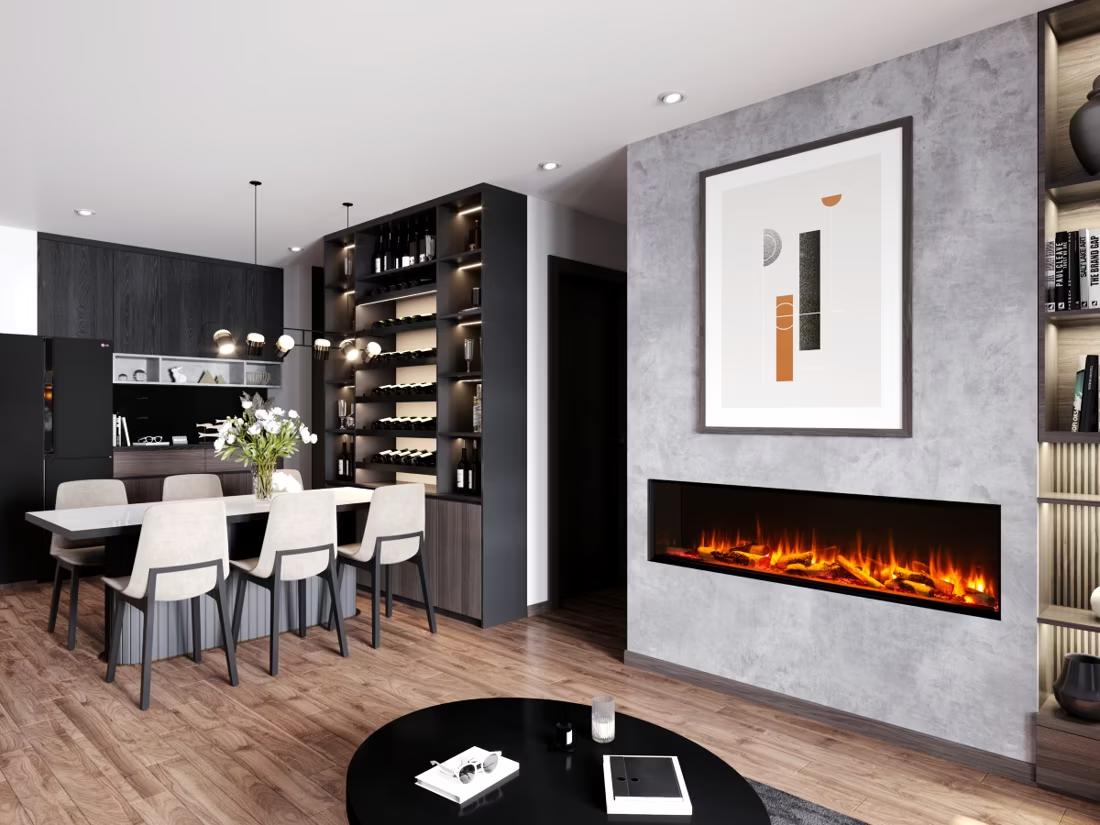
That's where electric fireplaces and inserts fit in. There's no flue to build, no gas line to run, and no cordwood to split and stack from the oak, hickory, and maple that fill the surrounding Monongahela hillsides. Potomac Edison serves electric customers throughout Keyser at a residential rate around 13.26 cents per kWh, which keeps day-to-day running costs modest for supplemental zone heat in a living room, finished basement, or bedroom that the furnace never quite reaches. It's the fastest and least invasive way to add real, visible heat to an older Keyser home.
Three steps. No salesperson until you're ready.
Tell us about your project
Your zip code, your situation, and the fuel you're leaning toward—or let the answers point you to one.
See what's actually available
The brands dealers within 100 miles genuinely carry—real options, never a catalog mirage.
Get your dealer & Project Guide
A trusted local dealer, plus the free Project Guide & Parts List that names every component of the job.
Frequently Asked Questions
How much does an electric fireplace installation cost in Keyser?
A plug-in electric insert or mantel package that uses an existing standard outlet typically runs $200 to $600 installed in Keyser, since there's no venting or gas line to deal with—often it's just placement and a cosmetic surround. A built-in wall unit or a larger insert that needs its own dedicated 20-amp circuit runs higher, generally $1,200 to $3,000, once you factor in an electrician's labor to run new wire from the panel, plus any framing or trim carpentry. Compare that to the chimney and Class A venting work a wood or gas installation requires in an older Keyser house without an existing flue, and electric is usually the fastest project to get done before cold weather sets in.
Do I need a permit to install an electric fireplace in Keyser?
Most plug-in electric fireplaces and inserts that use an existing outlet don't require a permit. If your unit needs a new dedicated circuit—common with larger built-ins—the electrical work itself typically requires a permit through the Mineral County building permit office, and a licensed electrician handling the wiring will usually pull that as part of the job. Unlike wood stoves, there's no EPA certification or chimney inspection involved, which is part of why electric installs move faster than solid-fuel projects here.
What does it actually cost to run an electric fireplace with Potomac Edison rates?
Potomac Edison's residential rate in Keyser runs around 13.26 cents per kWh. A typical 1,500-watt electric fireplace heater on high draws about 1.5 kWh per hour, so running one for five hours in the evening costs roughly $1. Most homeowners use them as supplemental heat for a specific room rather than running them all day, which keeps monthly cost increases modest—usually well under what a comparable amount of propane or heating oil would run for the same square footage.
Electric vs. wood—which makes more sense for my Keyser home?
Wood remains a strong option here—Mineral County sits near the Monongahela National Forest, where personal-use cutting permits run about $20 per cord during the May-to-October season, and oak, hickory, and cherry are all common locally. Wood also keeps working during a power outage, which electric heat cannot do. But wood means splitting, stacking, chimney maintenance, and annual sweeps. Electric skips all of that—no venting, no ash, no creosote—at the cost of needing grid power to run. For a primary heat source in an older farmhouse, wood still has a following in Mineral County. For supplemental heat in a bedroom, sunroom, or finished basement, electric is usually the simpler answer.
Electric vs. gas—is natural gas even available in Keyser?
Natural gas service is limited in much of rural Mineral County, and many homes outside Keyser's core rely on propane or heating oil instead. That makes gas fireplace installation more involved here—often requiring a propane tank and regulator setup rather than a simple tie-in to an existing gas line. Electric sidesteps that entirely: if the room has a working outlet or can support a new circuit, the fireplace can go in. For homeowners without existing gas or propane infrastructure, that's a real practical advantage.
What type of electric fireplace works best for an older Keyser home?
For homes with an existing but unused masonry fireplace, an electric insert is often the best fit—it slides into the opening, plugs in or ties to a new circuit, and instantly makes a decorative fireplace functional again without touching the chimney. For rooms without an existing fireplace, a built-in wall unit or a freestanding electric stove works well, especially in the small, low-ceilinged rooms common in Keyser's older frame houses. Freestanding electric stoves also mimic the look of the wood stoves many of these homes were originally built around, which some homeowners prefer for the visual continuity.
Will my electric fireplace work if the power goes out?
No—electric fireplaces require grid power to run the heating element, blower, and flame effect, so they shut down during an outage just like the rest of your household electronics. That's the tradeoff for the easy, ventless installation. If backup heat during winter storms is a priority for your Mineral County property, many homeowners pair an electric fireplace for everyday convenience with a wood stove or a battery/generator setup for outages, rather than relying on electric heat alone.
What size electric fireplace do I need for my room?
Most electric fireplace heaters are rated for spaces up to about 400-1,000 square feet, which covers a typical living room or bedroom in a Keyser home. The heating element is usually the limiting factor, not the visual size of the unit—a wide, low-profile fireplace can still only push out around 5,000 BTU of supplemental heat. If you're trying to warm an open, larger room, a local dealer can help you decide whether one larger unit or a different heat source altogether makes more sense for the space.
Where can I find someone to install an electric fireplace near Keyser?
For plug-in units, many homeowners handle placement themselves and just need a carpenter for the surround. For built-ins requiring new wiring, you'll want a licensed electrician familiar with Potomac Edison's service requirements and Mineral County permitting. The trusted local dealer we match you with can typically handle both the unit and the installation coordination, so you're not hunting down separate trades for a project that should be simple.
Can I put a TV above my fireplace?
Yes—with an asterisk. Fireplaces are hot and TVs don't like heat. Either put a mantel between them to deflect rising warmth, or choose a fireplace with heat-management technology that creates a cool zone on the wall above—the wall stays around 125 degrees, barely warm, while the room still gets full heat. If you like clean lines and don't want a mantel, heat management is the answer.
Do electric fireplaces actually produce heat?
Yes—most put out around 4,800–5,000 BTUs from a standard outlet, which comfortably warms a bedroom, office, or den as a comfort-zone heater. What they won't do is carry a whole house the way wood, gas, or pellet can. Think of electric as ambiance-first with honest supplemental heat: flames on with no heat in July, flames plus warmth in January.
Can I install a fireplace myself?
If you're putting a fire in your house on purpose, it's best to work with an expert. Unless you're genuinely experienced in framing, gas line, vent pipe, and the national code on clearances to combustibles, have a professional do it—and ideally the same company that sells you the fireplace, so warranty, service, and liability all live under one roof.
How much should I budget for a fireplace?
For an average home—covering the fireplace, the vent pipe, and basic installation—a budget between $3,900 and $5,500 gives you a lot of options across wood, gas, and pellet. By the time you add finish work, gas line, and electrical, the average complete installation lands between $5,000 and $12,000 all-in. In a remodel or new build, a good rule is to put about 2.5% of the total project cost toward the fireplace.
Nearby Dealers
Hearth shops serving Keyser and the surrounding area. Every listing shows whether it is a WhyFire partner, a dealer we have verified as authorized for the brands we recommend, or a local business carrying hearth products. No manufacturer pays for placement. How we verify dealers →
Warners Hearth & Patio
Ebyland, LLC
Manor Building Supply Inc.
Justin Funk Lawn And Landscaping LLC
Shirers Tin Shop
Slanesville Home &Hardware
Electric Service in Keyser
An electric fireplace's heater draws about 1,500 watts—pennies per hour at local rates.
The Potomac Edison Company
Find your electric fireplace in Keyser.
Tell us a bit about your home and we'll put together a free Project Guide & Parts List for your Keyser electric fireplace project—the right unit, the wiring needs, and a trusted local dealer to install it.
Find Your Fireplace →