
Real heat, no chimney, no permits—anywhere in Kanawha County.
From the hollows above Elkview to the row houses of Charleston's East End, electric fireplaces heat a room the same afternoon they're installed—no flue, no gas line, no masonry work. Find the right unit and connect with a trusted local dealer.
Every Project Starts From One of These Five Situations
The easiest heat upgrade in a county full of old chimneys.
Kanawha County sits in the Kanawha River valley at the heart of West Virginia's climate zone 4A—winters average a low around 26°F and the county logs roughly 4,353 heating degree days a year, cold enough to need real supplemental heat but nowhere near the sub-zero stretches of the northern Rockies or the Dakotas. What the county does have in abundance is topography: steep hollows, narrow building lots stacked up the hillsides above Elkview and Sissonville, and a housing stock in Charleston's East End, Kanawha City, and South Hills that dates back to the early 1900s, much of it built with masonry chimneys never designed for a modern gas line or a new Class A flue.
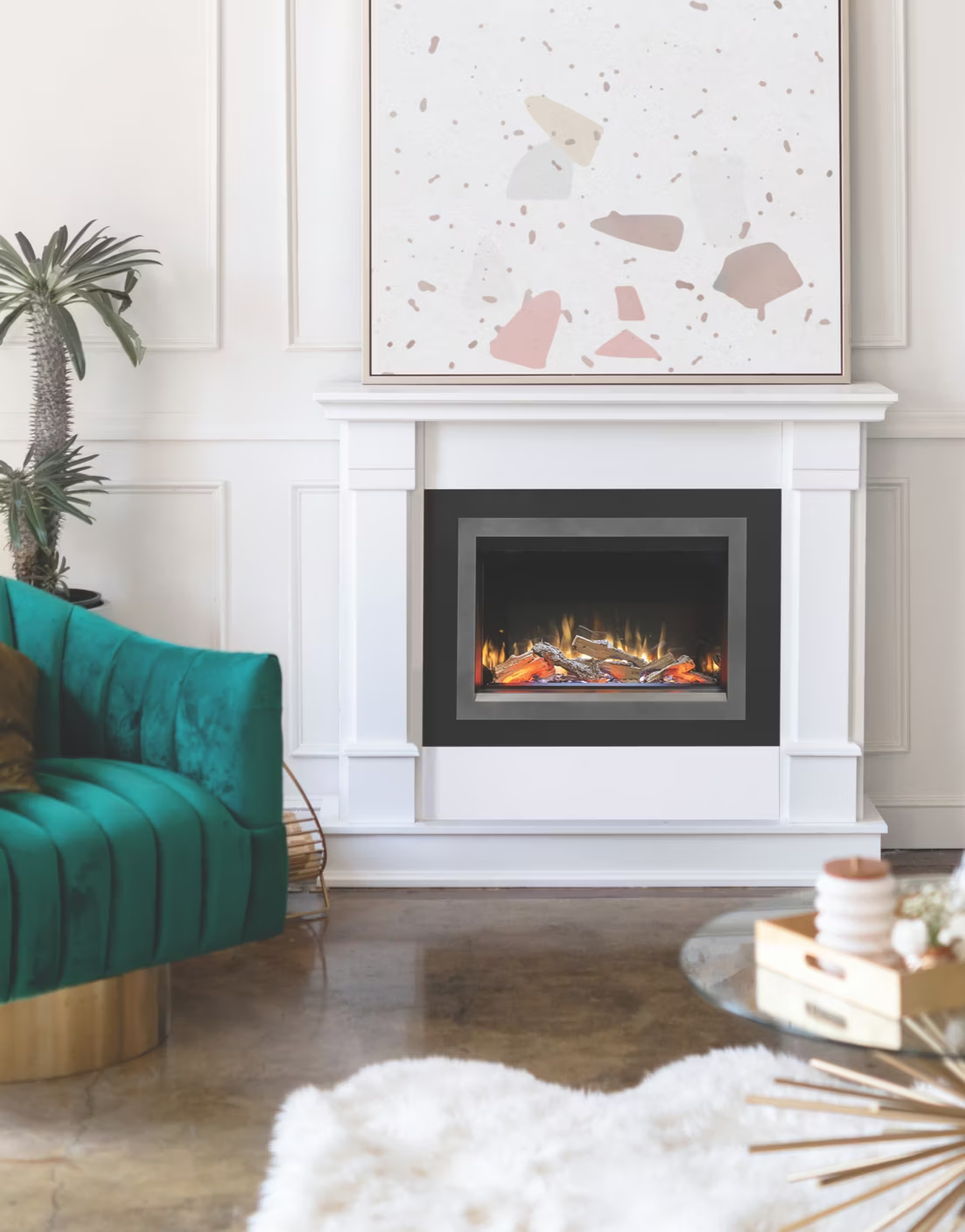
That combination is exactly where electric fireplaces earn their keep. There's no venting to run through a century-old brick wall, no gas line to extend, and no permit fight over exterior chimney chases in historic districts. Whether it's a plug-in insert dropped into an existing fireplace opening in a South Charleston bungalow, a built-in wall unit in a new St. Albans or Dunbar addition, or a freestanding unit in a Nitro apartment where a landlord won't allow venting at all, electric delivers real, instant zone heat with none of the structural work wood or gas installs require.
Three steps. No salesperson until you're ready.
Tell us about your project
Your zip code, your situation, and the fuel you're leaning toward—or let the answers point you to one.
See what's actually available
The brands dealers within 100 miles genuinely carry—real options, never a catalog mirage.
Get your dealer & Project Guide
A trusted local dealer, plus the free Project Guide & Parts List that names every component of the job.
Frequently Asked Questions
How much does it cost to install an electric fireplace in Kanawha County?
Because electric units don't need a chimney, gas line, or venting of any kind, they're by far the least expensive fireplace option in Kanawha County. A plug-in insert or freestanding unit that drops into an existing fireplace opening typically runs $300 to $900 installed. A built-in wall unit or full mantel package—which usually calls for an electrician to run a dedicated 20-amp circuit, especially in older Charleston East End or Kanawha City homes with older panels—runs closer to $800 to $1,800. Compare that to the $4,500-plus typical for a wood or gas install with venting, and it's easy to see why electric is the go-to for a fast heat upgrade in a rental or a historic property.
Do I need a permit to install an electric fireplace in Kanawha County?
In most cases, no—a plug-in electric fireplace that runs off a standard outlet requires no permit at all, since there's no venting or gas work involved. If you're adding a built-in unit that needs a new dedicated circuit, the electrical work itself may require a permit through your local jurisdiction—Charleston, South Charleston, St. Albans, and the other incorporated cities each handle their own electrical permitting, while unincorporated parts of the county go through the county building office. Either way, it's a phone call, not a project—nothing close to the inspection and clearance requirements that come with a wood stove or gas insert.
How much space will an electric fireplace actually heat?
Most electric fireplace inserts and stoves are rated for 400 to 1,000 square feet, which makes them well suited as zone heat for a single room—a den, a converted garage, a basement rec room—rather than whole-home heating. Given Kanawha County's moderate 4A climate (winter lows averaging around 26°F, nowhere near the extremes of a place like Duluth or Fargo), an electric unit can genuinely take the edge off a cold evening in a well-insulated room without leaning on the furnace. For a drafty older home in Kanawha City or a poorly insulated hollow property, treat it as supplemental heat rather than a furnace replacement.
Will my electric fireplace still work if the power goes out?
No—and this is the one real tradeoff against wood or gas. Ice storms and heavy wind do occasionally take out power across the Kanawha Valley, and when that happens, an electric fireplace goes dark along with everything else on the circuit. Homeowners who want backup heat for outages typically pair an electric unit for everyday convenience with a wood stove or gas insert elsewhere in the house—or at minimum, keep a generator on hand. If reliable heat during an outage is your top priority, a wood-burning option (Kanawha County has plenty of oak, hickory, and cherry firewood available locally) is the better fit.
Is an electric fireplace a good fit for a historic Charleston home?
Often, yes. Homes in Charleston's East End Historic District and similar older neighborhoods around Kanawha City frequently have decorative masonry fireplaces that were bricked up decades ago or were never designed to accommodate a modern chimney liner. Rather than tearing into a historic chimney or running new gas line through plaster walls, many homeowners drop an electric insert directly into the existing firebox opening. It preserves the mantel and surround, meets historic district exterior-appearance rules since there's no new venting visible from the street, and gets a cold room usable again in an afternoon.
What's the difference between an electric fireplace, insert, and stove?
An electric fireplace is typically a built-in unit set into a wall or custom mantel surround, often used in new construction or full remodels. An electric insert is sized to slide into an existing fireplace opening—the most common choice for Kanawha County's older homes with existing masonry fireboxes. An electric stove is a freestanding cabinet-style unit that can go almost anywhere with an outlet, popular in apartments in downtown Charleston or Dunbar where a landlord won't allow anything permanent. All three run on standard household current and produce the same flame-effect and heat output; the choice comes down to whether you have an existing opening to fill.
How much does it cost to run an electric fireplace in Kanawha County?
Most electric fireplace inserts draw around 1,500 watts on the heater setting. Running on Appalachian Power's residential rate, that works out to roughly 15 to 20 cents per hour of heater use—a few dollars for an evening of use, well under what most people expect. The flame-effect-only setting (no heat) draws a fraction of that, closer to 30 to 50 watts, so leaving the ambiance running without the heater costs pennies a day. It's a meaningful savings over running a whole-house furnace to warm a single occupied room.
What size electric fireplace do I need for my room?
As a starting point, plan on roughly 10 watts of heater output per square foot for a reasonably insulated room—a 400-square-foot den works well with a standard 1,500-watt insert, while a larger open-concept living room in a newer South Charleston or Nitro build may need a larger unit or a secondary source of heat. Ceiling height, window count, and how well the room is sealed all matter more than square footage alone. A local dealer can walk through your specific room and recommend the right size rather than guessing off a chart.
Electric vs. gas—which should I choose for my Kanawha County home?
Gas fireplaces produce higher heat output and can run during a power outage with the right ignition system, which matters in a county that sees its share of winter ice storms. Electric fireplaces cost far less to install, need no gas line or venting, and can go almost anywhere with an outlet—including apartments, rentals, and historic homes where running a flue isn't practical or allowed. For a primary heat source in an older Kanawha City or South Hills home, gas is usually the stronger choice. For a fast, low-cost upgrade to a single room, a rental unit, or a home where venting isn't an option, electric wins.
Can I put a TV above my fireplace?
Yes—with an asterisk. Fireplaces are hot and TVs don't like heat. Either put a mantel between them to deflect rising warmth, or choose a fireplace with heat-management technology that creates a cool zone on the wall above—the wall stays around 125 degrees, barely warm, while the room still gets full heat. If you like clean lines and don't want a mantel, heat management is the answer.
Does an electric fireplace need a vent or chimney?
No—that's its superpower. An electric fireplace needs a wall and an outlet, period. No vent pipe, no gas line, no clearances to design around, which is why it works in bedrooms, offices, apartments, and walls where venting a gas or wood unit would be impractical or impossible. Installation is typically the simplest and least expensive of any fireplace type.
Does a fireplace add value to my home?
On average, a fireplace adds back to the home about the same amount you spent installing it. Add the monthly savings from heating the rooms you actually use instead of the whole house—often hundreds of dollars a year—and the value case is strong before you even count what a fire does for how your family uses the room.
Can I install a fireplace myself?
If you're putting a fire in your house on purpose, it's best to work with an expert. Unless you're genuinely experienced in framing, gas line, vent pipe, and the national code on clearances to combustibles, have a professional do it—and ideally the same company that sells you the fireplace, so warranty, service, and liability all live under one roof.
Stove and Fireplace Dealers in Kanawha County
Listings include WhyFire partner dealers, dealers we have verified as authorized for the brands we recommend, and established local businesses that carry hearth products. Every listing shows which one it is. The ones marked Preferred run on WhyFire's software, so they can show you real pricing and book your appointment right here. No manufacturer pays for placement. How we verify dealers →
F. M. Pile Hardware Co.
The Best Hardware
Fireside & Patio Shop
Chimney Doctor LLC
Chimney Doctor
Byrnside Hardware
Walton Thriftway
Find your electric fireplace in Kanawha County.
Tell us a bit about your home and we'll match you with the right electric fireplace, insert, or stove—plus a free Project Guide & Parts List with the exact parts for your project and a trusted local Kanawha County dealer to install it.
Find Your Fireplace →