
Add real warmth to any room in Greenbrier County—no chimney required.
From historic Lewisburg storefronts to newer additions near White Sulphur Springs, electric fireplaces bring instant ambiance and zone heat to rooms that were never built for a flue. Find the right unit and get matched with a trusted local dealer.
Every Project Starts From One of These Five Situations
Instant heat, zero venting, for homes across the Alleghenies.
Greenbrier County sits in the Allegheny Mountains at around 2,300 feet in Lewisburg, with winter lows averaging 20°F and roughly 5,737 heating degree days a year—a real Appalachian winter, though noticeably milder than places like Buffalo, NY. Wood is still a common primary or supplemental fuel here, with oak, hickory, maple, and cherry cordwood cut locally and permits available through the George Washington & Jefferson National Forest for $20 a cord during the May-to-October season. But not every room, and not every house, is set up for a wood stove or a gas line.
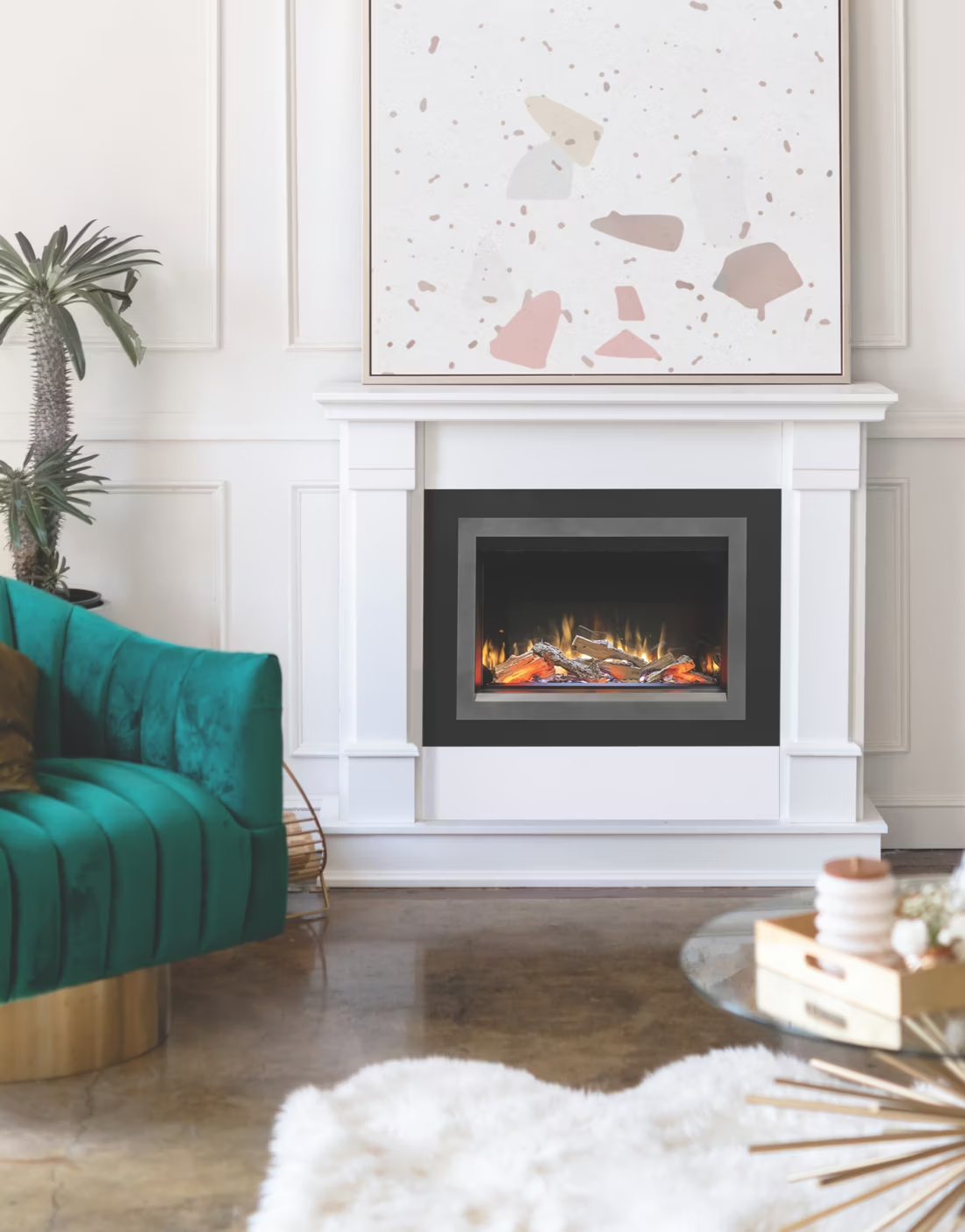
That's where electric fireplaces fill a real gap. Lewisburg's historic district, the guest cottages and outbuildings around White Sulphur Springs and The Greenbrier resort, finished basements in Ronceverte and Rainelle, and manufactured or modular homes throughout the rural county all benefit from a unit that plugs into an existing 120-volt outlet or ties into a dedicated 240-volt circuit without any masonry, flue, or gas line work. Appalachian Power serves most of the county's electric accounts, and a properly sized electric fireplace adds comfortable zone heat to a bedroom, sunroom, or addition without touching your central heating system.
Three steps. No salesperson until you're ready.
Tell us about your project
Your zip code, your situation, and the fuel you're leaning toward—or let the answers point you to one.
See what's actually available
The brands dealers within 100 miles genuinely carry—real options, never a catalog mirage.
Get your dealer & Project Guide
A trusted local dealer, plus the free Project Guide & Parts List that names every component of the job.
Frequently Asked Questions
How much does an electric fireplace installation cost in Greenbrier County?
Most electric fireplace projects in Greenbrier County run $300 to $2,500. A plug-in wall-mount or mantel unit on the low end needs no electrical work beyond an existing outlet. A built-in electric insert set into an existing masonry fireplace opening, or a linear wall unit requiring a dedicated 240-volt circuit run by an electrician, sits toward the higher end—especially in older Lewisburg homes where knob-and-tube or outdated panel wiring needs upgrading first. Local dealers will walk your home's wiring and give you a firm number before any work starts.
Do I need a permit to install an electric fireplace in Greenbrier County?
A simple 120-volt plug-in unit generally doesn't require a permit—it's treated like any other appliance. But a hardwired 240-volt built-in or a linear electric fireplace that requires new circuit wiring does typically need an electrical permit, pulled through the Greenbrier County Building Permits office or the relevant municipality if you're inside Lewisburg or White Sulphur Springs town limits. Most local dealers coordinate the licensed electrician and permit as part of the installation, so you're not left tracking down inspections yourself.
Can an electric fireplace actually heat my home, or is it just for looks?
Most electric fireplaces are built for zone heating, not whole-house heat—expect them to comfortably warm a single room of 300 to 600 square feet, not carry a Greenbrier County home through a 20°F January night on their own. For primary heat in this climate, wood stoves burning local oak and hickory, or propane, still do the heavy lifting for most rural households. Electric units shine as supplemental heat in an add-on room, a finished basement, or a bedroom you don't want to run ductwork to—and as a low-maintenance, always-on ambiance piece in living spaces that already have central heat.
Will my electric fireplace work during a power outage?
No—electric fireplaces require power to run the heater element and flame effect, so they go dark the moment the grid does. That matters in Greenbrier County, where ice storms in the mountains can knock out Appalachian Power service for a day or more in a bad winter. If backup heat during outages is a priority, pair an electric fireplace with a wood stove or propane unit elsewhere in the house rather than relying on electric as your only heat source.
What's the best electric fireplace option for an older home without a chimney?
For Lewisburg's historic homes and older farmhouses throughout the county that were never built with a masonry chimney, a wall-mounted linear electric fireplace or a freestanding electric stove is usually the simplest path—both install without touching the structure's exterior walls or roofline. If the home does have a bricked-up or decorative fireplace opening, an electric insert can be set into that existing opening to restore a focal point without reopening a flue. Either way, no venting, no clearance-to-combustibles concerns like a wood stove, and no gas line to run.
Can I convert an existing wood-burning fireplace to electric?
Yes, and it's a common project for older Greenbrier County homes with a masonry fireplace that's no longer used for wood. An electric insert slides into the existing firebox opening, often with some minor sizing adjustments or a surround kit, and plugs into a nearby outlet or a new dedicated circuit for higher-output models. It's a straightforward way to keep the look of a traditional fireplace in a Lewisburg or Ronceverte home while eliminating chimney maintenance, ash cleanup, and the need for cordwood altogether.
How much does it cost to run an electric fireplace day to day?
Most electric fireplaces draw around 1,500 watts on the heat setting—roughly the same as a space heater. Running one for a full evening, a few hours at a time, typically adds a few dollars a month to an Appalachian Power bill depending on how often it's used and current electric rates. Running the flame effect alone, without heat, uses only a fraction of that. It's a much lower operating cost than most homeowners expect, which is part of why electric units are popular as supplemental heat in rooms that don't need full-time central heating.
What size electric fireplace do I need for my room?
Sizing depends on square footage and how well-insulated the space is. As a rough guide for Greenbrier County: a 30 to 40 inch unit handles a bedroom or small sitting room (up to roughly 400 square feet), while a 50 to 60 inch linear model can take on a larger open living area up to about 600 square feet as supplemental heat. Older homes with less insulation, common in the county's pre-1950s housing stock, may need a slightly larger unit or should treat electric heat as a comfort boost rather than the main heat source. A local dealer can size the room during a quick in-home look.
Electric vs. pellet stove—which makes more sense for my home?
Pellet stoves burning regional brands like Energex, Hamer, or Greene Team pellets put out significantly more heat than an electric fireplace and can serve as a primary heat source in a Greenbrier County home, but they need venting through an exterior wall or roof and a hopper that has to be loaded regularly. Electric fireplaces need none of that—no venting, no fuel storage, no ash—but they're limited to zone heating and, like a pellet stove's auger and blower, still depend on electricity to run. If you want real heat output with some independence from wood handling, pellet is the stronger choice; if you want simple, install-anywhere ambiance and light supplemental warmth, electric wins.
Does an electric fireplace need a vent or chimney?
No—that's its superpower. An electric fireplace needs a wall and an outlet, period. No vent pipe, no gas line, no clearances to design around, which is why it works in bedrooms, offices, apartments, and walls where venting a gas or wood unit would be impractical or impossible. Installation is typically the simplest and least expensive of any fireplace type.
Can I put a TV above my fireplace?
Yes—with an asterisk. Fireplaces are hot and TVs don't like heat. Either put a mantel between them to deflect rising warmth, or choose a fireplace with heat-management technology that creates a cool zone on the wall above—the wall stays around 125 degrees, barely warm, while the room still gets full heat. If you like clean lines and don't want a mantel, heat management is the answer.
Does a fireplace add value to my home?
On average, a fireplace adds back to the home about the same amount you spent installing it. Add the monthly savings from heating the rooms you actually use instead of the whole house—often hundreds of dollars a year—and the value case is strong before you even count what a fire does for how your family uses the room.
Can I install a fireplace myself?
If you're putting a fire in your house on purpose, it's best to work with an expert. Unless you're genuinely experienced in framing, gas line, vent pipe, and the national code on clearances to combustibles, have a professional do it—and ideally the same company that sells you the fireplace, so warranty, service, and liability all live under one roof.
Stove and Fireplace Dealers in Greenbrier County
Listings include WhyFire partner dealers, dealers we have verified as authorized for the brands we recommend, and established local businesses that carry hearth products. Every listing shows which one it is. The ones marked Preferred run on WhyFire's software, so they can show you real pricing and book your appointment right here. No manufacturer pays for placement. How we verify dealers →
Top Hat Stove & Fireplace
Newport Trading Company Inc.
Global Stoves & Services
A & D Chimney Cleaning
Global Resources
Find your electric fireplace in Greenbrier County.
Tell us a bit about your home and we'll match you with the right electric fireplace or insert, plus a free Project Guide & Parts List and a trusted local dealer to handle the install.
Find Your Fireplace →