
Gas heat that lights the moment Kanawha Valley winters turn cold.
Dependable, instant heat for the Kanawha Valley's cold snaps and ice storms—find the right gas fireplace or insert and connect with a trusted local dealer.
Every Project Starts From One of These Five Situations
Reliable warmth for the Kanawha Valley's moderate but real winters.
Cross Lanes sits in the Kanawha Valley just west of Charleston, at around 667 feet in elevation, where winter lows average in the low 20s and the region logs a moderate winter heating season lasting about four or five months a year—a moderate mixed-humid climate (zone 4A), nowhere near as severe as places like Duluth, MN, but still enough to run a heating system hard for four or five months. Ice storms are the more common winter hazard here, occasionally coating power lines across the valley and knocking out electricity for a day or more.
The hills around Kanawha County are still thick with oak, hickory, maple, and cherry, and wood heat remains part of daily life in the more rural stretches of the county. But Cross Lanes itself is a more suburban, unincorporated community, and most homes here have shifted toward gas as the primary or supplemental heat source—whether piped in as natural gas near the Charleston side of the valley or delivered as propane farther out. A properly installed gas fireplace or insert gives you instant, controllable heat and, with the right ignition system, a source of warmth that keeps working when Appalachian Power or Black Diamond Power Co lines go down.
Three steps. No salesperson until you're ready.
Tell us about your project
Your zip code, your situation, and the fuel you're leaning toward—or let the answers point you to one.
See what's actually available
The brands dealers within 100 miles genuinely carry—real options, never a catalog mirage.
Get your dealer & Project Guide
A trusted local dealer, plus the free Project Guide & Parts List that names every component of the job.
Frequently Asked Questions
How much does a gas fireplace installation cost in Cross Lanes?
Gas fireplace and insert installations in the Cross Lanes area typically run $3,500 to $9,000, with the spread driven mostly by venting and gas line work rather than the appliance itself. A direct-vent insert dropped into an existing masonry fireplace in one of the area's older Kanawha Valley homes—where a gas line or propane tank is already in place—lands on the lower end. New construction, a fresh gas line run, or switching from propane to a new tank setup pushes a project toward the higher end. A trusted local dealer will walk your home before quoting a firm number.
Can I convert my existing wood-burning fireplace to gas?
Yes, and it's a common upgrade in this part of Kanawha County. Plenty of homes in and around Cross Lanes were built with open masonry fireplaces decades ago, back when wood heat from local oak and hickory was the norm in the surrounding hills. A gas insert slides into that existing firebox and uses the current chimney, relined with a stainless liner, as the vent path—which keeps costs down and preserves the look of the original hearth. Expect the conversion to land toward the lower half of the installation range above if a gas line is already nearby.
Do I need natural gas service, or can I run my fireplace on propane?
Either works, and which one applies depends on exactly where you are in Cross Lanes. Established neighborhoods closer to the Charleston side of the Kanawha Valley are more likely to sit on an existing gas main, while homes in outlying, unincorporated stretches of Kanawha County more often run on propane with an above-ground or buried tank. Most gas fireplace inserts and log sets can be configured for either fuel—your installer sets the correct orifice and regulator for whichever supply you have.
Will a gas fireplace still work if the power goes out?
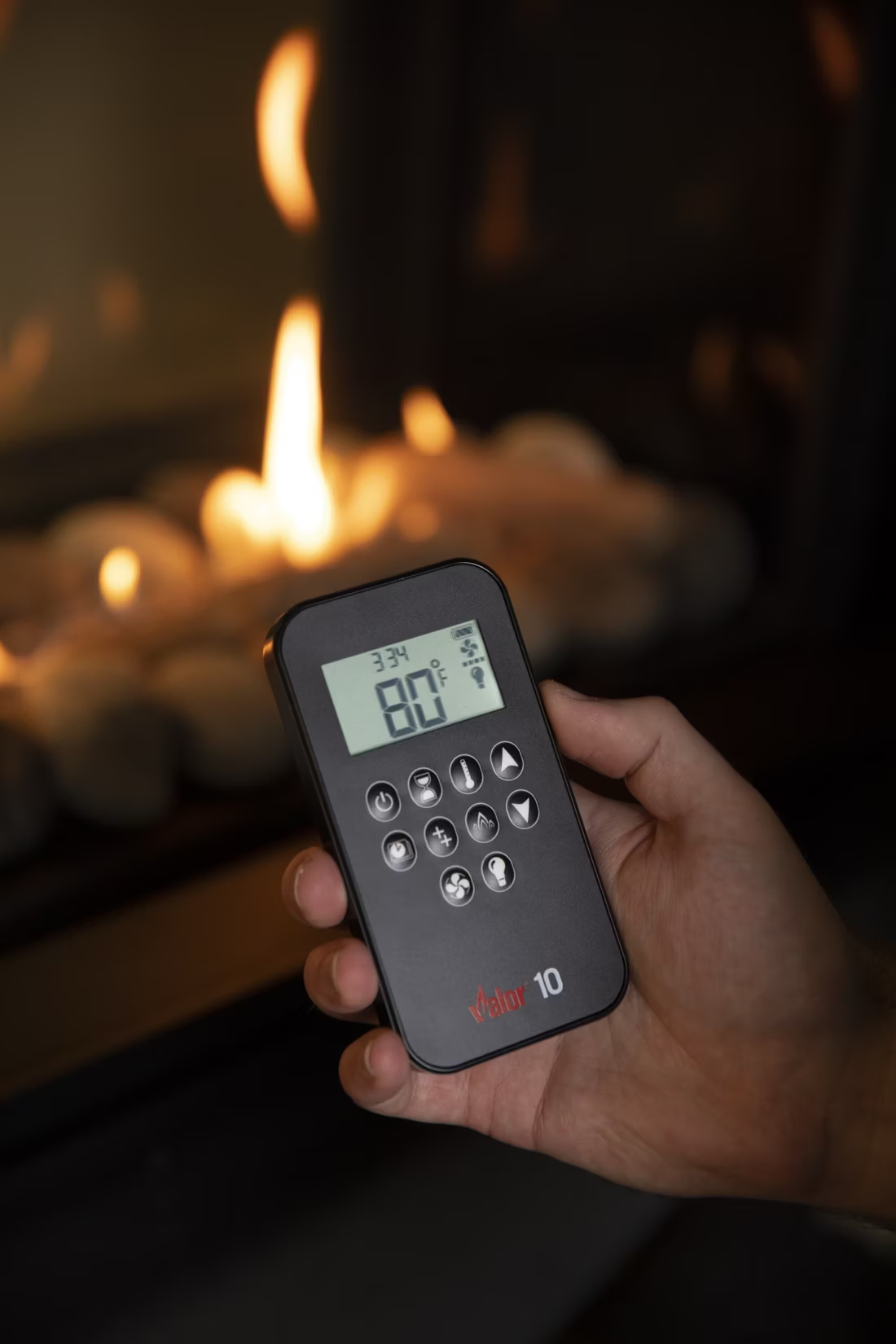
In most cases, yes. Ice storms move through the Kanawha Valley most winters and can knock out power from either Appalachian Power or Black Diamond Power Co for a day or more at a stretch. Gas fireplaces with intermittent pilot ignition (IPI) run on a small battery backup that lets the unit light on demand even with no grid power. Valor fireplaces go a step further—the pilot assembly generates its own electricity through the thermocouple, so there's no battery to check or replace. Ask your local dealer about the ignition system on any unit you're considering if outage backup matters to you.
What's the difference between a gas fireplace, insert, and stove?
A gas fireplace is a fully built-in unit framed into a wall—the right call for new construction or a remodel. A gas insert is sized to drop into an existing masonry firebox, which fits a lot of the older housing stock around Cross Lanes. A gas stove is a freestanding cabinet unit that sits on the floor like a wood stove but burns gas—a good option for a room with no existing fireplace and no interest in framing one in. Local dealers carry all three; which one fits depends mostly on what your home already has.
Do I need a permit to install a gas fireplace in Cross Lanes?
Cross Lanes itself is unincorporated, so building permits for gas fireplace installations fall under the Kanawha County Building Department, along with a separate gas-line permit for any new line work. A licensed gas-fitter has to sign off on that portion of the job—one reason it pays to work with an established hearth dealer who coordinates the gas line, venting, and inspection together instead of leaving you to manage separate trades yourself.
What's the difference between vented and vent-free gas fireplaces?
Vented, direct-vent units draw combustion air from outside and exhaust it back outside through a sealed pipe—they're the cleanest and most universally code-approved option. Vent-free units burn gas directly into the room with no external venting, which makes them cheaper to install but releases some water vapor and combustion byproducts into your living space, so West Virginia limits their use with room-size and ventilation rules. For most Cross Lanes homes, a direct-vent unit is the more straightforward, better-heating choice, and it's what most local dealers steer customers toward for a primary living space.
How often does a gas fireplace need to be serviced?
Plan on an annual inspection, ideally before the first cold stretch of the season. A technician checks the burner, pilot assembly, gas connections, and venting, and cleans the glass. It's a lighter job than sweeping a wood chimney, but skipping it is how pilot and ignition problems go unnoticed until the coldest night of the year—not when you want to discover them.
Gas vs. electric fireplace—which makes more sense in Cross Lanes?
Gas delivers more heat output and can double as backup heat during a power outage—a real consideration given how often ice storms interrupt service from Appalachian Power or Black Diamond Power Co in the Kanawha Valley. Electric fireplaces are simpler to install, often needing just a standard outlet and running $400 to $1,200, produce zero emissions, and cost more to operate per hour given local residential rates of roughly 15.4 to 17 cents per kWh depending on which utility serves your street. Wood, by contrast, isn't the default around Cross Lanes the way it still is in more rural parts of Kanawha County—most homes here have already shifted to gas or electric as primary heat. For day-to-day ambiance with real heat behind it, gas is the more common choice; for a simpler retrofit with no venting, electric wins.
What's the difference between an insert and a zero-clearance fireplace?
An insert is a fireplace that slides into a pre-existing wood-burning fireplace—if you don't have one, there's nothing to insert it into. A zero-clearance fireplace is built into a framed wall, which makes it the answer for remodels and new construction. Simple test: existing masonry fireplace means insert; blank or framed wall means zero-clearance.
Is my gas fireplace wasting gas?
If it was installed more than 15 years ago, probably. Older gas fireplaces keep a standing pilot light burning all the time, and that little flame can cost a couple hundred dollars a year. Newer models use pilot-on-demand ignition—the pilot lights only when you use the fireplace and goes out when you turn it off.
Can a fireplace actually lower my heating bill?
Yes—by creating a comfort zone. A furnace heats every square foot of the house just to warm the one room you're in; a gas fireplace on low burns roughly a sixth of the gas a typical furnace does. Set the furnace around 55–60 degrees as a baseline, then heat the rooms your family actually uses. Families who heat this way commonly save $20–$60 a month.
Does a fireplace add value to my home?
On average, a fireplace adds back to the home about the same amount you spent installing it. Add the monthly savings from heating the rooms you actually use instead of the whole house—often hundreds of dollars a year—and the value case is strong before you even count what a fire does for how your family uses the room.
Nearby Dealers
Hearth shops serving Cross Lanes and the surrounding area. Every listing shows whether it is a WhyFire partner, a dealer we have verified as authorized for the brands we recommend, or a local business carrying hearth products. No manufacturer pays for placement. How we verify dealers →
Fireside & Patio Shop
F. M. Pile Hardware Co.
Chimney Doctor LLC
Chimney Doctor
The Best Hardware
Walton Thriftway
Byrnside Hardware
Find your gas fireplace in Cross Lanes.
Tell us a bit about your home and we'll match you with a trusted local dealer and send over a free Project Guide & Parts List—the exact parts, vent kit included, for your gas fireplace project in Cross Lanes.
Find Your Fireplace →