
Electric warmth for every hollow in Calhoun County.
No gas line, no chimney, no cutting wood—just a plug and heat, whether you're in Grantsville or out along a gravel road miles from town. Find the right unit and connect with a trusted local dealer.
Every Project Starts From One of These Five Situations
Reliable heat without a gas line or chimney.
Calhoun County is one of West Virginia's smallest and most rural counties, tucked into the hill country along the Little Kanawha River with a year-round population under 400. Homes here are spread out—plenty sit at the end of long gravel drives with no natural gas main anywhere nearby, and propane delivery can mean a real drive for the supplier. That reality shapes what actually gets installed: wood heat from local oak, hickory, maple, and cherry has deep roots here, but electric fireplaces have carved out a solid role too, especially in manufactured homes, additions, and rooms where running a flue or a gas line just isn't practical.
Winters in this part of West Virginia (IECC climate zone 4A) bring routine stretches in the teens and 20s, with occasional hard freezes—enough cold to matter, but mild compared to the northern tier. An electric fireplace won't replace a furnace or a good wood stove as primary heat in a Calhoun County winter, but it's a genuinely useful zone heater: no venting, no combustion byproducts, and installation that a licensed electrician can usually complete in a single afternoon. For a county with no wood smoke restrictions to worry about but also no dense gas infrastructure, electric fills a real gap—supplemental warmth in a bedroom, a converted porch, or a mobile home where a masonry chimney was never part of the picture.
Three steps. No salesperson until you're ready.
Tell us about your project
Your zip code, your situation, and the fuel you're leaning toward—or let the answers point you to one.
See what's actually available
The brands dealers within 100 miles genuinely carry—real options, never a catalog mirage.
Get your dealer & Project Guide
A trusted local dealer, plus the free Project Guide & Parts List that names every component of the job.
Frequently Asked Questions
How much does an electric fireplace installation cost in Calhoun County?
A plug-in electric fireplace or insert that uses a standard household outlet typically runs $300 to $1,200 for the unit itself, with little to no installation cost beyond mounting. A built-in electric fireplace that requires a dedicated 120V or 240V circuit—common for larger units or in-wall installs—usually runs $1,500 to $4,000 once you factor in an electrician's time to run new wiring, which matters here since many homes in the county's rural stretches have older panels that may need a subpanel or circuit upgrade first. Local electricians familiar with the older housing stock around Grantsville and outlying communities can flag panel issues before you buy.
Will an electric fireplace actually heat my home in a Calhoun County winter?
Most electric fireplaces are built for supplemental or zone heating, not whole-house heat—they typically cover 400 to 1,000 square feet comfortably. In a climate zone 4A county like Calhoun, where nights regularly sit in the teens and 20s through January and February, an electric unit works best paired with your existing furnace or a wood stove, taking the edge off a single room so you can turn the thermostat down elsewhere. For homes without natural gas service—which describes most of the county outside Grantsville—electric is often the easiest secondary heat source to add since it doesn't require fuel storage or venting.
Do I need a permit for an electric fireplace in Calhoun County?
A plug-in unit that simply plugs into an existing outlet doesn't require a permit. A built-in electric fireplace that needs a new dedicated circuit is treated like any other electrical work—it should be pulled by a licensed electrician and inspected under the county's building and electrical code. Given how spread out Calhoun County is, most homeowners rely on the same electrician who already knows their home's panel and wiring rather than a big-box installer unfamiliar with older rural housing stock.
What's the difference between a plug-in electric fireplace and a built-in one?
A plug-in electric fireplace (freestanding or a mantel-style unit) runs off a standard outlet and can be moved or removed without any electrical work—a good fit for renters, mobile homes, or anyone who wants heat without committing to construction. A built-in unit is set into a wall or existing fireplace opening, usually wired to its own circuit, and gives a more finished, permanent look similar to a gas or wood fireplace. For Calhoun County's older farmhouses with existing masonry fireplace openings that have gone unused for years, a built-in electric insert is a popular way to bring that opening back to life without chimney repair or a wood-burning permit.
How does an electric fireplace compare to a wood stove for a Calhoun County home?
Wood remains the backbone of home heating for a lot of Calhoun County households—oak, hickory, maple, and cherry are all common locally, burn hot, and cost little to nothing if you're cutting your own from your own land. A wood stove also keeps working during a power outage, which matters on the county's rural electric lines where storm outages can stretch for hours. An electric fireplace can't do that—it goes dark the moment the power does—but it wins on convenience: no cutting, splitting, hauling, or ash cleanup, no chimney to maintain, and instant on-off heat at the flip of a switch. Many homes here run both: wood for the bulk of the heating season and backup power outages, electric for a quick-heat room or a space where a stove doesn't make sense.
Are there rebates available for electric fireplaces in West Virginia?
West Virginia doesn't currently offer a statewide rebate specifically for electric fireplaces the way it does for some heat pump upgrades, though some rural electric cooperatives serving Calhoun County periodically run efficiency incentive programs for electric heating equipment. It's worth asking your utility directly, since programs change year to year and aren't always well advertised in a county this size. A local dealer who's installed units in the area recently will usually know what's currently available.
What size electric fireplace do I need?
Sizing comes down to the square footage of the specific room you're heating, not your whole house—electric fireplaces are rated in BTUs, and most residential units top out around 5,000 to 9,000 BTUs, enough for a single room of 400 to 1,000 square feet depending on insulation and ceiling height. Older Calhoun County farmhouses with high ceilings and less insulation than newer construction may need a unit at the higher end of that range, or two smaller units placed in separate rooms rather than one large unit doing double duty. A local dealer can size this correctly during a quick in-home look rather than guessing off a big-box store's general chart.
Can an electric fireplace be installed in a mobile or manufactured home?
Yes, and it's one of the more common installations in this part of West Virginia, where manufactured and modular homes make up a meaningful share of the housing stock. Plug-in electric fireplaces require no structural changes and no chimney, which sidesteps the venting complications that come with wood or gas units in a manufactured home. Built-in units are also an option but need a qualified electrician to confirm the home's wiring and panel can support a new dedicated circuit—something worth checking before you buy rather than after.
How long does an electric fireplace last, and what maintenance does it need?
Electric fireplaces are low-maintenance by design—there's no chimney to sweep, no ash to clean, and no annual gas line inspection required. Most units last 10 to 15 years with basic care: keeping the heating element free of dust, checking the fan periodically, and replacing bulbs or LED components as needed on models with flame-effect lighting. That low upkeep is part of the appeal for a lot of Calhoun County households already managing wood stove chimney sweeps or propane deliveries—an electric unit in a secondary room is one less thing to maintain through the winter.
Can I put a TV above my fireplace?
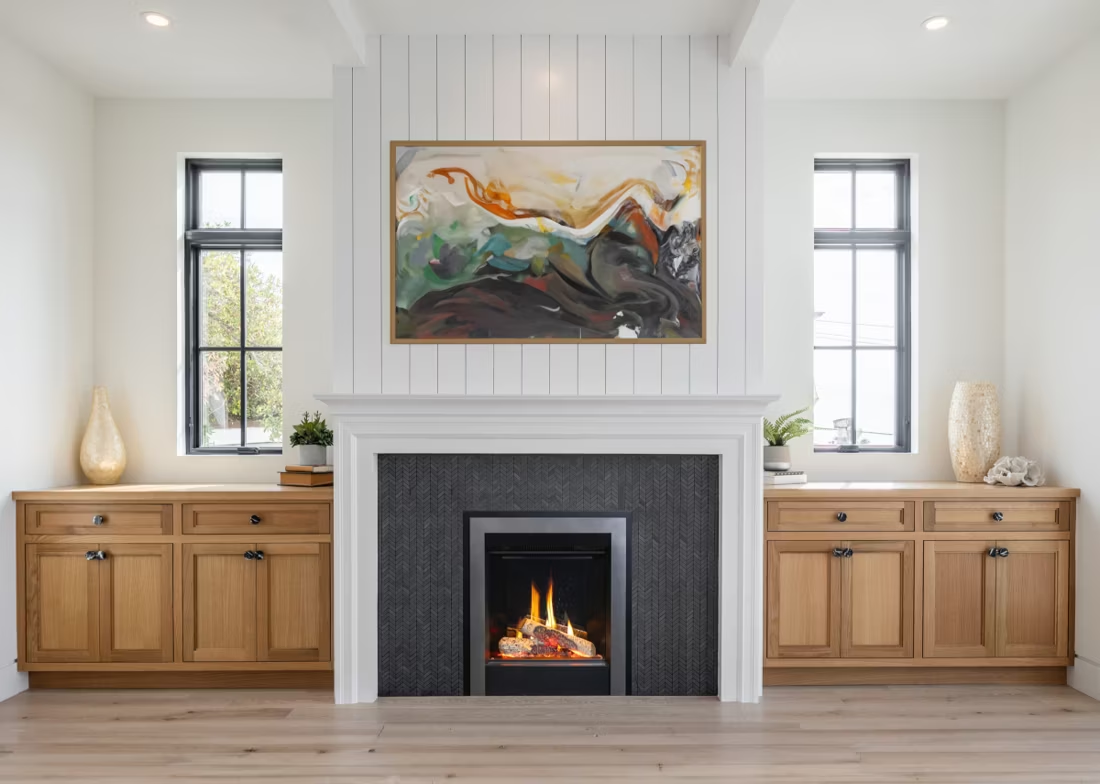
Yes—with an asterisk. Fireplaces are hot and TVs don't like heat. Either put a mantel between them to deflect rising warmth, or choose a fireplace with heat-management technology that creates a cool zone on the wall above—the wall stays around 125 degrees, barely warm, while the room still gets full heat. If you like clean lines and don't want a mantel, heat management is the answer.
Does an electric fireplace need a vent or chimney?
No—that's its superpower. An electric fireplace needs a wall and an outlet, period. No vent pipe, no gas line, no clearances to design around, which is why it works in bedrooms, offices, apartments, and walls where venting a gas or wood unit would be impractical or impossible. Installation is typically the simplest and least expensive of any fireplace type.
What is an in-home preview and do I need one?
It's a visit where a hearth professional measures your space, confirms the model you picked actually works in your home, and walks the specs—framing, gas line, venting, finish work—before anything is ordered. Some details you just can't know until you see the house. Never make a down payment without one; it's the single most-skipped step that burns buyers.
Can a fireplace actually lower my heating bill?
Yes—by creating a comfort zone. A furnace heats every square foot of the house just to warm the one room you're in; a gas fireplace on low burns roughly a sixth of the gas a typical furnace does. Set the furnace around 55–60 degrees as a baseline, then heat the rooms your family actually uses. Families who heat this way commonly save $20–$60 a month.
Stove and Fireplace Dealers in Calhoun County
Listings include WhyFire partner dealers, dealers we have verified as authorized for the brands we recommend, and established local businesses that carry hearth products. Every listing shows which one it is. The ones marked Preferred run on WhyFire's software, so they can show you real pricing and book your appointment right here. No manufacturer pays for placement. How we verify dealers →
Hardman's Hardware
Walton Thriftway
Hardman's Hardware
The Fore Timber Company Inc.
Hardman's Hardware
Bob's Fireplace
Find your electric fireplace in Calhoun County.
Tell us a bit about your home and we'll put together a free Project Guide & Parts List—the right electric fireplace or insert for your space, plus a trusted local dealer to install it.
Find Your Fireplace →