
Zone heat that fits Brooke County's older river-town homes.
No chimney, no gas line, no permit hassle—just supplemental warmth that drops into an existing fireplace opening or an interior wall in Wellsburg, Follansbee, or anywhere in the Ohio Valley panhandle. Find the right unit and get matched with a trusted local dealer.
Every Project Starts From One of These Five Situations
The no-chimney answer for the Ohio Valley's older housing stock.
Brooke County is a small, narrow panhandle county squeezed between the Ohio River and the Pennsylvania line—about 9,600 people spread across Wellsburg, Follansbee, and the Bethany College area. A lot of the housing stock here dates back to the steel and pottery era of the early-to-mid 1900s: brick row houses, older single-family homes with flues that were never designed for a modern insert, and plenty of rentals and apartment units where a landlord isn't going to sign off on a gas line or a wood-burning appliance. Winters are moderate-cold rather than brutal—an average low around 19°F and roughly 5,828 heating degree days, placing the county in climate zone 5A—enough cold months to want real supplemental heat in the rooms people actually live in, without needing to overhaul the whole house.
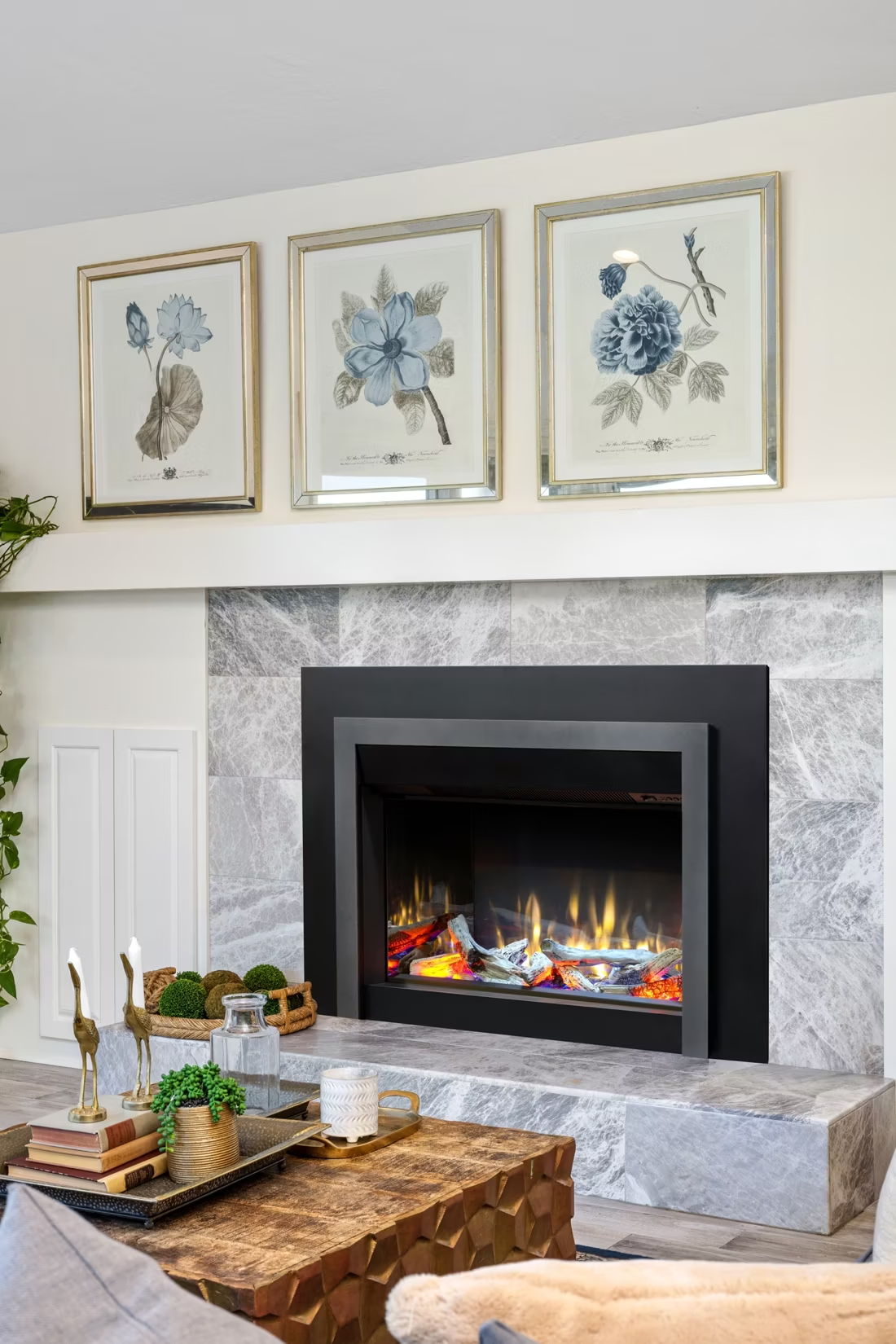
That's the gap electric fireplaces fill. A plug-in or built-in unit needs no venting, no gas permit, and no masonry work—it just needs an outlet or, for larger built-ins, a dedicated circuit. That makes it the practical option for a Wellsburg row house with a bricked-up flue, a Follansbee rental where any structural change is off the table, or a Bethany-area home already running on electric baseboard or an aging oil furnace that could use some help in the living room on the coldest nights. Brooke County has no air quality restrictions on record, so there's no smoke or emissions consideration either way—the case for electric here comes down to simplicity, upfront cost, and fitting into a home that wasn't built with a chimney in mind.
Three steps. No salesperson until you're ready.
Tell us about your project
Your zip code, your situation, and the fuel you're leaning toward—or let the answers point you to one.
See what's actually available
The brands dealers within 100 miles genuinely carry—real options, never a catalog mirage.
Get your dealer & Project Guide
A trusted local dealer, plus the free Project Guide & Parts List that names every component of the job.
Frequently Asked Questions
How much does an electric fireplace installation cost in Brooke County?
A basic plug-in electric fireplace or insert that drops into an existing fireplace opening typically runs $200 to $800 installed, since there's no venting or gas line involved—often just placing the unit and confirming it's on a circuit that can handle the draw. A built-in wall unit that requires framing, a dedicated 20-amp circuit, and finish trim work runs higher, typically $1,500 to $3,500 depending on the model and whether an electrician needs to run new wiring. Compared to wood or gas installs in this region, electric is consistently the lowest-cost path to a fireplace look and some real supplemental heat, which is part of why it's popular in Brooke County's older rental stock and smaller homes.
Can an electric fireplace actually heat a room, or is it just for looks?
Most electric fireplaces put out around 4,600 to 5,000 BTU (roughly 1,500 watts), which is enough to noticeably warm a single room in the 300 to 600 square foot range—a living room or den, for example—but it won't heat an entire Brooke County home on its own, especially once temperatures drop toward that 19°F average winter low. Think of it as zone heat: you run it in the room you're actually sitting in and let your baseboard, oil furnace, or central system handle the rest of the house. For homes with 5,828 heating degree days a year, that combination—targeted electric heat in the main living space plus whole-home backup—is usually more cost-effective than cranking central heat everywhere.
Do I need a permit or an electrician to install an electric fireplace in Brooke County?
A standard plug-in electric fireplace or insert that runs on a normal 120-volt outlet doesn't require a permit—there's no gas line and no venting to inspect. If you're installing a larger built-in unit that needs its own dedicated circuit, an electrician should run that wiring, and depending on the scope of the work, an electrical permit may be required through your local jurisdiction in Wellsburg or Follansbee. Most hearth dealers who sell built-in electric units can tell you upfront whether your specific model needs a dedicated circuit, which avoids a surprise electrician call after the fact.
Can I put an electric insert into my existing masonry fireplace?
Yes, and it's a common project in Brooke County's older housing—plenty of homes in Wellsburg and along the river towns have a masonry fireplace opening with a flue that's cracked, bricked up, or simply hasn't been used in decades. An electric insert slides into that existing opening, uses the household outlet or a nearby circuit, and gives you flame visuals and heat output without touching the chimney at all. It's usually the fastest and cheapest way to bring a dead fireplace back into daily use, since there's no chimney repair or relining involved.
Is an electric fireplace cheaper to run than my baseboard heat or oil furnace?
It depends on how you use it. Electric fireplaces run on the same per-kilowatt-hour rate as your baseboard heat, so if you're using one to heat an entire room instead of running central heat or oil to warm the whole house, you'll typically save money—especially in a home with older, less efficient baseboard resistance heat. But if you're running an electric fireplace in addition to keeping the rest of the house at full temperature, you're adding cost, not saving it. In a climate with 5,828 heating degree days like Brooke County, the savings case for electric zone heating works best in homes where people spend most evenings in one or two rooms and can turn the thermostat down elsewhere.
What's the difference between an electric fireplace, an electric insert, and an electric stove?
An electric fireplace is usually a built-in or wall-mounted unit designed to look like a framed fireplace, often installed during a remodel. An electric insert is sized to slot into an existing masonry fireplace opening, which is the most common upgrade path for Brooke County's older homes with unused wood fireplaces. An electric stove is a freestanding cabinet-style unit that mimics a wood or pellet stove's look and can sit anywhere near an outlet—no fireplace opening required. All three use the same basic electric heating element and flame-effect technology; the choice usually comes down to what your home's layout already gives you to work with.
Will my electric fireplace work during a power outage?
No—electric fireplaces require power to run the heating element, blower, and flame effect, so they shut off during an outage just like any other electric appliance. This is the main tradeoff compared to a wood stove, which keeps producing heat regardless of grid status. For Brooke County homes that want a backup heat source for winter storm outages, wood is the more resilient choice; electric is better suited as everyday, no-hassle supplemental heat when the power is on, which is most of the time.
Electric vs. pellet stove—which makes more sense for my home?
Pellet stoves burn compressed wood pellets—regional brands like Energex, Hamer Pellet Fuel, and Greene Team Pellet Fuel are available in the area—and can put out real whole-room or even whole-home heat, but they need a hopper refilled regularly, produce some ash, and still require electricity to run the auger and blower, so they're not a power-outage backup either. Electric fireplaces skip the fuel handling entirely—no bags to store, no ash to empty—but produce less total heat than a pellet stove at full output. For a Brooke County homeowner who wants low-maintenance supplemental warmth in one room, electric is simpler. For someone looking to meaningfully offset an oil or propane heating bill across a larger area, a pellet stove has more heating capacity to offer.
Electric vs. wood—which is the better fit in Brooke County?
Wood offers real whole-room heat output, works without electricity during outages, and this part of West Virginia has good access to hardwood species like oak, hickory, maple, and cherry for anyone willing to source and season firewood. Electric offers instant on-off convenience, zero maintenance, no chimney or venting requirements, and it's the only realistic option for many of Brooke County's rentals and older homes with unusable flues. Given the county's moderate winters—a 19°F average low rather than the deep-negative nights of colder regions—most homeowners here don't need wood as a primary heat source the way they might farther north; it comes down to whether you want the ritual and backup capability of a real fire or the simplicity of flipping a switch.
Can I put a TV above my fireplace?
Yes—with an asterisk. Fireplaces are hot and TVs don't like heat. Either put a mantel between them to deflect rising warmth, or choose a fireplace with heat-management technology that creates a cool zone on the wall above—the wall stays around 125 degrees, barely warm, while the room still gets full heat. If you like clean lines and don't want a mantel, heat management is the answer.
Do electric fireplaces actually produce heat?
Yes—most put out around 4,800–5,000 BTUs from a standard outlet, which comfortably warms a bedroom, office, or den as a comfort-zone heater. What they won't do is carry a whole house the way wood, gas, or pellet can. Think of electric as ambiance-first with honest supplemental heat: flames on with no heat in July, flames plus warmth in January.
How much should I budget for a fireplace?
For an average home—covering the fireplace, the vent pipe, and basic installation—a budget between $3,900 and $5,500 gives you a lot of options across wood, gas, and pellet. By the time you add finish work, gas line, and electrical, the average complete installation lands between $5,000 and $12,000 all-in. In a remodel or new build, a good rule is to put about 2.5% of the total project cost toward the fireplace.
Can I install a fireplace myself?
If you're putting a fire in your house on purpose, it's best to work with an expert. Unless you're genuinely experienced in framing, gas line, vent pipe, and the national code on clearances to combustibles, have a professional do it—and ideally the same company that sells you the fireplace, so warranty, service, and liability all live under one roof.
Stove and Fireplace Dealers in Brooke County
Listings include WhyFire partner dealers, dealers we have verified as authorized for the brands we recommend, and established local businesses that carry hearth products. Every listing shows which one it is. The ones marked Preferred run on WhyFire's software, so they can show you real pricing and book your appointment right here. No manufacturer pays for placement. How we verify dealers →
Buckeye Valley Chimney Service
Builders Wholesale
The Stove Place
Find your electric fireplace in Brooke County.
Tell us a bit about your home—whether it's an old Wellsburg fireplace opening or a bare wall in Follansbee—and we'll put together a free Project Guide & Parts List with the right unit and your recommended local dealer.
Find Your Fireplace →