
Reliable gas heat for Waller's damp Pacific Northwest winters.
Instant, clean heat for a Pierce County home—without the wood smoke or the split-and-stack routine. Find the right unit and get matched with a trusted local dealer.
Every Project Starts From One of These Five Situations
Mild winters, real heat, less hassle.
Waller sits in unincorporated Pierce County between Puyallup and Tacoma, at just 351 feet in elevation with a marine climate (Zone 4C) that keeps winter lows averaging a relatively mild 37°F. With roughly 4,332 heating degree days a year, Waller's winters are nowhere near what a place like Duluth, MN or Buffalo, NY sees—but the region's damp, gray stretches from November through February still call for steady, reliable indoor heat, and late-summer wildfire smoke days make many homeowners hesitant to add more smoke of their own with a wood-burning setup.
Natural gas infrastructure is uneven in unincorporated pockets of Pierce County like Waller—homes closer to Puyallup city limits may have access to Puget Sound Energy's gas mains, while many properties further out run on propane from a regional supplier and tank. Either way, a direct-vent gas fireplace or insert gives you flip-a-switch heat, no ash or creosote to manage, and (with the right ignition system) the ability to keep running through one of the windstorm-driven power outages that hit this part of Pierce County most winters. Local installs typically run $4,000 to $9,500 depending on venting path and whether new gas line or propane tank work is involved.
Three steps. No salesperson until you're ready.
Tell us about your project
Your zip code, your situation, and the fuel you're leaning toward—or let the answers point you to one.
See what's actually available
The brands dealers within 100 miles genuinely carry—real options, never a catalog mirage.
Get your dealer & Project Guide
A trusted local dealer, plus the free Project Guide & Parts List that names every component of the job.
Frequently Asked Questions
How much does a gas fireplace installation cost in Waller?
Most gas fireplace and insert installations in the Waller area run $4,000 to $9,500. A direct-vent insert going into an existing masonry fireplace with a gas line already nearby sits at the lower end. A new built-in gas fireplace for a remodel—with fresh venting, gas line runs, and finish work—lands in the middle to upper end. If your property is on propane and needs a new tank set, or if the gas run has to travel a long distance from the meter or tank, expect the higher end of that range. A local dealer will give you a firm number after seeing the space.
Can I convert my existing wood fireplace to gas?
Yes, and it's a common request in older Pierce County homes with an open masonry fireplace that rarely gets used because splitting and hauling wood isn't practical anymore. A gas insert typically runs through your existing chimney with a stainless liner, keeping the exterior look of the fireplace while swapping in a sealed, efficient gas unit. Locally this runs roughly $4,000 to $8,500 depending on whether you're on natural gas or propane and whether a new line needs to be run from the meter or tank to the firebox.
Should I plan for natural gas or propane in Waller?
It depends on where your property sits. Some Waller-area homes closer to Puyallup have access to Puget Sound Energy's natural gas system, while many properties further into unincorporated Pierce County are not on a gas main and rely on propane delivered and stored in a tank on-site. If you already have a propane tank for a range or water heater, adding a gas fireplace to that same system is usually simple. If you're not sure which is available at your address, a local hearth dealer can check your service area before recommending a unit—most gas fireplaces can be configured for either fuel with the right orifice kit.
Will my gas fireplace still work if the power goes out?
Most direct-vent gas fireplaces with an IPI (intermittent pilot ignition) system run on battery backup and will keep lighting on demand during an outage—worth having given how often fall and winter windstorms knock out power in Pierce County. Just remember to swap the AA batteries once a year so they're ready when you need them. Valor's lineup takes a different approach: their units generate their own electricity through the pilot's thermocouple and never need batteries at all. Ask your local dealer which ignition system a unit uses before you buy if outage performance matters to you.
What's the difference between a gas fireplace, gas insert, and gas stove?
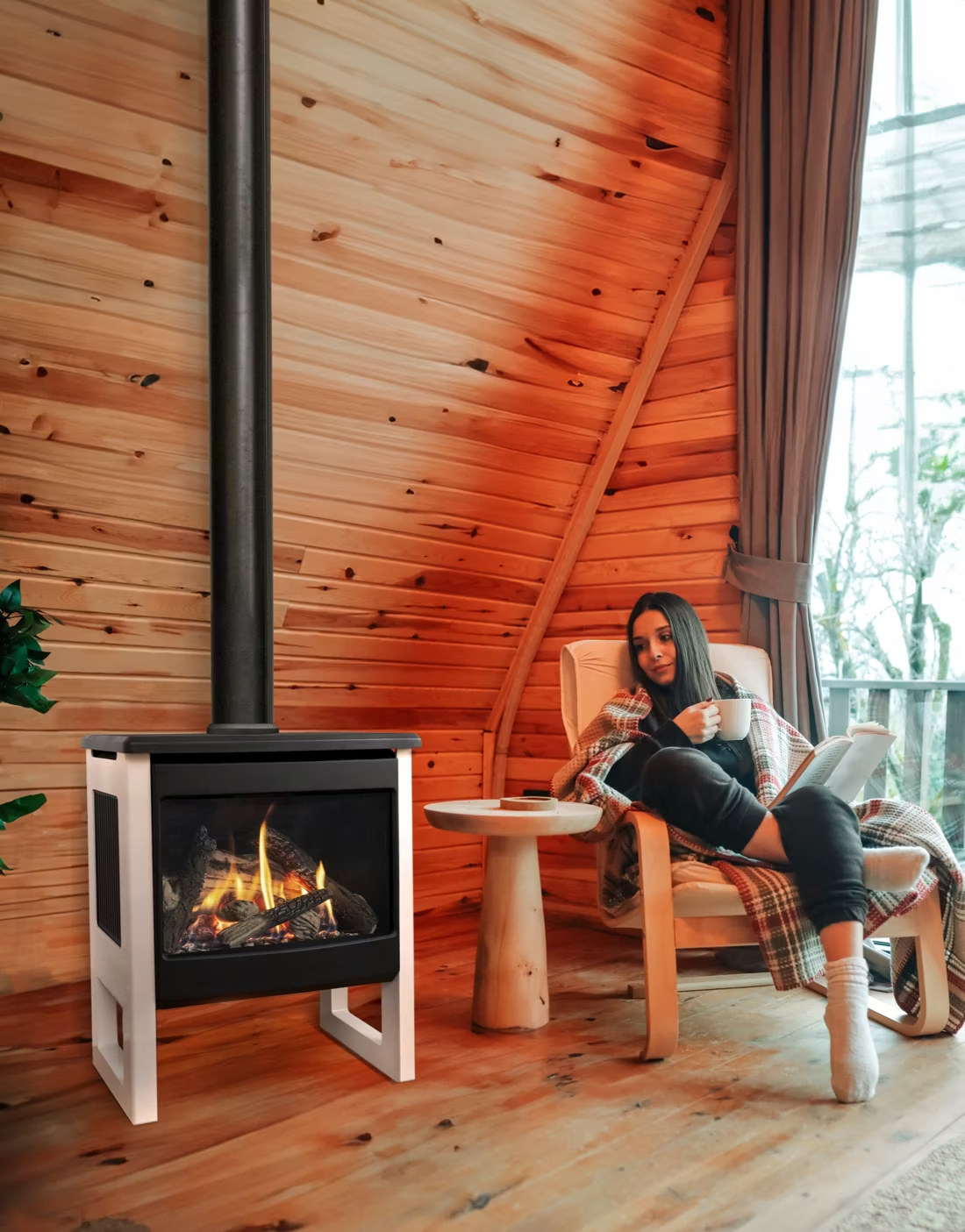
A gas fireplace is a fully built-in unit framed into a wall—the right choice for new construction or a major remodel. A gas insert is built to slot into an existing masonry fireplace opening and vent through the existing chimney, which is the common route for older Waller-area homes with an underused wood fireplace. A gas stove is a freestanding cabinet unit that sits on the floor like a wood stove but runs on gas—a good option if you don't have an existing fireplace and don't want to frame in a new one. A local dealer can walk your space and tell you which fits.
Do I need a permit to install a gas fireplace in Waller?
Yes. Since Waller is unincorporated, permitting runs through Pierce County Planning and Public Works rather than a city building department. A new gas fireplace install typically needs both a mechanical/building permit and a gas piping permit, and the gas line work itself has to be done by a licensed gas fitter. Most established hearth dealers coordinate all of this—the permit, the gas line, and the final inspection—as part of the installation, so you're not managing multiple trades yourself.
Are vent-free gas fireplaces allowed in Waller?
Washington State building code is stricter on unvented (vent-free) gas appliances than many states—they're generally restricted from bedrooms and bathrooms and limited in how they can be used as a primary heat source. Direct-vent gas fireplaces, which draw combustion air from outside and exhaust it back out through a sealed vent, don't carry those restrictions and are by far the more common choice locally. Most Pierce County dealers will steer you toward a direct-vent unit by default; ask specifically if you want to understand the vent-free limitations for your situation.
How often does a gas fireplace need to be serviced?
Plan on an annual inspection, ideally in early fall before the damp Pacific Northwest heating season starts in earnest. A technician checks the burner, pilot assembly, venting, and gas connections, and cleans the glass and interior—a much smaller job than chimney sweeping for a wood unit but just as important for safe operation. Local gas appliance service typically runs $150 to $250 per visit.
Gas vs. wood—which makes more sense for a Waller home?
Wood is still workable here—Douglas fir, red alder, and lodgepole pine are all common locally, and cutting permits through Olympic National Forest or Mt. Baker-Snoqualmie National Forest run just $5 to $20 per cord during the May-to-October season. But Waller's mild winters (average lows around 37°F, nowhere near the extremes of a place like Bozeman, MT) mean most homes don't need wood's higher raw heat output just to stay warm, and late-summer wildfire smoke has made a lot of Pierce County residents less enthusiastic about adding their own smoke to the air in the shoulder seasons. For most Waller households, gas wins on convenience and air quality; wood still makes sense if you want a genuine backup heat source that doesn't depend on gas service or electricity for ignition.
What's the difference between an insert and a zero-clearance fireplace?
An insert is a fireplace that slides into a pre-existing wood-burning fireplace—if you don't have one, there's nothing to insert it into. A zero-clearance fireplace is built into a framed wall, which makes it the answer for remodels and new construction. Simple test: existing masonry fireplace means insert; blank or framed wall means zero-clearance.
Why is my open fireplace making my house colder?
Open fireplaces suck—literally. As the fire burns, it consumes air your furnace already paid to heat and pulls it out through the chimney, so the house is actually colder after the fire goes out than before you lit it. An insert fixes this: it seals the chimney, puts fixed glass across the front, and turns that hole in your house into a real heat source.
Can a fireplace actually lower my heating bill?
Yes—by creating a comfort zone. A furnace heats every square foot of the house just to warm the one room you're in; a gas fireplace on low burns roughly a sixth of the gas a typical furnace does. Set the furnace around 55–60 degrees as a baseline, then heat the rooms your family actually uses. Families who heat this way commonly save $20–$60 a month.
Does a fireplace add value to my home?
On average, a fireplace adds back to the home about the same amount you spent installing it. Add the monthly savings from heating the rooms you actually use instead of the whole house—often hundreds of dollars a year—and the value case is strong before you even count what a fire does for how your family uses the room.
Nearby Dealers
Hearth shops serving Waller and the surrounding area. Every listing shows whether it is a WhyFire partner, a dealer we have verified as authorized for the brands we recommend, or a local business carrying hearth products. No manufacturer pays for placement. How we verify dealers →
Rich’s Woodstoves & Spas
Benson, LLC
Cascade Fire Solutions
Aqua Rec Swimmin Hole And Fireside
Fireside Hearth & Home-Auburn
Rcs Fireplace
Aqua Rec’s Fireplace Shop
Dowell Company
Cressy Door & Fireplace
Chimney And Fireplace Solutions
Rich's For The Home
Rich's Stoves & Spas
Aqua Quip
Economy Wiring
Good Earth Works
Yelm Home Center
Get matched with a gas dealer serving Waller.
Tell us about your home and we'll put together a free Project Guide & Parts List—the right gas fireplace or insert, the vent kit it needs, and a trusted local dealer to install it.
Find Your Fireplace →