
Steady gas heat for Spokane County's long, cold winters.
From the city of Spokane out through Spokane Valley, Cheney, and Deer Park, gas fireplaces deliver instant, low-maintenance warmth through a heating season that runs six-plus months. I'll match you with a trusted local dealer who knows what actually installs well in this county.
Every Project Starts From One of These Five Situations
Reliable warmth without the wood-splitting.
Spokane County sits in climate zone 5B with roughly 6,019 heating degree days a year—a winter workload closer to Fargo, ND than to the milder coastal side of Washington. Average winter lows hover around 26°F, but hard freezes and stretches of single-digit nights are routine from November through February. Ponderosa pine, lodgepole pine, and Douglas fir grow throughout the surrounding forests and have long fueled wood heat in the region, but a large share of Spokane County homeowners—especially in denser parts of the city of Spokane, Spokane Valley, and newer subdivisions in Liberty Lake and north county—have shifted to gas for daily, primary-room heat.
Gas appeals here for reasons beyond convenience: no hauling cordwood, no ash cleanup, and consistent output on the coldest nights without tending a fire at 2 a.m. Avista Utilities provides natural gas service across most of the city of Spokane and surrounding urbanized areas, while homes farther out—toward Cheney, Deer Park, or the rural edges of the county near the Idaho Panhandle National Forests—more often rely on propane. Either way, a properly sized and vented gas fireplace or insert gives you real heat at the flip of a switch, which matters when Spokane County's wildfire-smoke summers give way to a genuinely long, hard winter.
Three steps. No salesperson until you're ready.
Tell us about your project
Your zip code, your situation, and the fuel you're leaning toward—or let the answers point you to one.
See what's actually available
The brands dealers within 100 miles genuinely carry—real options, never a catalog mirage.
Get your dealer & Project Guide
A trusted local dealer, plus the free Project Guide & Parts List that names every component of the job.
Frequently Asked Questions
How much does a gas fireplace installation cost in Spokane County?
Costs vary with the unit, venting path, and whether new gas line work is needed. A direct-vent gas insert dropped into an existing masonry fireplace, with gas already run to that wall, sits on the lower end. A new built-in direct-vent fireplace for a remodel or new construction—with framing, venting, and a fresh gas line—lands in the middle to upper range. Homes needing a new propane tank, a long gas line extension, or complex venting through multiple floors will run higher still. A local dealer will give you a firm number after seeing your home, not a phone quote.
Can I convert my existing wood fireplace to gas in Spokane County?
Yes, and it's a common project for homes throughout the county with older masonry fireplaces built for wood or Douglas fir cordwood. A gas insert typically goes into the existing firebox, using a stainless liner run up your current chimney as the vent path. Homes already plumbed for natural gas through Avista are usually the simpler, less expensive conversion; homes on propane in the outer parts of the county may need tank sizing or placement work first. The result keeps your existing masonry look while eliminating the wood handling and ash cleanup.
Is natural gas available everywhere in Spokane County, or do I need propane?
Natural gas through Avista Utilities covers most of the city of Spokane, Spokane Valley, and the closer-in suburbs, so if your home already has a gas water heater or furnace, adding a fireplace is usually straightforward. Once you get out toward Cheney, Deer Park, and the more rural stretches of the county—including areas closer to the BLM Spokane District lands—propane becomes the standard fuel, either from an existing tank or a new tank set by a local propane supplier. Most gas fireplace models can be configured for either fuel; your installer sets the correct orifice and regulator for whichever you have.
Will my gas fireplace still work if the power goes out?
Most direct-vent gas fireplaces with intermittent pilot ignition (IPI) include a battery backup that automatically takes over when the power drops, so the unit still lights and runs on demand—just remember to keep fresh batteries in the compartment. Valor fireplaces handle this differently: their pilot assembly generates its own electricity through the thermocouple, so there are no batteries to maintain at all. In Spokane County, where winter storms can knock out power for a day or more in outlying areas around Deer Park or the county's northern reaches, that kind of self-powered backup heat is worth asking about when you're comparing units with a local dealer.
What's the difference between a gas fireplace, insert, and stove?
A gas fireplace is a fully built-in unit installed during framing—the right call for new construction or a major remodel. A gas insert slides into an existing masonry firebox and uses the current chimney as its vent path, which is the more common upgrade for older Spokane County homes with a wood fireplace already in place. A gas stove is freestanding, sitting on the floor like a wood stove but running on gas—a good fit for a room with no existing fireplace opening. Most homeowners upgrading an existing hearth in this county go with an insert; new builds usually go with a built-in fireplace.
Do I need a permit to install a gas fireplace in Spokane County?
Yes. Both a building permit and a gas permit are typically required for new gas fireplace installations in Spokane County, whether you're inside city limits or in unincorporated areas. The gas line work has to be done by a licensed gas-fitter, which is one reason it pays to work with an established local dealer—they coordinate the gas permit, the venting inspection, and the building sign-off together rather than leaving you to chase down three separate trades yourself.
Vented vs. vent-free gas fireplaces—what's the difference, and which fits Spokane County homes?
Vented (direct-vent or B-vent) gas fireplaces pull combustion air from outside and exhaust it back outside through sealed venting, keeping combustion byproducts out of your living space. Vent-free units burn directly into the room without external venting—more efficient on paper, but they release water vapor and small amounts of CO and NO2 indoors, and they're subject to strict room-sizing and ventilation rules. Vent-free units are legal in Washington but restricted in some other states. For Spokane County's long, sealed-up heating season, direct-vent units are the far more common choice locally—they deliver strong heat output without any indoor air quality tradeoffs, which matters over a six-month burn season.
How often does a gas fireplace need to be serviced in Spokane County?
Plan on an annual inspection before each heating season, ideally in early fall ahead of Spokane County's long winter run. A technician checks the burner, pilot assembly, gas connections, and venting, and cleans the glass and interior—a lighter job than wood chimney sweeping but still important for safe, efficient operation. Local gas appliance service providers typically charge in the $150 to $250 range for a standard annual inspection.
Gas vs. wood—which makes more sense for a Spokane County home?
Wood offers lower fuel costs if you're cutting your own ponderosa pine or Douglas fir under a BLM Spokane District or Idaho Panhandle National Forests permit (often $5 to $20 per cord), the authentic feel of a real fire, and heat that works with no power at all. Gas offers instant on-off convenience, no ash or smoke, and steady output on demand—a real plus during Spokane County's wildfire-smoke summers when burning outdoors or even indoors can raise air-quality concerns. Many households in the county run both: gas in the main living space for daily use, and a wood stove or insert elsewhere as backup heat and for the ambiance of a real fire.
Can I put a TV above my fireplace?
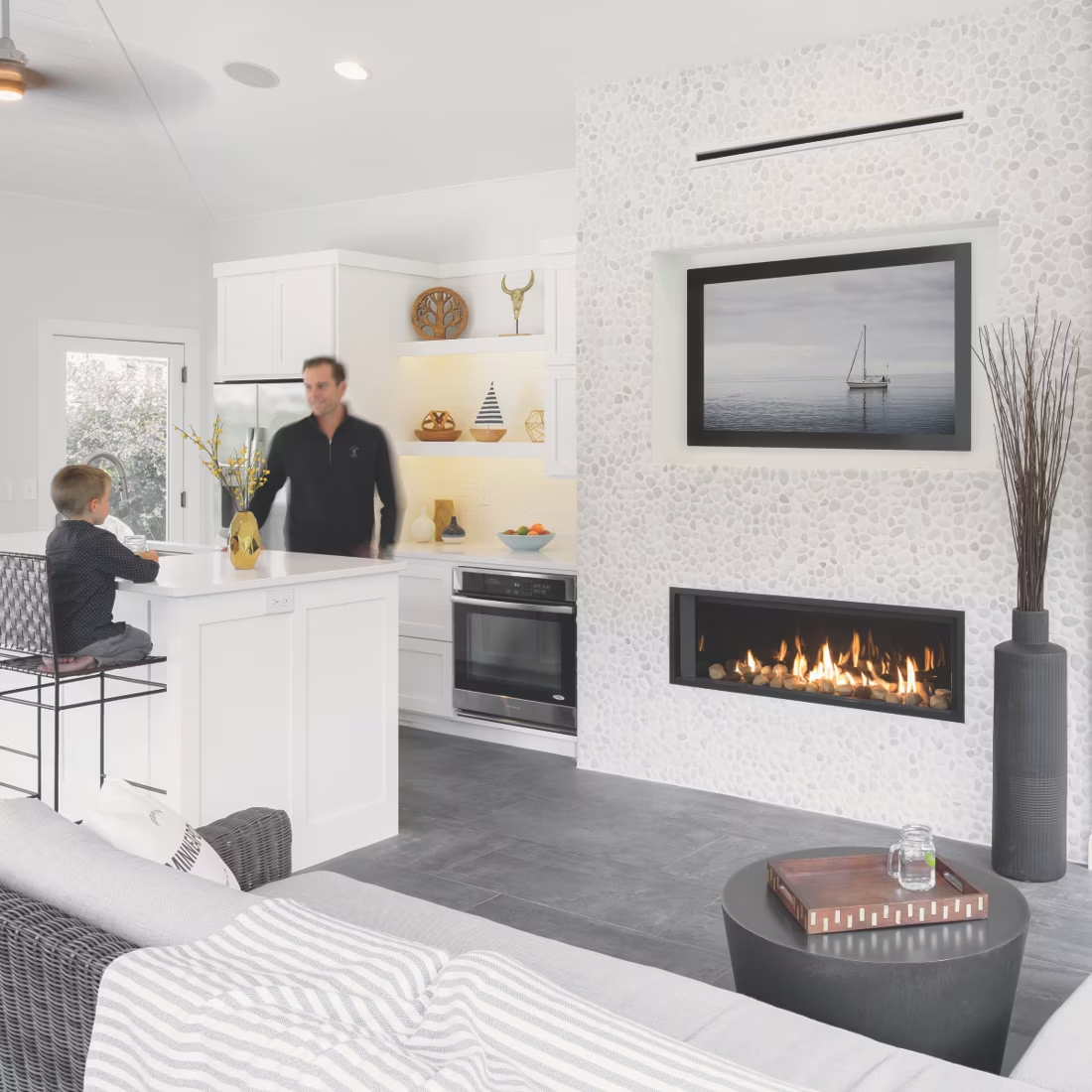
Yes—with an asterisk. Fireplaces are hot and TVs don't like heat. Either put a mantel between them to deflect rising warmth, or choose a fireplace with heat-management technology that creates a cool zone on the wall above—the wall stays around 125 degrees, barely warm, while the room still gets full heat. If you like clean lines and don't want a mantel, heat management is the answer.
Why is my open fireplace making my house colder?
Open fireplaces suck—literally. As the fire burns, it consumes air your furnace already paid to heat and pulls it out through the chimney, so the house is actually colder after the fire goes out than before you lit it. An insert fixes this: it seals the chimney, puts fixed glass across the front, and turns that hole in your house into a real heat source.
What is an in-home preview and do I need one?
It's a visit where a hearth professional measures your space, confirms the model you picked actually works in your home, and walks the specs—framing, gas line, venting, finish work—before anything is ordered. Some details you just can't know until you see the house. Never make a down payment without one; it's the single most-skipped step that burns buyers.
Can I install a fireplace myself?
If you're putting a fire in your house on purpose, it's best to work with an expert. Unless you're genuinely experienced in framing, gas line, vent pipe, and the national code on clearances to combustibles, have a professional do it—and ideally the same company that sells you the fireplace, so warranty, service, and liability all live under one roof.
Stove and Fireplace Dealers in Spokane County
Listings include WhyFire partner dealers, dealers we have verified as authorized for the brands we recommend, and established local businesses that carry hearth products. Every listing shows which one it is. The ones marked Preferred run on WhyFire's software, so they can show you real pricing and book your appointment right here. No manufacturer pays for placement. How we verify dealers →
Accent Stove & Spa
Tri State Distributors
Wing Stoves & More
Copper Creek Landscaping, Inc
Rock Creek
Lake Creek Comfort Systems
Get your Spokane County gas fireplace Project Guide & Parts List.
Tell me about your home and I'll match you with a trusted local dealer serving Spokane County, plus a free Project Guide & Parts List—the exact components, including the vent kit, and the dealer best suited to install it.
Find Your Fireplace →