
Warm, Clean Heat for South Hill Winters.
South Hill's winters are mild and wet rather than brutal, which makes gas one of the most practical heat sources in the Puyallup Valley. Find the right fireplace or insert and get matched with a trusted local dealer.
Every Project Starts From One of These Five Situations
Steady Heat for Puget Sound Living.
South Hill sits at about 542 feet in Pierce County between Puyallup and Frederickson, in a climate zone (4C) where winter lows average a relatively mild 33°F and the winter heating season adds up to a moderate load over the year—nowhere near the extremes of the Cascades or eastern Washington, but still enough steady damp cold from November through March to make supplemental heat worth having. The area has grown fast, with a population now past 67,000 and new subdivisions still filling in between older 1970s and '80s ranch-style homes, which means a wide mix of housing stock—some with existing masonry fireplaces ready for a gas insert, plenty of newer builds framed for direct-vent units from the start.
Puget Sound Energy serves electric and natural gas across much of South Hill's established neighborhoods, while some of the newer developments toward the edges of Pierce County still rely on propane until gas mains catch up with construction. Either way, gas fireplaces have become a common choice here for a simple reason: they deliver instant, even heat without the smoke output that becomes a real concern during late-summer wildfire smoke events, when the Puget Sound Clean Air Agency issues advisories and burning wood outdoors or indoors is discouraged. A gas fireplace also holds up well through the windstorms that periodically knock out power across the South Hill Plateau, especially when paired with a battery-backup or self-powered ignition system.
Three steps. No salesperson until you're ready.
Tell us about your project
Your zip code, your situation, and the fuel you're leaning toward—or let the answers point you to one.
See what's actually available
The brands dealers within 100 miles genuinely carry—real options, never a catalog mirage.
Get your dealer & Project Guide
A trusted local dealer, plus the free Project Guide & Parts List that names every component of the job.
Frequently Asked Questions
How much does a gas fireplace installation cost in South Hill?
Most gas fireplace installations in South Hill fall between $4,000 and $10,000. A direct-vent gas insert dropped into an existing masonry fireplace—common in the older ranch homes around South Hill and Puyallup—tends to land on the lower end when a gas line is already nearby. A new built-in gas fireplace for a remodel or new-construction home, where framing, venting, and a fresh gas line all have to be run, sits toward the middle to upper end. Homes outside Puget Sound Energy's natural gas footprint that need a propane tank set and line run typically add another $1,500 to $3,000. A local retailer can give a firm number after seeing your chimney or framing in person.
Can I convert my existing wood fireplace to gas?
Yes, and it's one of the most requested projects among South Hill homeowners with an older masonry fireplace. A gas insert slides into the existing firebox and vents through a stainless liner run up the same chimney, so you keep the look of the fireplace but gain real, controllable heat output. In South Hill this project usually runs $4,000 to $8,500 depending on the insert and whether the home is already on Puget Sound Energy's natural gas line or needs to run off propane. It's a popular upgrade for the area's older 1970s and '80s homes where the original open-hearth fireplace was more decorative than functional.
Do I need natural gas, or does propane work in South Hill?
Both are used here. Puget Sound Energy runs natural gas mains through much of South Hill's established residential areas, so if your home already has gas service for a water heater or range, adding a fireplace is a straightforward tie-in. Homes in newer developments on the outer edges of the South Hill Plateau, where gas infrastructure hasn't fully caught up with construction, typically run on propane instead, with a tank set by a local propane supplier. Nearly every gas fireplace model on the market can be configured for either fuel—your installer sets the correct orifice and regulator for whichever you have.
Will my gas fireplace still work if the power goes out?
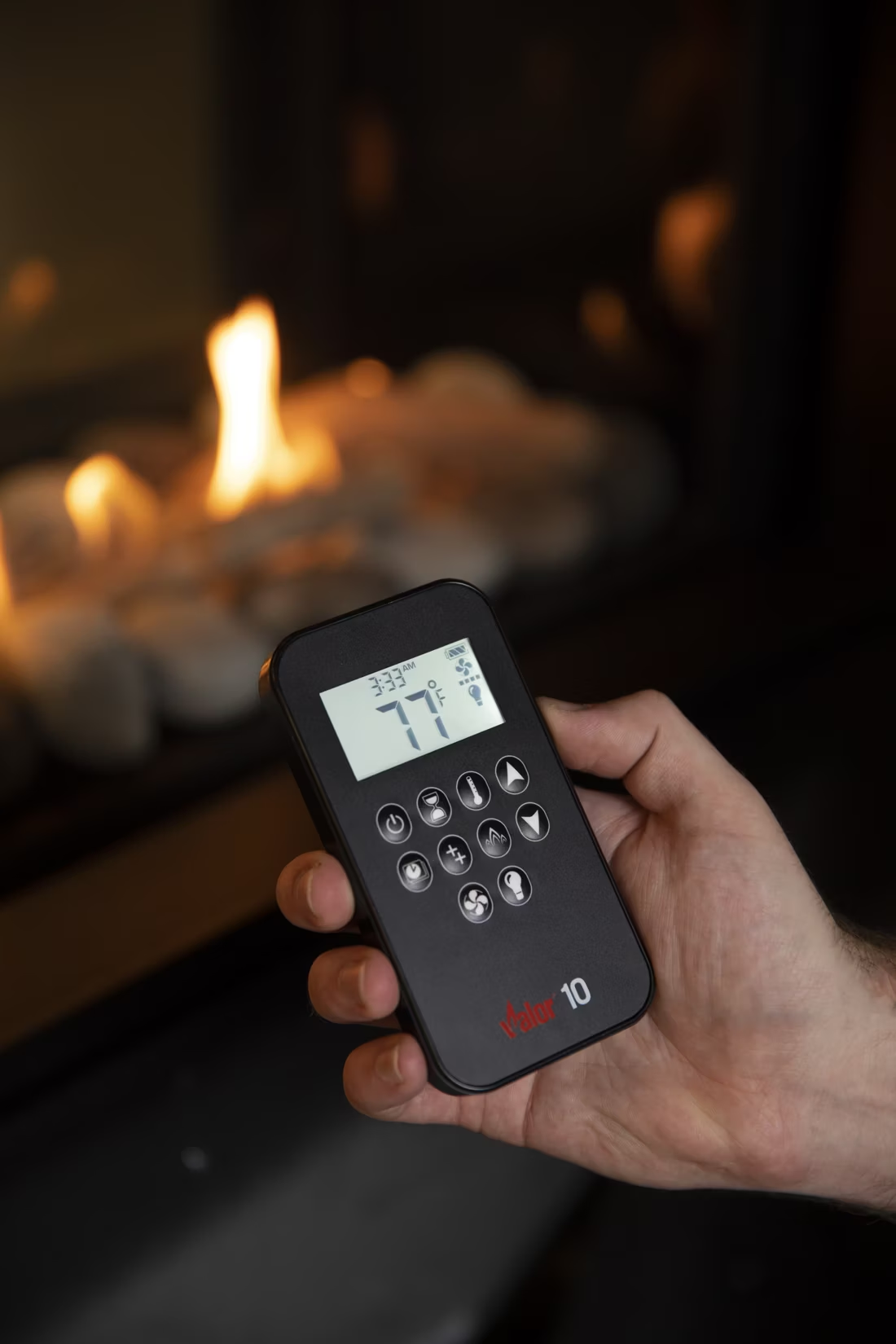
Most will, with the right ignition system. Gas fireplaces with intermittent pilot ignition (IPI) include a small battery backup that takes over automatically when utility power drops, so the fireplace still lights on demand. That matters in South Hill, where fall and winter windstorms coming off the Sound regularly knock down branches from the area's Douglas fir stands and interrupt power for hours at a time. Valor fireplaces take a different approach: their pilot assembly generates its own electricity through a thermocouple, so there are no batteries to remember at all. Ask your local retailer which ignition system a given model uses before you buy.
What's the difference between a gas fireplace, gas insert, and gas stove?
A gas fireplace is a fully built-in unit installed into a framed wall opening—the standard choice for new construction and larger remodels going into South Hill's newer subdivisions. A gas insert is sized to slide into an existing masonry firebox, using the existing chimney as its vent chase, which makes it the natural fit for older homes around South Hill and Puyallup that already have a wood-burning fireplace. A gas stove is a freestanding cabinet unit that sits on the floor like a wood stove but runs on gas—a good option for a room with no existing fireplace and no interest in framing one in. Most homeowners with an older fireplace choose an insert; most new-construction buyers choose a built-in fireplace.
Do I need a permit to install a gas fireplace in South Hill?
Yes. Since South Hill is unincorporated Pierce County, permits go through the Pierce County Planning and Public Works Building Division rather than a city hall, and both a building permit and a gas piping permit are typically required for a new installation. The gas line portion has to be run or inspected by a licensed gas fitter. Most established hearth retailers in the South Hill and Puyallup area handle the permit filing and inspection scheduling as part of the installation, so it isn't something you have to coordinate yourself.
Are vent-free gas fireplaces allowed in South Hill?
Washington's state building and energy codes place tight restrictions on unvented (vent-free) gas appliances, and Pierce County enforces those same limits—which is why the overwhelming majority of gas fireplaces installed in South Hill are sealed-combustion, direct-vent units that draw outside air and exhaust combustion byproducts back outdoors. Direct-vent models are also simply a better fit for the area's damp climate, since they don't add extra humidity or combustion gases to the indoor air the way a vent-free unit would. If you're comparing options, ask your local retailer to confirm which models are actually approved for installation in Pierce County before you fall in love with a specific unit.
What size gas fireplace do I need for a South Hill home?
South Hill's climate is milder than most of Washington's interior—winter lows average around 33°F and the area sees a moderate winter heating load overall, well short of what homes east of the Cascades deal with. That means most South Hill homeowners are sizing a gas fireplace for supplemental zone heat and ambiance rather than as a primary whole-house heat source, so mid-range units in the 20,000–30,000 BTU range are common for a typical great room or living area. Larger or more open-concept homes in the newer South Hill developments sometimes call for a higher-output unit or a second zone. A local retailer will size the unit to your actual square footage and insulation level during an in-home visit rather than relying on a generic chart.
How often does a gas fireplace need to be serviced?
Plan on an annual inspection, ideally in early fall before you start using it regularly through the wet Puget Sound winter. A qualified technician checks the burner, pilot assembly, venting, and gas connections, and cleans the glass and interior—a much lighter lift than a wood-stove chimney sweep, but still important, since a cracked seal or degraded gasket on a direct-vent unit can let combustion gases leak into the room. Local gas appliance service providers in the South Hill and Puyallup area typically charge in the $150–$250 range for a standard annual service call.
Is my gas fireplace wasting gas?
If it was installed more than 15 years ago, probably. Older gas fireplaces keep a standing pilot light burning all the time, and that little flame can cost a couple hundred dollars a year. Newer models use pilot-on-demand ignition—the pilot lights only when you use the fireplace and goes out when you turn it off.
Can I put a TV above my fireplace?
Yes—with an asterisk. Fireplaces are hot and TVs don't like heat. Either put a mantel between them to deflect rising warmth, or choose a fireplace with heat-management technology that creates a cool zone on the wall above—the wall stays around 125 degrees, barely warm, while the room still gets full heat. If you like clean lines and don't want a mantel, heat management is the answer.
What is an in-home preview and do I need one?
It's a visit where a hearth professional measures your space, confirms the model you picked actually works in your home, and walks the specs—framing, gas line, venting, finish work—before anything is ordered. Some details you just can't know until you see the house. Never make a down payment without one; it's the single most-skipped step that burns buyers.
How much should I budget for a fireplace?
For an average home—covering the fireplace, the vent pipe, and basic installation—a budget between $3,900 and $5,500 gives you a lot of options across wood, gas, and pellet. By the time you add finish work, gas line, and electrical, the average complete installation lands between $5,000 and $12,000 all-in. In a remodel or new build, a good rule is to put about 2.5% of the total project cost toward the fireplace.
Nearby Dealers
Hearth shops serving South Hill and the surrounding area.
Find your gas fireplace in South Hill.
Tell us about your home and we'll match you with a trusted local South Hill dealer and send over a free Project Guide & Parts List—the exact parts, vent kit, and recommended installer for your gas fireplace project.
Find Your Fireplace →