
Effortless warmth for Snoqualmie Valley homes.
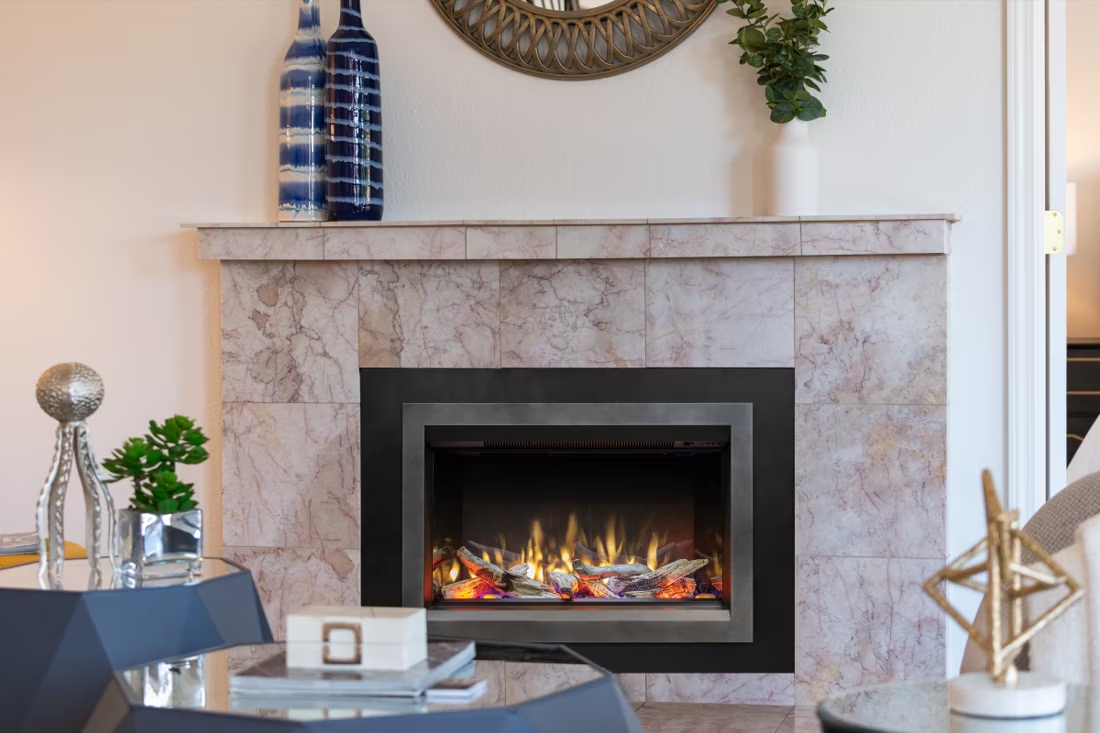
No chimney, no gas line, no wood smoke—just clean, flip-a-switch heat that fits the mild Cascade foothills climate. Find the right unit and get matched with a trusted local dealer.
Every Project Starts From One of These Five Situations
A mild climate and a hydro-powered grid.
Snoqualmie sits at 454 feet in the Cascade foothills east of Seattle, where winters are mild and wet rather than brutally cold—average winter lows hover around 36°F and the city has a comparatively light winter heating load each year, a fraction of what inland cold-climate towns like Bozeman, Montana or Fargo, North Dakota see. That milder heating load is exactly the profile where electric fireplaces perform best: supplemental, on-demand warmth in a family room or bonus space rather than a primary furnace replacement.
It also helps that the grid serving Snoqualmie is largely hydroelectric, so an electric fireplace's operating cost and carbon footprint both stay low—residential rates through Puget Sound Energy run about $0.1463 per kWh. Newer developments around Snoqualmie Ridge, along with homes served by Tanner Electric Cooperative in the surrounding unincorporated area, increasingly skip gas hookups altogether, and regional air quality concerns around wildfire smoke have pushed many households away from wood burning entirely. An electric unit sidesteps both issues: no venting, no chimney permit, and no smoke to manage.
Three steps. No salesperson until you're ready.
Tell us about your project
Your zip code, your situation, and the fuel you're leaning toward—or let the answers point you to one.
See what's actually available
The brands dealers within 100 miles genuinely carry—real options, never a catalog mirage.
Get your dealer & Project Guide
A trusted local dealer, plus the free Project Guide & Parts List that names every component of the job.
Frequently Asked Questions
How much does it cost to install an electric fireplace in Snoqualmie?
Electric fireplaces are the least expensive hearth product to install because there's no chimney, gas line, or venting involved. A plug-in insert or freestanding unit that uses a standard household outlet typically runs $200 to $600 installed, including a hearth pad or surround if needed. A built-in electric fireplace with a custom mantel or wall surround—the more common choice in newer Snoqualmie Ridge construction—runs $1,500 to $4,000, with most of that cost in cabinetry and finish work rather than the unit itself. If the fireplace needs a dedicated 20-amp circuit, add $200 to $500 for a licensed electrician to run it.
What type of electric fireplace works best for a Snoqualmie home?
For most homes here, it comes down to whether you're retrofitting an existing space or building new. A freestanding electric stove or insert drops into an existing masonry fireplace opening or a bookshelf niche with no structural work. A built-in, wall-mounted unit is more common in newer construction around Snoqualmie Ridge, where builders frame a recessed opening specifically for it. Because our winters rarely demand serious heat output—average lows sit around 36°F—most local buyers prioritize flame appearance and room ambiance over raw BTU output, which opens up more design-forward options than you'd consider in a colder climate.
Does an electric fireplace actually heat a room, or is it just for looks?
Most electric fireplaces put out around 4,600–5,200 BTU on the high setting—enough to noticeably warm a single room (roughly 400 square feet) as supplemental heat, but not enough to replace a furnace or heat pump. Given Snoqualmie's mild winter average lows around 36°F, that's usually plenty for a family room, bonus room, or converted garage space. If you're trying to heat a larger open-concept space or a whole floor, talk to a local dealer about a higher-output model or reconsider whether a gas unit is a better fit.
Electric vs. gas fireplace—which makes more sense in Snoqualmie?
Gas is the better choice if you want a fireplace to function as a real secondary heat source during a Pacific Northwest windstorm power outage, and natural gas service through Puget Sound Energy is available through much of the city. Electric is the better choice if you want the lowest install cost, zero venting, and flexibility to put a fireplace almost anywhere in the house—including rooms with no gas line access, like a basement bonus room or a condo unit. A growing number of newer Snoqualmie Ridge homes are built without gas service at all, which naturally pushes homeowners toward electric or heat-pump-based systems. If backup heat during an outage matters to you, factor that in, since electric units go dark along with everything else on the circuit.
Do I need a permit to install an electric fireplace in Snoqualmie?
A plug-in unit that uses an existing outlet doesn't require a permit. If your installation needs a new dedicated circuit—common for built-in units pulling more than 1,500 watts—that electrical work needs to be pulled by a licensed electrician and permitted through the City of Snoqualmie Building Department, or through King County's Department of Permitting and Environmental Review if you're in one of the unincorporated pockets served by Tanner Electric Cooperative. There's no chimney or gas-line inspection to worry about, which is one reason electric installs move faster than wood or gas projects.
What does it cost to run an electric fireplace in Snoqualmie?
At the local residential rate of about $0.1463 per kWh through Puget Sound Energy, a typical 1,500-watt electric fireplace running on high heat costs roughly 22 cents an hour. Most owners run the flame effect alone—without the heater engaged—for ambiance, which draws only 30 to 50 watts and costs a fraction of a cent per hour. Compared to running a space heater or letting a heat pump work overtime in a chilly room, an electric fireplace is a genuinely cheap way to take the edge off on a cool Snoqualmie evening.
What about wood or pellet stoves in Snoqualmie?
They're uncommon here, and for good reason. Snoqualmie's mild, wet climate and moderate heating load don't create much demand for wood as a primary heat source, and regional air quality concerns around wildfire smoke have made many Puget Sound-area homeowners cautious about adding another smoke source. If you're set on burning wood, Douglas fir, red alder, and lodgepole pine are the common species in the area, and cutting permits through Mt. Baker-Snoqualmie National Forest or Olympic National Forest run $5 to $20 per cord during the May-through-October season—but very few local dealers stock wood stoves for a Snoqualmie install, and most homeowners land on gas or electric instead.
Who provides electric service in Snoqualmie, and does it matter for my fireplace?
Puget Sound Energy serves most of the city, with Tanner Electric Cooperative covering pockets of the surrounding unincorporated King County area toward Fall City and North Bend. For a plug-in fireplace, your provider doesn't change anything about installation. It matters more for a built-in unit needing a new circuit—your electrician will pull permits and coordinate any meter or panel questions with whichever utility serves your specific address, since panel capacity and service specs can vary slightly between PSE and Tanner Electric territory.
Will my electric fireplace work during a power outage?
No—and this is worth planning around if you live in Snoqualmie, where Pacific Northwest windstorms regularly knock out power for hours or, in bad years, days. An electric fireplace goes dark the moment the power does, along with your furnace fan and most heat pumps. If reliable heat during an outage matters to you, consider pairing an electric fireplace (for everyday ambiance and low-cost supplemental heat) with a gas fireplace or wood stove elsewhere in the home as a genuine backup—a combination several local dealers in the area are used to designing around.
Can I put a TV above my fireplace?
Yes—with an asterisk. Fireplaces are hot and TVs don't like heat. Either put a mantel between them to deflect rising warmth, or choose a fireplace with heat-management technology that creates a cool zone on the wall above—the wall stays around 125 degrees, barely warm, while the room still gets full heat. If you like clean lines and don't want a mantel, heat management is the answer.
Do electric fireplaces actually produce heat?
Yes—most put out around 4,800–5,000 BTUs from a standard outlet, which comfortably warms a bedroom, office, or den as a comfort-zone heater. What they won't do is carry a whole house the way wood, gas, or pellet can. Think of electric as ambiance-first with honest supplemental heat: flames on with no heat in July, flames plus warmth in January.
How much should I budget for a fireplace?
For an average home—covering the fireplace, the vent pipe, and basic installation—a budget between $3,900 and $5,500 gives you a lot of options across wood, gas, and pellet. By the time you add finish work, gas line, and electrical, the average complete installation lands between $5,000 and $12,000 all-in. In a remodel or new build, a good rule is to put about 2.5% of the total project cost toward the fireplace.
Can I install a fireplace myself?
If you're putting a fire in your house on purpose, it's best to work with an expert. Unless you're genuinely experienced in framing, gas line, vent pipe, and the national code on clearances to combustibles, have a professional do it—and ideally the same company that sells you the fireplace, so warranty, service, and liability all live under one roof.
Nearby Dealers
Hearth shops serving Snoqualmie and the surrounding area. Every listing shows whether it is a WhyFire partner, a dealer we have verified as authorized for the brands we recommend, or a local business carrying hearth products. No manufacturer pays for placement. How we verify dealers →
Good Earth Works
Rich’s Woodstoves & Spas
Aqua Quip
Rich's Stoves & Spas
Kirkland Fireplace
Rich's For The Home
Chimney And Fireplace Solutions
Cressy Door & Fireplace
Dowell Company
Rcs Fireplace
Fireside Hearth & Home-Auburn
Economy Wiring
Pristine Sweeps
Sundance Energy Services, Inc.
Electric Service in Snoqualmie
An electric fireplace's heater draws about 1,500 watts—pennies per hour at local rates.
Puget Sound Energy Inc
City Of Milton - (Wa)
Tanner Electric Coop
Find your electric fireplace in Snoqualmie.
Tell us about your space and we'll put together a free Project Guide & Parts List—the right electric fireplace or insert for your home, with a recommended local Snoqualmie-area dealer to install it.
Find Your Fireplace →