
Warm, Clean Heat for Shelton's Wet Pacific Northwest Winters.
Shelton doesn't have natural gas service, so most gas heat here runs on propane. I'll match you with a trusted local dealer who knows tank setup, venting, and permits—and hands you a free plan for the project.
Every Project Starts From One of These Five Situations
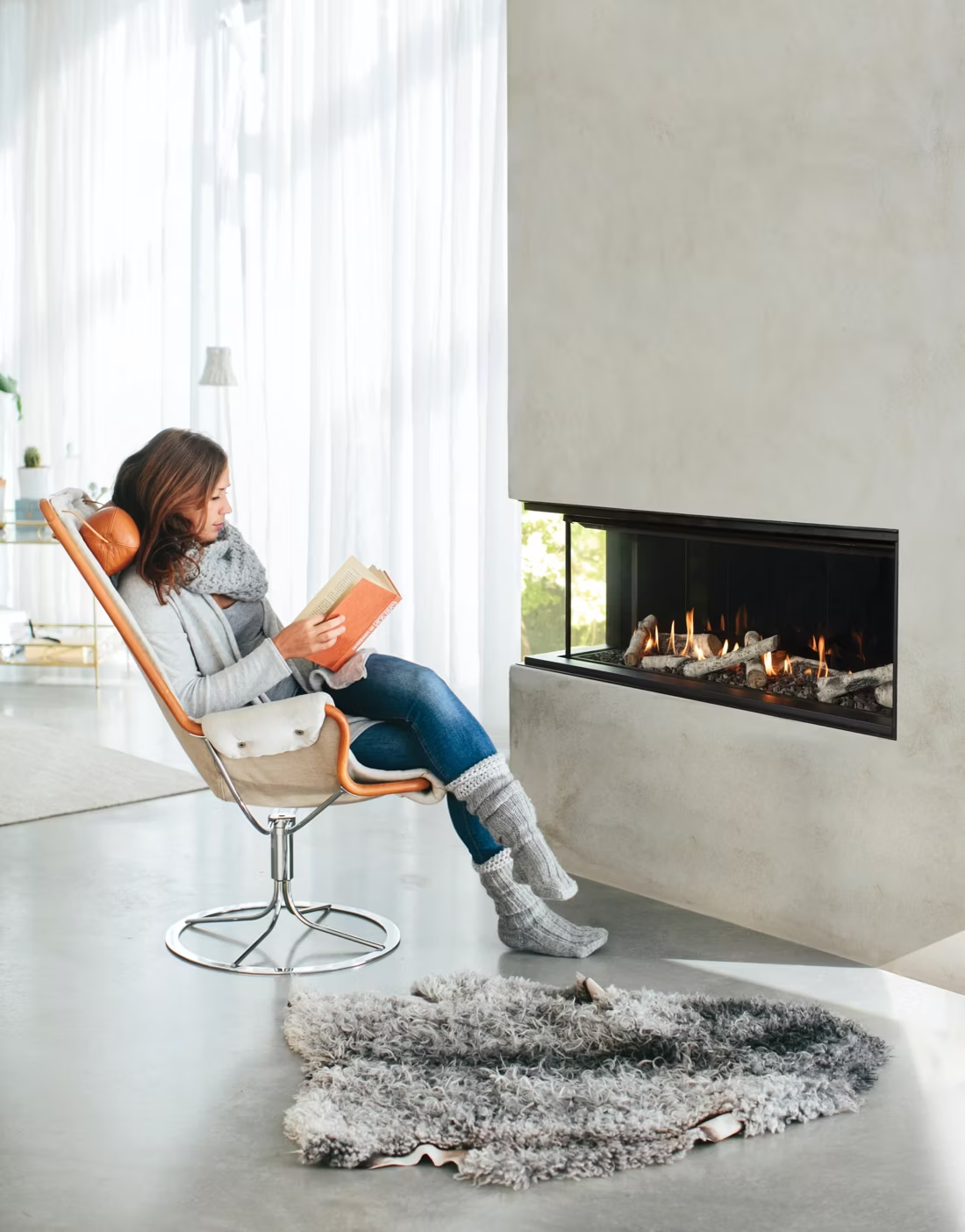
Reliable warmth without splitting kindling.
Shelton sits at just 197 feet in the southern reaches of the Olympic Peninsula, in a marine climate zone (4C) where winter lows average a mild 34°F and the heating season adds up to a moderate overall load for the year. That's a fraction of what a continental winter town like Duluth, MN sees, but the tradeoff is months of persistent Puget Sound damp—gray, wet, chilly days from October through April that make a quick-cycling heat source more useful than a whole-house furnace running nonstop.
There's no municipal natural gas line into Shelton, so gas fireplaces here almost always mean propane, delivered by regional suppliers and stored in an on-site tank. Mason County is heavily timbered—Douglas fir, red alder, and lodgepole pine cover the hills around town, and plenty of longtime residents still burn wood. But propane appeals for a different reason: instant heat with no ash, no chimney sweep, and in a county served by PUD No. 3 of Mason County where windstorms regularly drop trees across power lines, a propane fireplace with battery backup keeps a room warm when the grid doesn't.
Three steps. No salesperson until you're ready.
Tell us about your project
Your zip code, your situation, and the fuel you're leaning toward—or let the answers point you to one.
See what's actually available
The brands dealers within 100 miles genuinely carry—real options, never a catalog mirage.
Get your dealer & Project Guide
A trusted local dealer, plus the free Project Guide & Parts List that names every component of the job.
Frequently Asked Questions
How much does a gas or propane fireplace installation cost in Shelton?
Most propane fireplace and insert installations in Shelton run $4,500 to $10,000, with the spread driven mostly by whether you already have a propane tank on the property. Homes with an existing tank and regulator just need the appliance, venting, and gas line run to the hearth—that's the lower end. New construction or a first-time propane setup adds the cost of a tank (leased or purchased from a regional supplier) plus the buried or above-ground line to the house, which can push the project toward the higher end. A local dealer will walk your property before quoting anything firm.
Can I convert my existing wood fireplace to gas in Shelton?
Yes, and it's a common project in Shelton's older homes near downtown and along the Oakland Bay waterfront. A propane insert typically drops into your existing masonry firebox with a stainless liner run up the current chimney, so you keep the same footprint and mantel. Expect $4,000 to $8,500 depending on the insert and whether the property already has a propane tank and line in place. If you're starting from a wood-burning setup with no gas infrastructure at all, factor in the tank and line work on top of the insert cost.
Do I need natural gas, or does everyone in Shelton use propane?
Propane is the standard here—Shelton has no piped natural gas utility, so nearly every gas fireplace in Mason County runs on propane from a tank, either leased or purchased through a regional supplier. If you already heat your water or range with propane, adding a fireplace usually just means tapping into the existing line and tank size (or upsizing the tank if it's near capacity). Your local dealer can tell you whether your current tank has enough headroom or whether the supplier needs to swap it for a larger one.
Will my propane fireplace still work if the power goes out?
For most models, yes. Mason County's tree-lined power lines mean PUD No. 3 outages aren't rare during fall and winter windstorms, and this is exactly where a propane fireplace earns its keep. Units with IPI (intermittent pilot ignition) run on AA battery backup that kicks in automatically when the grid drops, so the fireplace lights on demand just like normal. Valor units go a step further—their pilot generates its own electricity through the thermocouple, so there are no batteries to remember at all. Ask your dealer about the ignition system on any model you're considering if outage performance matters to you.
What's the difference between a gas fireplace, gas insert, and gas stove?
A gas fireplace is a fully built-in unit framed into a wall—the right call for new construction or a remodel without an existing hearth. A gas insert slides into an existing masonry firebox and uses the current chimney as its vent path, which suits many of Shelton's older homes with a working wood fireplace they'd rather not tend anymore. A gas stove is a freestanding cast-iron or steel unit that sits on its own hearth pad, useful in a room with no existing fireplace and no interest in framing one in. Most Shelton homeowners converting from wood go with an insert.
Do I need a permit to install a gas fireplace in Shelton?
Yes—Mason County Community Development requires a building permit for the fireplace installation and, separately, permitting tied to the propane tank placement if you're adding or upsizing one, since LP tanks have required setback distances from structures, property lines, and ignition sources under the fire code. Most established hearth dealers coordinate this directly with the propane supplier and the county, so you're not stuck managing two separate permit processes yourself.
Vented vs. vent-free propane fireplaces—which is right for a Shelton home?
Vented (direct-vent) units draw combustion air from outside and exhaust it back outside through a sealed pipe—they're the standard choice and deliver real heat output without touching indoor air quality. Vent-free units burn directly into the room and are legal in Washington within specific room-size and ventilation limits, but they release moisture and combustion byproducts indoors. In a climate as damp as Shelton's, adding more moisture to a room is rarely a plus, and on the handful of late-summer days when wildfire smoke already has the air quality index elevated here, most homeowners prefer a fireplace that doesn't add anything to the indoor air. Direct-vent is what nearly every local dealer installs by default.
How often should a propane fireplace be serviced?
Plan on an annual inspection, ideally in late summer or early fall before the wet season sets in. A qualified technician checks the burner, pilot assembly, gas connections, and venting, and cleans the glass and interior—a quick job compared to wood chimney sweeping, but it matters for safety and keeps the warranty valid. Local gas appliance service providers typically charge $150 to $250 for this visit.
Propane vs. wood—which makes more sense for a Shelton home?
Wood is genuinely cheap here—Mason County sits between Olympic National Forest and Mt. Baker-Snoqualmie National Forest, both issuing cutting permits for $5 to $20 per cord during the May-to-October season, and Douglas fir, red alder, and lodgepole pine are all common and split easily. Wood also keeps working with zero power, which matters when PUD 3 lines go down. Propane wins on convenience: no splitting, no ash, no chimney sweep, and no smoke on the wildfire-smoke days when local air quality already takes a hit each summer. Plenty of Shelton homes run both—wood in a shop or detached space, propane in the main living area for everyday use.
Why is a fireplace insert so efficient?
An insert does two things: it seals the chimney completely, so you stop losing air you already paid to heat, and it radiates warmth into the room through the firebox and glass. Most add a heat-exchange fan that pulls cool room air underneath, wraps it around the hot firebox, and pushes it back out warm. Your home is more efficient before you've even lit the first fire.
Why is my open fireplace making my house colder?
Open fireplaces suck—literally. As the fire burns, it consumes air your furnace already paid to heat and pulls it out through the chimney, so the house is actually colder after the fire goes out than before you lit it. An insert fixes this: it seals the chimney, puts fixed glass across the front, and turns that hole in your house into a real heat source.
Can I install a fireplace myself?
If you're putting a fire in your house on purpose, it's best to work with an expert. Unless you're genuinely experienced in framing, gas line, vent pipe, and the national code on clearances to combustibles, have a professional do it—and ideally the same company that sells you the fireplace, so warranty, service, and liability all live under one roof.
What is an in-home preview and do I need one?
It's a visit where a hearth professional measures your space, confirms the model you picked actually works in your home, and walks the specs—framing, gas line, venting, finish work—before anything is ordered. Some details you just can't know until you see the house. Never make a down payment without one; it's the single most-skipped step that burns buyers.
Nearby Dealers
Hearth shops serving Shelton and the surrounding area. Every listing shows whether it is a WhyFire partner, a dealer we have verified as authorized for the brands we recommend, or a local business carrying hearth products. No manufacturer pays for placement. How we verify dealers →
Olympic Stove & Spa, Inc.
Find your gas fireplace in Shelton.
Tell us about your home and your existing propane setup, and I'll match you with a trusted local Shelton dealer plus a free Project Guide & Parts List—the exact parts, vent kit included, for your specific installation.
Find Your Fireplace →