
Heat your home without waiting on a burn ban.
Selah's winter inversions bring frequent air-quality burn bans—electric heat keeps working when wood and pellet stoves can't. Find the right unit and connect with a trusted local dealer.
Every Project Starts From One of These Five Situations
The one fireplace fuel a burn ban can't touch.
Selah sits in the Yakima Valley at 1,292 feet, tucked against Selah Gap and the surrounding ridges that trap cold air and smoke through the winter months. With an average winter low of 22°F and a long, demanding heating season, the valley sees a real heating season—but its geography works against burning fuel. Winter inversions settle over the valley for days at a time, and the Yakima Regional Clean Air Agency regularly issues Stage 1 and Stage 2 burn bans that restrict wood stoves and, in many cases, pellet stoves right along with them.
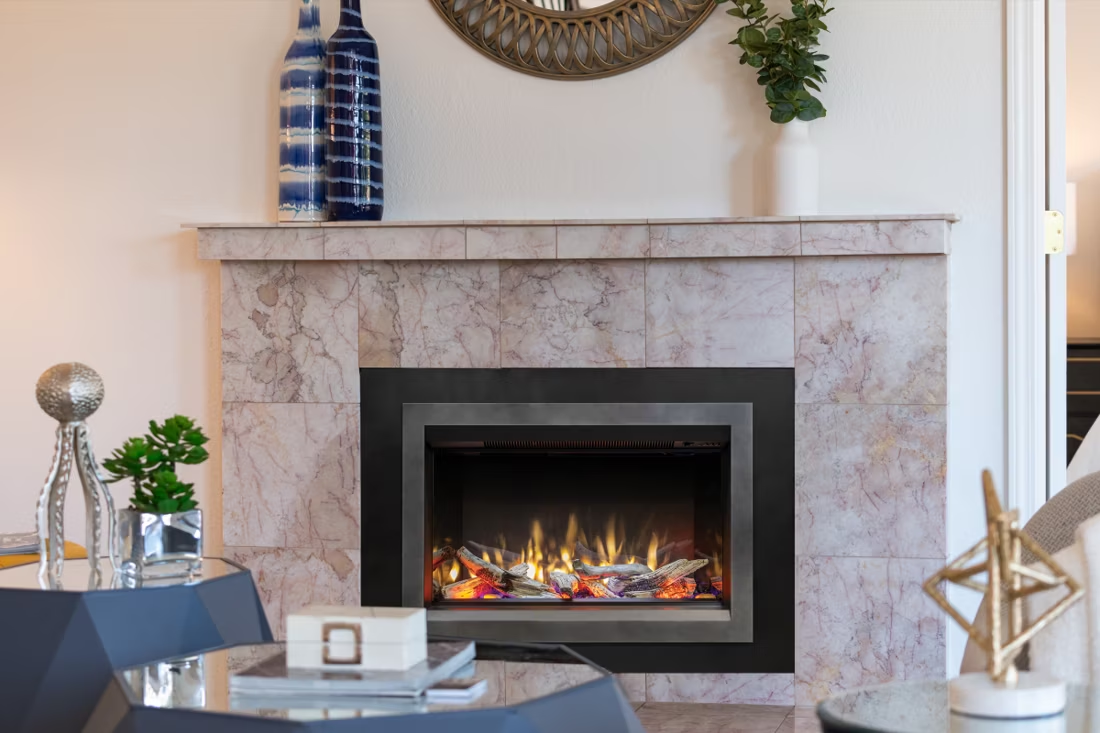
That's part of why electric fireplaces and inserts are the standard, no-compromise choice for Selah homeowners who want supplemental heat they can count on regardless of the day's air quality advisory. There's no chimney, no venting, and no combustion byproducts to worry about—just plug it in or wire it to a dedicated circuit and it runs. With PacifiCorp serving as the local utility at a residential rate around $0.1252 per kWh, running an electric fireplace for zone heating in a bedroom or living room is inexpensive compared to heating the whole house, and installation costs are a fraction of what a vented gas or wood system requires.
Three steps. No salesperson until you're ready.
Tell us about your project
Your zip code, your situation, and the fuel you're leaning toward—or let the answers point you to one.
See what's actually available
The brands dealers within 100 miles genuinely carry—real options, never a catalog mirage.
Get your dealer & Project Guide
A trusted local dealer, plus the free Project Guide & Parts List that names every component of the job.
Frequently Asked Questions
How much does an electric fireplace installation cost in Selah?
Electric fireplace installation in Selah typically falls into two tiers. Plug-in freestanding units or wall-mount models that use a standard 120V/15-amp outlet run $200-$800 including the unit itself, since there's no venting or gas line to install. Built-in electric fireplaces or inserts that need a dedicated 20-amp circuit run higher—typically $800-$2,500—once you factor in a licensed electrician to run new wiring and a local installer to frame and finish the surround. Compare that to the vented gas installs common on the west side of the Cascades, which often run $4,500 and up, and electric is by far the lower-cost entry point for Selah homes.
Do electric fireplaces work during Yakima Valley winter burn bans?
Yes. The Yakima Regional Clean Air Agency issues burn bans during winter inversions when smoke and particulates get trapped against the valley walls near Selah Gap—a regular occurrence given the area's geography and long, demanding heating season. Stage 1 bans restrict uncertified wood stoves, and Stage 2 bans restrict all wood and pellet-burning devices, including EPA-certified units, unless it's someone's sole source of heat. Electric fireplaces have no combustion and are exempt from burn ban restrictions entirely, which is why they've become the reliable backup—and often primary—supplemental heat source for many households here.
Do I need a permit to install an electric fireplace in Selah?
It depends on the unit. A plug-in freestanding or wall-mount electric fireplace that uses an existing outlet typically doesn't require a permit. A built-in unit or insert that needs new wiring or a dedicated circuit does require an electrical permit through the City of Selah or Yakima County, depending on your address, and the work needs to be done by a licensed electrician. Most local dealers coordinate this as part of the installation, so you're not left tracking down the permit yourself.
Why is wood heat less common for new installations in Selah?
Wood is technically legal to burn in Selah, but the valley's persistent winter inversions make it an unreliable primary heat source. Ponderosa pine, lodgepole pine, and Douglas fir are all available through Okanogan-Wenatchee National Forest cutting permits ($5-$20 per cord, May through October season), but a Stage 2 burn ban can shut down your wood stove for days at exactly the moment you need heat most. That trade-off is why new wood stove installations have become rare in Selah—most homeowners who want dependable heat during inversion season choose electric instead.
Electric vs. pellet—why don't more Selah homes use pellet stoves?
Pellet stoves face the same Stage 2 burn ban restrictions as wood stoves in Selah during inversion events, and dealer support for pellet appliances is thinner here than in higher-elevation Cascade communities where pellet heat is more common. Regional brands like Bear Mountain, Lignetics, and Pacific Pellet are available through Yakima-area suppliers, but between the burn ban exposure and the added cost of venting and hopper maintenance, most Selah homeowners looking for hassle-free supplemental heat land on electric instead.
How much does it cost to run an electric fireplace with PacifiCorp rates?
A typical 1,500-watt electric fireplace running at PacifiCorp's residential rate of $0.1252 per kWh costs about 19 cents an hour to run at full output—roughly $4.50 for a full 24 hours, though most households only run their unit a few hours an evening for zone heating rather than around the clock. Compare that to what it would cost to heat the same room with central electric resistance heat, and a fireplace insert or wall-mount unit used for targeted heating in the room you're actually using is usually the more efficient choice.
What size electric fireplace do I need for my Selah home?
Most electric fireplace sizing in Selah comes down to the room, not the whole house, since these units are typically used for supplemental zone heat rather than replacing a furnace. A compact wall-mount or freestanding unit (1,000-1,400 watts) handles a bedroom or den. A larger built-in insert or mantel unit (1,500 watts, the standard max for a single circuit) can comfortably supplement a living room in one of Selah's many single-story ranch or manufactured homes. If you're trying to heat more than one room, you're better off with two smaller units on separate circuits than one oversized unit.
Does my electric fireplace need a dedicated circuit?
Units drawing close to the standard 1,500-watt maximum—which includes most built-in inserts and larger mantel-style fireplaces—should be on their own dedicated 20-amp circuit rather than sharing an outlet with other household loads. Smaller plug-in units under about 1,200 watts can usually run on a standard household circuit without issue. A local electrician or your installing dealer can tell you within a few minutes whether your existing panel and wiring can support the unit you're considering, or whether new circuit work is needed.
Are there rebates for electric fireplace installation in Selah?
Standalone electric fireplaces generally don't qualify for the bigger efficiency rebates that heat pumps and heat pump water heaters get through PacifiCorp's Wattsmart program, since a fireplace is supplemental rather than primary heat. That said, it's worth checking PacifiCorp's current rebate catalog before you buy, since programs change year to year, and if you're pairing an electric fireplace purchase with a broader heating upgrade like a ductless heat pump, the whole project may qualify for combined incentives. Your local dealer can tell you what's currently available.
Do electric fireplaces actually produce heat?
Yes—most put out around 4,800–5,000 BTUs from a standard outlet, which comfortably warms a bedroom, office, or den as a comfort-zone heater. What they won't do is carry a whole house the way wood, gas, or pellet can. Think of electric as ambiance-first with honest supplemental heat: flames on with no heat in July, flames plus warmth in January.
Can I put a TV above my fireplace?
Yes—with an asterisk. Fireplaces are hot and TVs don't like heat. Either put a mantel between them to deflect rising warmth, or choose a fireplace with heat-management technology that creates a cool zone on the wall above—the wall stays around 125 degrees, barely warm, while the room still gets full heat. If you like clean lines and don't want a mantel, heat management is the answer.
How much should I budget for a fireplace?
For an average home—covering the fireplace, the vent pipe, and basic installation—a budget between $3,900 and $5,500 gives you a lot of options across wood, gas, and pellet. By the time you add finish work, gas line, and electrical, the average complete installation lands between $5,000 and $12,000 all-in. In a remodel or new build, a good rule is to put about 2.5% of the total project cost toward the fireplace.
Can a fireplace actually lower my heating bill?
Yes—by creating a comfort zone. A furnace heats every square foot of the house just to warm the one room you're in; a gas fireplace on low burns roughly a sixth of the gas a typical furnace does. Set the furnace around 55–60 degrees as a baseline, then heat the rooms your family actually uses. Families who heat this way commonly save $20–$60 a month.
Nearby Dealers
Hearth shops serving Selah and the surrounding area. Every listing shows whether it is a WhyFire partner, a dealer we have verified as authorized for the brands we recommend, or a local business carrying hearth products. No manufacturer pays for placement. How we verify dealers →
Armstrong’s Stove & Spa
Armstrong’s Yakima
Armstrong's Stove & Spa
Electric Service in Selah
An electric fireplace's heater draws about 1,500 watts—pennies per hour at local rates.
Find your electric fireplace in Selah.
Tell us a bit about your Selah home and we'll match you with a trusted local dealer who can confirm what electrical work is needed, then send you a free Project Guide & Parts List—the exact parts and recommended dealer for your electric fireplace project.
Find Your Fireplace →