
Warm island living, without the woodpile.
Mild, damp winters and a ferry-dependent supply chain make electric heat an easy fit across San Juan, Orcas, Lopez, and Shaw. No chimney, no delivery truck off the boat—just a unit that plugs in or ties into your OPALCO service.
Every Project Starts From One of These Five Situations
An archipelago where nothing arrives without a ferry ticket.
San Juan County is Washington's only island county—San Juan, Orcas, Lopez, and Shaw, plus a scatter of smaller islands, all reachable only by ferry, boat, or small plane out of Anacortes. At roughly 5,171 heating degree days and average winter lows near 37°F, the climate here (Zone 4C) is mild and maritime, not the deep-freeze cold of the Cascades interior—but the isolation changes the math on heating fuel more than the thermometer does. Propane and firewood both have to make the ferry crossing before they reach a home; electricity is already there, running through the OPALCO grid to nearly every developed lot on the islands.
Orcas Power & Light Cooperative (OPALCO), the member-owned utility serving the county, keeps the islands connected via submarine cable and a network of local generation, though storm-related outages do happen and tend to last longer here than on the mainland given the logistics of getting crews and parts across water. That's why electric fireplaces on the islands are usually installed as a second heat source—clean, ventless, zero-maintenance zone heat for a guest room, sunroom, or one of the county's many vacation rentals—layered alongside a wood stove or propane furnace that can carry the house if the power drops. For a second home or a Friday Harbor rental that sits empty half the year, an electric unit with no chimney to sweep and no fuel to stockpile is often the simplest, lowest-liability choice a local can install in an afternoon.
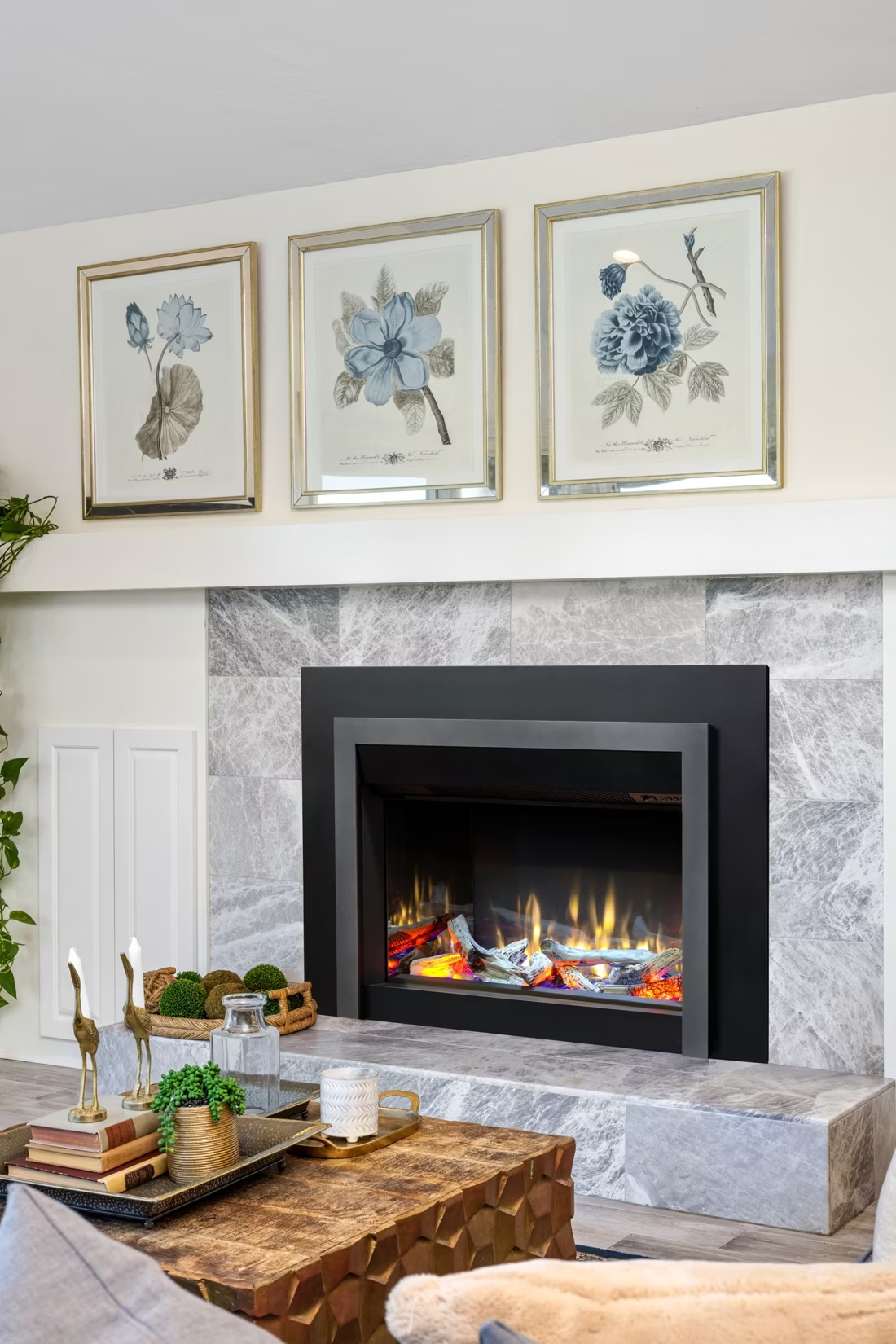
Three steps. No salesperson until you're ready.
Tell us about your project
Your zip code, your situation, and the fuel you're leaning toward—or let the answers point you to one.
See what's actually available
The brands dealers within 100 miles genuinely carry—real options, never a catalog mirage.
Get your dealer & Project Guide
A trusted local dealer, plus the free Project Guide & Parts List that names every component of the job.
Frequently Asked Questions
How much does an electric fireplace installation cost in San Juan County?
A plug-in electric insert or freestanding unit runs $300 to $800 installed, since it just needs a standard outlet and no venting or framing. A built-in wall unit or a linear electric fireplace set into a mantel surround typically runs $1,500 to $4,000 once you factor in a dedicated 20-amp circuit, an electrician's time, and finish carpentry around the opening. Because everything on the islands—materials, contractors, appliances—has to come over on the ferry from Anacortes, expect modest delivery or scheduling lead time compared to mainland Skagit or Whatcom county jobs, even though the labor and material costs themselves are similar.
Is electric heat a good fit for a vacation home or rental property on the islands?
It's one of the most common uses for electric fireplaces in San Juan County. A large share of housing stock on San Juan, Orcas, and Lopez is second homes or short-term rentals that sit unoccupied for stretches of the year, and an electric unit has no fuel to steal, no ash to clean between guest turnovers, and no chimney that needs inspection while the owner is off-island. Property managers here frequently pair a wall-mounted or built-in electric fireplace in the main living space with a remote or app-based thermostat, so the unit can be scheduled to warm the house before a renter's ferry even docks.
Will my electric fireplace still work if OPALCO power goes out?
No—a standard electric fireplace has no function without grid power, and outages on the islands can run longer than a mainland outage because repair crews and parts sometimes have to travel by boat to reach a downed line on Orcas or Lopez. For that reason, most San Juan County homes that rely on electric heat for daily comfort also keep a wood stove, propane heater, or a home battery/generator setup as backup for the coldest stretches or the next winter windstorm. If backup power matters to you, ask your installer about whole-home battery systems, which are increasingly common on the islands given the outage risk.
Plug-in electric insert vs. a built-in unit—which should I get?
A plug-in insert or freestanding electric stove is the fastest and cheapest option—it works in any room with a standard outlet, can be moved between properties, and needs no electrician for a basic install. A built-in wall unit or linear fireplace requires a dedicated circuit and looks more like a real fireplace once trimmed out, which matters more in a primary residence than a rental cabin. For most of San Juan County's smaller cottages and guest cabins, a plug-in unit does the job; for a Friday Harbor or Eastsound main house where the fireplace is a focal point, a built-in is usually worth the electrician visit.
Do I need a permit to install an electric fireplace in San Juan County?
A simple plug-in unit generally doesn't require a permit since there's no new wiring or structural work. A built-in electric fireplace that needs a new dedicated circuit does require an electrical permit, issued through San Juan County's Community Development and Planning Department, and the wiring itself must be done by a licensed electrician. Given how few licensed electricians serve the islands relative to the mainland, it's worth booking early—especially in summer when contractor schedules fill up with the seasonal construction rush.
What does it cost to run an electric fireplace on OPALCO power?
Most electric fireplaces draw around 1,500 watts on the heat setting, which at OPALCO's residential rates works out to a modest daily cost when used as supplemental heat for a single room—nowhere near the cost of heating a whole house electrically. Because San Juan County's winter lows average a mild 37°F rather than the sub-zero nights of the Cascades or the Rockies, an electric fireplace here is realistically sized for zone heating a living room or bedroom rather than replacing a whole-home heat source, which keeps typical running costs manageable.
Electric vs. wood—which makes more sense for my island home?
Wood remains a strong choice in San Juan County—Douglas fir, red alder, and lodgepole pine are all common locally, and cutting permits through the Mt. Baker-Snoqualmie National Forest run $5 to $20 per cord during the May-to-October season for those willing to cut their own. Wood also keeps a home warm through the kind of extended outages that can follow an island windstorm. Electric wins on convenience: no ferry-dependent fuel deliveries, no ash, no chimney maintenance on a property you might only visit part of the year, and instant on-off operation for a rental guest who's never lit a wood stove. Many island homes run both—wood as the resilient primary heat, electric for easy ambiance and backup zone heat in rooms the wood stove doesn't reach.
Electric vs. pellet stove—which is right for a San Juan County home?
Pellet stoves burn bagged pellets from regional brands like Bear Mountain, Lignetics, or Pacific Pellet and produce real, substantial heat output, but they need electricity to run the auger and blower—so during a power outage they're no more independent than an electric fireplace unless paired with a battery backup. Given that tradeoff, many islanders skip pellet stoves in favor of either wood (for true storm resilience) or electric (for zero-maintenance convenience), reserving pellet for homes that want stove-level heat output without the cutting, splitting, and stacking that cordwood requires.
Where can I find an installer for an electric fireplace on the islands?
Electrical and hearth contractors serving San Juan County typically work across all the ferry-served islands—San Juan, Orcas, and Lopez—rather than being based on just one, since the customer base on any single island is small. Expect installers to build ferry crossing time into their scheduling and sometimes batch multiple island jobs into the same trip, which can mean a slightly longer lead time than you'd see on the mainland. Booking a couple of weeks ahead, especially outside the busy summer season, generally gets the most flexibility on install dates.
Does an electric fireplace need a vent or chimney?
No—that's its superpower. An electric fireplace needs a wall and an outlet, period. No vent pipe, no gas line, no clearances to design around, which is why it works in bedrooms, offices, apartments, and walls where venting a gas or wood unit would be impractical or impossible. Installation is typically the simplest and least expensive of any fireplace type.
Do electric fireplaces actually produce heat?
Yes—most put out around 4,800–5,000 BTUs from a standard outlet, which comfortably warms a bedroom, office, or den as a comfort-zone heater. What they won't do is carry a whole house the way wood, gas, or pellet can. Think of electric as ambiance-first with honest supplemental heat: flames on with no heat in July, flames plus warmth in January.
Does a fireplace add value to my home?
On average, a fireplace adds back to the home about the same amount you spent installing it. Add the monthly savings from heating the rooms you actually use instead of the whole house—often hundreds of dollars a year—and the value case is strong before you even count what a fire does for how your family uses the room.
How much should I budget for a fireplace?
For an average home—covering the fireplace, the vent pipe, and basic installation—a budget between $3,900 and $5,500 gives you a lot of options across wood, gas, and pellet. By the time you add finish work, gas line, and electrical, the average complete installation lands between $5,000 and $12,000 all-in. In a remodel or new build, a good rule is to put about 2.5% of the total project cost toward the fireplace.
Stove and Fireplace Dealers in San Juan County
Listings include WhyFire partner dealers, dealers we have verified as authorized for the brands we recommend, and established local businesses that carry hearth products. Every listing shows which one it is. The ones marked Preferred run on WhyFire's software, so they can show you real pricing and book your appointment right here. No manufacturer pays for placement. How we verify dealers →
Merle's Masonry,Chimney Care And Stoves
Silver Knight Heating Ltd
Jacobson Heating & Air
Find your electric fireplace in San Juan County.
Tell us a bit about your home or rental property on the islands, and we'll match you with the right electric fireplace or insert—plus a free Project Guide & Parts List with your recommended local installer.
Find Your Fireplace →