
Pellet heat built for Tri-Cities winters.
Clean-burning, thermostat-controlled heat for Richland homes—sized right and installed by a trusted local dealer, with a free parts list to match.
Every Project Starts From One of These Five Situations
Consistent heat without the smoke concerns.
Richland sits at just 405 feet in the Columbia Basin's high desert, and its 4,935 annual heating degree days make for a noticeably milder cold season than colder climates like Fargo, ND or Duluth, MN—winter lows here average around 29°F, not sub-zero. That's exactly the kind of moderate, shoulder-season-heavy heating load where a pellet stove earns its keep: set the thermostat, load the hopper, and let it run for a day or more without babysitting a fire.
The Tri-Cities region also deals with winter temperature inversions and wildfire smoke that build up over the Columbia Basin, and the Benton Clean Air Agency (which covers Benton and Franklin counties) issues burn restrictions during the worst air-quality stretches. Pellet appliances typically burn cleaner and are treated more favorably under these restrictions than uncertified wood stoves, which matters if you want reliable heat on the exact days outdoor air quality is worst. Regional brands like Bear Mountain, Lignetics, and Pacific Pellet keep fuel supply local and consistent for Richland households.
Three steps. No salesperson until you're ready.
Tell us about your project
Your zip code, your situation, and the fuel you're leaning toward—or let the answers point you to one.
See what's actually available
The brands dealers within 100 miles genuinely carry—real options, never a catalog mirage.
Get your dealer & Project Guide
A trusted local dealer, plus the free Project Guide & Parts List that names every component of the job.
Frequently Asked Questions
How much does a pellet stove installation cost in Richland?
Most pellet stove installs in the Tri-Cities run in the $3,500 to $6,500 range, depending on the unit, whether you're venting through an existing chimney chase or need a new through-wall vent kit, and whether electrical work is required for the hopper's auger and blower motor. Pellet inserts going into an existing masonry fireplace tend to land toward the lower end since the chimney cavity is already there. A local dealer will give you a firm number after seeing your space, and the free Project Guide & Parts List we send includes the vent kit and hardware specific to your install.
What size pellet stove do I need for a Richland home?
Given Richland's relatively mild 4,935 heating degree days, most homes here don't need the largest hopper capacity or BTU output on the market—a mid-size unit rated for 1,200 to 1,800 square feet handles a typical single-story Tri-Cities home comfortably, even accounting for occasional cold snaps into the teens. Larger, open-concept homes or houses used for primary (not supplemental) heat should size up. A local dealer will factor in your square footage, ceiling height, and insulation during an in-home visit—sizing is worth getting right, since an oversized unit short-cycles and an undersized one can't keep up when temperatures drop.
Do I need a permit to install a pellet stove in Richland?
Yes—a building permit is required for a new pellet stove or insert installation through the City of Richland Building Department, or Benton County if you're outside city limits. The permit process is fairly light for pellet appliances compared to wood stoves, since venting is simpler (often just through-wall PVC or similar), but it still needs sign-off on clearances and venting termination points. Most hearth dealers in the area pull the permit as part of the installation, so it's rarely something homeowners have to manage themselves.
Will my pellet stove work during a power outage?
No—this is the one real tradeoff with pellet heat. Unlike a wood stove, a pellet stove's auger, igniter, and combustion blower all run on electricity, so the unit shuts down when the power does. City of Richland's residential electric rate is among the cheaper in the region at under 10 cents per kWh, which keeps day-to-day running costs low, but it doesn't help during an outage. If backup heat during storms matters to you, ask a local dealer about a small battery backup unit (some pellet stoves support a UPS-style battery for a few hours of runtime) or consider pairing a pellet stove with a wood-burning option for true grid-independent heat.
What's the difference between a pellet stove and a wood stove?
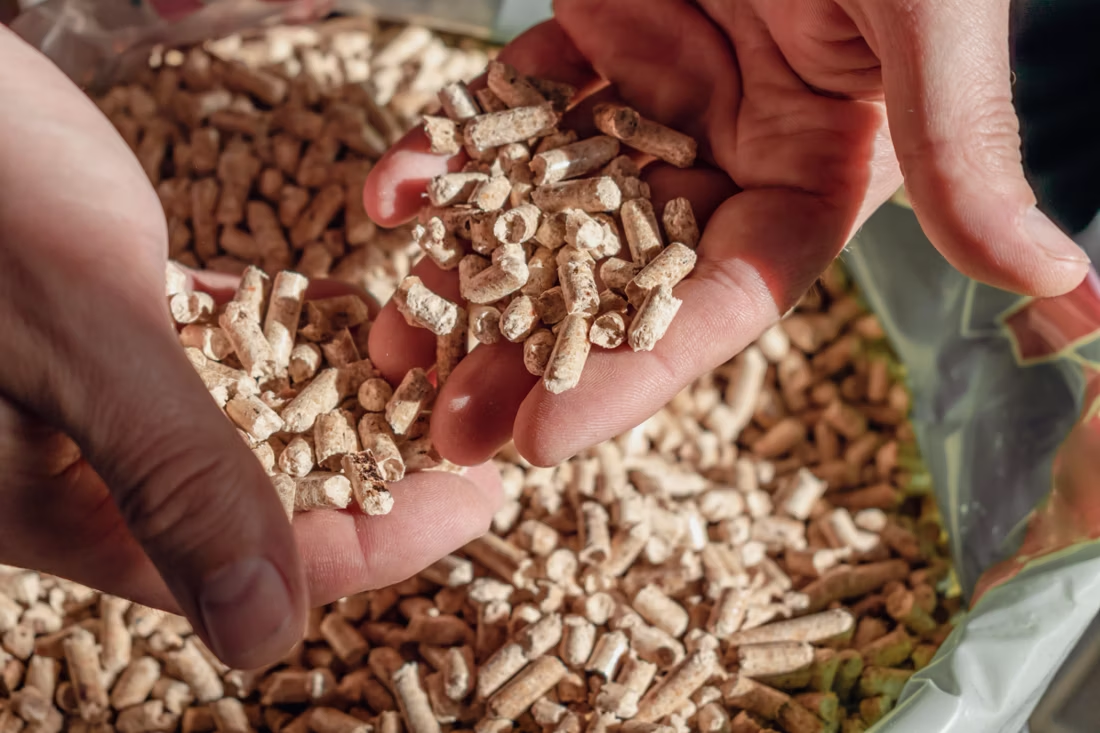
A pellet stove burns compressed wood pellets fed automatically from a hopper, producing steady, thermostat-controlled heat with minimal ash and far less creosote buildup than cordwood. A wood stove burns split logs—Richland's surrounding forests supply plenty of ponderosa pine, lodgepole pine, and Douglas fir, available through Umatilla National Forest cutting permits for around $20 per 4 cords during the May-to-October season—but it requires more hands-on tending and doesn't run without a person feeding it. If you want set-it-and-forget-it heat and don't mind depending on electricity and a fuel delivery, pellet is usually the easier day-to-day choice for Richland homes.
Are pellet stoves exempt from burn bans during winter inversions?
Generally, yes, in most air-quality restriction schemes pellet stoves are treated more leniently than older or uncertified wood stoves, since they burn cleaner and produce fewer particulates. The Benton Clean Air Agency, which covers Benton and Franklin counties including Richland, issues burn advisories during winter inversion events when smoke and particulates settle into the Columbia Basin. Certified pellet appliances are typically allowed to keep operating when older wood stoves are restricted—worth confirming with the agency directly, but it's one of the practical reasons Tri-Cities homeowners choose pellet over an aging wood stove.
Where can I buy pellets in Richland, and how much do they cost?
Regional brands like Bear Mountain, Lignetics, and Pacific Pellet are widely stocked at hearth retailers and farm/home supply stores throughout the Tri-Cities, and a ton (about 50 forty-pound bags) typically runs in the $250 to $350 range depending on the brand and time of year—buying early in the fall before the first cold snap usually beats late-winter pricing. Most homes burning pellets as a primary or heavy supplemental heat source go through 1.5 to 3 tons per winter given Richland's relatively moderate heating season.
What pellet stove brands work well for the Tri-Cities climate?
Because Richland's winters are milder than much of the inland Northwest, homeowners here have flexibility to prioritize efficiency and hopper capacity over sheer BTU output. Mid-size units from established manufacturers pair well with the regional pellet supply from Bear Mountain, Lignetics, and Pacific Pellet—using a pellet that matches your stove's burn pot design (some stoves are picky about pellet hardness and ash content) makes a real difference in performance. A local dealer can match a specific stove model to the pellet brands most consistently available in the Tri-Cities.
Pellet vs. gas—which is right for my home?
Gas fireplaces offer instant on-off convenience and don't require any fuel storage or hopper refilling, which some homeowners prefer. Pellet stoves cost less to run in this region—with pellets running roughly $250 to $350 a ton and Richland's low electric rate keeping the auger and blower cheap to operate—and many owners like that pellet fuel is a renewable byproduct of regional lumber operations rather than a fossil fuel. Gas requires either an existing gas line or propane tank; pellet requires only an electrical outlet and a place to store bagged fuel. For Richland homes without existing gas service, pellet is often the simpler retrofit. A local dealer can walk through both options against your home's setup.
Why is my open fireplace making my house colder?
Open fireplaces suck—literally. As the fire burns, it consumes air your furnace already paid to heat and pulls it out through the chimney, so the house is actually colder after the fire goes out than before you lit it. An insert fixes this: it seals the chimney, puts fixed glass across the front, and turns that hole in your house into a real heat source.
What's the difference between an insert and a zero-clearance fireplace?
An insert is a fireplace that slides into a pre-existing wood-burning fireplace—if you don't have one, there's nothing to insert it into. A zero-clearance fireplace is built into a framed wall, which makes it the answer for remodels and new construction. Simple test: existing masonry fireplace means insert; blank or framed wall means zero-clearance.
What is an in-home preview and do I need one?
It's a visit where a hearth professional measures your space, confirms the model you picked actually works in your home, and walks the specs—framing, gas line, venting, finish work—before anything is ordered. Some details you just can't know until you see the house. Never make a down payment without one; it's the single most-skipped step that burns buyers.
Can I install a fireplace myself?
If you're putting a fire in your house on purpose, it's best to work with an expert. Unless you're genuinely experienced in framing, gas line, vent pipe, and the national code on clearances to combustibles, have a professional do it—and ideally the same company that sells you the fireplace, so warranty, service, and liability all live under one roof.
Nearby Dealers
Hearth shops serving Richland and the surrounding area.
Pellet Brands Stocked Around Richland
Manufacturers will point you to the nearest stocking dealer.
Find your pellet stove in Richland.
Tell us about your home and we'll match you with a trusted local dealer and send over a free Project Guide & Parts List—sized for your space, with the right vent kit and hardware for your Richland install.
Find Your Fireplace →