
Real heat, real ambiance, no flame required.
No venting, no gas line, no chimney—just plug in or wire up and go. Find the right electric fireplace for your Richland home and connect with a trusted local dealer.
Every Project Starts From One of These Five Situations
Cheap hydropower makes electric heat an easy call.
Richland sits at just 405 feet elevation in the high-desert Columbia Basin, part of the Tri-Cities region where winters run milder than most of the interior Pacific Northwest. Average winter lows hover around 29°F and the city logs about 4,935 heating degree days a season—noticeably less than colder inland climates like Bozeman, MT or Fargo, ND. That milder profile means a lot of Richland homes don't need a full wood or gas heating system running around the clock; a well-placed electric fireplace can carry a room on its own during most of the season.
The City of Richland runs its own municipal electric utility, and residential rates here run around 9.8 cents per kWh—among the lowest in the country, thanks largely to hydropower drawn from the Columbia and Snake River system. That rate changes the math on electric heat: running a 1,500-watt electric fireplace insert here costs meaningfully less than it would on most other grids in the U.S. Combine that with zero smoke output during the winter inversions and wildfire-smoke stretches that periodically affect the Tri-Cities, and electric becomes a genuinely practical choice here, not just a decorative one.
Three steps. No salesperson until you're ready.
Tell us about your project
Your zip code, your situation, and the fuel you're leaning toward—or let the answers point you to one.
See what's actually available
The brands dealers within 100 miles genuinely carry—real options, never a catalog mirage.
Get your dealer & Project Guide
A trusted local dealer, plus the free Project Guide & Parts List that names every component of the job.
Frequently Asked Questions
How much does it cost to install an electric fireplace in Richland?
Plug-in electric stoves and inserts are the cheapest path—most run $150 to $800 fully installed since they just need an existing outlet, no permit or electrician required in most cases. Built-in electric fireplaces or mantel packages wired to a dedicated circuit typically run $800 to $3,000, with the range driven mostly by whether an electrician needs to run new wiring or a 240V circuit for a larger unit. Either way, you're skipping the chimney, venting, and gas line costs that come with wood or gas installs—which is the main reason electric tends to land on the low end of any hearth project in Richland.
Do I need a permit to install an electric fireplace in Richland?
Usually not for a plug-in unit—since it's just an appliance running off an existing outlet, there's no combustion, no venting, and nothing for the City of Richland's Building Department to inspect. Built-in electric fireplaces wired directly to a new dedicated circuit are a different story: that work requires an electrical permit and should be done by a licensed electrician, since it involves modifying your home's wiring. Either way, you're avoiding the gas-line permits and chimney inspections that come with a wood or gas project.
Is electric heat actually cost-effective in Richland, or just convenient?
Both, honestly. Electric resistance heat is generally more expensive per BTU than wood or natural gas on a national average—but Richland isn't the national average. The City of Richland's municipal utility charges around $0.0982 per kWh, powered largely by Columbia and Snake River hydro, which is well below what most U.S. households pay. For a supplemental unit heating one room rather than the whole house, that rate makes an electric fireplace a genuinely economical choice here, not just the easy one.
Can an electric fireplace actually heat a room, or is it just for looks?
Most electric fireplaces and inserts include a built-in 1,500-watt fan-forced heater rated around 4,600 to 5,200 BTU, enough to comfortably warm a 400 to 1,000 sq ft room depending on insulation and ceiling height. Given that Richland's winter lows average a relatively mild 29°F—milder than much of the interior Northwest—an electric unit is often enough to serve as the primary heat source for a living room or bedroom without also running a wood stove or furnace overnight, the way you'd need to in a colder climate like Duluth, MN.
What's the difference between an electric insert and a freestanding electric stove?
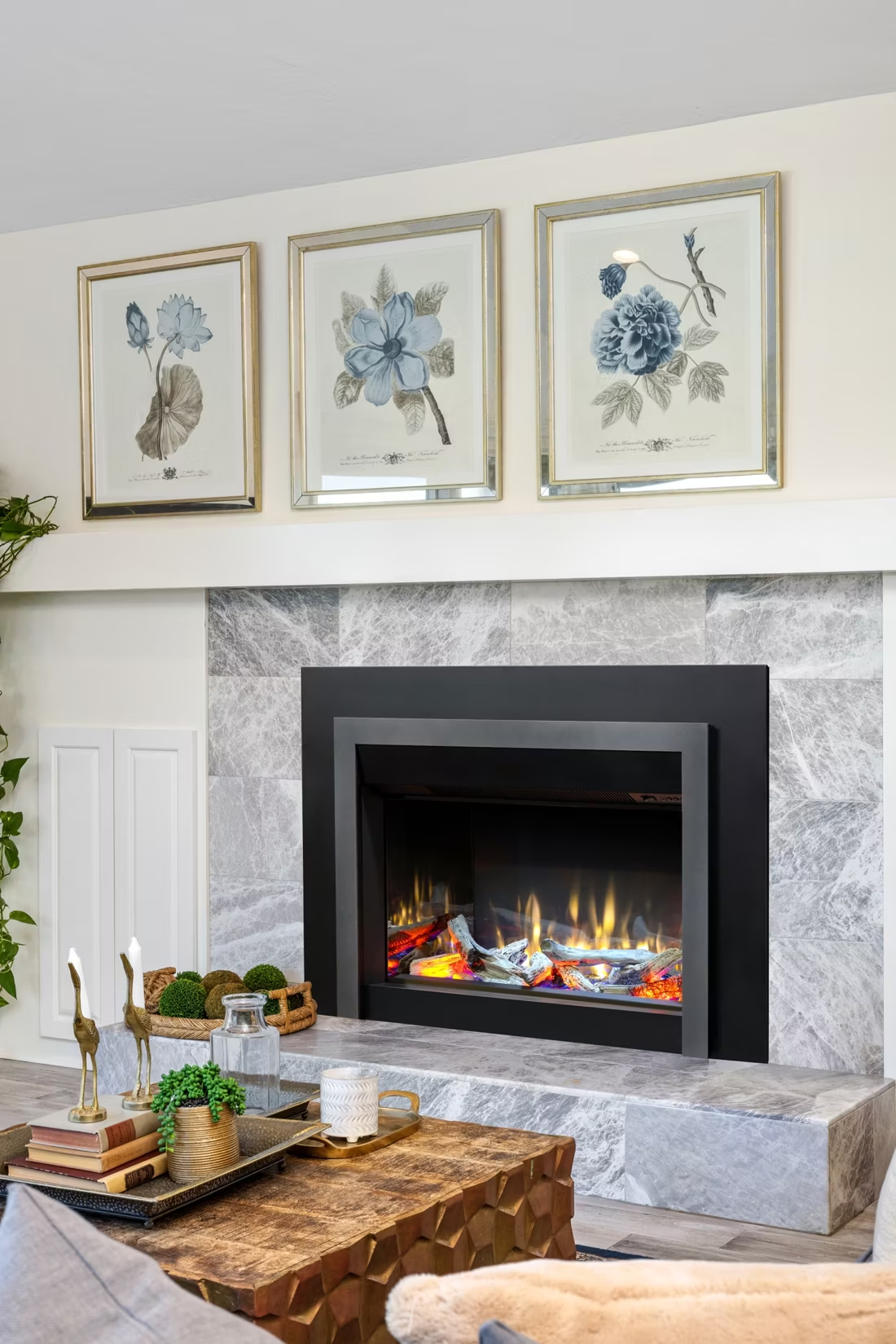
An electric insert is built to slide into an existing masonry fireplace opening, giving a dead fireplace real heat output and flame visuals again without touching the chimney—a popular option for older Richland homes with unused wood-burning fireboxes. A freestanding electric stove sits anywhere with an outlet nearby, no fireplace opening required, which makes it a good fit for a room that never had a hearth at all. Built-in wall-mount and mantel-style units are a third option, more common in newer Tri-Cities construction where the fireplace is designed in from the start rather than retrofitted.
Does electric make sense given Richland's wildfire smoke and inversion issues?
It's one of the strongest local arguments for it. Richland deals with winter temperature inversions that trap air pollutants at ground level, plus periodic wildfire smoke drifting in from surrounding wildland areas in late summer and early fall. An electric fireplace produces zero smoke, zero particulate matter, and no combustion byproducts of any kind—it doesn't add to the air quality problem the way a wood stove can during a smoke event or inversion. For households that want fire-like ambiance without contributing to those conditions, electric is the cleanest option on the table.
Will my electric fireplace work during a power outage?
No—and this is the main tradeoff to plan around. An electric fireplace is fully dependent on grid power from the City of Richland's utility and stops working the instant the power drops, unlike a wood stove that needs no electricity at all, or a gas fireplace with a battery-backed ignition system. If backup heat during a winter storm outage matters to your household, a common approach in Richland is running electric in the main living space for everyday convenience and keeping a wood stove or gas insert elsewhere in the home as a fallback.
What electric fireplace brands and styles can a local dealer install?
Local hearth dealers typically carry built-in wall units, mantel packages, and insert-style electric fireplaces sized to slot into an existing masonry firebox, from established manufacturers like Dimplex, Napoleon, and Amantii. Styles range from realistic log-and-ember sets to modern linear flame displays with adjustable color and heat-independent flame settings—useful in Richland if you want the visual on a warm September evening without running the heater. A local dealer can walk you through which style fits your existing opening or wall space before you buy anything.
Electric vs. gas vs. wood—which is right for my Richland home?
Wood offers the lowest fuel cost if you're willing to self-cut—Umatilla National Forest permits run about $20 for 4 cords during the May-to-October season, and ponderosa pine, lodgepole pine, and Douglas fir are all common locally—plus it works with zero electricity during an outage. Gas delivers instant, consistent heat without ash or smoke but requires venting and a fuel line. Electric skips venting and combustion entirely, costs the least to install, and runs cheaply here thanks to Richland's municipal hydropower rate—but it offers no backup heat if the grid goes down and won't match wood's raw output on the coldest nights. Many Richland households land on electric for a secondary room or supplemental ambiance and keep wood or gas as their primary heat source.
Do electric fireplaces actually produce heat?
Yes—most put out around 4,800–5,000 BTUs from a standard outlet, which comfortably warms a bedroom, office, or den as a comfort-zone heater. What they won't do is carry a whole house the way wood, gas, or pellet can. Think of electric as ambiance-first with honest supplemental heat: flames on with no heat in July, flames plus warmth in January.
How much does an electric fireplace cost to run?
With the heater on, a typical unit draws about 1,500 watts—at average electric rates that's roughly 20 cents an hour. Run the flame effect alone and it costs pennies; the flames are LED-driven and use about as much power as a light bulb. There's no pilot light, no fuel delivery, and essentially no maintenance.
Does a fireplace add value to my home?
On average, a fireplace adds back to the home about the same amount you spent installing it. Add the monthly savings from heating the rooms you actually use instead of the whole house—often hundreds of dollars a year—and the value case is strong before you even count what a fire does for how your family uses the room.
What is an in-home preview and do I need one?
It's a visit where a hearth professional measures your space, confirms the model you picked actually works in your home, and walks the specs—framing, gas line, venting, finish work—before anything is ordered. Some details you just can't know until you see the house. Never make a down payment without one; it's the single most-skipped step that burns buyers.
Nearby Dealers
Hearth shops serving Richland and the surrounding area.
Electric Service in Richland
An electric fireplace's heater draws about 1,500 watts—pennies per hour at local rates.
City Of Richland - (Wa)
Find your electric fireplace in Richland.
Tell us a bit about your home and we'll put together a free Project Guide & Parts List—the right electric fireplace or insert for your space, matched with a trusted local dealer who can install it.
Find Your Fireplace →