
Electric Warmth Built for Redmond's Rainy Winters.
No venting, no permits, no wood smoke—just clean zone heat that fits the townhomes, condos, and newer builds that make up so much of Redmond. Get matched with a local dealer who can size it right.
Every Project Starts From One of These Five Situations
Mild Winters and Clean Hydropower Make Electric the Practical Choice.
Redmond sits at just 52 feet of elevation in the Puget Sound lowlands, where the average winter low hovers around 37°F and the city logs roughly 4,482 heating degree days a year—less than half of what a genuinely cold-climate city like Duluth, MN or Burlington, VT sees in an average winter. That's a maritime climate, not a wood-stove climate. Most Redmond homes don't need a high-BTU primary heat source; they need supplemental warmth for a family room, a basement, or a home office on a gray, damp February evening.
It also matters what kind of housing stock Redmond has. This is a fast-growing tech corridor—Microsoft's headquarters sits inside city limits—and a large share of the market is newer construction: townhomes, condos, and HOA-governed subdivisions where wood-burning appliances are often restricted or outright prohibited, and where masonry chimneys for gas or wood venting simply don't exist. Wood and pellet stoves are genuinely uncommon here, and the region's periodic wildfire-smoke air quality advisories from the Puget Sound Clean Air Agency give homeowners another reason to skip combustion altogether. Electric fireplaces sidestep all of it—no permit for burning, no chimney, no smoke, and power from Puget Sound Energy's largely hydro-fed grid at a residential rate around 14.6 cents per kWh.
Three steps. No salesperson until you're ready.
Tell us about your project
Your zip code, your situation, and the fuel you're leaning toward—or let the answers point you to one.
See what's actually available
The brands dealers within 100 miles genuinely carry—real options, never a catalog mirage.
Get your dealer & Project Guide
A trusted local dealer, plus the free Project Guide & Parts List that names every component of the job.
Frequently Asked Questions
How much does an electric fireplace installation cost in Redmond?
Plug-in electric inserts and freestanding units are the cheapest path—often $200 to $600 for the unit itself with no installation labor beyond plugging it in. Built-in wall units and linear electric fireplaces recessed into a framed wall typically run $1,500 to $3,500 installed, including a dedicated 120V or 240V circuit run by a licensed electrician, framing, and finish work around the unit. Custom surrounds or stone/tile mantel work push costs higher. Because there's no venting or gas line involved, electric installs in Redmond are consistently the fastest and least invasive hearth project a local dealer handles.
Are electric fireplaces allowed in Redmond condos and HOA communities?
Generally yes, and that's a big part of why electric is popular here. Most Redmond HOAs and condo associations that prohibit or restrict wood-burning and even gas fireplaces have no issue with electric units, since there's no combustion, no venting penetration through a shared wall or roof, and no fire-code chimney clearance to negotiate. If you're in a multifamily building, check your HOA's covenants for any electrical load or wall-modification rules before a built-in installation, but plug-in units are almost universally permitted without any HOA review at all.
Will an electric fireplace actually heat my Redmond home?
For most Redmond homes, yes—as supplemental heat. With an average winter low around 37°F and roughly 4,482 heating degree days a year, this isn't a climate that demands a whole-home wood or high-output gas system the way a place like Bozeman, MT does. Most electric fireplaces put out 4,600 to 5,200 BTUs (about 1,500 watts), enough to comfortably warm a single room of 400 to 600 square feet. They're not designed to replace your central heat pump or furnace, but for the mild, damp Puget Sound winters, that's usually exactly the amount of supplemental warmth a family room or bonus room needs.
Electric vs. gas fireplace—which makes more sense for my Redmond home?
Both are standard options here, and the answer depends mostly on your home. If you already have natural gas service—common in many Redmond neighborhoods served through the regional gas network—and want real radiant heat output with the ambiance of a visible flame, a direct-vent gas insert or fireplace is worth considering. If you're in a condo, townhome, or newer construction without existing gas infrastructure, or you want a zero-maintenance, no-permit option you can install this weekend, electric is the simpler and cheaper path. Many Redmond homeowners also choose electric specifically to avoid the venting and gas-line work a gas installation requires in a home that wasn't built with a chimney chase.
Do I need a permit to install an electric fireplace in Redmond?
A plug-in electric fireplace that uses an existing standard outlet requires no permit at all—it's an appliance, not a construction project. A built-in electric fireplace that requires a new dedicated circuit does require an electrical permit through the City of Redmond Development Services, pulled by a licensed electrician. There's no building or fire-code review for venting or clearances the way there is with wood or gas, which is one of the reasons electric installs move faster than any other fuel type in this market.
What does an electric fireplace cost to run in Redmond?
At Puget Sound Energy's residential rate of about 14.6 cents per kWh, a typical 1,500-watt electric fireplace costs roughly 22 cents per hour to run on full heat, or under $2 for a full evening. Most units let you run the flame effect alone without the heater engaged, which draws only a few watts—essentially free ambiance. Because PSE's generation mix leans heavily on hydropower, electric heat here also carries a smaller carbon footprint per kWh than in regions running on coal or gas-fired grids.
What kind of electric fireplace works best for a Redmond home?
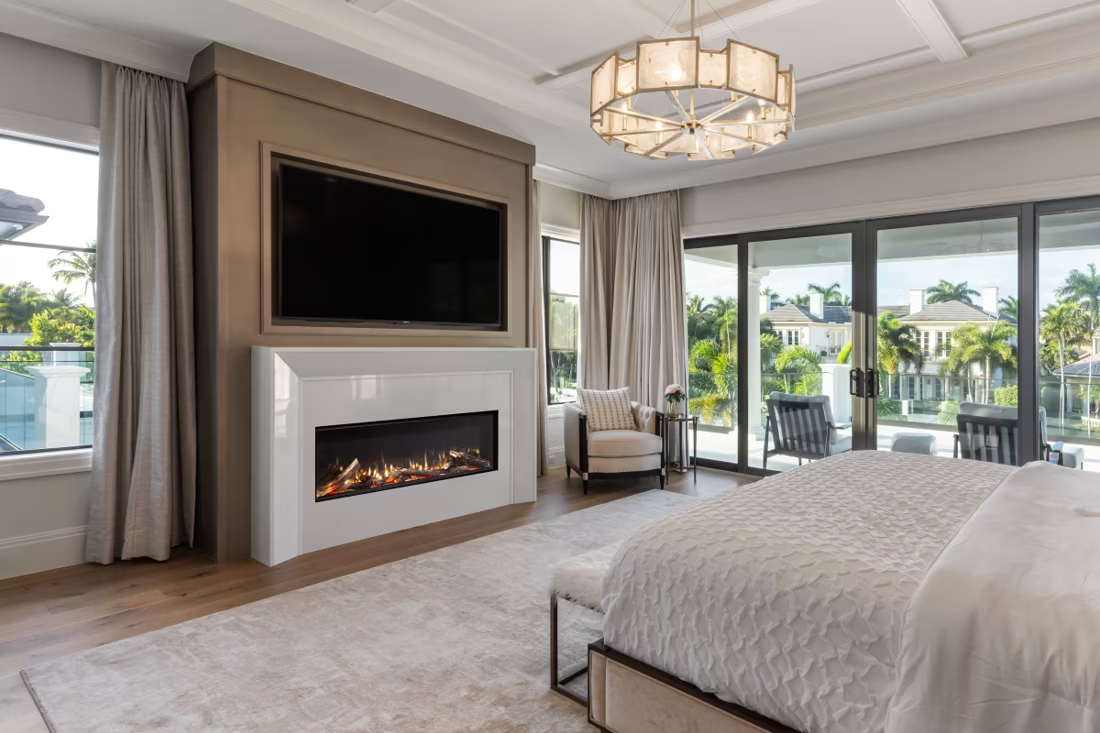
For condos and smaller living spaces, a wall-mounted or recessed linear electric fireplace gives you a modern, low-profile look without eating floor space. For families wanting a more traditional focal point, built-in electric fireplaces with mantel surrounds mimic a wood-burning hearth without any venting requirement. Electric inserts are also a straightforward way to convert an old, rarely-used masonry fireplace—uncommon in Redmond's newer housing stock, but not unheard of in some of the city's older neighborhoods—into a clean, functional feature without chimney repair costs. A local dealer can walk your space and tell you which format fits.
Why is wood heat so uncommon in Redmond?
It comes down to climate and housing stock. Redmond's mild, wet Puget Sound winters (average low around 37°F) don't create the sustained deep-cold demand that drives wood-heat culture in places like the Cascades' eastern slope or the northern Rockies. On top of that, a large share of Redmond's housing is newer construction—townhomes, condos, and HOA subdivisions—built without masonry chimneys and often with covenants restricting combustion appliances. The Puget Sound Clean Air Agency also issues periodic burn bans during winter air stagnation events and wildfire smoke episodes, which further discourages wood-burning installations. Electric and gas have effectively replaced wood as the practical choices in this market.
How much maintenance does an electric fireplace need?
Very little, which is the main appeal. There's no chimney to sweep, no creosote, no gas lines to inspect, and no combustion byproducts to worry about. Maintenance is limited to occasionally dusting the unit, replacing LED flame-effect bulbs every several years (most last 20,000+ hours), and checking the blower fan if it starts making noise. There's no annual inspection requirement the way there is for wood or gas appliances—one more reason electric fits so well into low-maintenance Redmond condos and townhomes.
Can I put a TV above my fireplace?
Yes—with an asterisk. Fireplaces are hot and TVs don't like heat. Either put a mantel between them to deflect rising warmth, or choose a fireplace with heat-management technology that creates a cool zone on the wall above—the wall stays around 125 degrees, barely warm, while the room still gets full heat. If you like clean lines and don't want a mantel, heat management is the answer.
Does an electric fireplace need a vent or chimney?
No—that's its superpower. An electric fireplace needs a wall and an outlet, period. No vent pipe, no gas line, no clearances to design around, which is why it works in bedrooms, offices, apartments, and walls where venting a gas or wood unit would be impractical or impossible. Installation is typically the simplest and least expensive of any fireplace type.
Does a fireplace add value to my home?
On average, a fireplace adds back to the home about the same amount you spent installing it. Add the monthly savings from heating the rooms you actually use instead of the whole house—often hundreds of dollars a year—and the value case is strong before you even count what a fire does for how your family uses the room.
What is an in-home preview and do I need one?
It's a visit where a hearth professional measures your space, confirms the model you picked actually works in your home, and walks the specs—framing, gas line, venting, finish work—before anything is ordered. Some details you just can't know until you see the house. Never make a down payment without one; it's the single most-skipped step that burns buyers.
Nearby Dealers
Hearth shops serving Redmond and the surrounding area.
Rich's Stoves & Spas
Electric Service in Redmond
An electric fireplace's heater draws about 1,500 watts—pennies per hour at local rates.
Puget Sound Energy Inc
City Of Milton - (Wa)
Find your electric fireplace in Redmond.
Tell us about your space and we'll put together a free Project Guide & Parts List—the right electric fireplace or insert for your Redmond home, the exact parts needed, and a match with a trusted local dealer who can install it.
Find Your Fireplace →