
Warm, Instant Heat for Jefferson County's Marine Winters.
Propane-fed gas heat built for the damp, mild winters of the Olympic Peninsula. Find the right unit and get matched with a trusted local dealer near Port Hadlock-Irondale.
Every Project Starts From One of These Five Situations
Propane heat built for a mild, wet Olympic Peninsula winter.
Port Hadlock-Irondale sits at just 131 feet above sea level on the shores of Puget Sound's Admiralty Inlet, in a climate zone (4C) that's about as gentle as it gets in the Pacific Northwest. With a winter low average of 38°F and a moderate overall winter heating load for the year, this small Jefferson County community never sees the kind of deep-freeze conditions you'd get in a place like Fargo, ND or Duluth, MN—but the region's persistent damp cold and long, gray heating season still mean most homes run some form of supplemental or zone heat from October through April.
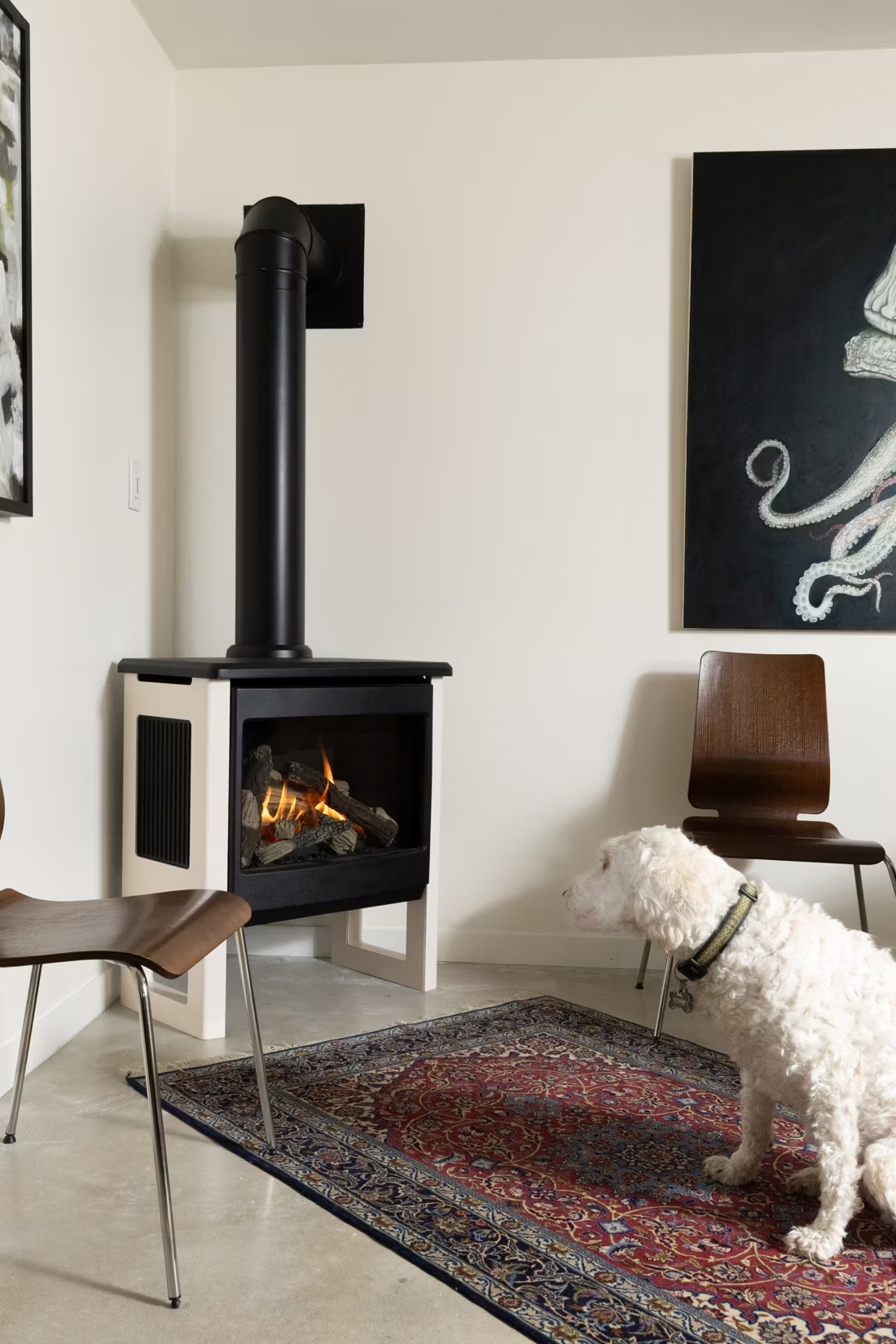
There's no natural gas main serving Port Hadlock-Irondale—Puget Sound Energy and PUD No. 1 of Jefferson County provide electricity here, not piped gas—so when locals say "gas fireplace," they almost always mean propane. That makes gas inserts and freestanding units a popular choice for homes near Beach Drive, Irondale Road, and the Chimacum Creek corridor: instant heat with the flip of a switch, no wood handling, and in many models, the ability to keep running when winter windstorms knock out power along the Sound.
Three steps. No salesperson until you're ready.
Tell us about your project
Your zip code, your situation, and the fuel you're leaning toward—or let the answers point you to one.
See what's actually available
The brands dealers within 100 miles genuinely carry—real options, never a catalog mirage.
Get your dealer & Project Guide
A trusted local dealer, plus the free Project Guide & Parts List that names every component of the job.
Frequently Asked Questions
How much does a gas fireplace installation cost in Port Hadlock-Irondale?
Because this area runs on propane rather than piped natural gas, most installations include the cost of running or connecting to a propane line in addition to the unit itself. A direct-vent propane insert into an existing masonry fireplace typically lands in the $4,000 to $8,000 range if a propane tank and line are already in place. A new built-in gas fireplace for a remodel or addition—with framing, venting, and a fresh propane line run from an outdoor tank—usually runs higher, often $7,000 to $11,000. A local dealer will give you a firm number after seeing your home and your existing propane setup, if any.
Can I convert my wood fireplace to a gas (propane) insert?
Yes, and it's one of the more common upgrades for the older homes around Port Hadlock and Irondale. A propane insert slides into your existing masonry fireplace and vents through a stainless liner run up your current chimney, so you keep the look of the original hearth while gaining instant, thermostat-controlled heat. Since there's no natural gas utility here, the project also involves either connecting to an existing propane tank or having a supplier install a new one—factor that into your budget alongside the insert and labor.
Do I need natural gas, or does my gas fireplace run on propane?
In Port Hadlock-Irondale, it's propane. There's no natural gas utility serving the 98339, 98325, or 98368 zip codes—Puget Sound Energy and PUD No. 1 of Jefferson County supply electricity here, not gas mains. Nearly every "gas fireplace" installed locally runs on propane from either a buried or above-ground tank supplied by a regional propane company. The good news is that almost every gas fireplace, insert, and stove on the market today can be configured for propane use—your installer sets the correct orifice and regulator, and performance is identical to a natural-gas equivalent.
Will my gas fireplace still work if the power goes out?
For many homes along the Sound, this is the whole reason to choose gas over electric heat. Winter windstorms off Admiralty Inlet regularly cause outages for PUD No. 1 of Jefferson County and PSE customers, sometimes for a day or more. Gas fireplaces with IPI (intermittent pilot ignition) run on a small battery backup that kicks in automatically when power drops, so the unit still lights on demand. Valor fireplaces go a step further—their pilot assembly generates its own electricity through the thermocouple, so there's no battery to check or replace at all. Ask your local dealer about the ignition system on any model you're considering if outage backup matters to you.
What's the difference between a gas fireplace, gas insert, and gas stove?
A gas fireplace is a fully built-in unit framed into a wall, typically chosen for new construction or a remodel. A gas insert is sized to slide into an existing masonry fireplace opening, converting an old wood-burning hearth into a sealed, efficient heat source using the existing chimney as a vent path. A gas stove is a freestanding cabinet-style unit that sits on the floor, similar in footprint to a wood stove but running on propane. Many of the older homes in Port Hadlock and Irondale already have a masonry fireplace, which usually points toward an insert as the more straightforward and cost-effective option.
Do I need a permit to install a gas fireplace in Port Hadlock-Irondale?
Yes. Jefferson County's Department of Community Development handles building permits for unincorporated areas like Port Hadlock-Irondale, and a gas fireplace installation typically requires both a mechanical permit and sign-off on the propane line work. A licensed propane technician needs to handle the tank and line connection regardless of who installs the fireplace itself. Working with an established local hearth dealer simplifies this—they coordinate the propane contractor, the venting, and the county inspection as one project instead of you managing separate trades.
Should I choose a vented or vent-free gas fireplace?
Vented (direct-vent) propane fireplaces draw combustion air from outside and exhaust it back outside through a sealed pipe—they're the standard choice and deliver real, sustained heat output. Vent-free units burn propane directly into the room without exterior venting; they're legal in Washington State but come with strict room-size and ventilation requirements, and they add moisture and combustion byproducts to indoor air. Given how damp the Olympic Peninsula already gets through the winter, most local dealers steer Port Hadlock-Irondale homeowners toward direct-vent units rather than adding more moisture load to the house.
How often does a propane gas fireplace need servicing?
Plan on an annual inspection, ideally before the fall heating season starts. A technician checks the burner, pilot assembly, venting, and the propane connections, and cleans the glass and interior. This matters more in a marine climate like this one, where humidity and salt air off Puget Sound can accelerate corrosion on metal components faster than in a drier inland climate. Most local service providers charge in the neighborhood of $150 to $250 for a standard annual visit.
Gas vs. wood—which makes more sense in Port Hadlock-Irondale?
Wood is still a viable, affordable option here—douglas fir, red alder, and lodgepole pine are all common locally, and Mt. Baker-Snoqualmie National Forest issues cutting permits for $5 to $20 per cord during the May-to-October season. Wood also keeps working with zero electricity or propane deliveries. Gas (propane) wins on convenience: instant on-off operation, no ash or creosote, and no need to season or store cordwood in a climate where summer wildfire smoke already limits outdoor burning some years. Many homes in the area end up with both—a wood stove for backup and ambiance, propane for the daily-use zone heat in the main living space.
Why is my open fireplace making my house colder?
Open fireplaces suck—literally. As the fire burns, it consumes air your furnace already paid to heat and pulls it out through the chimney, so the house is actually colder after the fire goes out than before you lit it. An insert fixes this: it seals the chimney, puts fixed glass across the front, and turns that hole in your house into a real heat source.
Can I put a TV above my fireplace?
Yes—with an asterisk. Fireplaces are hot and TVs don't like heat. Either put a mantel between them to deflect rising warmth, or choose a fireplace with heat-management technology that creates a cool zone on the wall above—the wall stays around 125 degrees, barely warm, while the room still gets full heat. If you like clean lines and don't want a mantel, heat management is the answer.
Can I install a fireplace myself?
If you're putting a fire in your house on purpose, it's best to work with an expert. Unless you're genuinely experienced in framing, gas line, vent pipe, and the national code on clearances to combustibles, have a professional do it—and ideally the same company that sells you the fireplace, so warranty, service, and liability all live under one roof.
What is an in-home preview and do I need one?
It's a visit where a hearth professional measures your space, confirms the model you picked actually works in your home, and walks the specs—framing, gas line, venting, finish work—before anything is ordered. Some details you just can't know until you see the house. Never make a down payment without one; it's the single most-skipped step that burns buyers.
Nearby Dealers
Hearth shops serving Port Hadlock-Irondale and the surrounding area. Every listing shows whether it is a WhyFire partner, a dealer we have verified as authorized for the brands we recommend, or a local business carrying hearth products. No manufacturer pays for placement. How we verify dealers →
Sunshine Propane
Whidbey Heating And Stoves
Ace Freeland Home
Olympic Hearth And Spa
Island Gas Piping & Installations, LLC
All Points Heating
Find your gas fireplace in Port Hadlock-Irondale.
Tell us about your home and propane setup, and we'll match you with a trusted local dealer plus a free Project Guide & Parts List—the exact parts, including the vent kit, for your gas fireplace project.
Find Your Fireplace →