
Warm, dry heat for Pacific County's damp coastal winters.
From the Long Beach Peninsula to Raymond and South Bend, Pacific County's marine air stays cool and wet for most of the year. A gas fireplace or insert delivers instant, consistent warmth without hauling or seasoning wood in a climate where wood rarely dries out fast. Find the right unit and connect with a trusted local dealer.
Every Project Starts From One of These Five Situations
Reliable heat without stacking wood in the rain.
Pacific County sits in the far southwest corner of Washington, wrapped by the Pacific Ocean, Willapa Bay, and the mouth of the Columbia River. It's a climate 4C marine zone with a mild average winter low around 33°F—this isn't a place that sees deep freezes—but the county still logs a winter heating load far lower than a place like Buffalo, NY, yet enough to keep furnaces and fireplaces running nearly nine months out of twelve because of the persistent coastal fog, rain, and onshore wind. With just under 11,825 residents spread across Raymond, South Bend, Ilwaco, Long Beach, Ocean Park, and Naselle, homes here range from older masonry-fireplace houses near Willapa Bay to newer construction out on the peninsula.
Cascade Natural Gas has limited service in pockets around South Bend and Raymond, but most of the county—including the entire Long Beach Peninsula, Ocean Park, Ilwaco, and Naselle—runs on propane, delivered by regional suppliers. Either way, a gas fireplace or insert gives you heat at the flip of a switch, no chimney sweeping, and no need to keep a woodpile dry through a season where local species like Douglas fir, red alder, and lodgepole pine can take a full year or more to season properly in the humidity. It's also a clean option during the late-summer stretches when wildfire smoke already thickens the coastal air—no added wood smoke to manage on top of it.
Three steps. No salesperson until you're ready.
Tell us about your project
Your zip code, your situation, and the fuel you're leaning toward—or let the answers point you to one.
See what's actually available
The brands dealers within 100 miles genuinely carry—real options, never a catalog mirage.
Get your dealer & Project Guide
A trusted local dealer, plus the free Project Guide & Parts List that names every component of the job.
Frequently Asked Questions
How much does a gas fireplace installation cost in Pacific County?
A typical gas fireplace or insert installation in Pacific County runs roughly $4,500 to $9,500, depending on the unit, whether you're on propane or one of the limited Cascade Natural Gas pockets near Raymond or South Bend, and how much venting or gas line work is needed. A direct-vent insert into an existing masonry fireplace with a gas line or propane tank already in place sits at the lower end. New construction, a fresh propane tank installation, or longer gas line runs on the Long Beach Peninsula push toward the higher end. Homes in more remote spots like Naselle or Ocean Park may see a modest travel charge added to the quote. Local retailers will give you a firm number after an in-home visit.
Can I convert my existing wood fireplace to gas?
Yes, and it's a common project for the older masonry fireplaces found in homes around South Bend, Raymond, and the bay towns. A gas insert is fitted into the existing masonry opening, with a stainless liner run up the current chimney to handle venting. Since most of Pacific County outside the small Cascade Natural Gas service areas runs on propane, your installer will typically set the insert up for propane and coordinate a tank if you don't already have one. Costs generally land in the $4,500 to $8,500 range, and the conversion keeps your existing fireplace opening while eliminating the need to keep a woodpile dry in this climate.
Do I need natural gas, or should I plan on propane?
For most of Pacific County, plan on propane. Cascade Natural Gas serves a limited footprint around Raymond and South Bend, but the Long Beach Peninsula, Ocean Park, Ilwaco, and Naselle have no natural gas main service at all—propane is the standard fuel there, supplied by regional propane companies who deliver and maintain tanks throughout the county. Nearly every gas fireplace and insert on the market can be configured for either fuel; your installer sets the correct orifice and regulator during install. If you're outside the small natural gas pockets, budget for either an existing tank hookup or a new propane tank installation.
Will my gas fireplace work during a power outage?
Most modern gas fireplaces will, which matters here—winter windstorms off the Pacific regularly knock out power across the peninsula and bay towns for hours or days at a time. Units with IPI (intermittent pilot ignition) include a battery backup, typically AA batteries inside the unit, that keeps the fireplace lighting on demand when the grid drops. Valor fireplaces take a different approach: the pilot's thermocouple generates its own electricity, so there are no batteries to maintain at all. Given how often Pacific County loses power during coastal storms, ask your local retailer specifically about the ignition system on any unit you're considering.
What's the difference between a gas fireplace, gas insert, and gas stove?
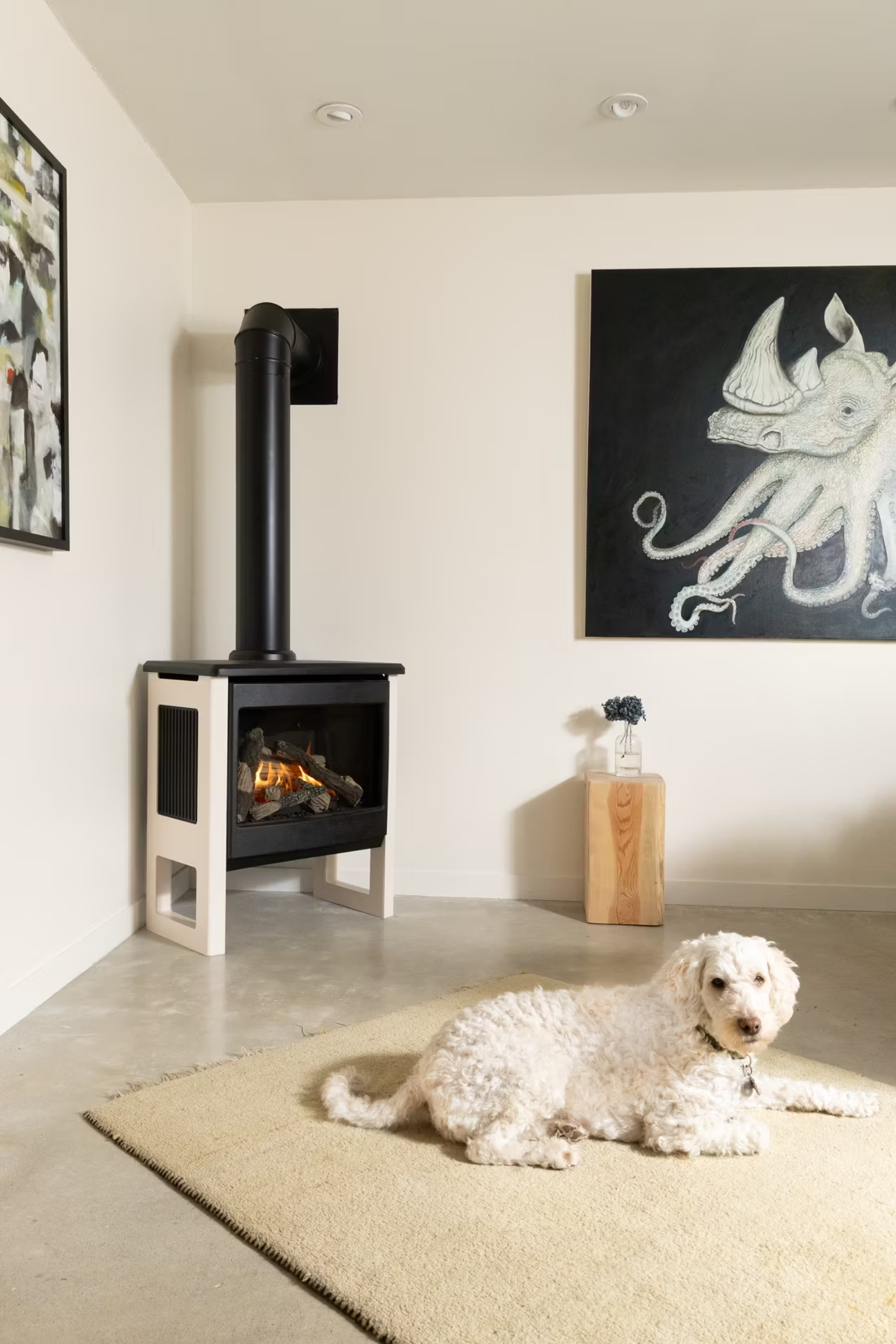
A gas fireplace is a fully built-in unit framed into a wall—the right call for new construction or a remodel out on the Long Beach Peninsula. A gas insert slides into an existing masonry opening, which fits many of the older homes around South Bend and Raymond that already have a fireplace and chimney. A gas stove is a freestanding cast-iron or steel unit that sits on the floor like a wood stove but burns gas or propane, a good fit for a room with no existing fireplace. Most Pacific County homeowners with an old masonry fireplace do best with an insert; homes without one usually go with a built-in fireplace or a freestanding stove.
Do I need a permit to install a gas fireplace in Pacific County?
Yes. In unincorporated parts of the county, permits go through the Pacific County Building Department; within the incorporated towns—South Bend, Raymond, Long Beach, and Ilwaco—permits are issued by the city itself. Either way you'll need a building permit and, since gas line or propane line work is involved, sign-off from a licensed gas-fitter or propane technician. Most local hearth retailers handle this paperwork as part of the installation, coordinating the gas work, venting, and inspection so you're not juggling multiple trades yourself.
What's the difference between vented and vent-free gas fireplaces?
Vented gas fireplaces—direct-vent or B-vent—pull combustion air from outside and exhaust it back outside through a sealed flue. They're the cleaner, more universally code-friendly option. Vent-free units burn directly into the room air and are legal in Washington under strict conditions (minimum room volume, oxygen depletion sensors, and restrictions against use in bedrooms), but they release some combustion byproducts indoors. Given Pacific County's already-damp indoor air and the amount of time homes here spend closed up against coastal weather, most local installers steer homeowners toward direct-vent units, which don't add moisture or byproducts to an already humid house.
How often should my gas fireplace be serviced?
Plan on an annual inspection, ideally before the wet season sets in around October. A technician checks the burner, pilot assembly, venting, and gas or propane connections, and cleans the glass and interior. This matters more in Pacific County's salt-air, high-humidity environment than it might inland—corrosion on fittings and venting components shows up faster near the coast. Local service providers typically charge $150 to $250 for a standard annual visit.
Gas vs. wood—which is right for my Pacific County home?
Wood is still workable here—Olympic National Forest issues cutting permits for $5 to $20 per cord during the May-to-October season, and Douglas fir, red alder, and lodgepole pine are all available locally. But this climate makes wood heat harder than it looks: with near-constant coastal humidity, freshly cut wood can take well over a year to season properly, and poorly dried wood means more smoke, more creosote, and less heat. Gas sidesteps that entirely—no seasoning, no storage, no smoke to add to the haze during the wildfire-smoke stretches of late summer. For most Pacific County homes, especially in town where propane delivery is reliable, gas offers the more practical year-round heat source. Wood still has a place for backup heat or ambiance, particularly in rural spots where power outages run longer.
Why is a fireplace insert so efficient?
An insert does two things: it seals the chimney completely, so you stop losing air you already paid to heat, and it radiates warmth into the room through the firebox and glass. Most add a heat-exchange fan that pulls cool room air underneath, wraps it around the hot firebox, and pushes it back out warm. Your home is more efficient before you've even lit the first fire.
What's the difference between radiant and convective fireplace heat?
Most fireplaces are a thin metal box—they heat fine, but you rely on the fan to move the warmth into the room. Radiant models use a thick cast-ceramic firebox, about an inch and a quarter thick, that soaks up the fire's heat and radiates roughly 25–30% more warmth into the room with no fan running. If you watch TV in the same room or want heat in a power outage, radiant is worth asking about.
Does a fireplace add value to my home?
On average, a fireplace adds back to the home about the same amount you spent installing it. Add the monthly savings from heating the rooms you actually use instead of the whole house—often hundreds of dollars a year—and the value case is strong before you even count what a fire does for how your family uses the room.
Can I install a fireplace myself?
If you're putting a fire in your house on purpose, it's best to work with an expert. Unless you're genuinely experienced in framing, gas line, vent pipe, and the national code on clearances to combustibles, have a professional do it—and ideally the same company that sells you the fireplace, so warranty, service, and liability all live under one roof.
Stove and Fireplace Dealers in Pacific County
Listings include WhyFire partner dealers, dealers we have verified as authorized for the brands we recommend, and established local businesses that carry hearth products. Every listing shows which one it is. The ones marked Preferred run on WhyFire's software, so they can show you real pricing and book your appointment right here. No manufacturer pays for placement. How we verify dealers →
Rock Construction
White's Heating & Sheet Metal
Coast Heating & Cooling
Diamond Heating
Find your gas fireplace in Pacific County.
Tell us a bit about your home and we'll match you with the right gas fireplace, insert, or stove for Pacific County's damp coastal climate—plus a free Project Guide & Parts List with the exact parts, vent kit, and a recommended local dealer.
Find Your Fireplace →