
Clean heat for the Methow Valley's wildfire-smoke seasons.
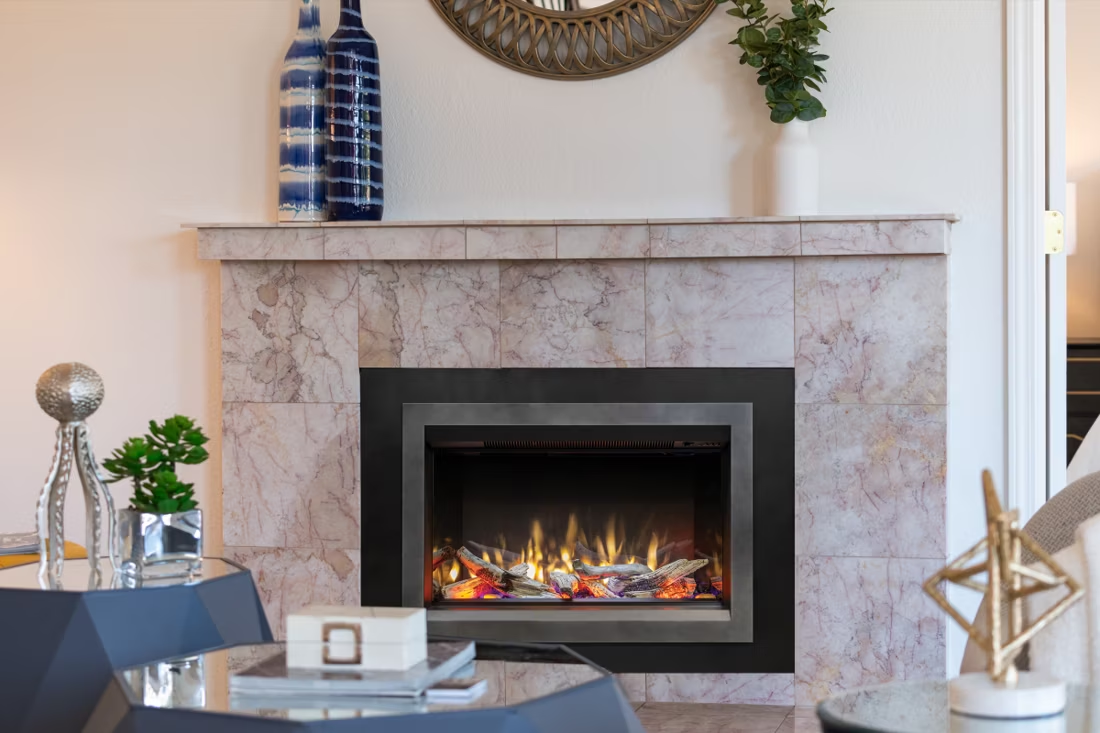
From the orchards along the Columbia at Brewster to the high cabins outside Winthrop, electric fireplaces give Okanogan County homeowners smoke-free warmth without a chimney, a burn permit, or a fuel delivery. Find the right unit and get matched with a trusted local dealer.
Every Project Starts From One of These Five Situations
Warmth that works when a burn ban shuts everything else down.
Okanogan County is Washington's largest county by land area—stretching from the Columbia River at roughly 800 feet near Brewster and Oroville up into the Pasayten Wilderness above 8,000 feet, with the Methow Valley towns of Twisp and Winthrop sitting in between. At Climate Zone 6B with average winter lows near 23°F and about 6,177 heating degree days a year, this county sees a cold season on par with Bozeman, Montana—long, and cold enough that supplemental heat matters in most homes from October through April.
Wildfire smoke is the defining air-quality reality here, and summers that end in haze often carry into fall burn restrictions that limit wood-stove use during Stage 1 and Stage 2 air quality advisories. Electric fireplaces and inserts produce zero combustion byproducts, so they keep running during those advisories when wood stoves have to go cold. They're also popular in second homes and rental cabins around Winthrop and Twisp, where owners want ambiance and zone heat without worrying about a chimney or an unattended fire while the property sits empty. Power comes through Okanogan County Public Utility District, whose largely hydro-sourced rates keep electric heat more affordable here than in many parts of the country—though it's still worth treating electric as supplemental heat alongside a home's primary furnace or heat pump rather than a sole heat source through a 6,177-HDD winter.
Three steps. No salesperson until you're ready.
Tell us about your project
Your zip code, your situation, and the fuel you're leaning toward—or let the answers point you to one.
See what's actually available
The brands dealers within 100 miles genuinely carry—real options, never a catalog mirage.
Get your dealer & Project Guide
A trusted local dealer, plus the free Project Guide & Parts List that names every component of the job.
Frequently Asked Questions
How much does an electric fireplace or insert cost to install in Okanogan County?
Plug-in electric fireplaces and inserts that run on a standard 120-volt outlet typically cost $300 to $1,500 for the unit itself, with no formal installation required beyond mounting—many homeowners handle this themselves. Built-in electric fireplaces or larger inserts often need a dedicated 20-amp circuit, which means an electrician's visit; that work typically adds $300 to $800 depending on how far the unit is from your electrical panel, which can be a bigger factor in older farmhouses around Tonasket or Oroville with dated wiring. Total project cost usually lands between $600 and $2,500 for most Okanogan County homes, well below what wood or gas installations run.
Do I need a permit for an electric fireplace in Okanogan County?
A plug-in electric fireplace that uses an existing outlet doesn't require a permit. If your installer needs to run a new dedicated circuit or add a breaker—common for built-in units in newer construction around Omak or Okanogan—that electrical work falls under Washington State Department of Labor & Industries (L&I) electrical permitting rather than a county building permit, since L&I handles electrical inspections in most of unincorporated Okanogan County. A licensed electrician pulling the permit as part of the install is standard practice and keeps everything code-compliant.
Will my electric fireplace work during a power outage?
No—electric fireplaces and inserts require utility power to run, so they go dark during an outage. This matters in Okanogan County, where winter storms and high-wind events can knock out Okanogan County PUD service in rural stretches of the Methow Valley and along the Highway 20 corridor for hours at a time. If backup heat during outages is a priority, pair an electric fireplace with a generator, or consider that a wood stove burning ponderosa pine or lodgepole pine remains the only option in this county that keeps working when the grid doesn't.
Are electric fireplaces exempt from wildfire-smoke burn restrictions?
Yes. When smoke from regional wildfires pushes air quality into Stage 1 or Stage 2 burn ban territory, wood stoves and fireplaces (even EPA-certified ones, during Stage 2) are restricted from operating. Electric units produce no combustion emissions, so they're unaffected by these advisories. That's a major reason electric fireplaces have caught on in second homes and rentals around Winthrop and Twisp—owners get reliable zone heat and ambiance regardless of what the smoke forecast looks like that week.
Electric fireplace vs. wood stove—which makes sense for my Okanogan County home?
Wood stoves burning locally available ponderosa pine, lodgepole pine, or Douglas fir deliver far more heat per dollar and keep working through both power outages and 23°F winter nights—a real advantage given this county's 6,177 heating degree days. Electric fireplaces cost more to run as a primary heat source but require no chimney, no permit for a plug-in unit, no Colville National Forest cutting permit, and no ash cleanup, and they keep running during wood-burning restrictions triggered by wildfire smoke. Many Okanogan County homeowners run both: a wood stove or insert for primary cold-weather heat, and an electric unit in a bedroom, den, or rental cabin for supplemental warmth and smoke-season backup.
What size electric fireplace or insert do I need?
Most electric fireplaces are rated for a specific square footage as supplemental zone heat rather than whole-home heating—typically 400 to 1,000 square feet per unit at full output. For a Methow Valley cabin near Twisp or Winthrop used mainly for weekend warmth and ambiance, a mid-size insert (750-1,500 watts) in the main living area is usually enough. For a year-round home in Omak or Okanogan where the unit supplements a furnace or heat pump, sizing to the specific room you're heating—rather than the whole house—gives the most realistic comfort expectations.
What's the best electric fireplace for a cold climate like Okanogan County's?
Look for units with a true heater rating (typically 4,600-5,000 BTU, 1,500 watts) rather than purely decorative models, since Okanogan County winters regularly justify real supplemental heat rather than ambiance alone. Brands like Dimplex, Napoleon, and Touchstone build electric inserts and mantel units with dual-function heaters that can run on flame-only mode in shoulder seasons and full heat mode during cold snaps. A local dealer can walk you through which models actually hold up to daily winter use versus ones designed mainly for occasional ambiance.
Is electric heat expensive to run in Okanogan County?
It depends on how much you lean on it. Okanogan County PUD's largely hydro-based power keeps electric rates relatively favorable compared to many parts of the country, which helps offset the fact that electric resistance heat costs more per BTU than wood. Used as supplemental or zone heat—warming a den or bedroom rather than the whole house through a 6,177-HDD winter—an electric fireplace's running cost stays modest. Relying on one as a primary heat source across an entire Okanogan or Omak-area home through a full winter would run considerably higher on the electric bill than heating with wood or propane.
Electric fireplace vs. pellet stove—which is right for my home?
Pellet stoves burning bagged pellets from regional brands like Bear Mountain, Lignetics, or Pacific Pellet produce real, efficient heat output and can serve as a home's primary heat source, but they need electricity to run the auger and blower—so they go down in a power outage just like an electric fireplace would. Electric fireplaces are simpler (no hopper to fill, no ash, no venting) but produce less total heat and cost more per BTU to run continuously. For an Okanogan County home that wants genuine winter heat output with some hands-on fuel handling, pellet often wins; for a room that needs supplemental warmth and ambiance with zero maintenance, electric is the easier answer.
Do electric fireplaces actually produce heat?
Yes—most put out around 4,800–5,000 BTUs from a standard outlet, which comfortably warms a bedroom, office, or den as a comfort-zone heater. What they won't do is carry a whole house the way wood, gas, or pellet can. Think of electric as ambiance-first with honest supplemental heat: flames on with no heat in July, flames plus warmth in January.
Can I put a TV above my fireplace?
Yes—with an asterisk. Fireplaces are hot and TVs don't like heat. Either put a mantel between them to deflect rising warmth, or choose a fireplace with heat-management technology that creates a cool zone on the wall above—the wall stays around 125 degrees, barely warm, while the room still gets full heat. If you like clean lines and don't want a mantel, heat management is the answer.
Does a fireplace add value to my home?
On average, a fireplace adds back to the home about the same amount you spent installing it. Add the monthly savings from heating the rooms you actually use instead of the whole house—often hundreds of dollars a year—and the value case is strong before you even count what a fire does for how your family uses the room.
How much should I budget for a fireplace?
For an average home—covering the fireplace, the vent pipe, and basic installation—a budget between $3,900 and $5,500 gives you a lot of options across wood, gas, and pellet. By the time you add finish work, gas line, and electrical, the average complete installation lands between $5,000 and $12,000 all-in. In a remodel or new build, a good rule is to put about 2.5% of the total project cost toward the fireplace.
Stove and Fireplace Dealers in Okanogan County
Listings include WhyFire partner dealers, dealers we have verified as authorized for the brands we recommend, and established local businesses that carry hearth products. Every listing shows which one it is. The ones marked Preferred run on WhyFire's software, so they can show you real pricing and book your appointment right here. No manufacturer pays for placement. How we verify dealers →
Valley Lumber
Lee Frank Mercantile
Cascade Pipe & Feed Supply
Find your electric fireplace in Okanogan County.
Tell us a bit about your home—cabin, year-round house, or rental near Winthrop or Twisp—and we'll match you with the right electric fireplace or insert, plus a free Project Guide & Parts List with your recommended local dealer.
Find Your Fireplace →