
Instant heat, zero venting, any room in Mead.
No chimney, no gas line, no permit hassle—just plug in or wire in and add warmth to whichever room in your Spokane County home needs it most.
Every Project Starts From One of These Five Situations
The no-permit, no-chimney way to add heat.
Mead sits just north of Spokane at about 1,786 feet, where winters bring roughly 6,019 heating degree days and average lows near 26°F—cold enough to need real supplemental heat, though milder than the high desert country further south. A lot of homes in this part of Spokane County already lean on wood or gas for primary heat, especially with ponderosa pine, lodgepole pine, and Douglas fir forests close by. Electric fireplaces fill a different gap: bonus rooms, finished basements, additions, and any space where running new gas line or building a chimney chase isn't realistic.
Electric service in Mead comes from two different providers with meaningfully different rates. Avista Corp bills residential customers around $0.119 per kWh, while Inland Power & Light Company—the rural electric cooperative covering much of this stretch of Spokane County—charges closer to $0.09 per kWh, one of the lower residential rates in the Pacific Northwest thanks to regional hydropower. That gap matters if you're running a 1,500-watt unit several hours a night through the winter. It's also worth noting that electric heat doesn't add anything to the air during the wildfire smoke events that hit this region most summers, which is a real consideration if you're weighing it against a wood stove for a room you use year-round.
Three steps. No salesperson until you're ready.
Tell us about your project
Your zip code, your situation, and the fuel you're leaning toward—or let the answers point you to one.
See what's actually available
The brands dealers within 100 miles genuinely carry—real options, never a catalog mirage.
Get your dealer & Project Guide
A trusted local dealer, plus the free Project Guide & Parts List that names every component of the job.
Frequently Asked Questions
How much does it cost to install an electric fireplace in Mead?
Plug-in electric inserts and mantel packages are the cheapest path—since they run on a standard 120V outlet, there's no gas line, no venting, and usually no permit, so installed cost typically lands between $300 and $1,500 depending on the unit and any surround or built-in cabinetry work. Larger wall-mounted or built-in units that need a dedicated 20-amp or 240V circuit run higher, often $1,500 to $3,500, because that requires a licensed electrician and sometimes drywall or trim repair. Either way, electric installs cost a fraction of a wood or gas project in Mead since there's no chimney, liner, or gas fitting involved.
Can an electric fireplace actually heat a room during a Mead winter?
For zone heating, yes—most units put out 5,000 to 9,000 BTU, enough to comfortably warm a single room in the 400 to 1,000 square foot range. Given Mead's average winter low of 26°F and roughly 6,019 heating degree days, an electric fireplace isn't going to replace a furnace or a wood stove as whole-home heat, and I'd be doing you a disservice to suggest otherwise. Where it shines is supplementing a room your main heat source struggles to reach—a converted garage, a bonus room over an unheated space, or a basement—so you can turn the thermostat down elsewhere and heat only where people are sitting.
Do I need a permit to install an electric fireplace in Mead?
A plug-in insert or mantel package that runs off an existing outlet doesn't require a permit—there's no gas, no venting, and no structural change involved. If you're installing a built-in unit that needs a new dedicated circuit, that electrical work falls under Spokane County's building and electrical permitting, and it should be pulled and inspected by a licensed electrician rather than done as a DIY project. Most local dealers can tell you within a few minutes of looking at your install location whether a new circuit is needed.
What's the difference between an electric fireplace, insert, and mantel package?
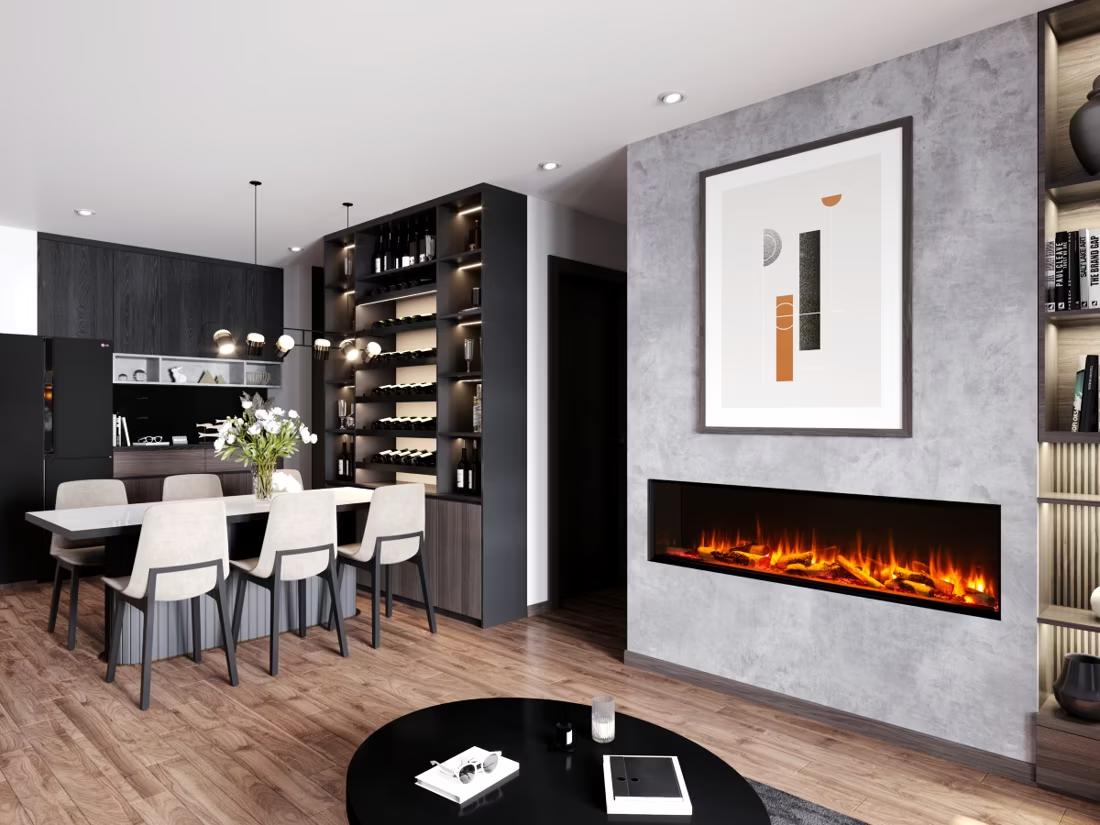
An electric insert is a self-contained unit designed to slide into an existing masonry or wood-fireplace opening—a good option if you're converting an old wood-burning fireplace you no longer want to feed. A built-in electric fireplace is meant to be framed into a wall like a TV, giving you a flush, modern look but requiring more finish carpentry. A mantel package pairs a freestanding electric firebox with a stand or mantel surround—no wall modification needed, and it can move with you if you rent or relocate. For a lot of Mead homeowners without an existing hearth, the mantel package is the simplest starting point.
Does it matter which electric utility serves my home in Mead?
It affects your running cost more than you'd expect. Avista Corp customers pay around $0.119 per kWh, while homes served by Inland Power & Light Company—the cooperative that covers a good portion of rural Spokane County including parts of Mead—pay closer to $0.09 per kWh. Over a winter of daily use, that difference adds up. Check a recent bill to confirm which utility serves your address before you budget for hours of use, since it's common for neighboring streets in this area to be split between the two providers.
What's a good electric fireplace for supplemental heat in a cold Spokane County winter?
Look for a unit with a true 1,500-watt heater element rather than a decorative-only flame unit—brands like Dimplex, Napoleon, and Touchstone all make models with realistic flame technology and enough heat output to matter in a Mead winter. For a room you actually want to warm (not just accent), prioritize the heater spec over flame effects; some lower-end units sold mainly for ambiance only push 400-750 watts of heat, which won't do much on a 26°F night.
Should I get electric or wood heat for my home in Mead?
Wood remains common here given the ponderosa pine, lodgepole pine, and Douglas fir in the surrounding forests, with cutting permits available from BLM Spokane District and BLM Coeur d'Alene District at $10 per cord, or the Idaho Panhandle National Forests at $5-$20 per cord, generally April through October. Wood gives you real heat output and works during a power outage. Electric can't do either of those things, but it's the cleaner choice when regional wildfire smoke is thick and you don't want to add more combustion byproducts to the air, and it's dramatically simpler to install in a room that doesn't already have a chimney. Many households here end up with wood as primary heat and an electric unit for a secondary room.
Will my electric fireplace still work if the power goes out?
No—electric fireplaces are entirely dependent on grid power, and Spokane County does see winter windstorm outages that can last hours or, occasionally, a couple of days. If backup heat during an outage is a real concern for your household, an electric fireplace shouldn't be your only heat source; pair it with a wood stove or a battery-backed gas unit for the rooms where losing heat during a storm would actually be a problem.
Where can I find a local dealer to install an electric fireplace near Mead?
A handful of hearth retailers and electricians in the greater Spokane area handle electric fireplace sales and installation, but quality and product selection vary a lot by shop. Rather than guessing which local dealer actually stocks a unit with real heat output versus a decorative-only model, tell us about your space and we'll match you with a trusted local dealer who installs electric fireplaces regularly in Spokane County homes like yours.
Can I put a TV above my fireplace?
Yes—with an asterisk. Fireplaces are hot and TVs don't like heat. Either put a mantel between them to deflect rising warmth, or choose a fireplace with heat-management technology that creates a cool zone on the wall above—the wall stays around 125 degrees, barely warm, while the room still gets full heat. If you like clean lines and don't want a mantel, heat management is the answer.
What fireplace styles should I know before shopping?
Four cover most of the market: screen-front traditional (mesh front, open feel, fits craftsman homes), traditional door set (the classic look you grew up with), modern linear (wide, low, the statement piece for entertaining), and clean face contemporary (no trim—your tile or stone runs right to the fire's edge). Walk in knowing those four terms and you're ahead of most buyers.
How much should I budget for a fireplace?
For an average home—covering the fireplace, the vent pipe, and basic installation—a budget between $3,900 and $5,500 gives you a lot of options across wood, gas, and pellet. By the time you add finish work, gas line, and electrical, the average complete installation lands between $5,000 and $12,000 all-in. In a remodel or new build, a good rule is to put about 2.5% of the total project cost toward the fireplace.
Can a fireplace actually lower my heating bill?
Yes—by creating a comfort zone. A furnace heats every square foot of the house just to warm the one room you're in; a gas fireplace on low burns roughly a sixth of the gas a typical furnace does. Set the furnace around 55–60 degrees as a baseline, then heat the rooms your family actually uses. Families who heat this way commonly save $20–$60 a month.
Nearby Dealers
Hearth shops serving Mead and the surrounding area. Every listing shows whether it is a WhyFire partner, a dealer we have verified as authorized for the brands we recommend, or a local business carrying hearth products. No manufacturer pays for placement. How we verify dealers →
Copper Creek Landscaping, Inc
Wing Stoves & More
Accent Stove & Spa
Tri State Distributors
Rock Creek
Lake Creek Consulting LLC, Dba Lake Creek Comfort
Iron Stone
Electric Service in Mead
An electric fireplace's heater draws about 1,500 watts—pennies per hour at local rates.
Avista Corp
Inland Power & Light Company
Find your electric fireplace in Mead.
Tell us about your room and your electric utility, and we'll match you with a trusted local dealer and send over a free Project Guide & Parts List—the exact unit, circuit requirements, and parts for your Mead home.
Find Your Fireplace →