
Reliable heat for the Key Peninsula, even when the power lines come down.
Propane-fired warmth built for the wet, windy winters around Case Inlet. I'll match you with a trusted local dealer who can size the tank, the vent, and the unit correctly for your Longbranch home.
Every Project Starts From One of These Five Situations
Propane does the heavy lifting out here.
Longbranch sits on the Key Peninsula between Case Inlet and greater Puget Sound, at just 189 feet of elevation in a mild marine climate zone (4C). Winters here rarely get brutally cold—the average winter low hovers around 36°F—but a long, damp, gray, windy heating season adds up, and storms rolling off the Sound regularly take down power lines. Peninsula Light Company crews are good at restoring service, but rural line runs on the Key Peninsula mean outages of several hours to a day or more aren't unusual in a bad winter.
There's no piped natural gas utility serving Longbranch or most of the surrounding Key Peninsula—this is propane country. Every gas fireplace, insert, or stove installed out here runs on a propane tank rather than a municipal gas line, which changes a few things about planning the project: tank placement and setback distance from the house matter, and your installer needs to size the regulator and line correctly for propane's different pressure and BTU characteristics. Done right, a propane gas fireplace gives you instant heat at the flip of a switch and, with the right ignition system, a heat source that keeps working through a Peninsula Light outage.
Three steps. No salesperson until you're ready.
Tell us about your project
Your zip code, your situation, and the fuel you're leaning toward—or let the answers point you to one.
See what's actually available
The brands dealers within 100 miles genuinely carry—real options, never a catalog mirage.
Get your dealer & Project Guide
A trusted local dealer, plus the free Project Guide & Parts List that names every component of the job.
Frequently Asked Questions
How much does a gas fireplace installation cost in Longbranch?
Most propane fireplace installations in Longbranch run $5,000 to $11,500, depending on the unit, the venting path, and whether you already have a propane tank on the property. A direct-vent insert going into an existing masonry fireplace, with propane already piped to the house, sits toward the lower end. A new built-in unit in a remodel—plus a new propane tank set and buried line run from the tank to the house—pushes toward the upper end. Tank rental or purchase from a regional propane supplier is a separate cost your local installer can help you plan for.
Can I convert my existing wood fireplace to propane gas?
Yes, and it's a common request on the Key Peninsula, where a lot of homes were built with a wood-burning masonry fireplace decades ago. A propane insert typically slides into that existing firebox, using a stainless liner run up your current chimney for venting. Cost usually lands between $4,800 and $9,500 in the Longbranch area, with the range driven mostly by whether the home already has a propane tank and line in place or needs one installed.
Do I need natural gas, or is propane my only option in Longbranch?
Propane is effectively your only option—there's no natural gas utility line serving Longbranch or the surrounding Key Peninsula communities. Nearly every gas fireplace installed in this area runs on propane from an on-site tank, either owned outright or supplied under a fill contract with a regional propane company. The good news is that almost every gas fireplace, insert, and stove on the market is available in a propane configuration; your installer sets the correct orifice and regulator for propane pressure rather than natural gas.
Will my gas fireplace work during a Peninsula Light Company power outage?
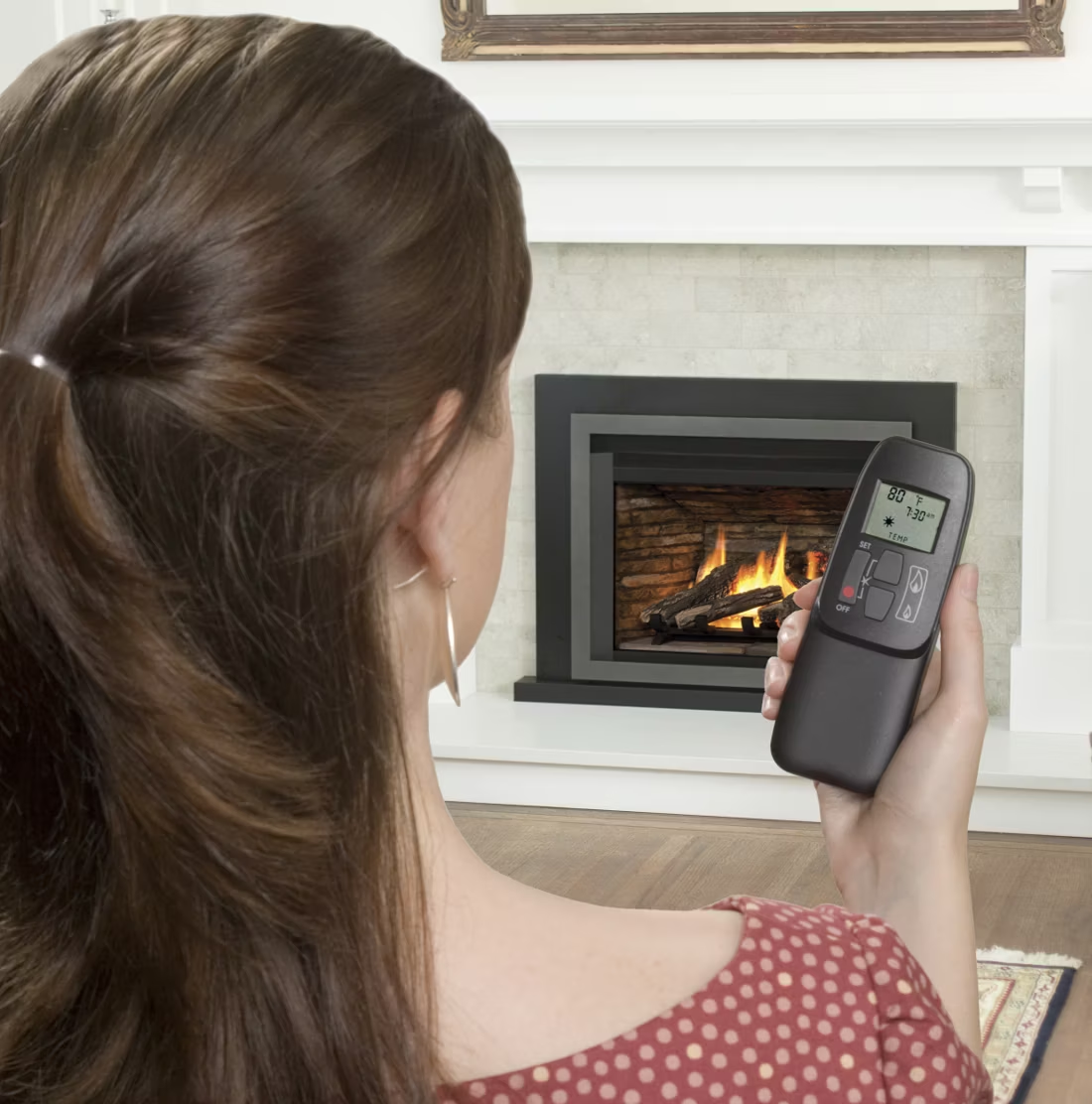
Most modern propane fireplaces will, which is a real selling point out here given how often storm-driven outages hit the Key Peninsula's rural lines. Units with IPI (intermittent pilot ignition) use a battery backup—typically a few AA batteries built into the unit—that automatically takes over when line power drops, so the fireplace still lights on demand. Valor's propane fireplaces go a step further: their pilot assembly generates its own electricity through the thermocouple, so there are no batteries to remember or replace, ever. For a Longbranch home that loses power for a day or more during a winter windstorm, that difference matters.
What's the difference between a gas fireplace, gas insert, and gas stove?
A gas fireplace is a fully framed-in, built-in unit—the right choice for new construction or a remodel where you're building the wall around it. A gas insert is built to slide into an existing masonry firebox, sealing it up and venting through the existing chimney with a liner—the common choice for older Key Peninsula homes that already have a wood fireplace. A gas stove is a freestanding cast-iron or steel unit that sits out on a hearth pad, similar in footprint to a wood stove but running on propane. For most Longbranch homes with an existing fireplace, an insert is the simplest upgrade; cabins or additions without one often do better with a freestanding stove.
Do I need a permit to install a gas fireplace in Longbranch?
Yes—Longbranch is unincorporated, so gas fireplace and propane line installations fall under the Pierce County Planning and Public Works Department. You'll need a building permit for the unit and venting, plus sign-off on propane tank placement and setback from the house and property lines. Most established hearth dealers who work the Key Peninsula handle this paperwork as part of the installation, including coordinating with your propane supplier on tank siting.
Vented vs. vent-free propane fireplaces—what should I know?
Vented (direct-vent) propane fireplaces pull combustion air from outside and exhaust it back outside through a sealed pipe—they're the standard, code-friendly choice almost everywhere, including Pierce County. Vent-free units burn propane directly into the room without external venting; they're technically more fuel-efficient but release some water vapor and combustion byproducts indoors, and they come with strict room-size and ventilation requirements. Given how damp the Key Peninsula climate already is, most local installers steer homeowners toward direct-vent units—they avoid adding extra moisture to a house that's already dealing with marine humidity most of the year.
How often does a propane fireplace need to be serviced?
Plan on an annual inspection, ideally before the wet season sets in each fall. A technician checks the burner, pilot assembly, venting, and the propane regulator and connections, and cleans the glass and interior. This matters even more for propane systems than natural gas ones, since tank changes, line pressure, and outdoor tank corrosion from Puget Sound's salt air are all things worth a yearly look. Expect to pay roughly $150 to $250 for a standard annual service call from a local hearth or propane appliance technician.
Gas vs. wood—which makes more sense for a Longbranch home?
Wood is still a strong option on the Key Peninsula—douglas fir, red alder, and lodgepole pine are all common locally, and Forest Service cutting permits through Olympic National Forest or Mt. Baker-Snoqualmie National Forest run just $5 to $20 per cord during the May-through-October season. Wood also keeps working with zero electricity, which appeals to a lot of people given how often storms take down Peninsula Light's lines. Propane gas wins on convenience—no splitting, stacking, or ash cleanup, instant on-off operation, and (with a battery-backup or self-powered pilot unit) heat that still works during an outage without any tending. Plenty of Longbranch homes end up with both: propane for daily, no-fuss heat in the main living space, and a wood stove elsewhere for backup and ambiance.
What's the difference between an insert and a zero-clearance fireplace?
An insert is a fireplace that slides into a pre-existing wood-burning fireplace—if you don't have one, there's nothing to insert it into. A zero-clearance fireplace is built into a framed wall, which makes it the answer for remodels and new construction. Simple test: existing masonry fireplace means insert; blank or framed wall means zero-clearance.
Does a gas fireplace work when the power is out?
Yes—modern gas fireplaces have a battery backup for the ignition system that lasts for weeks, so no power equals no problem. Your furnace can't say that: no electricity, no blower, no heat. It's one of the most common reasons families add a fireplace, and worth confirming on any model you're considering.
How much should I budget for a fireplace?
For an average home—covering the fireplace, the vent pipe, and basic installation—a budget between $3,900 and $5,500 gives you a lot of options across wood, gas, and pellet. By the time you add finish work, gas line, and electrical, the average complete installation lands between $5,000 and $12,000 all-in. In a remodel or new build, a good rule is to put about 2.5% of the total project cost toward the fireplace.
Should the dealer who sells my fireplace also install it?
Ideally, yes. A fireplace project involves vent pipe, gas line, electrical, and often tile or stone. Hire three or four separate trades and you own the liability and the game of telephone between them. One company selling and installing means one accountable party, start to finish—ask about factory training, on-time completion records, and what happens if an inspection fails.
Nearby Dealers
Hearth shops serving Longbranch and the surrounding area. Every listing shows whether it is a WhyFire partner, a dealer we have verified as authorized for the brands we recommend, or a local business carrying hearth products. No manufacturer pays for placement. How we verify dealers →
Aqua Rec’s Fireplace Shop
Aqua Rec Swimmin Hole And Fireside
Rich’s Woodstoves & Spas
Yelm Home Center
Olympic Stove & Spa, Inc.
Sunrice Gas & Chimney Services
Cascade Fire Solutions
Benson, LLC
Find your gas fireplace in Longbranch.
Tell me about your home and I'll match you with a trusted local dealer and send over your free Project Guide & Parts List—the exact propane fireplace or insert, tank and line plan, and vent kit sized for your Longbranch property.
Find Your Fireplace →