
Instant heat for the Long Beach Peninsula's damp coastal winters.
No chimney, no venting, no salt-air corrosion worries—just plug in or wire up and get warm. Find the right electric fireplace for your peninsula home and connect with a trusted local dealer.
Every Project Starts From One of These Five Situations
Cheap hydropower and salt air make electric the practical choice.
Long Beach sits at just 27 feet of elevation on a narrow finger of sand between the Pacific and Willapa Bay, in climate zone 4C—a marine climate where winter lows average a mild 36°F. That's a different world from a place like Bismarck, ND, where winter lows regularly drop below zero for weeks at a time. Long Beach still adds up to a long, steady heating season because of how consistently damp and cool it stays, but the cold here is a persistent, penetrating dampness rather than a hard freeze—the kind of chill that instant, on-demand heat handles better than a slow-building fire.
Pacific County PUD No. 2 supplies power to the peninsula at 9.17 cents per kWh, one of the lower residential rates in Washington thanks to regional hydropower—which makes running an electric fireplace for daily supplemental heat genuinely cheap here. It also matters that so much of Long Beach's housing stock is second homes and short-term vacation rentals along the dunes: property owners want heat that doesn't require firewood delivery, chimney maintenance, or worrying about an unattended ember while guests are asleep. Add in the salt air that corrodes exposed metal components over time, and it's easy to see why electric units—with no venting, no combustion, and no chimney exposed to the marine environment—have become the practical default for a lot of peninsula properties, even in a town where wood heat is still common in year-round homes.
Three steps. No salesperson until you're ready.
Tell us about your project
Your zip code, your situation, and the fuel you're leaning toward—or let the answers point you to one.
See what's actually available
The brands dealers within 100 miles genuinely carry—real options, never a catalog mirage.
Get your dealer & Project Guide
A trusted local dealer, plus the free Project Guide & Parts List that names every component of the job.
Frequently Asked Questions
How much does an electric fireplace installation cost in Long Beach?
Plug-in electric inserts and log sets—the kind that drop into an existing fireplace opening and run off a standard 120V outlet—typically run $300 to $1,200 with no electrician required. Built-in wall-mount or linear electric fireplaces that need a dedicated circuit run $1,500 to $3,500 once you factor in an electrician, which is common in older peninsula beach cottages where the existing wiring wasn't built for a 1,500-watt heating appliance. Either way, you're skipping the chimney, flue liner, and venting costs that come with wood or gas installs—that's the main reason electric tends to be the lowest-cost option on the peninsula.
What size electric fireplace do I need for a peninsula beach house?
Most electric fireplaces are rated for zone heating—roughly 400 to 1,000 square feet per unit, depending on ceiling height and how well the home is insulated. A lot of Long Beach cottages are older, single-story, and drafty by modern standards, so a single 1,500-watt insert in the main living area is often enough supplemental heat, especially paired with baseboard or ductless heat elsewhere in the house. For larger year-round homes, some owners install a second unit in a bedroom or bonus room rather than sizing up one unit—electric doesn't lose efficiency the way an oversized wood stove would, so splitting the heat load across rooms is a reasonable approach here.
Do I need a permit to install an electric fireplace in Long Beach?
A simple plug-in insert or freestanding unit needs no permit—it's no different than plugging in a space heater. If you're installing a built-in or wall-mount unit that requires a new dedicated circuit, that electrical work needs a permit through Pacific County Building Department, and it should be pulled by a licensed electrician regardless of who sells you the fireplace. Because there's no combustion and no venting involved, electric fireplaces sidestep the building permit and inspection process that wood and gas installations require in Pacific County.
What's the best type of electric fireplace for the coastal salt air here?
Look for units with sealed electronic components and a solid steel or composite housing rather than budget models with exposed circuit boards—salt-laden marine air on the peninsula will corrode unprotected metal parts over a few winters. Recessed wall inserts and linear built-ins from established manufacturers tend to hold up better than bargain freestanding stoves shipped for indoor big-box use elsewhere. If the fireplace is going into a rental unit that sits empty and unheated for stretches during the off-season, ask your local dealer specifically about moisture and corrosion resistance—it's a real consideration here in a way it wouldn't be inland.
Is electric a good fit for a vacation rental on the peninsula?
It's one of the more common reasons owners choose electric here. A wood-burning setup means firewood storage, ash cleanup between guest turnovers, and the liability of an unattended fire in a rental—plus, self-cut firewood requires a Forest Service permit through Olympic National Forest ($5–$20 per cord, May through October season), which isn't practical for an absentee owner. Electric units turn on with a remote or app, need zero fuel handling, and carry no ember or chimney-fire risk, which is exactly what most short-term rental insurance policies and property managers prefer.
What does it actually cost to run an electric fireplace here?
At Pacific County PUD No. 2's residential rate of 9.17 cents per kWh—among the cheapest power in Washington thanks to regional hydro—a typical 1,500-watt electric fireplace costs roughly 14 cents an hour to run on full heat. Running it 5 hours a night through a damp peninsula winter adds up to about $20–$25 a month, noticeably less than the same unit would cost on many other Northwest utilities. It's a big part of why electric heat pencils out so well for supplemental use here even though it isn't the cheapest fuel nationally.
What happens if the power goes out during a coastal storm?
Electric fireplaces stop working the moment the power does, and the peninsula does see winter storm outages—onshore wind events off the Pacific can knock out lines for hours or, occasionally, longer. If you're relying on electric as your only heat source, it's worth keeping a backup plan: a wood stove or fireplace insert that burns Douglas fir, red alder, or lodgepole pine (all common locally) will keep running with zero power, and a Forest Service permit for self-cut wood through Olympic National Forest costs as little as $5 per cord. Many peninsula homes pair an electric fireplace for everyday convenience with a wood-burning appliance for genuine storm backup.
Can I convert an existing wood fireplace to electric?
Yes, and it's a straightforward project for older Long Beach cottages built with a masonry fireplace. An electric log insert slides into the existing firebox opening and plugs into a nearby outlet or a newly wired one—no chimney liner, no venting modification, and the original mantel and surround stay as-is. Some owners cap the chimney afterward to stop the draft and moisture intrusion that an unused flue invites in this marine climate, which is worth asking your installer about.
Where can I find an electric fireplace dealer near Long Beach?
Long Beach itself is a small town of under 2,000 people, so dedicated hearth retailers are limited locally—most peninsula homeowners work with dealers based in Aberdeen, Longview, or across the Columbia in Astoria, Oregon, who service the whole Pacific County coastline. These are the installers who understand the wiring quirks of older beach cottages and the corrosion issues that come with salt air, which matters more here than in an inland market. We'll help you find one who actually covers your zip code rather than pointing you toward a big-box option that ships and forgets.
Can I put a TV above my fireplace?
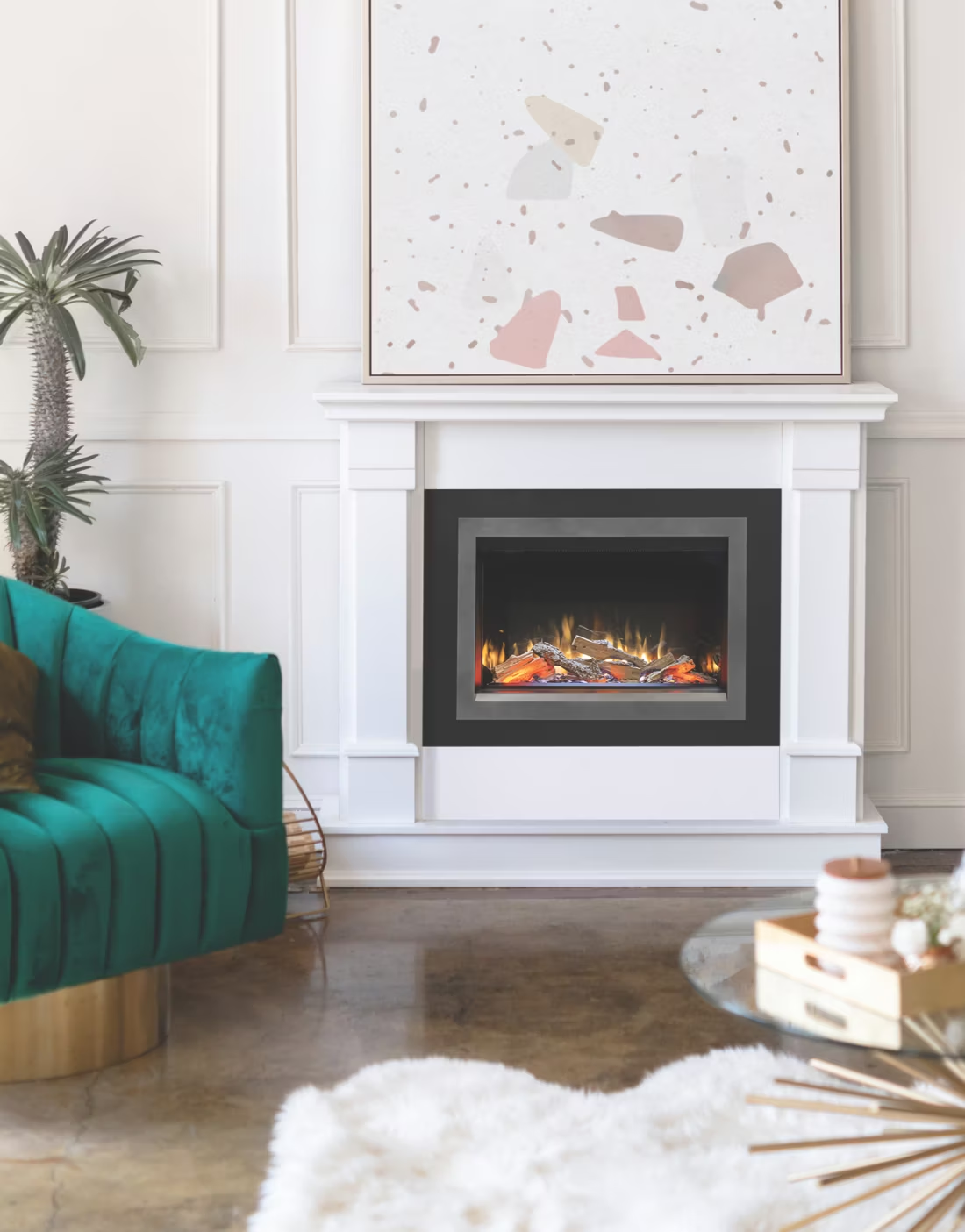
Yes—with an asterisk. Fireplaces are hot and TVs don't like heat. Either put a mantel between them to deflect rising warmth, or choose a fireplace with heat-management technology that creates a cool zone on the wall above—the wall stays around 125 degrees, barely warm, while the room still gets full heat. If you like clean lines and don't want a mantel, heat management is the answer.
Do electric fireplaces actually produce heat?
Yes—most put out around 4,800–5,000 BTUs from a standard outlet, which comfortably warms a bedroom, office, or den as a comfort-zone heater. What they won't do is carry a whole house the way wood, gas, or pellet can. Think of electric as ambiance-first with honest supplemental heat: flames on with no heat in July, flames plus warmth in January.
Does a fireplace add value to my home?
On average, a fireplace adds back to the home about the same amount you spent installing it. Add the monthly savings from heating the rooms you actually use instead of the whole house—often hundreds of dollars a year—and the value case is strong before you even count what a fire does for how your family uses the room.
Can a fireplace actually lower my heating bill?
Yes—by creating a comfort zone. A furnace heats every square foot of the house just to warm the one room you're in; a gas fireplace on low burns roughly a sixth of the gas a typical furnace does. Set the furnace around 55–60 degrees as a baseline, then heat the rooms your family actually uses. Families who heat this way commonly save $20–$60 a month.
Nearby Dealers
Hearth shops serving Long Beach and the surrounding area. Every listing shows whether it is a WhyFire partner, a dealer we have verified as authorized for the brands we recommend, or a local business carrying hearth products. No manufacturer pays for placement. How we verify dealers →
We’ve paused dealer listings for this connection today. Enter your zip or postal code above to find dealers near you, or come back tomorrow.
Popular Electric Brands
Where each brand came from, what's inside it today, and every current model. No brand pays to be here. Not every dealer carries every brand, so enter your zip code to see what's sold near Long Beach.
Fireplace Xtrordinair
Fireplace Xtrordinair, now often called FireplaceX, is the fireplace brand of Travis Industries, Inc., of Mukilteo, Washington.
5 electric models →DaVinci
DaVinci Custom Fireplaces is a brand of Travis Industries, Inc., of Mukilteo, Washington, the company behind Lopi and Fireplace Xtrordinair.
5 electric models →Kozy Heat
Kozy Heat was founded in 1976 by Dudley Hussong in Lakefield, Minnesota, and incorporated as Hussong Manufacturing Co., Inc. in 1978.
3 electric models →Forge & Flame
Forge & Flame is the stove brand Hearth & Home Technologies introduced in August 2023 to bring Vermont Castings, Harman, and Quadra-Fire under one name.
1 electric model →Electric Service in Long Beach
An electric fireplace's heater draws about 1,500 watts—pennies per hour at local rates.
Pud No 2 Of Pacific County
Find your electric fireplace in Long Beach.
Tell us about your home—or your rental—on the peninsula, and we'll put together a free Project Guide & Parts List with the exact unit, wiring needs, and a trusted local dealer to install it.
Find Your Fireplace →