
Warm, Dry Heat for Lewis County's Long Damp Winters.
Instant, reliable heat for the I-5 corridor and the foothill towns alike—natural gas in Chehalis and Centralia, propane from Winlock to Packwood. Find the right unit and connect with a trusted local dealer.
Every Project Starts From One of These Five Situations
Steady warmth without the wood pile.
Lewis County stretches from the Chehalis River lowlands along I-5, at around 200 feet elevation, up into the foothills near White Pass and Mt. Rainier, where towns like Randle and Packwood sit closer to 1,100 feet. It's a Climate Zone 4C marine-influenced county—winter lows average around 34°F, rarely plunging into the deep freezes you'd see in a place like Fargo, but with roughly 5,063 heating degree days spread across a long, wet heating season that often runs from October into May. The cold here isn't dramatic, it's persistent, and homes need heat that can run steadily for months without much fuss.
Cascade Natural Gas provides service to the incorporated areas of Chehalis and Centralia along the I-5 corridor, which covers a good share of the county's population. Outside those city limits—in Winlock, Toledo, Mossyrock, Morton, Randle, and Packwood—propane is the standard fuel, delivered by regional suppliers who serve rural tanks throughout the county. Either way, a gas fireplace or insert gives you heat at the flip of a switch, no wet wood to manage during a soggy Pacific Northwest winter, and the option to zone-heat a farmhouse or foothill cabin without running the furnace around the clock.
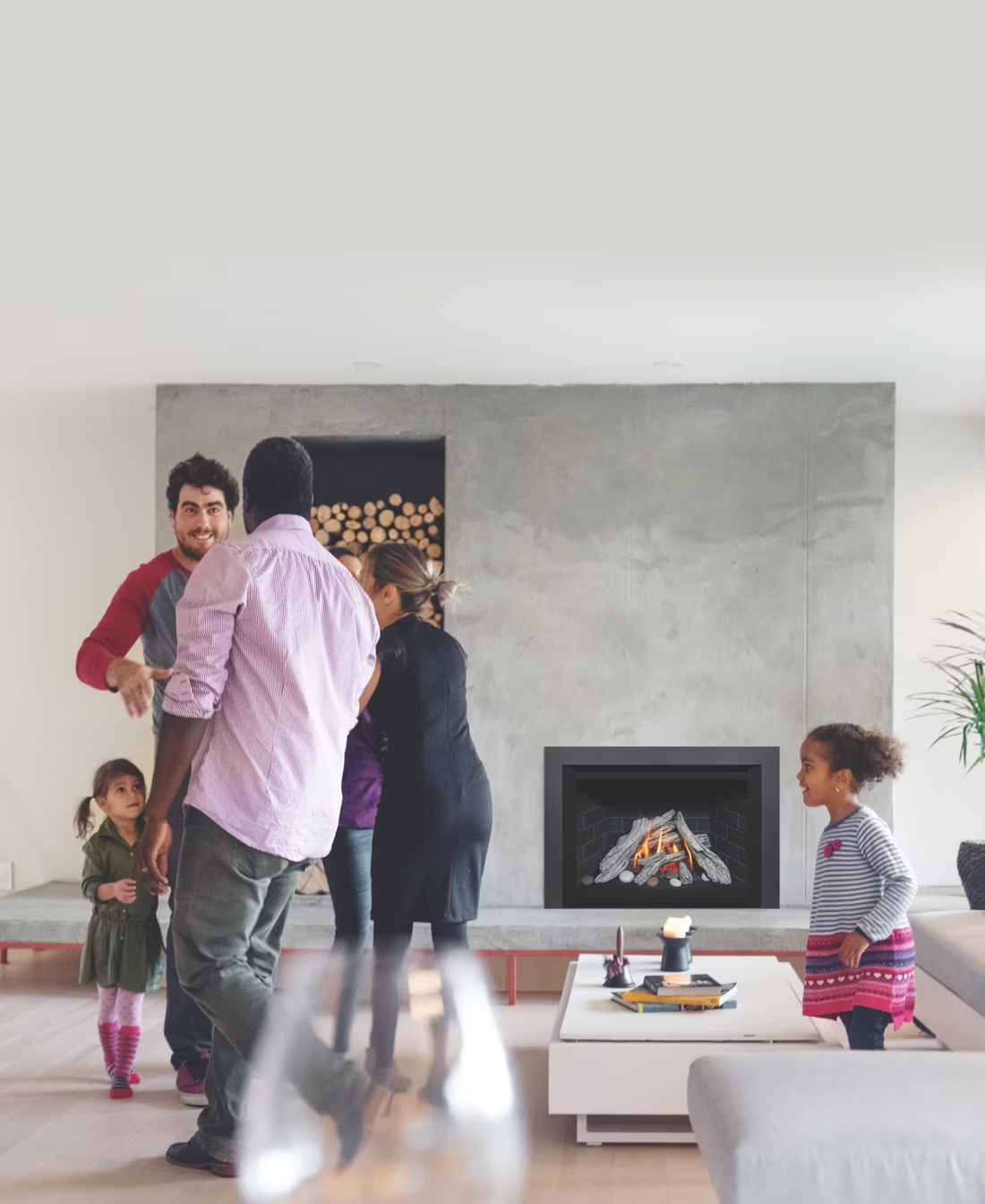
Three steps. No salesperson until you're ready.
Tell us about your project
Your zip code, your situation, and the fuel you're leaning toward—or let the answers point you to one.
See what's actually available
The brands dealers within 100 miles genuinely carry—real options, never a catalog mirage.
Get your dealer & Project Guide
A trusted local dealer, plus the free Project Guide & Parts List that names every component of the job.
Frequently Asked Questions
How much does a gas fireplace installation cost in Lewis County?
Most gas fireplace installations in Lewis County run between $4,000 and $10,000, depending on the unit and the venting path. A direct-vent insert going into an existing masonry fireplace with gas already run to the house sits toward the lower end. A new direct-vent fireplace in a remodel or an addition—with framing, venting, and a fresh gas line—lands in the middle to upper range. Homes outside the Chehalis-Centralia natural gas footprint that need a new propane tank set and line run from the tank should budget toward the higher end. A local dealer will size the job accurately after an in-home look at your existing chimney or wall cavity.
Can I convert my existing wood fireplace to gas?
Yes, and it's one of the more common upgrades local hearth dealers see in Lewis County, especially in older Chehalis and Centralia homes with a masonry fireplace that's rarely used. A gas insert slides into the existing firebox and vents through a stainless liner run up your current chimney, so you keep the look of the fireplace while gaining real, adjustable heat output. Typical cost runs $4,000 to $8,500, with the low end for homes already on natural gas service and the high end for propane conversions that need a new line or tank.
Do I need natural gas, or should I plan on propane?
It depends on where in the county you're located. Cascade Natural Gas serves the city of Chehalis and Centralia along the I-5 corridor, so if you're already on the natural gas grid there, adding a fireplace is straightforward. Outside those city limits—in Winlock, Toledo, Mossyrock, Morton, Randle, and up toward Packwood—propane is the standard, delivered and stored in a tank on your property. Nearly every gas fireplace on the market can be configured for either fuel; your installer just sets the correct orifice and regulator for the gas type you have.
Will my gas fireplace still work if the power goes out?
Most modern gas fireplaces will, which matters in Lewis County—windstorms off the coast and heavy wet snow in the foothills near White Pass knock out power in the county most winters. Units with intermittent pilot ignition (IPI) run off AA batteries that kick in automatically when line power drops, so the fireplace lights and operates normally. Valor fireplaces go a step further: the pilot's thermocouple generates the small amount of electricity the unit needs on its own, so there are no batteries to remember at all. If backup heat during an outage matters to you, ask your local dealer which ignition system a given model uses before you buy.
What's the difference between a gas fireplace, gas insert, and gas stove?
A gas fireplace is a fully built-in unit framed into a wall, typically chosen for new construction or a remodel. A gas insert is built to drop into an existing masonry fireplace, sealing it off and venting through the existing chimney with a liner—the right call for many of the older homes around Chehalis and Centralia. A gas stove is a freestanding cast-iron or steel unit that sits on the floor like a wood stove but burns gas, which works well in a foothill cabin or a room without an existing fireplace opening. A local dealer can walk your space and tell you which format fits.
Do I need a permit to install a gas fireplace in Lewis County?
Yes. Lewis County requires a building permit for new gas fireplace or insert installations, along with a separate gas line permit when new piping is involved, whether that's a natural gas line in Chehalis or Centralia or a propane line run from a new tank. Permits are handled through the Lewis County Community Development Department for unincorporated areas, or through the city for installs inside Chehalis or Centralia. Most established hearth dealers pull these permits as part of the install and schedule the required inspection, so you're not coordinating it yourself.
Should I choose a vented or vent-free gas fireplace?
Vented gas fireplaces—direct-vent models in particular—pull combustion air from outside and exhaust it back outside through a sealed pipe, which keeps combustion byproducts out of your living space entirely. Vent-free units burn without any outside venting and are legal in Washington within strict room-size and ventilation limits, but they do release some moisture and combustion gases into the room. In a county that already deals with wildfire smoke intruding on indoor air quality during dry summer stretches, most Lewis County dealers steer homeowners toward direct-vent units for daily use—they heat well and don't add anything to the air you're breathing.
How often does a gas fireplace need to be serviced?
Plan on an annual inspection, ideally before the heating season ramps up in early fall. A technician checks the burner, pilot assembly, venting, and any gas connections, and cleans the glass and interior components. This is a lighter service than wood chimney sweeping, but it's just as important—a dirty pilot or degraded gasket is the most common reason a gas fireplace stops firing reliably mid-winter. Expect to pay roughly $150 to $250 for a standard annual service call from a local dealer.
Should I go with gas or stick with wood heat?
Lewis County has a genuine wood-burning tradition—douglas fir, red alder, and lodgepole pine are all common locally, and Olympic National Forest issues personal-use cutting permits for $5 to $20 per cord during the May-through-October season. Wood works without electricity and costs less to fuel if you're willing to cut and split it yourself. Gas trades that self-sufficiency for convenience: no wet wood to season through a damp Pacific Northwest winter, no ash, and instant on-off heat at the flip of a switch or thermostat. Given how consistently wet the county's winters are, many homeowners here run gas as the everyday heat source and keep wood heat, if at all, as a backup or secondary unit in a shop or outbuilding.
Can I put a TV above my fireplace?
Yes—with an asterisk. Fireplaces are hot and TVs don't like heat. Either put a mantel between them to deflect rising warmth, or choose a fireplace with heat-management technology that creates a cool zone on the wall above—the wall stays around 125 degrees, barely warm, while the room still gets full heat. If you like clean lines and don't want a mantel, heat management is the answer.
What's the difference between an insert and a zero-clearance fireplace?
An insert is a fireplace that slides into a pre-existing wood-burning fireplace—if you don't have one, there's nothing to insert it into. A zero-clearance fireplace is built into a framed wall, which makes it the answer for remodels and new construction. Simple test: existing masonry fireplace means insert; blank or framed wall means zero-clearance.
Can a fireplace actually lower my heating bill?
Yes—by creating a comfort zone. A furnace heats every square foot of the house just to warm the one room you're in; a gas fireplace on low burns roughly a sixth of the gas a typical furnace does. Set the furnace around 55–60 degrees as a baseline, then heat the rooms your family actually uses. Families who heat this way commonly save $20–$60 a month.
Does a fireplace add value to my home?
On average, a fireplace adds back to the home about the same amount you spent installing it. Add the monthly savings from heating the rooms you actually use instead of the whole house—often hundreds of dollars a year—and the value case is strong before you even count what a fire does for how your family uses the room.
Stove and Fireplace Dealers in Lewis County
Listings include WhyFire partner dealers, dealers we have verified as authorized for the brands we recommend, and established local businesses that carry hearth products. Every listing shows which one it is. The ones marked Preferred run on WhyFire's software, so they can show you real pricing and book your appointment right here. No manufacturer pays for placement. How we verify dealers →
Energy Star Systems & Stoves
JnL Stoves & Spas
Yelm Home Center
Find your gas fireplace in Lewis County.
Tell us about your home and heating goals, and we'll match you with a trusted local Lewis County dealer and send over a free Project Guide & Parts List—the exact parts, including the vent kit, for your gas fireplace project.
Find Your Fireplace →