
The simplest way to add real warmth to a Kent home.
Kent's mild Puget Sound winters rarely call for a full wood or gas system—electric heat delivers ambiance and zone warmth with no venting, no chimney, and no gas line. Find the right unit and a trusted local dealer near you.
Every Project Starts From One of These Five Situations
Mild winters, dense housing, and no venting to worry about.
Kent sits at just 393 feet in the Green River Valley south of Seattle, where Puget Sound's marine climate keeps winters mild—the average winter low is 36°F, and the city logs roughly 4,369 heating degree days a year, less than half what a place like Fargo, ND or International Falls, MN sees in an average winter. That's a big part of why electric fireplaces have become a standard, mainstream choice here: most Kent homes don't need a high-BTU wood stove or gas insert to stay comfortable, just supplemental zone heat for the rooms people actually spend evenings in.
Kent is also one of the more densely populated cities in King County, with a housing mix across zip codes like 98030, 98031, and 98042 that includes a large share of condos, townhomes, and apartments—buildings where a wood or gas installation isn't practical or permitted by an HOA, but a 120-volt electric insert or built-in unit plugs into an existing outlet with no chimney or gas line required. Puget Sound Energy serves most of the city, with the City of Milton running its own utility on the southern edge, and at a residential rate around 14.6 cents per kWh, running an electric fireplace for supplemental evening heat costs a fraction of what a vented system requires up front.
Three steps. No salesperson until you're ready.
Tell us about your project
Your zip code, your situation, and the fuel you're leaning toward—or let the answers point you to one.
See what's actually available
The brands dealers within 100 miles genuinely carry—real options, never a catalog mirage.
Get your dealer & Project Guide
A trusted local dealer, plus the free Project Guide & Parts List that names every component of the job.
Frequently Asked Questions
How much does it cost to install an electric fireplace in Kent?
Electric fireplaces are the least expensive hearth option to get running in Kent because there's no venting, no gas line, and typically no building permit involved. A basic plug-in insert or wall-mount unit runs $300 to $900 installed, since most just need a 120-volt outlet and a mounting bracket. A built-in electric fireplace with a custom mantel or surround, or a unit wired to a dedicated 240-volt circuit for higher heat output, typically runs $1,500 to $3,500 including carpentry and electrical work. With PSE's residential rate around 14.6 cents per kWh, even the higher-output models are inexpensive to run compared to maintaining a wood or gas system.
Do I need a permit to install an electric fireplace in Kent?
In most cases, no. A plug-in or wall-mount electric fireplace that uses a standard household outlet doesn't require a building permit through the City of Kent or King County, since there's no venting, gas line, or chimney work involved. If a licensed electrician is running a new dedicated circuit for a higher-output built-in unit, that electrical work itself may need a permit—your installer or electrician can confirm and pull it if needed. This is one of the biggest advantages of electric heat for renters and condo owners in zip codes like 98032 and 98035, where wood or gas installations often aren't allowed at all.
Is an electric fireplace warm enough for Kent's winters?
For most Kent homes, yes. With an average winter low around 36°F and about 4,369 heating degree days a year, Kent's climate is mild by national standards—nowhere near the sub-zero stretches that push wood stoves to their limits in places like Bozeman, MT. A 1,500-watt electric insert can comfortably supplement a room's heat on the coldest nights here, especially in newer, well-insulated construction. Electric fireplaces are best thought of as zone heat and ambiance rather than a whole-home primary heat source—most Kent homes pair one with existing forced-air or heat pump heating for the rest of the house.
What size electric fireplace do I need?
Sizing an electric fireplace is more about the room and the look you want than raw heating capacity, since most residential units top out around 1,500 watts regardless of size. A 30- to 40-inch insert or wall-mount unit suits a bedroom or den, while a 50- to 60-inch linear unit is a common choice for open-concept living rooms in Kent's newer townhome developments. If supplemental heat matters more than aesthetics, look for a unit with a stated heating coverage area (often 400 to 1,000 sq ft) rather than sizing purely by width. A local dealer can walk through your room dimensions and outlet or circuit situation to recommend the right fit.
What's the difference between an electric insert, built-in, and wall-mount fireplace?
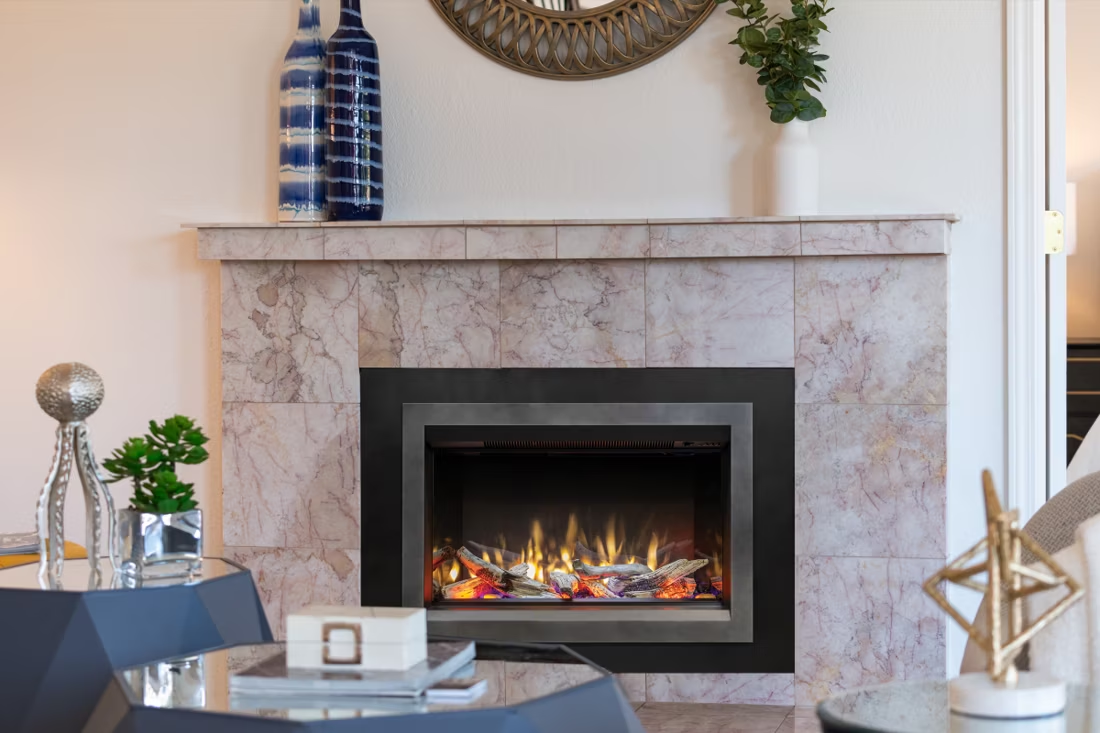
An electric insert is designed to slide into an existing masonry or wood-burning firebox, giving you flame effect and heat without touching your existing chimney—a popular option for older Kent homes with a fireplace that's rarely used. A built-in electric fireplace is framed into a wall during a remodel or new construction and finished flush with drywall or a custom surround, often wired to a dedicated circuit for full heat output. A wall-mount unit hangs directly on the wall like a TV and plugs into a standard outlet—the simplest and least expensive option, common in condos and apartments where structural changes aren't an option. All three share the same core technology; the difference is installation complexity and finished appearance.
Are there rebates for electric fireplaces through Puget Sound Energy?
PSE doesn't typically offer direct rebates for decorative electric fireplaces, since they're a supplemental heat source rather than a primary heating system. Where PSE efficiency programs do come into play is on the electrical work side—if you're upgrading panel capacity or wiring to support a higher-output built-in unit alongside other electrification projects like a heat pump, it's worth asking a licensed electrician whether that work qualifies. For the fireplace purchase and installation itself, the main cost factor in Kent is simply PSE's residential rate of about 14.6 cents per kWh, which keeps day-to-day operating costs low regardless of rebate eligibility.
How much maintenance does an electric fireplace need?
Very little, which is one of the appeals for Kent homeowners who don't want the annual chimney sweep a wood stove requires. Electric units have no combustion, no venting, and no creosote—maintenance is mostly dusting the interior, wiping the glass front occasionally, and replacing the LED flame light strip every several years as it dims with age. There's no annual inspection requirement like there is for gas or wood-burning appliances, since there's no combustion byproduct to manage.
Does wildfire smoke season affect electric fireplace use in Kent?
This is actually where electric fireplaces have a real advantage. Kent, like the rest of the Puget Sound region, sees periods of wildfire smoke drifting in during late summer, when air quality advisories recommend keeping windows closed and avoiding additional indoor combustion. An electric fireplace produces no smoke, no particulates, and needs no outdoor combustion air, so it runs safely during smoke events when a wood stove would add to indoor air quality problems. It's one more reason electric has become the default choice for supplemental heat and ambiance in condos and tighter, newer-construction homes around Kent.
Electric vs. wood-burning fireplace—which makes more sense for my Kent home?
Wood offers a genuine flame, real radiant heat, and keeps working during a power outage—a real consideration in a region where winter windstorms off Puget Sound occasionally knock power out for days. Local firewood options include Douglas fir, red alder, and lodgepole pine, and Forest Service cutting permits through Mt. Baker-Snoqualmie or Olympic National Forest run $5 to $20 per cord during the May-to-October season for those willing to cut their own. Electric, on the other hand, requires no chimney, no wood storage, and no permits, and it works instantly at the flip of a switch—but it needs power to run, so it won't help during an outage. For most Kent homes, especially condos, townhomes, and homes without an existing chimney, electric is the practical choice. Homeowners who want outage-proof backup heat or already have a working chimney sometimes choose wood or a gas insert instead.
Do electric fireplaces actually produce heat?
Yes—most put out around 4,800–5,000 BTUs from a standard outlet, which comfortably warms a bedroom, office, or den as a comfort-zone heater. What they won't do is carry a whole house the way wood, gas, or pellet can. Think of electric as ambiance-first with honest supplemental heat: flames on with no heat in July, flames plus warmth in January.
Can I put a TV above my fireplace?
Yes—with an asterisk. Fireplaces are hot and TVs don't like heat. Either put a mantel between them to deflect rising warmth, or choose a fireplace with heat-management technology that creates a cool zone on the wall above—the wall stays around 125 degrees, barely warm, while the room still gets full heat. If you like clean lines and don't want a mantel, heat management is the answer.
Does a fireplace add value to my home?
On average, a fireplace adds back to the home about the same amount you spent installing it. Add the monthly savings from heating the rooms you actually use instead of the whole house—often hundreds of dollars a year—and the value case is strong before you even count what a fire does for how your family uses the room.
Can a fireplace actually lower my heating bill?
Yes—by creating a comfort zone. A furnace heats every square foot of the house just to warm the one room you're in; a gas fireplace on low burns roughly a sixth of the gas a typical furnace does. Set the furnace around 55–60 degrees as a baseline, then heat the rooms your family actually uses. Families who heat this way commonly save $20–$60 a month.
Nearby Dealers
Hearth shops serving Kent and the surrounding area.
Rich's Stoves & Spas
Electric Service in Kent
An electric fireplace's heater draws about 1,500 watts—pennies per hour at local rates.
Puget Sound Energy Inc
City Of Milton - (Wa)
Find your electric fireplace in Kent.
Tell us about your space and we'll match you with the right electric fireplace or insert—plus a free Project Guide & Parts List and a trusted local Kent-area dealer to install it.
Find Your Fireplace →