
Instant Heat, Built for Island Living.
Clean, on-demand warmth for homes across Whidbey and Camano Islands—where propane, not piped natural gas, does the work. Find the right unit and connect with a trusted local dealer.
Every Project Starts From One of These Five Situations
Reliable heat for a place that runs on ferries and propane trucks.
Island County is Whidbey Island and Camano Island, reached by the Clinton–Mukilteo ferry and the Camano Gateway Bridge, with winters that are mild by national standards—average lows around 38°F and a heating season only a fraction as demanding as what a place like Duluth, MN sees in a single season. Homes here rarely need to fight single-digit cold, but the damp marine air and shoulder-season chill mean a lot of households still want dependable zone heat they can flip on without hauling wood or tending a fire, especially in older Whidbey homes and waterfront cottages built before central heating was standard.
There's no piped natural gas utility serving the islands—Island County runs almost entirely on propane, delivered by truck via ferry or bridge and stored in above-ground or buried tanks on the property. That changes the math a bit versus a mainland natural gas hookup: propane fireplace installs typically include a tank as part of the project cost, and your local dealer will size that tank based on your fireplace's BTU output and any other propane appliances in the house. The upside is flexibility—direct-vent propane fireplaces and inserts work anywhere on the island, whether you're in downtown Oak Harbor, historic Coupeville, or a rural stretch of Camano with no gas line anywhere nearby.
Three steps. No salesperson until you're ready.
Tell us about your project
Your zip code, your situation, and the fuel you're leaning toward—or let the answers point you to one.
See what's actually available
The brands dealers within 100 miles genuinely carry—real options, never a catalog mirage.
Get your dealer & Project Guide
A trusted local dealer, plus the free Project Guide & Parts List that names every component of the job.
Frequently Asked Questions
How much does a gas fireplace installation cost in Island County?
A typical propane fireplace or insert installation in Island County runs roughly $4,000 to $10,000, depending on the unit, the venting path, and whether a new propane tank is part of the project. Homes that already have a propane tank and gas line for a furnace or water heater sit toward the lower end, since the dealer is mainly running a new line to the fireplace location. Homes starting from scratch—new tank, buried or above-ground, plus line run and direct-vent installation—land toward the higher end, often adding $1,500 to $3,000 just for the tank and its setup. Waterfront and hard-to-access Whidbey and Camano properties can carry a bit of a travel or access premium from local installers.
Is natural gas available in Island County, or is it all propane?
It's propane almost everywhere. Island County has no piped natural gas utility serving Whidbey or Camano Island—running gas mains under Puget Sound and Saratoga Passage was never built out the way it was for mainland Snohomish or Skagit County communities. Nearly every gas fireplace, insert, or stove installed in Oak Harbor, Coupeville, Langley, or Freeland runs on propane instead, supplied by a local propane company and stored in a tank on the property. Functionally the fireplace looks and performs the same either way—your installer just sets the orifice and regulator for propane instead of natural gas.
Can I convert my existing wood fireplace to gas?
Yes, and it's a common project in Island County's older housing stock, particularly in historic Coupeville homes and early Whidbey farmhouses with an existing masonry fireplace and chimney. A propane insert is installed into the existing firebox, using a stainless steel liner run up the original chimney as the vent path. The project typically runs $4,500 to $9,000 depending on the insert and whether a new propane tank or line extension is needed. It keeps the look of the original fireplace while replacing the drafty open hearth with a sealed, efficient heat source—no more splitting or hauling firewood down island roads.
Will my gas fireplace still work if the power goes out?
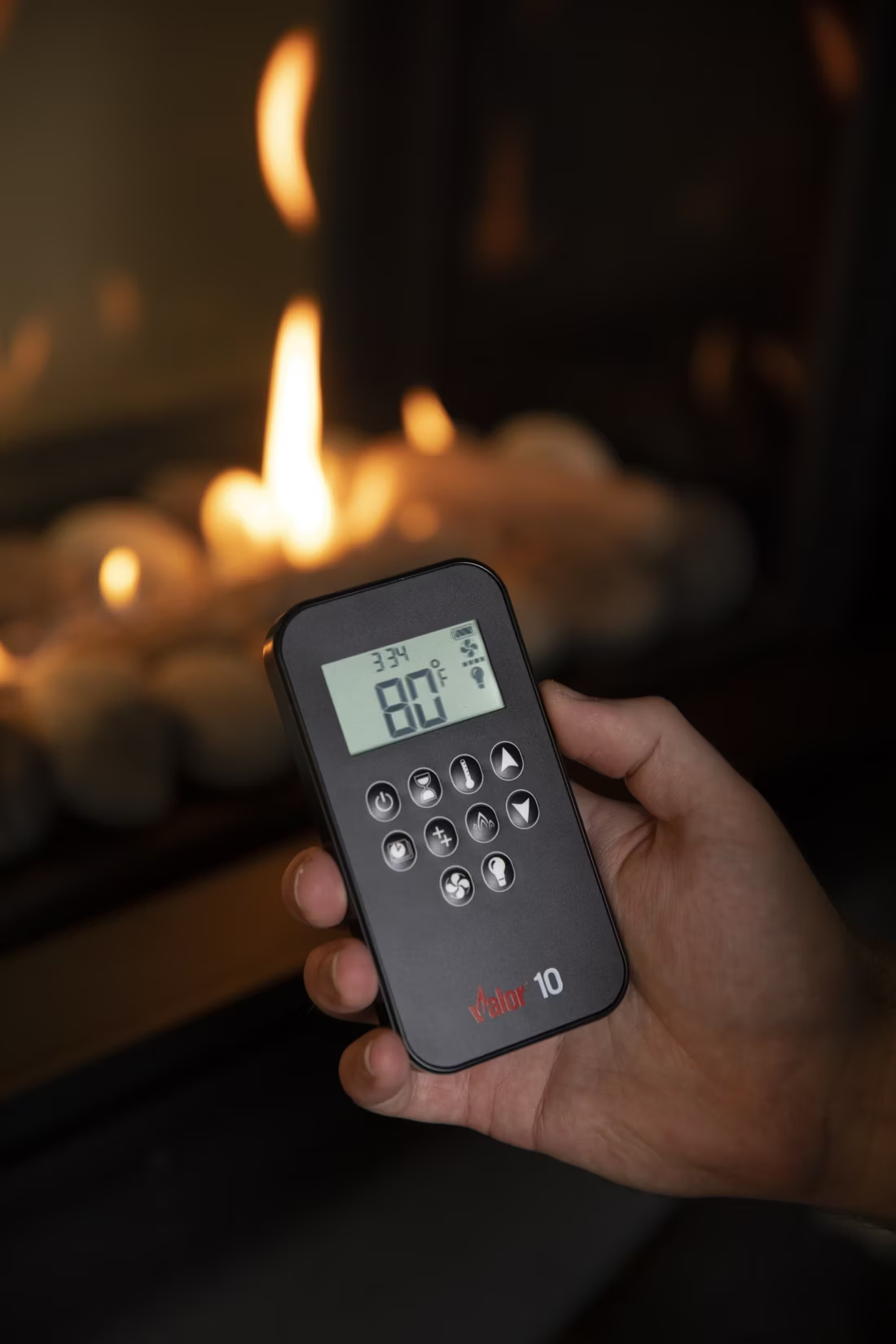
Most modern gas fireplaces will, which matters on the islands—winter windstorms off Puget Sound can knock out power to Whidbey and Camano for hours or, in bad years, days, since outages here often wait on crews coming over by ferry or bridge. Units with intermittent pilot ignition (IPI) include a battery backup that keeps the fireplace lighting on demand even with the grid down, as long as you keep fresh batteries in the unit. Valor's lineup goes a step further—the pilot's thermocouple generates its own electricity, so there's no battery to maintain or forget. Ask your local dealer about the ignition system on any model you're considering if outage backup matters to you.
Do I need a permit to install a gas fireplace in Island County?
Yes. New gas or propane fireplace installations require a building permit through Island County Planning & Community Development, plus sign-off on the propane line work from a licensed gas-fitter or propane installer. Most reputable local dealers handle the permitting and coordinate the propane company, the gas line, and the final inspection as one process, so you're not managing multiple trades yourself. If your property is within city limits—Oak Harbor, Coupeville, or Langley—permits may run through the city rather than the county; your installer will know which office applies.
What's the difference between vented and vent-free gas fireplaces, and can I install a vent-free unit in Washington?
Vented (direct-vent) gas fireplaces draw combustion air from outside and exhaust it back outside through sealed venting—they're the standard, code-friendly choice everywhere in Island County. Vent-free units burn fuel directly into the room with no outside venting; Washington's building code significantly restricts their use, and most local jurisdictions, including Island County, don't approve them for primary installations. Nearly every dealer serving Whidbey and Camano will point you toward a direct-vent model, which also tends to hold up better against the marine air's effect on indoor air quality.
How often should a gas fireplace be serviced on the islands?
Plan on an annual inspection, same as anywhere, but don't skip it here—the salt air off Puget Sound and Saratoga Passage accelerates corrosion on exterior vent caps, screws, and other exposed hardware faster than it would inland. A certified technician should check the burner, pilot assembly, venting termination, and gas connections once a year, ideally before the wetter fall and winter months set in. Local propane and hearth service companies serving Island County typically charge $150 to $250 for this visit, and it's worth catching corrosion issues early before they affect the vent seal.
How does propane delivery and tank sizing work in Island County?
Propane suppliers serving Whidbey and Camano truck fuel over by ferry or across the Camano Gateway Bridge, then deliver to residential tanks on a schedule or on-call basis, same as mainland service—it just adds a logistics step that occasionally affects delivery timing during ferry disruptions or bad weather. Tank size depends on your fireplace's BTU rating and whether it's feeding other appliances like a range or water heater; a dealer will size it during your consultation. Many island homeowners with self-sufficiency in mind opt for a larger tank than the minimum, simply to reduce how often they need a delivery truck to make the trip out.
Gas vs. wood—which makes more sense for an Island County home?
Wood is still common here, especially for waterfront cabins and rural Camano properties, and local supply is decent—douglas fir, red alder, and lodgepole pine are all cut locally, with Forest Service permits available through Mt. Baker-Snoqualmie National Forest for $5 to $20 per cord during the May-to-October season. But Island County's marine climate means most homes don't need wood as primary heat, and late-summer wildfire smoke drifting in from Cascade and British Columbia fires has made some homeowners lean toward cleaner-burning propane instead. For a primary living space where you want instant, low-maintenance heat, propane usually wins. For a rustic cabin, off-grid backup, or homeowners who value the ritual of a real fire, wood still has a strong following on the islands.
Why is my open fireplace making my house colder?
Open fireplaces suck—literally. As the fire burns, it consumes air your furnace already paid to heat and pulls it out through the chimney, so the house is actually colder after the fire goes out than before you lit it. An insert fixes this: it seals the chimney, puts fixed glass across the front, and turns that hole in your house into a real heat source.
What's the difference between radiant and convective fireplace heat?
Most fireplaces are a thin metal box—they heat fine, but you rely on the fan to move the warmth into the room. Radiant models use a thick cast-ceramic firebox, about an inch and a quarter thick, that soaks up the fire's heat and radiates roughly 25–30% more warmth into the room with no fan running. If you watch TV in the same room or want heat in a power outage, radiant is worth asking about.
How much should I budget for a fireplace?
For an average home—covering the fireplace, the vent pipe, and basic installation—a budget between $3,900 and $5,500 gives you a lot of options across wood, gas, and pellet. By the time you add finish work, gas line, and electrical, the average complete installation lands between $5,000 and $12,000 all-in. In a remodel or new build, a good rule is to put about 2.5% of the total project cost toward the fireplace.
Can I install a fireplace myself?
If you're putting a fire in your house on purpose, it's best to work with an expert. Unless you're genuinely experienced in framing, gas line, vent pipe, and the national code on clearances to combustibles, have a professional do it—and ideally the same company that sells you the fireplace, so warranty, service, and liability all live under one roof.
Stove and Fireplace Dealers in Island County
Listings include WhyFire partner dealers, dealers we have verified as authorized for the brands we recommend, and established local businesses that carry hearth products. Every listing shows which one it is. The ones marked Preferred run on WhyFire's software, so they can show you real pricing and book your appointment right here. No manufacturer pays for placement. How we verify dealers →
Whidbey Heating And Stoves
Ace Freeland Home
Sunshine Propane
Sundance Energy Services, Inc.
Handy's Heating
Craft Stoves Of Western Wa
Rich’s For The Home
Island Gas Piping & Installations, LLC
Jacobson Heating & Air
Four Day Fireplace
All Seasons Spa & Stove
Barron Heating - Burlington
Anderson Fireplace
Ecco Supply
Find your gas fireplace in Island County.
Tell us a bit about your home on Whidbey or Camano and we'll match you with the right propane fireplace, insert, or stove—plus a free Project Guide & Parts List and a trusted local dealer to install it.
Find Your Fireplace →