
Steady heat for Fort Lewis's mild, marine winters.
Clean, code-friendly gas heat for the JBLM area's damp Puget Sound winters. Find the right unit and get matched with a trusted local dealer.
Every Project Starts From One of These Five Situations
Consistent warmth without the smoke restrictions.
Fort Lewis sits at just 320 feet in the Puget Sound lowlands, where winter lows average a relatively mild 36°F and the heating season adds up to about 4,884 heating degree days—a fraction of what a place like Fargo, ND or Duluth, MN racks up in a single winter. That mildness, combined with the fact that most homes here fall inside Joint Base Lewis-McChord's family housing footprint or the surrounding off-base communities, means wood-burning appliances are rare: base housing policy generally prohibits them, and the climate doesn't demand the all-night burn times a true cold-climate wood stove is built for. Gas fills that gap instead.
Natural gas infrastructure isn't consistently mapped across the 98433 zip code—Puget Sound Energy serves electric power to the area, but a fair number of homes near JBLM run on propane rather than piped natural gas, especially in the more rural stretches around the base. Either fuel works fine for a direct-vent gas fireplace or insert. The appeal is the same regardless: instant heat with no ash or wood handling, a unit that can run on battery backup during the windstorm-driven power outages that hit this part of Pierce County most winters, and an install that satisfies whatever fire-safety standard applies to your specific housing situation—on-base or off.
Three steps. No salesperson until you're ready.
Tell us about your project
Your zip code, your situation, and the fuel you're leaning toward—or let the answers point you to one.
See what's actually available
The brands dealers within 100 miles genuinely carry—real options, never a catalog mirage.
Get your dealer & Project Guide
A trusted local dealer, plus the free Project Guide & Parts List that names every component of the job.
Frequently Asked Questions
How much does a gas fireplace installation cost in Fort Lewis?
For off-base homes around Fort Lewis and JBLM, a typical gas fireplace or insert installation runs roughly $3,800 to $9,500, with the spread driven mainly by whether you're on propane or natural gas, whether a new gas line or tank has to be run, and how much venting work is involved. Because piped natural gas isn't reliably available throughout the 98433 area, many installs here include a propane tank setup or connection, which adds cost compared to a home already plumbed for gas. A local dealer will give you a firm number after seeing your home and your existing fuel setup.
Can I convert my existing wood fireplace to gas?
Yes, and it's a common request from owners of older homes near JBLM—plenty of the housing stock in and around Fort Lewis was built decades before wood stoves fell out of favor here, so masonry fireplaces are still common. A gas insert typically drops into that existing firebox using a stainless liner run up the current chimney, and costs generally land between $4,000 and $8,500 depending on the insert and whether you're running propane or natural gas to it. It's a straightforward way to keep the look of an existing fireplace while switching to a fuel that's actually practical for this climate and housing situation.
Do I need natural gas, or is propane the standard fuel here?
Propane is the more dependable answer for most of the Fort Lewis area. Piped natural gas service isn't consistently available across the 98433 zip code the way it is in denser parts of Tacoma or Lakewood, so a lot of gas fireplace installs here run on a propane tank instead—either an existing one or a new tank set by a regional propane supplier. Puget Sound Energy provides electric service to the area but isn't confirmed as a natural gas provider for every address here, so it's worth checking your specific street before assuming piped gas is an option. A local dealer can tell you within a few minutes what's actually available at your address.
Will my gas fireplace work during a power outage?
Most direct-vent gas fireplaces with intermittent pilot ignition (IPI) include a battery backup that keeps the unit lighting and running when the power drops—worth having in this part of Pierce County, where winter windstorms off the Sound regularly knock out Puget Sound Energy service for hours at a time. Just remember to swap the batteries on a schedule, since they sit unused most of the year until you actually need them. Valor fireplaces take a different route: their pilot assembly generates its own electricity through the thermocouple, so there's no battery to maintain at all. Ask your local dealer which ignition system a given model uses before you commit.
What's the difference between a gas fireplace, gas insert, and gas stove?
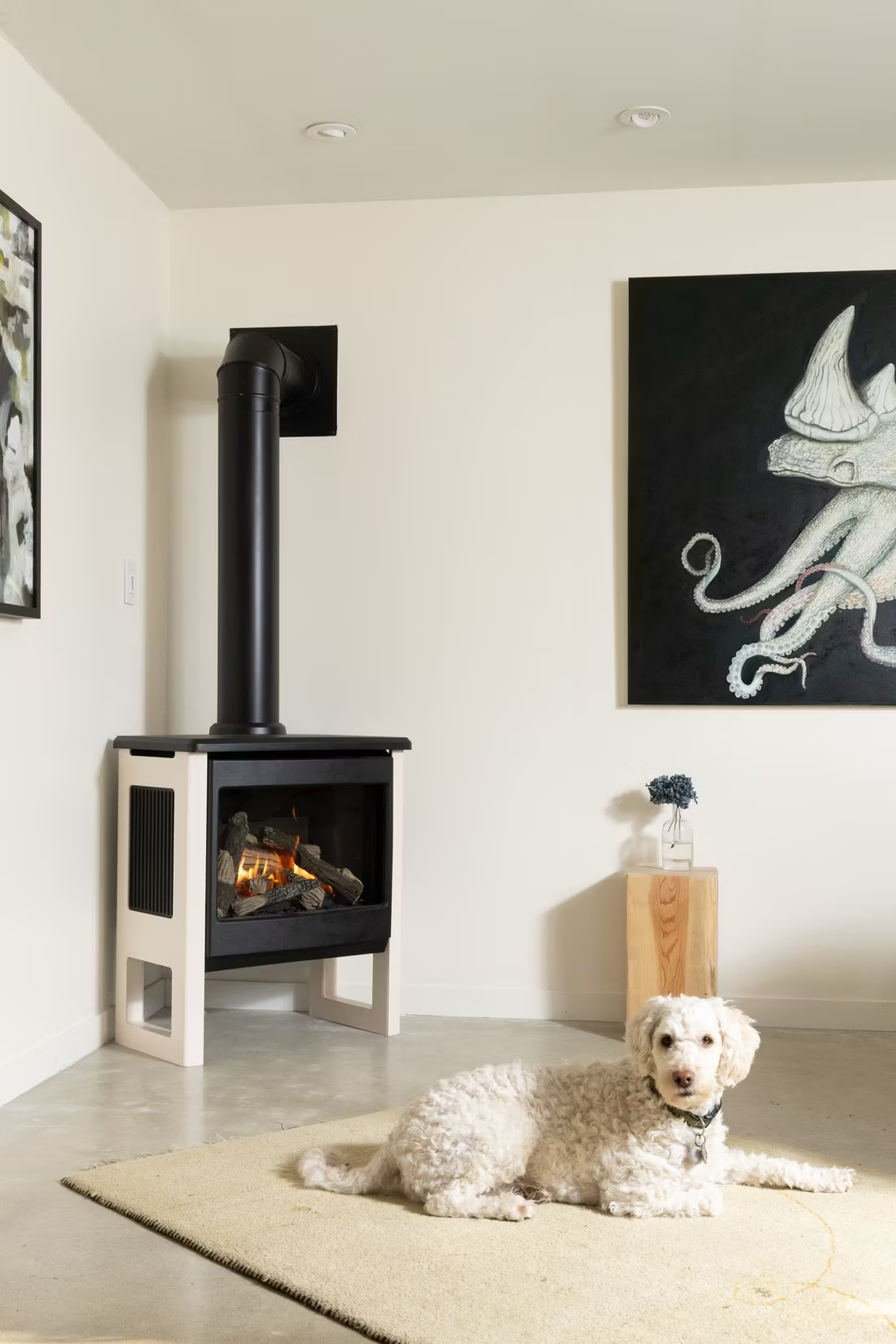
A gas fireplace is a built-in unit framed into a wall—the right call for new construction or a full remodel. A gas insert slides into an existing masonry firebox and uses the current chimney as its vent path, which fits a lot of the older homes around Fort Lewis that already have a wood-era fireplace. A gas stove is a freestanding cabinet unit that sits on the floor, useful in a room with no existing fireplace and no interest in framing one in. For most homeowners here upgrading an existing fireplace, an insert is the simplest and most cost-effective path.
Do I need a permit to install a gas fireplace near Fort Lewis?
It depends on whether you're on-base or off. Homes in Joint Base Lewis-McChord family housing go through the installation's Directorate of Public Works for any fireplace or gas line work—privatized housing partners typically require their own sign-off before an installer can touch the unit. Off-base homes in unincorporated Pierce County or nearby cities like Lakewood and DuPont go through the standard Pierce County building and gas permit process instead, which covers both the appliance install and the licensed gas-fitter work on the line. A dealer familiar with the JBLM area will know which path applies to your address and can walk the paperwork through for you.
What's the difference between vented and vent-free gas fireplaces?
Vented (direct-vent) gas fireplaces pull combustion air from outside and exhaust it back outside through a sealed pipe—they're the cleanest, safest option and the one most installers in the Fort Lewis area default to. Vent-free units burn fuel directly into the room air; they're legal in Washington but come with room-size minimums and oxygen depletion sensor requirements, and privatized military housing partners often won't approve them at all given liability standards for family housing. For most homes here, a direct-vent unit is both the simpler approval path and the safer long-term choice—ask your local dealer to walk through both if you want to compare.
How often should my gas fireplace be serviced?
Plan on an annual inspection, ideally before the wet season sets in each fall. A technician checks the burner, pilot assembly, venting, and gas connections, and cleans the glass and interior—this matters more than usual in a marine climate like Fort Lewis's, where humidity and salt air off the Sound can accelerate corrosion on fittings and venting hardware. Most local gas appliance service providers charge in the $150–$250 range for a standard annual visit.
Gas vs. wood—which makes sense for a home near Fort Lewis?
For most homes here, gas wins by a wide margin. Wood-burning appliances are largely off the table in JBLM family housing, the region's mild winters (36°F average lows, under 5,000 heating degree days) don't demand the kind of all-night burn a wood stove is designed for, and summer wildfire smoke already puts enough particulate in the air without adding winter wood smoke on top of it. Gas delivers instant, consistent heat with no ash, no wood storage, and no chimney sweeping—the more practical fit for the base's transient population and the region's damp climate. Wood remains a niche choice here, mostly limited to rural off-base properties with no housing-authority restrictions.
What's the difference between an insert and a zero-clearance fireplace?
An insert is a fireplace that slides into a pre-existing wood-burning fireplace—if you don't have one, there's nothing to insert it into. A zero-clearance fireplace is built into a framed wall, which makes it the answer for remodels and new construction. Simple test: existing masonry fireplace means insert; blank or framed wall means zero-clearance.
What does it take to replace an existing fireplace?
Fireplaces are like icebergs—bigger behind the wall than in front of it. Replacement means removing the surrounding tile or stone (the finish material laps onto the fireplace face), pulling the old unit, setting the new one in the same enclosure, and re-finishing the wall. A hearth professional can determine what's behind your wall without demolition during an in-home preview.
How much should I budget for a fireplace?
For an average home—covering the fireplace, the vent pipe, and basic installation—a budget between $3,900 and $5,500 gives you a lot of options across wood, gas, and pellet. By the time you add finish work, gas line, and electrical, the average complete installation lands between $5,000 and $12,000 all-in. In a remodel or new build, a good rule is to put about 2.5% of the total project cost toward the fireplace.
Can a fireplace actually lower my heating bill?
Yes—by creating a comfort zone. A furnace heats every square foot of the house just to warm the one room you're in; a gas fireplace on low burns roughly a sixth of the gas a typical furnace does. Set the furnace around 55–60 degrees as a baseline, then heat the rooms your family actually uses. Families who heat this way commonly save $20–$60 a month.
Nearby Dealers
Hearth shops serving Fort Lewis and the surrounding area. Every listing shows whether it is a WhyFire partner, a dealer we have verified as authorized for the brands we recommend, or a local business carrying hearth products. No manufacturer pays for placement. How we verify dealers →
Rich’s Woodstoves & Spas
Aqua Rec Swimmin Hole And Fireside
Yelm Home Center
Cascade Fire Solutions
Aqua Rec’s Fireplace Shop
Benson, LLC
Fireside Hearth & Home-Auburn
Rcs Fireplace
Find your gas fireplace in Fort Lewis.
Tell us about your home and fuel setup and we'll put together a free Project Guide & Parts List—the right gas fireplace or insert, the exact venting or propane hookup you'll need, and a trusted local dealer who can install it correctly the first time.
Find Your Fireplace →