
Instant Heat for Fife's Damp, Mild Winters.
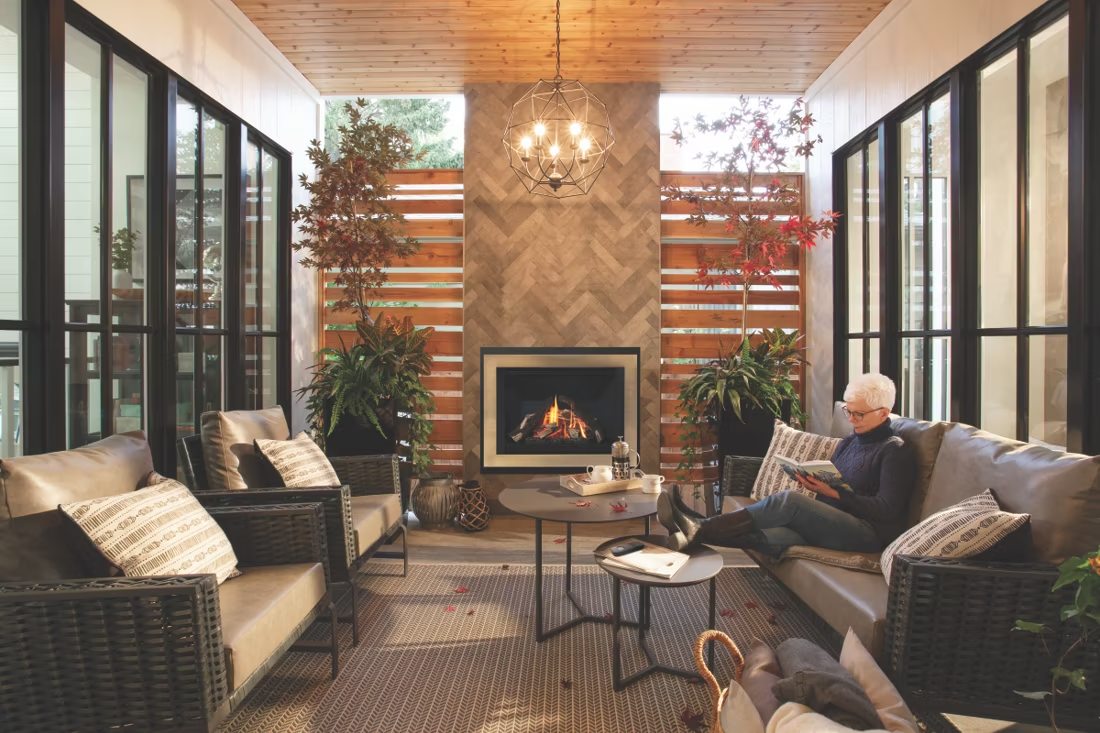
Gas fireplaces deliver clean, on-demand warmth without the upkeep of wood—a natural fit for Fife's marine climate. Find the right unit and connect with a trusted local dealer.
Every Project Starts From One of These Five Situations
Convenient heat for a mild, wet climate.
Fife sits at just 21 feet above sea level on the Puyallup River delta near Tacoma, inside the marine west coast climate zone (4C) that keeps Pierce County winters mild—average lows around 37°F—but persistently damp from November through March. With roughly 4,300 heating degree days a year, Fife never sees the sub-zero stretches of a place like Fargo or Duluth, but the near-constant chill and moisture make a reliable secondary heat source something most homes here still want.
Natural gas service through Puget Sound Energy reaches much of Fife and the surrounding I-5 corridor, which makes gas fireplaces and inserts a practical, low-maintenance choice—especially in the newer construction going up around Fife's warehouse and retail districts, and in remodels of older homes near downtown. A gas fireplace lights instantly, needs no wood storage or ash cleanup, and produces no smoke, which matters when summer wildfire smoke drifts into the South Sound and outdoor burning gets discouraged.
Three steps. No salesperson until you're ready.
Tell us about your project
Your zip code, your situation, and the fuel you're leaning toward—or let the answers point you to one.
See what's actually available
The brands dealers within 100 miles genuinely carry—real options, never a catalog mirage.
Get your dealer & Project Guide
A trusted local dealer, plus the free Project Guide & Parts List that names every component of the job.
Frequently Asked Questions
How much does a gas fireplace installation cost in Fife?
Most gas fireplace and insert installations in the Fife and Tacoma area run somewhere between roughly $4,000 and $10,000, depending on the unit, the venting path, and whether new gas line work is needed. A direct-vent insert going into an existing masonry fireplace with a gas line already nearby sits toward the lower end. A new built-in gas fireplace as part of a remodel—with framing, direct-vent piping through an exterior wall, and a fresh gas line run from the meter—pushes toward the higher end. A local retailer can give you a firm number after seeing your home and your existing gas service.
Can I convert my existing wood fireplace to gas?
Yes—it's a common project for older homes in and around Fife, particularly ones built before gas service extended through this part of Pierce County. A gas insert is fitted into the existing masonry firebox with a stainless liner run up the current chimney, so you keep the look of your fireplace while gaining instant, thermostatically controlled heat. If your home already has a Puget Sound Energy gas line for a furnace or water heater, the conversion is usually simpler and less expensive than starting from scratch with a new gas run to the fireplace location.
Do I need natural gas, or can I use propane?
Either works. Within Fife city limits, Puget Sound Energy provides natural gas service to most established neighborhoods, so if your home already has gas for cooking or water heating, adding a fireplace is a straightforward tie-in. In parts of unincorporated Pierce County or newer developments still outside the gas main, propane is the standard fallback, supplied by a local propane provider with either a buried or above-ground tank. Nearly every gas fireplace on the market can be set up for either fuel—your installer just configures the correct orifice and regulator.
Will my gas fireplace work during a power outage?
Most modern gas fireplaces will, which matters in Fife given how often Puget Sound windstorms knock out power for a day or more each winter. Units with IPI (intermittent pilot ignition) include a battery backup—typically AA batteries inside the unit—that keeps the fireplace lighting on demand even with no grid power. Valor fireplaces handle this differently: their pilot assembly generates its own electricity through a thermocouple, so there's no battery to remember or replace at all. If storm-driven outages are a concern for your household, ask your local dealer specifically about the ignition system on any unit you're considering.
What's the difference between a gas fireplace, gas insert, and gas stove?
A gas fireplace is a fully built-in unit framed into a wall—the right call for new construction or a larger remodel. A gas insert slides into an existing masonry firebox and uses the existing chimney as its vent chase, which is the common upgrade path for Fife's older homes with a wood-burning fireplace that rarely gets used. A gas stove is a freestanding cabinet unit, often chosen for a room without an existing fireplace where running venting through a wall is easier than building a full surround. Most Fife homeowners calling about an existing fireplace end up choosing an insert.
Do I need a permit to install a gas fireplace in Fife?
Yes—the City of Fife Building Department requires a building permit for gas fireplace installations, and a separate gas line permit is needed any time new gas piping is run or an existing line is modified. The gas line work has to be done by a licensed gas-fitter, which is one reason it's worth using an established hearth retailer rather than a general contractor: they coordinate the appliance install, the gas line, and the inspection sign-off as one process instead of leaving you to manage separate trades and separate permits.
Can I install a vent-free gas fireplace in Fife?
Not in most cases. Washington is one of the states that restricts vent-free (unvented) gas fireplaces under its building and mechanical codes, so nearly every installation in Fife is a direct-vent or B-vent unit that draws combustion air from outside and exhausts flue gases back out through a sealed vent. That's not a real limitation in practice—direct-vent units are the standard choice regionally, they produce strong heat output, and they don't raise any of the indoor air quality questions that come with unvented models. A local retailer can confirm exactly which venting configuration works for your specific wall or chimney setup.
How often should my gas fireplace be serviced?
Plan on an annual inspection, ideally in early fall before you're relying on it daily through Fife's wet winter months. A technician checks the burner, pilot assembly, venting, and gas connections, and cleans the glass and interior—a lighter service than wood-stove chimney sweeping, but just as important for safe operation. Local gas appliance service providers typically charge in the $150 to $250 range for a standard annual visit.
Gas vs. wood—which makes more sense for a Fife home?
Wood is still workable here—douglas fir, red alder, and lodgepole pine are all commonly burned locally, and cutting permits through the Olympic and Mt. Baker-Snoqualmie National Forests run about $5 to $20 per cord during the May-to-October season. But Fife's mild winters (average lows near 37°F) mean most households don't need wood as a primary heat source the way a harsher-climate town would, and periodic wildfire smoke through the South Sound in summer has pushed more homeowners toward gas for a smoke-free option. For most Fife homes, gas ends up as the practical daily-use choice, with wood reserved for ambiance or true backup heat.
Why is my open fireplace making my house colder?
Open fireplaces suck—literally. As the fire burns, it consumes air your furnace already paid to heat and pulls it out through the chimney, so the house is actually colder after the fire goes out than before you lit it. An insert fixes this: it seals the chimney, puts fixed glass across the front, and turns that hole in your house into a real heat source.
Is my gas fireplace wasting gas?
If it was installed more than 15 years ago, probably. Older gas fireplaces keep a standing pilot light burning all the time, and that little flame can cost a couple hundred dollars a year. Newer models use pilot-on-demand ignition—the pilot lights only when you use the fireplace and goes out when you turn it off.
Can I install a fireplace myself?
If you're putting a fire in your house on purpose, it's best to work with an expert. Unless you're genuinely experienced in framing, gas line, vent pipe, and the national code on clearances to combustibles, have a professional do it—and ideally the same company that sells you the fireplace, so warranty, service, and liability all live under one roof.
Does a fireplace add value to my home?
On average, a fireplace adds back to the home about the same amount you spent installing it. Add the monthly savings from heating the rooms you actually use instead of the whole house—often hundreds of dollars a year—and the value case is strong before you even count what a fire does for how your family uses the room.
Nearby Dealers
Hearth shops serving Fife and the surrounding area. Every listing shows whether it is a WhyFire partner, a dealer we have verified as authorized for the brands we recommend, or a local business carrying hearth products. No manufacturer pays for placement. How we verify dealers →
Rich’s Woodstoves & Spas
Benson, LLC
Aqua Rec Swimmin Hole And Fireside
Cascade Fire Solutions
Fireside Hearth & Home-Auburn
Rcs Fireplace
Aqua Rec’s Fireplace Shop
Dowell Company
Cressy Door & Fireplace
Chimney And Fireplace Solutions
Rich's For The Home
Rich's Stoves & Spas
Aqua Quip
Economy Wiring
Good Earth Works
Yelm Home Center
Sunrice Gas & Chimney Services
Find your gas fireplace in Fife.
Tell us a bit about your home and we'll match you with the right gas fireplace, insert, or stove—and connect you with a trusted local dealer, plus a free Project Guide & Parts List for your installation.
Find Your Fireplace →