
Heat that runs on the nation's cheapest hydropower.
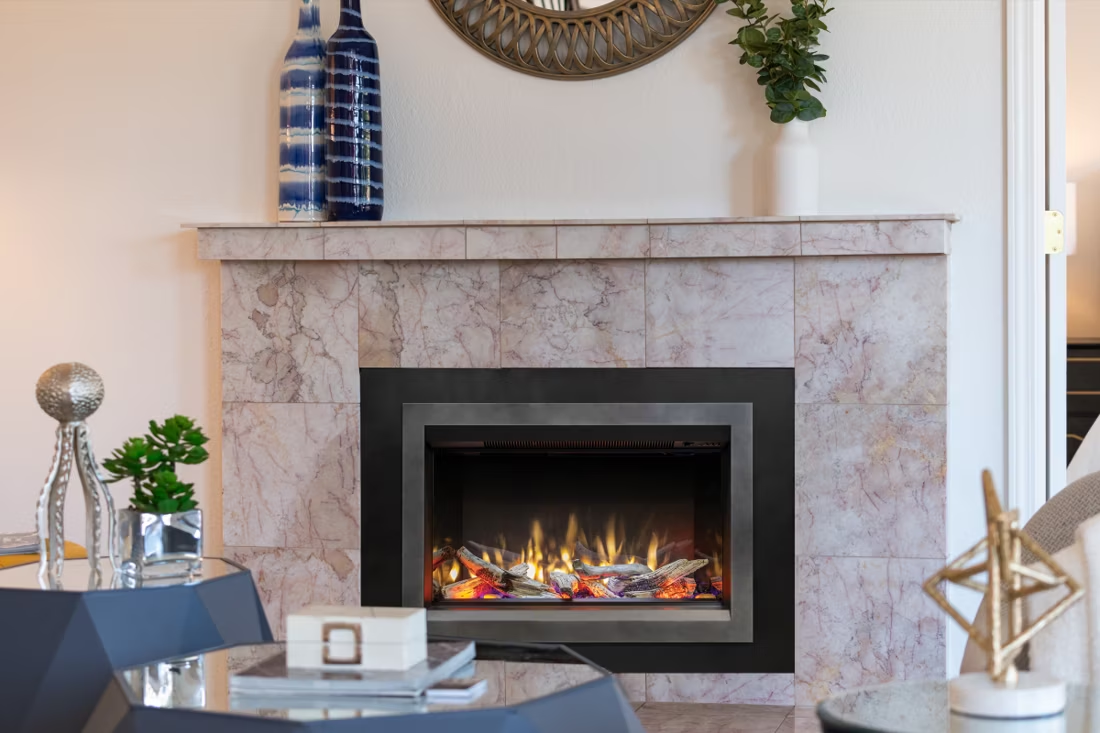
From East Wenatchee along the Columbia to the wheat country around Waterville and Mansfield, Douglas County PUD's low hydro rates make electric fireplaces and inserts one of the most cost-effective ways to add heat, room by room. Find the right unit and connect with a trusted local dealer.
Every Project Starts From One of These Five Situations
Cheap hydropower changes the math on electric heat.
Douglas County runs from the Columbia River near East Wenatchee, at around 700 feet, up onto the Waterville Plateau near Waterville, Bridgeport, and Mansfield, where elevations top 2,600 feet. Winter lows average around 26°F and the county sees a moderate cold climate with a fairly long heating season—milder than what places like Fargo, ND or Duluth, MN see, but enough that most homes want supplemental heat through December and January, especially in bedrooms, offices, and additions that the central system struggles to keep even.
Douglas County PUD, drawing largely from the Wells Hydroelectric Project on the Columbia, delivers some of the lowest electric rates in the country—which is the real reason electric fireplaces and inserts make sense here beyond just convenience. Running a zone heater or electric insert costs a fraction of what it would in a county paying standard investor-owned utility rates. It also matters during wildfire-smoke season: when advisories tied to Okanogan-Wenatchee National Forest fire activity discourage outdoor burning and can affect indoor air quality near open wood fires, an electric unit adds heat and ambiance with zero smoke and zero venting to worry about.
Three steps. No salesperson until you're ready.
Tell us about your project
Your zip code, your situation, and the fuel you're leaning toward—or let the answers point you to one.
See what's actually available
The brands dealers within 100 miles genuinely carry—real options, never a catalog mirage.
Get your dealer & Project Guide
A trusted local dealer, plus the free Project Guide & Parts List that names every component of the job.
Frequently Asked Questions
How much does an electric fireplace installation cost in Douglas County?
Electric is the least expensive hearth project by a wide margin. A plug-in electric insert or freestanding stove that runs on a standard 120V outlet can be in place for the cost of the unit itself, often a few hundred dollars, with no electrician needed. A built-in electric fireplace or a larger insert that requires a dedicated 240V circuit typically runs somewhere in the $800 to $2,500 range once a licensed electrician runs the circuit and a dealer handles the trim-out. Given Douglas County PUD's low per-kilowatt-hour rates, the ongoing cost to run the unit is also modest compared to counties served by standard investor-owned utilities—worth asking your dealer to estimate for your specific model and usage.
What size electric fireplace or insert do I need?
Most electric units are sized by room rather than whole-home square footage, since they're built for zone heat rather than primary heating in a climate like Douglas County's fairly long, moderately cold winters. A 1,500-watt insert or stove comfortably supplements a bedroom or den; larger great rooms or open-concept living spaces in newer East Wenatchee or Waterville-area homes may call for a 4,600 BTU unit or a model with a stronger blower to push heat further. Ceiling height, drafts from single-pane windows in older farmhouses, and whether the room sits on the exposed Waterville Plateau versus the more sheltered river valley all factor in—a local dealer will size it to your actual room during an in-home look.
Do I need a permit to install an electric fireplace in Douglas County?
A plug-in electric fireplace or insert that uses an existing outlet typically doesn't require any permit—it's treated like any other appliance. If you're adding a dedicated circuit for a larger built-in unit, that electrical work generally requires a permit through whichever jurisdiction covers your address—the City of East Wenatchee, the Town of Waterville, or unincorporated Douglas County—and the wiring has to be done by a licensed electrician to code. Most dealers coordinate this as part of the install, so you're not chasing down inspections yourself.
What's the difference between an electric fireplace, insert, and stove?
An electric fireplace is typically a built-in unit set into a wall or mantel surround, common in new construction and remodels around East Wenatchee. An electric insert is sized to slide into an existing masonry or zero-clearance firebox—a common move for homeowners who like the look of an old fireplace but want it to actually produce usable heat without wood or gas. An electric stove is a freestanding cabinet-style unit that can go almost anywhere with an outlet, which makes it a flexible option for older farmhouses on the plateau that don't have an existing fireplace opening at all.
How much does it actually cost to run an electric fireplace here?
This is where Douglas County stands out. Because Douglas County PUD sources most of its power from Columbia River hydro at the Wells Dam, residential electric rates here run well below the national average and below most surrounding counties served by different utilities. A 1,500-watt electric insert run for several hours a night through the coldest stretch of winter costs only a modest amount on the monthly bill—meaningfully less than the same unit would cost to operate in a county paying standard grid rates. It's a big part of why electric heat has real staying power here rather than being just a stopgap.
Is an electric fireplace a good option during wildfire smoke season?
Yes, and it's one of the more overlooked reasons homeowners in Douglas County add one. Smoke from regional fires, including activity on Okanogan-Wenatchee National Forest land, periodically pushes air quality advisories through the Columbia River valley and the Waterville Plateau in late summer. An electric fireplace produces zero smoke and needs no outdoor venting, so it keeps working—for ambiance or supplemental heat on cooler smoke-season evenings—without contributing anything to indoor or outdoor air quality concerns the way an open wood fire would.
Do electric fireplaces actually produce real heat, or just the look of a fire?
Both, depending on the model. Every electric fireplace and insert includes a flame-effect display that runs independently of the heater—you can run the flame with the heat off, which is popular for ambiance in warmer months. For heat, most units use a fan-forced ceramic or infrared element rated up to 1,500 watts (about 4,600–5,100 BTU), enough to noticeably warm a single room. They won't replace a furnace, but for the zone-heat role most Douglas County homeowners want—a den, a bedroom, a sunroom on the Waterville side that gets cold at night—the heat output is genuinely useful, not just cosmetic.
Will my electric fireplace work during a power outage?
No—this is the honest tradeoff with electric heat, and it's worth knowing before you buy. Electric fireplaces, inserts, and stoves all require power to run both the flame effect and the heater, so during an outage they go dark along with everything else in the house. In Douglas County, where winter storms along the Columbia or on the exposed plateau near Mansfield and Waterville can occasionally knock out power for a stretch, some households pair an electric unit for everyday low-cost zone heat with a wood or propane appliance elsewhere in the home as a backup source that doesn't depend on the grid.
Electric vs. gas or wood—which is right for my home in Douglas County?
Wood, using local species like ponderosa pine, lodgepole pine, and Douglas fir (with cutting permits available through the Okanogan-Wenatchee National Forest for $5 to $20 per cord, May through October), offers real heat output and works without power, but it also means smoke that can matter during wildfire-advisory season and regular maintenance. Gas or propane gives instant, substantial heat without the ash or smoke, at a higher install cost than electric. Electric costs the least to install and, thanks to Douglas County PUD's hydro rates, is cheap to run, but it's supplemental heat only and won't help during an outage. Many homes here end up with electric in a bedroom or den for everyday low-cost warmth and a wood or gas appliance in the main living area for bigger heat and storm backup.
Can I put a TV above my fireplace?
Yes—with an asterisk. Fireplaces are hot and TVs don't like heat. Either put a mantel between them to deflect rising warmth, or choose a fireplace with heat-management technology that creates a cool zone on the wall above—the wall stays around 125 degrees, barely warm, while the room still gets full heat. If you like clean lines and don't want a mantel, heat management is the answer.
Do electric fireplaces actually produce heat?
Yes—most put out around 4,800–5,000 BTUs from a standard outlet, which comfortably warms a bedroom, office, or den as a comfort-zone heater. What they won't do is carry a whole house the way wood, gas, or pellet can. Think of electric as ambiance-first with honest supplemental heat: flames on with no heat in July, flames plus warmth in January.
How much should I budget for a fireplace?
For an average home—covering the fireplace, the vent pipe, and basic installation—a budget between $3,900 and $5,500 gives you a lot of options across wood, gas, and pellet. By the time you add finish work, gas line, and electrical, the average complete installation lands between $5,000 and $12,000 all-in. In a remodel or new build, a good rule is to put about 2.5% of the total project cost toward the fireplace.
Does a fireplace add value to my home?
On average, a fireplace adds back to the home about the same amount you spent installing it. Add the monthly savings from heating the rooms you actually use instead of the whole house—often hundreds of dollars a year—and the value case is strong before you even count what a fire does for how your family uses the room.
Stove and Fireplace Dealers in Douglas County
Listings include WhyFire partner dealers, dealers we have verified as authorized for the brands we recommend, and established local businesses that carry hearth products. Every listing shows which one it is. The ones marked Preferred run on WhyFire's software, so they can show you real pricing and book your appointment right here. No manufacturer pays for placement. How we verify dealers →
Seasonally Living By Chim Chimney
Patriot Plumbing, Heating & Cooling Inc.
Big R - Wenatchee
Find your electric fireplace in Douglas County.
Tell us a bit about your home and we'll match you with the right electric fireplace, insert, or stove, and send you a free Project Guide & Parts List with the exact parts and your recommended local dealer.
Find Your Fireplace →