
Warmth you can flip on, from Dayton to Starbuck.
No chimney, no gas line, no cordwood to split—just clean zone heat for farmhouses, additions, and rural properties across Columbia County. Find the right unit and connect with a trusted local dealer.
Every Project Starts From One of These Five Situations
Zone heat without the chimney work.
Columbia County is one of the smallest counties in Washington by population—just under 2,900 people spread across dryland wheat farms, cattle ranches, and the Blue Mountains foothills around Dayton and Starbuck. Winters here run cold for a Zone 5B climate: average lows near 26°F and a heating season about as demanding as Bozeman, Montana, though without Bozeman's deep snowpack. Most homes in the county are older farmhouses or manufactured homes, many built long before central heating was standard, which is exactly the situation where a plug-in or built-in electric fireplace earns its keep.
Power in Columbia County runs through Columbia REA, the rural electric cooperative headquartered in Dayton that serves most of the county's farms and small towns. Because the grid here is a rural distribution system rather than a dense urban one, electric fireplaces tend to play a supplemental role—heating a converted porch, a bedroom addition, or a room far from the woodstove or propane furnace—rather than serving as the sole heat source through a full Columbia County winter. Wildfire smoke is the county's main air quality concern most summers and falls, and it's worth noting: unlike a wood stove, an electric unit adds zero indoor combustion byproducts, which matters on the days when windows stay shut and the sky is orange with smoke from the Umatilla National Forest and beyond.
Three steps. No salesperson until you're ready.
Tell us about your project
Your zip code, your situation, and the fuel you're leaning toward—or let the answers point you to one.
See what's actually available
The brands dealers within 100 miles genuinely carry—real options, never a catalog mirage.
Get your dealer & Project Guide
A trusted local dealer, plus the free Project Guide & Parts List that names every component of the job.
Frequently Asked Questions
How much does an electric fireplace cost to install in Columbia County?
Plug-in electric inserts and stoves that run on a standard 120V outlet typically cost $300 to $1,500 for the unit itself, with little to no installation labor since they don't require venting or a gas line. Built-in electric fireplaces or larger units that need a dedicated 240V circuit are a different project—plan on an electrician running new wiring, which usually adds $500 to $1,500 in labor on top of the unit cost. For most Columbia County homes, especially older farmhouses in Dayton or Starbuck with dated electrical panels, a licensed electrician should check panel capacity before a built-in install is quoted.
Can an electric fireplace heat my whole house through a Columbia County winter?
Generally, no—and any honest installer will tell you the same. With average winter lows around 26°F and a heating season nearly as demanding as Bozeman, Montana, Columbia County's heat load is significant, and electric resistance heat is expensive to run as a whole-home solution at that scale. Electric fireplaces are best used the way most local homeowners already use them: zone heat for a specific room, an addition, or a space that's hard to reach with the home's central wood, propane, or heat pump system. If a room in your Dayton or Starbuck home runs cold no matter what the furnace does, an electric unit sized to that space is often the simplest fix.
Do I need a permit to install an electric fireplace in Columbia County?
A plug-in electric fireplace or stove that simply plugs into an existing outlet doesn't require a permit—there's no gas line, no venting, and no structural change involved. A built-in electric fireplace that requires new wiring or a dedicated circuit does typically need an electrical permit, since that work falls under the county's building and electrical code. Because there's no combustion, you also skip the chimney and venting inspections that come with wood or gas installs—one of the real advantages of going electric in an older farmhouse without an existing flue.
What's the difference between an electric insert, a wall-mount unit, and a built-in electric fireplace?
An electric insert is sized to slide into an existing masonry fireplace opening, giving an old wood-burning hearth a working flame effect and heat without touching the chimney. A wall-mount unit hangs on the wall like a flat-screen TV and is popular in additions or rooms without any existing fireplace. A built-in electric fireplace is framed into a wall during construction or remodeling, similar to how a gas fireplace would be installed, and usually needs that dedicated circuit. For most Columbia County homes with an old masonry fireplace sitting unused, the insert is the fastest and least invasive option.
Will my electric fireplace still work if the power goes out?
No—this is the one honest tradeoff with electric heat, and it matters in a county like this one. Columbia REA's rural lines can go down during winter ice storms or high-wind events, and wildfire-season power shutoffs are an increasing reality across the inland Northwest. An electric fireplace goes dark the moment the grid does. For homes where backup heat during an outage matters—which is most rural Columbia County properties—pairing an electric fireplace for everyday zone heat with a wood stove or propane heater as backup is the more resilient setup.
What's the best electric fireplace for an older Columbia County farmhouse?
For older farmhouses around Dayton and Starbuck that already have a masonry fireplace opening, an electric insert is usually the best fit—it reuses the existing opening, requires no chimney work, and can be swapped in without touching the home's structure. For additions, sunrooms, or bonus rooms built without any fireplace, a wall-mount or freestanding electric stove is easier to place and often cheaper. Given the drafty, single-pane-window reality of a lot of the county's older housing stock, look for a unit with a real supplemental BTU rating (typically 4,000-5,000 BTU for a standard 1,500-watt heater) rather than one marketed purely on flame appearance.
How does electric heat compare to burning wood from local Forest Service permits?
Wood is genuinely cheap heat in Columbia County if you're willing to cut it—Umatilla National Forest permits run about $20 per 4 cords during the May-to-October cutting season, and the ponderosa pine, lodgepole pine, and Douglas fir common to the area all burn well. Wood also keeps working during a power outage, which electric can't do. Electric wins on convenience: no splitting, hauling, or ash cleanup, no chimney to sweep, and instant on-off operation from a wall switch or remote. Many Columbia County households run both—a wood stove as the primary or backup heat source, and an electric fireplace or two for zone heat in rooms the woodstove doesn't reach.
Is electric or propane better for a rural Columbia County property without natural gas?
Most of rural Columbia County runs on propane rather than natural gas, since there's no municipal gas main reaching the farmland and smaller towns outside Dayton. Propane fireplaces deliver more heat output and can be sized to serve as a real secondary heat source through a cold snap. Electric fireplaces cost less upfront, need no tank or delivery contract, and skip any combustion venting—but they're generally better suited to supplemental zone heat than to standing in for a propane furnace on the coldest nights. If your priority is backup heat during a Columbia REA outage, propane has the edge; if it's low-hassle ambiance and heat for one room, electric is simpler.
Does an electric fireplace help with wildfire smoke season in Columbia County?
Indirectly, yes. Columbia County's main air quality issue is wildfire smoke drifting in from the Blue Mountains and Umatilla National Forest during late summer and fall, and on bad smoke days the standard advice is to keep windows closed and avoid adding indoor combustion sources. An electric fireplace produces zero combustion byproducts, so running one for warmth or ambiance on a smoky, sealed-up evening doesn't add anything to indoor air quality problems the way an open wood fire would. It's a small but real advantage for households that burn wood most of the winter but want a smoke-free option during heavy smoke stretches.
Can I put a TV above my fireplace?
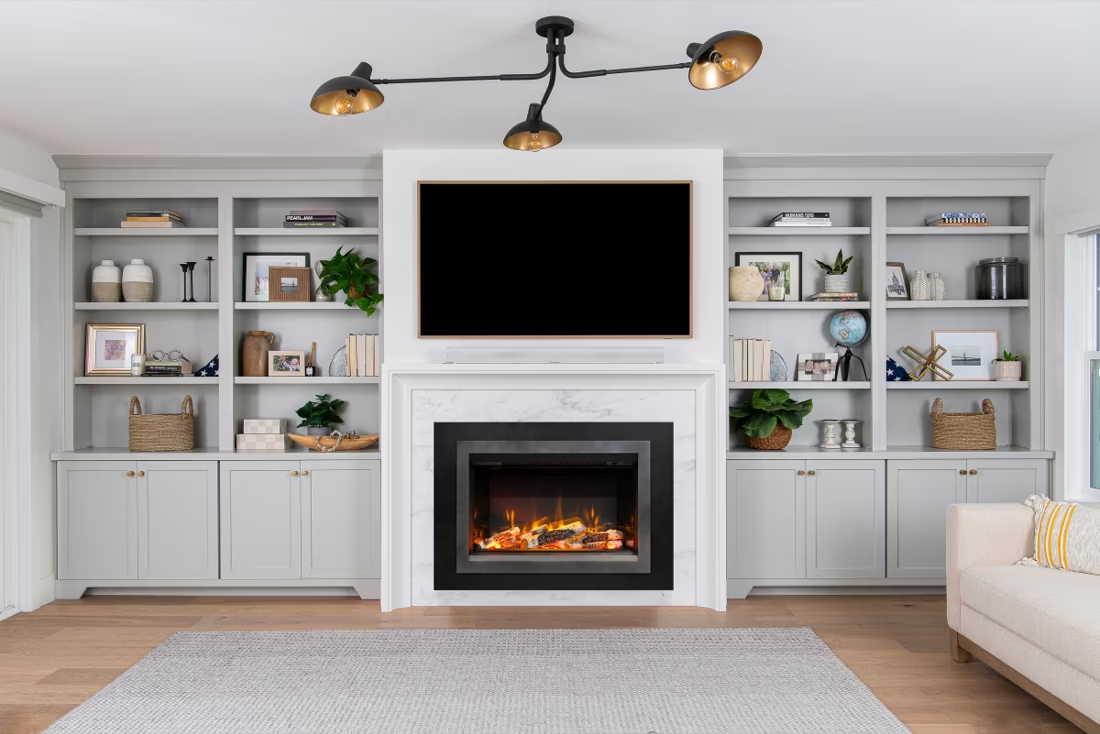
Yes—with an asterisk. Fireplaces are hot and TVs don't like heat. Either put a mantel between them to deflect rising warmth, or choose a fireplace with heat-management technology that creates a cool zone on the wall above—the wall stays around 125 degrees, barely warm, while the room still gets full heat. If you like clean lines and don't want a mantel, heat management is the answer.
Does an electric fireplace need a vent or chimney?
No—that's its superpower. An electric fireplace needs a wall and an outlet, period. No vent pipe, no gas line, no clearances to design around, which is why it works in bedrooms, offices, apartments, and walls where venting a gas or wood unit would be impractical or impossible. Installation is typically the simplest and least expensive of any fireplace type.
Can a fireplace actually lower my heating bill?
Yes—by creating a comfort zone. A furnace heats every square foot of the house just to warm the one room you're in; a gas fireplace on low burns roughly a sixth of the gas a typical furnace does. Set the furnace around 55–60 degrees as a baseline, then heat the rooms your family actually uses. Families who heat this way commonly save $20–$60 a month.
Does a fireplace add value to my home?
On average, a fireplace adds back to the home about the same amount you spent installing it. Add the monthly savings from heating the rooms you actually use instead of the whole house—often hundreds of dollars a year—and the value case is strong before you even count what a fire does for how your family uses the room.
Stove and Fireplace Dealers in Columbia County
Listings include WhyFire partner dealers, dealers we have verified as authorized for the brands we recommend, and established local businesses that carry hearth products. Every listing shows which one it is. The ones marked Preferred run on WhyFire's software, so they can show you real pricing and book your appointment right here. No manufacturer pays for placement. How we verify dealers →
Tires Shop Center
Young's Heating & Cooling
Blue Mountain Stove Services
Find your electric fireplace in Columbia County.
Tell us about your home in Dayton, Starbuck, or elsewhere in the county, and we'll put together a free Project Guide & Parts List—the right electric fireplace or insert for your space, matched with a trusted local dealer who can install it.
Find Your Fireplace →