
Warm up your Cheney home without a chimney or gas line.
Plug-in and built-in electric heat for Cheney's long, cold winters—no venting, no wood, no smoke. Get matched with a trusted local dealer who knows what actually works here.
Every Project Starts From One of These Five Situations
Clean, flexible supplemental heat for a 7,399-HDD winter.
At 2,424 feet on the Palouse's edge, Cheney racks up roughly 7,399 heating degree days a year, with average winter lows around 22°F and stretches that drop well below that. That's a heating load closer to Fargo, ND than to the Willamette Valley. A lot of Cheney's housing stock is rental and student housing tied to Eastern Washington University, where landlords and tenants alike want heat that doesn't require a chimney, a gas line, or a wood permit—just an outlet or a dedicated circuit.
Electricity here comes from the City of Cheney's own municipal utility, currently billing residential customers around $0.1463 per kWh—a rate that makes zone heating with an electric insert or stove genuinely cost-competitive for supplementing a room or two rather than heating an entire drafty older home. Cheney's wildfire-smoke seasons also push some households away from wood burning in summer and fall, when an electric unit can provide ambiance and heat without adding particulate to already smoky air. I match Cheney homeowners with a trusted local dealer who can tell you honestly whether a $300 plug-in unit solves your problem or whether you need a proper 240V built-in insert—not whichever unit is sitting on a big-box shelf.
Three steps. No salesperson until you're ready.
Tell us about your project
Your zip code, your situation, and the fuel you're leaning toward—or let the answers point you to one.
See what's actually available
The brands dealers within 100 miles genuinely carry—real options, never a catalog mirage.
Get your dealer & Project Guide
A trusted local dealer, plus the free Project Guide & Parts List that names every component of the job.
Frequently Asked Questions
How much does an electric fireplace cost to buy and install in Cheney?
Plug-in electric fireplaces and stoves—the kind you set in front of an existing wall and run off a standard 120V outlet—typically run $300 to $1,500 for the unit itself, with no installation cost beyond plugging it in. Built-in electric inserts or wall-mounted units that get recessed into a wall or existing masonry fireplace opening usually run $1,000 to $3,000 installed, including any electrician work needed to add a dedicated circuit. Cheney's older housing stock near downtown sometimes needs panel or wiring upgrades to support a larger built-in unit, which a local electrician or hearth dealer can flag during a walkthrough.
What will an electric fireplace actually cost me to run each month?
At the City of Cheney's residential rate of about $0.1463 per kWh, a typical 1,500-watt electric fireplace costs roughly 22 cents an hour to run on the heat setting. Used five hours a day as supplemental evening heat, that works out to around $30 to $35 a month. Run on flame-only mode with the heater off, the draw drops to just a few watts—essentially free ambiance. That math makes electric a reasonable way to take the edge off a bedroom or den without running a furnace harder.
Will an electric fireplace keep working during a winter power outage?
No—and this is worth being direct about. Electric fireplaces and inserts require grid power to run the heating element, blower, and controls, so they shut down the moment the power does. For Cheney winters, where ice storms and wind events do occasionally knock out City of Cheney service for hours, an electric unit isn't a backup heat source. If outage resilience matters to your household, a wood stove or a battery-backed gas insert is the better fit, and electric is best thought of as everyday convenience heat rather than emergency heat.
Is electric heat enough to handle Cheney's cold winters on its own?
For most homes, no—not as the sole heat source. With around 7,399 heating degree days a year and winter lows regularly in the low 20s or colder, Cheney's heating load is significant, and a single electric fireplace is designed to zone-heat one room, not carry a whole house. Most local installs pair an electric insert or stove with existing forced-air or heat pump systems, using the electric unit to take pressure off the main system in a bedroom, living room, or finished basement rather than replacing central heat outright.
What types of electric fireplaces are available for a Cheney home?
Three main categories cover most Cheney installs: freestanding plug-in stoves that mimic a wood stove's look and can be moved between rooms or taken when a renter moves out; wall-mounted or built-in inserts that recess into a wall cavity or existing fireplace opening for a cleaner, more permanent look; and mantel-style units that combine a surround with a lower-wattage insert. Given how much of Cheney's housing near Eastern Washington University turns over as rental units, plug-in freestanding models are especially popular—no permitting, no rewiring, and they go with the tenant.
Do I need a permit to install an electric fireplace in Cheney?
A plug-in electric fireplace that runs off a standard outlet doesn't require a permit—it's treated like any other appliance. A built-in electric insert that requires a new dedicated 240V circuit is electrical work, which does typically require an electrical permit pulled by a licensed electrician, and any framing changes to a wall may require sign-off from Cheney's building department. Most hearth dealers who sell built-in units either handle this coordination directly or refer you to an electrician who does it regularly.
Does wildfire smoke make electric heat a better choice than wood in Cheney?
For part of the year, yes. Cheney sees wildfire smoke impact regional air quality most summers and into early fall, and an electric fireplace produces zero smoke, zero particulate, and no additional load on air quality regardless of outdoor conditions. That's a real advantage over wood burning during smoke season. It doesn't mean wood heat is off the table for winter—most Cheney households burning ponderosa pine, lodgepole pine, or Douglas fir do so once the smoke season has passed—but electric gives you a smoke-free option any time of year.
How does electric compare to wood, gas, or pellet heat in Cheney?
Wood is the cheapest fuel if you're willing to cut your own—BLM Spokane District permits run about $10 per cord—but it requires storage, hauling, and regular tending, plus it stops being ideal during smoke season. Gas and propane deliver strong, instant heat but need a fuel line or tank and professional venting work. Pellet stoves (Bear Mountain, Lignetics, and Pacific Pellet are common regional brands) offer a middle ground of convenience and lower fuel cost but still need hopper loading and electricity to run the auger. Electric is the simplest of the four: no fuel storage, no venting, no combustion byproducts, and the lowest upfront cost for a plug-in unit—the tradeoff is it's supplemental heat only and does nothing during a power outage.
What size electric fireplace do I need for my Cheney home?
Electric units are generally sized by room square footage rather than whole-home BTU load, since they're intended as zone heat. A 1,500-watt unit comfortably supplements a bedroom or den up to about 400 square feet in a reasonably insulated home; larger open living areas common in newer construction near the university may want a higher-wattage built-in or two smaller units. Older Cheney homes with less insulation and single-pane windows will feel less output from the same wattage than a newer, tighter build—a local dealer can walk your specific room and make a real recommendation rather than guessing off a spec sheet.
Can I put a TV above my fireplace?
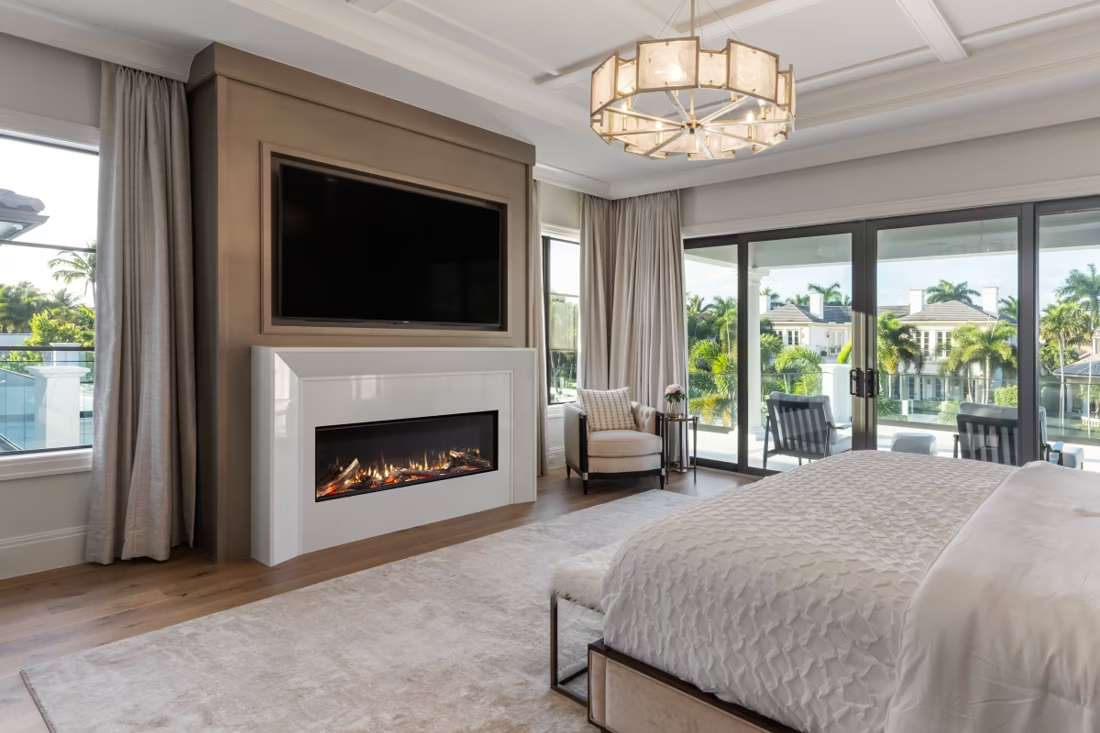
Yes—with an asterisk. Fireplaces are hot and TVs don't like heat. Either put a mantel between them to deflect rising warmth, or choose a fireplace with heat-management technology that creates a cool zone on the wall above—the wall stays around 125 degrees, barely warm, while the room still gets full heat. If you like clean lines and don't want a mantel, heat management is the answer.
Do electric fireplaces actually produce heat?
Yes—most put out around 4,800–5,000 BTUs from a standard outlet, which comfortably warms a bedroom, office, or den as a comfort-zone heater. What they won't do is carry a whole house the way wood, gas, or pellet can. Think of electric as ambiance-first with honest supplemental heat: flames on with no heat in July, flames plus warmth in January.
How much should I budget for a fireplace?
For an average home—covering the fireplace, the vent pipe, and basic installation—a budget between $3,900 and $5,500 gives you a lot of options across wood, gas, and pellet. By the time you add finish work, gas line, and electrical, the average complete installation lands between $5,000 and $12,000 all-in. In a remodel or new build, a good rule is to put about 2.5% of the total project cost toward the fireplace.
Can I install a fireplace myself?
If you're putting a fire in your house on purpose, it's best to work with an expert. Unless you're genuinely experienced in framing, gas line, vent pipe, and the national code on clearances to combustibles, have a professional do it—and ideally the same company that sells you the fireplace, so warranty, service, and liability all live under one roof.
Nearby Dealers
Hearth shops serving Cheney and the surrounding area. Every listing shows whether it is a WhyFire partner, a dealer we have verified as authorized for the brands we recommend, or a local business carrying hearth products. No manufacturer pays for placement. How we verify dealers →
Tri State Distributors
Accent Stove & Spa
Wing Stoves & More
Copper Creek Landscaping, Inc
Rock Creek
Electric Service in Cheney
An electric fireplace's heater draws about 1,500 watts—pennies per hour at local rates.
City Of Cheney - (Wa)
Find your electric fireplace in Cheney.
Tell us about your home and we'll match you with a trusted local dealer and send over a free Project Guide & Parts List—the exact parts and recommended installer for your electric fireplace project in Cheney.
Find Your Fireplace →