
Low-cost zone heat for Centralia's mild, wet winters.
With winter lows averaging 34°F and City of Centralia's residential rate sitting under 10 cents a kWh, an electric fireplace or insert is a practical way to add ambiance and zone heat without a chimney. I'll match you with a trusted local dealer who can show you what actually fits your space.
Every Project Starts From One of These Five Situations
Ambiance and zone heat, without the venting hassle.
Centralia sits low in the Chehalis River valley at just 165 feet, and its climate zone 4C winters are mild by any national standard—an average winter low of 34°F and a winter heating load closer to Portland than to a place like Duluth, Minnesota, where homeowners need a stove that can hold a fire through single-digit nights. That milder profile matters for fuel choice: Centralia rarely needs a primary heat source rated to fight brutal cold, which is exactly the situation where an electric fireplace or insert earns its keep as supplemental zone heat in a living room, bedroom, or basement rec room, backing up whatever heat pump or furnace already handles the whole house.
City of Centralia runs its own municipal electric utility, and at roughly $0.0988 per kWh, it's one of the more affordable residential rates in western Washington—cheaper than a lot of investor-owned utilities in the Puget Sound corridor. That makes running an electric insert for a few hours each evening genuinely inexpensive compared to firing up a whole-house system. It also sidesteps the parts of wood and gas heat that add cost and paperwork here: no Class A chimney, no gas line, and no building permit trip to the Lewis County Community Development office for most plug-in units. Late-summer wildfire smoke has also made a fair number of Centralia homeowners rethink adding another combustion source indoors, which is one more reason electric keeps showing up as the choice for a second-hearth or supplemental unit even in homes that keep a wood stove for backup heat.
Three steps. No salesperson until you're ready.
Tell us about your project
Your zip code, your situation, and the fuel you're leaning toward—or let the answers point you to one.
See what's actually available
The brands dealers within 100 miles genuinely carry—real options, never a catalog mirage.
Get your dealer & Project Guide
A trusted local dealer, plus the free Project Guide & Parts List that names every component of the job.
Frequently Asked Questions
How much does an electric fireplace installation cost in Centralia?
A plug-in electric insert or freestanding unit typically runs $500 to $2,500 installed, since most units just need a standard outlet and a mounting bracket rather than any structural work. A built-in wall unit with a custom surround, or a unit wired to its own dedicated circuit, runs higher—often $2,500 to $5,000—because it involves carpentry and an electrician rather than just a hearth installer. Either way, it's dramatically less than a wood or gas install here, since there's no chimney, no venting, and no gas line to run.
Do I need a permit to install an electric fireplace in Centralia?
Most plug-in electric fireplaces and inserts don't require a building permit since there's no venting or gas line involved—you're plugging into an existing circuit. If you're having a unit hardwired on its own dedicated circuit, or building it into a wall as part of a remodel, that electrical work typically needs a permit through the City of Centralia or Lewis County Community Development, depending on your address. A local dealer or electrician handling the install can tell you which situation applies before work starts.
Is electric heat actually cheap to run in Centralia?
For zone heating, yes. City of Centralia's municipal rate of roughly $0.0988 per kWh is on the low side for western Washington, and a typical 1,500-watt electric insert running a few hours an evening adds up to a modest monthly cost—far less than running central heat harder to warm one room. It won't undercut a wood stove burning free or cheap-permit fuel, but compared to propane or running electric baseboard as a whole-house solution, a zoned electric fireplace is one of the more efficient ways to take the chill off a specific room here.
Electric vs. wood—which makes more sense for a Centralia home?
Wood still has a following in Lewis County, with douglas fir, red alder, and lodgepole pine cut under Olympic National Forest permits running $5 to $20 a cord—cheap fuel that also keeps a home warm through the windstorm-driven power outages that hit this part of the I-5 corridor most winters. Electric fireplaces can't help during an outage, since they need power to run. But on the many mild, wet Centralia evenings where you just want ambiance and a little supplemental warmth—and especially during wildfire smoke season when adding more combustion indoors isn't appealing—electric is the lower-maintenance, lower-cost choice. A lot of households here end up with both: wood or a generator-backed system for resilience, electric for everyday convenience.
What size electric fireplace do I need for a Centralia living room?
Given the mild climate here—winter lows averaging 34°F rather than the deep-freeze conditions that demand a big BTU output—most Centralia homes do fine with a mid-size electric insert or wall unit in the 1,000 to 1,500 square foot heating range, used as supplemental zone heat rather than a whole-room primary source. Larger open-concept spaces or rooms with high ceilings may call for a bigger unit or a second zone, but oversizing isn't the concern it would be in a colder climate. A local dealer can size it against your actual room and insulation rather than guessing off square footage alone.
What's the difference between an electric insert, stove, and wall-mount unit?
An electric insert drops into an existing masonry firebox or a fireplace surround, which is a common upgrade in older Centralia homes that have a fireplace opening but don't want to deal with wood or a gas line. A freestanding electric stove sits on the floor like a wood stove and just needs an outlet, making it flexible for a room with no existing hearth. A wall-mount or built-in linear unit skips the hearth altogether and gets framed into a wall during a remodel—popular for a modern look in newer builds around the Centralia and Chehalis area. All three run off standard household power with no venting required.
How much maintenance does an electric fireplace need?
Very little compared to wood or gas. There's no chimney to sweep, no gas line to inspect, and no combustion byproducts to manage—maintenance is mostly wiping down the glass front and occasionally cleaning dust out of the fan or heater unit, similar to caring for a space heater. Most units are rated for years of regular use with no annual service call needed, which is part of why electric appeals to homeowners here who already handle chimney maintenance on a primary wood stove and don't want a second appliance to maintain.
Will my electric fireplace work during a power outage?
No—electric fireplaces need household power to run the heater and flame effect, so they go dark along with everything else. That's a real consideration in Lewis County, where windstorms off the coast periodically knock out power along the I-5 corridor for hours or occasionally days. Homeowners who want heat resilience during outages typically keep a wood stove or a generator-backed system as the fallback and treat the electric unit as everyday convenience heat rather than an emergency plan.
Electric vs. pellet stove—which is the better fit in Centralia?
Pellet stoves burning regional brands like Bear Mountain, Lignetics, or Pacific Pellet put out more heat and can serve as a primary or near-primary source, but they need an electrical hookup for the auger and blower and involve venting, a hopper to refill, and periodic ash cleanout. Electric fireplaces skip all of that—no fuel to store, no venting, no combustion—at the cost of lower total heat output. Given Centralia's mild 34°F average winter low, plenty of homeowners find an electric insert is enough for supplemental warmth, while those wanting a stronger secondary heat source, especially for outage resilience, lean toward pellet or wood instead.
Can I put a TV above my fireplace?
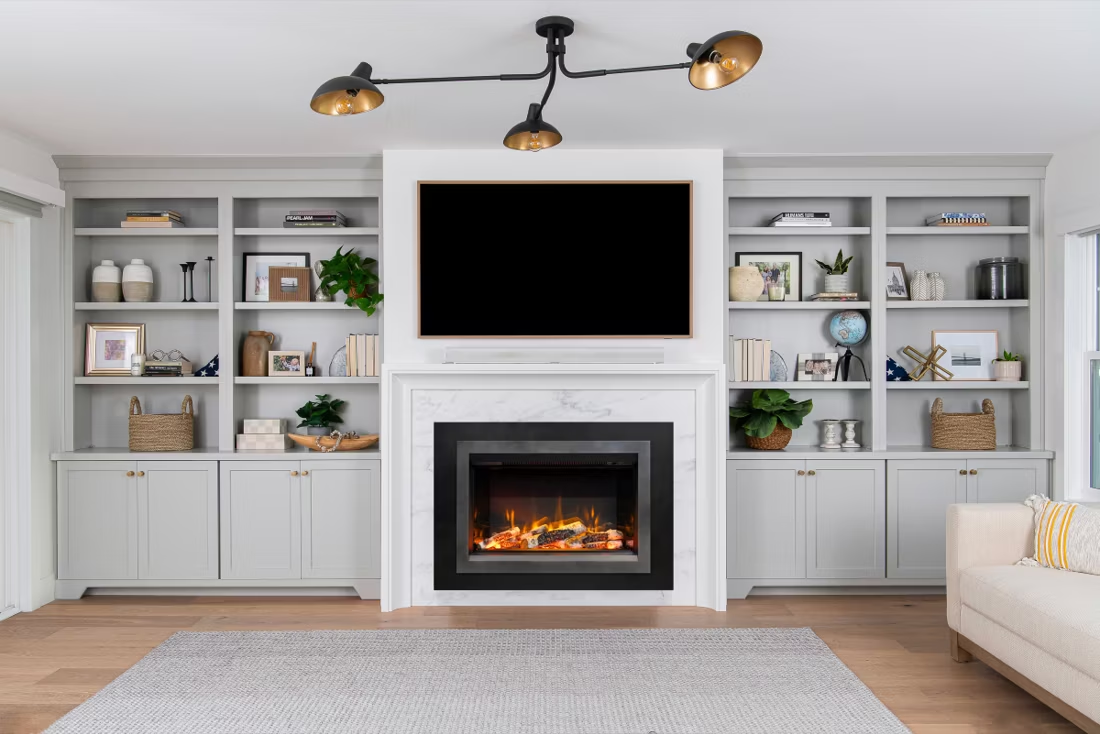
Yes—with an asterisk. Fireplaces are hot and TVs don't like heat. Either put a mantel between them to deflect rising warmth, or choose a fireplace with heat-management technology that creates a cool zone on the wall above—the wall stays around 125 degrees, barely warm, while the room still gets full heat. If you like clean lines and don't want a mantel, heat management is the answer.
Do electric fireplaces actually produce heat?
Yes—most put out around 4,800–5,000 BTUs from a standard outlet, which comfortably warms a bedroom, office, or den as a comfort-zone heater. What they won't do is carry a whole house the way wood, gas, or pellet can. Think of electric as ambiance-first with honest supplemental heat: flames on with no heat in July, flames plus warmth in January.
What is an in-home preview and do I need one?
It's a visit where a hearth professional measures your space, confirms the model you picked actually works in your home, and walks the specs—framing, gas line, venting, finish work—before anything is ordered. Some details you just can't know until you see the house. Never make a down payment without one; it's the single most-skipped step that burns buyers.
Can a fireplace actually lower my heating bill?
Yes—by creating a comfort zone. A furnace heats every square foot of the house just to warm the one room you're in; a gas fireplace on low burns roughly a sixth of the gas a typical furnace does. Set the furnace around 55–60 degrees as a baseline, then heat the rooms your family actually uses. Families who heat this way commonly save $20–$60 a month.
Nearby Dealers
Hearth shops serving Centralia and the surrounding area. Every listing shows whether it is a WhyFire partner, a dealer we have verified as authorized for the brands we recommend, or a local business carrying hearth products. No manufacturer pays for placement. How we verify dealers →
Energy Star Systems & Stoves
JnL Stoves & Spas
Yelm Home Center
Electric Service in Centralia
An electric fireplace's heater draws about 1,500 watts—pennies per hour at local rates.
City Of Centralia - (Wa)
Get your free Project Guide & Parts List for an electric fireplace in Centralia.
Tell me about your room and how you plan to use it, and I'll match you with a trusted local dealer and send a free Project Guide & Parts List sized right for your space—no venting guesswork, no oversized unit you don't need.
Find Your Fireplace →