
Dependable Gas Heat for Bangor Base Homes.
Clean, instant heat for the damp Hood Canal winters around Naval Base Kitsap - Bangor. Find the right gas fireplace or insert and connect with a trusted local dealer who understands military housing and Kitsap County code alike.
Every Project Starts From One of These Five Situations
Clean heat that fits Navy housing life.
Naval Base Kitsap - Bangor sits along Hood Canal at just 373 feet of elevation, in a mild marine climate (zone 4C) where winter lows average around 36°F and the region logs roughly 4,825 heating degree days a year. That is nowhere close to the bitter cold of a place like Duluth, MN—but the near-constant Puget Sound dampness means low-grade heating demand runs for most of the year, and homes need something that turns on reliably without a lot of fuss.
Wood and pellet stoves are essentially not part of the picture here. Both are flagged as not-applicable for this area, largely because base housing fire-safety policy and unit turnover make wood-burning appliances impractical, and late-summer wildfire smoke advisories already push residents toward cleaner-burning options. Gas fills that gap well: on base, propane and electric heat pumps (Puget Sound Energy serves the electric side, at roughly 14.6 cents/kWh) are the norm, while natural gas service through Puget Sound Energy is common in the surrounding Kitsap communities of Silverdale, Poulsbo, and Bremerton. Either fuel path gets you instant, adjustable warmth without the storage, ash, or open-flame concerns that come with wood.
Three steps. No salesperson until you're ready.
Tell us about your project
Your zip code, your situation, and the fuel you're leaning toward—or let the answers point you to one.
See what's actually available
The brands dealers within 100 miles genuinely carry—real options, never a catalog mirage.
Get your dealer & Project Guide
A trusted local dealer, plus the free Project Guide & Parts List that names every component of the job.
Frequently Asked Questions
How much does a gas fireplace installation cost near Bangor Base?
Across the broader Kitsap Peninsula, a typical gas fireplace or insert installation runs roughly $4,000 to $10,000, depending on the unit, whether you are running new gas or propane line, and the venting path. A direct-vent insert added to an existing fireplace opening tends to land on the lower end; a new built-in unit in a remodel, with fresh framing and venting, runs toward the middle and upper end. If you live in privatized base housing, your options and costs may be shaped by what the housing management office allows rather than open market choice, so it is worth checking with them before a local dealer quotes the job.
Can I install a gas fireplace in on-base housing at Bangor?
It depends on your housing situation. Homes managed through the base housing office typically require any fireplace or heating appliance change to be coordinated with that office and, in some cases, Naval Facilities Engineering Command, rather than going through a standard Kitsap County permit. Off-base homeowners in Silverdale, Poulsbo, or elsewhere in Kitsap County go through the county's standard building and gas permitting process. Either way, start with a conversation about who owns the approval before you fall in love with a specific unit—a local dealer familiar with the base can usually tell you quickly what has been approved before.
Is my gas fireplace running on natural gas or propane?
On base, propane is the more common fuel for supplemental gas appliances, since natural gas mains do not run to every part of the installation the way they do in surrounding towns. Off base, Puget Sound Energy provides natural gas service through much of Kitsap County, including Silverdale and Bremerton, so homes there can often tie into an existing gas line. Most gas fireplace models can be configured for either fuel with the correct orifice and regulator—your installer will confirm which supply reaches your address before ordering the unit.
Will my gas fireplace still work if the power goes out?
Most modern gas fireplaces are built to keep working through a power outage. Units with IPI (intermittent pilot ignition) run on a small battery backup that kicks in the moment power drops, so the fireplace still lights on demand. That matters around Hood Canal, where winter windstorms off the Sound periodically knock out power for hours at a time. Valor fireplaces take it a step further—their pilot assembly generates its own electricity through the thermocouple, so there is no battery to remember to replace. Ask your local dealer about the ignition system on any model you are considering.
What is the difference between a gas fireplace, insert, and stove?
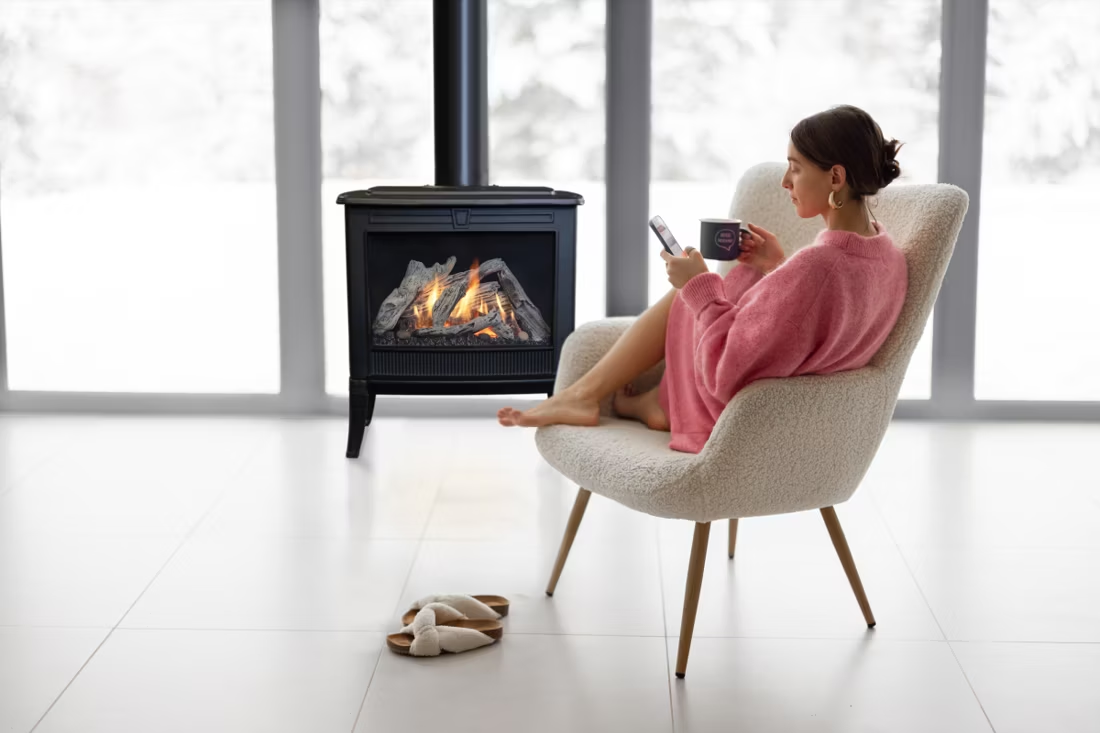
A gas fireplace is a fully built-in unit framed into a wall, typically chosen for new construction or a larger remodel. A gas insert is sized to drop into an existing masonry or prefab fireplace opening, sealing it up and venting through the existing chimney. A gas stove is a freestanding cabinet-style unit, similar in footprint to a wood stove, that sits on the floor. Given how much of the housing stock around Bangor Base is newer construction or manufactured/modular units, a built-in gas fireplace or a compact gas insert tends to be the more common fit—a local dealer can tell you which openings and clearances your specific home allows.
Do I need a permit to install a gas fireplace near Bangor Base?
Off base, yes—Kitsap County requires a building permit and a gas line permit for new gas fireplace installations, and the gas line work has to be done by a licensed gas-fitter. On base, the approval path runs through the housing management office or NAVFAC rather than the county, since the property itself is federal land. In both cases, a certified hearth retailer who has done work in the area before can walk you through exactly who signs off on what, which saves a lot of back-and-forth.
Should I choose a vented or vent-free gas fireplace?
Vented (direct-vent) units draw combustion air from outside and exhaust it back outside through sealed venting—they are the standard, code-friendly choice almost everywhere, including Washington. Vent-free units burn fuel directly into the room and are technically legal in Washington under strict room-sizing and oxygen-sensor rules, but they release some combustion byproducts indoors. For tightly built, well-insulated military and newer-construction homes around Bangor Base, direct-vent units are generally the safer and more commonly installed option, since they don't ask you to make any tradeoff on indoor air quality.
How often should a gas fireplace be serviced?
Plan on an annual inspection, ideally before the damp season sets in each fall. A certified technician checks the burner, pilot assembly, venting, and any electronic ignition components, and cleans the glass and interior. This is a much lighter lift than wood-stove chimney sweeping, but skipping it is still the most common cause of pilot and ignition problems. Local gas appliance service providers typically charge in the $150 to $250 range for a standard annual visit.
Why gas instead of wood or pellet heat around Bangor Base?
Wood and pellet stoves are flagged as not applicable for this area, and in practice you will see very few of either around base housing—fire-safety policy in military housing and the realities of frequent turnover make wood-burning appliances impractical, and late-summer wildfire smoke advisories already discourage additional smoke sources. Off base in Kitsap County, wood heat is still possible using local species like Douglas fir, red alder, and lodgepole pine, with cutting permits available through the Olympic National Forest or Mt. Baker-Snoqualmie National Forest for $5 to $20 per cord during the May-to-October season—but that is a different lifestyle choice than most Bangor Base households are making. For the base community, gas (often propane) paired with electric heat from Puget Sound Energy covers the practical need: instant, low-maintenance heat that fits a household that may move again in a few years.
Can I put a TV above my fireplace?
Yes—with an asterisk. Fireplaces are hot and TVs don't like heat. Either put a mantel between them to deflect rising warmth, or choose a fireplace with heat-management technology that creates a cool zone on the wall above—the wall stays around 125 degrees, barely warm, while the room still gets full heat. If you like clean lines and don't want a mantel, heat management is the answer.
Why is a fireplace insert so efficient?
An insert does two things: it seals the chimney completely, so you stop losing air you already paid to heat, and it radiates warmth into the room through the firebox and glass. Most add a heat-exchange fan that pulls cool room air underneath, wraps it around the hot firebox, and pushes it back out warm. Your home is more efficient before you've even lit the first fire.
How much should I budget for a fireplace?
For an average home—covering the fireplace, the vent pipe, and basic installation—a budget between $3,900 and $5,500 gives you a lot of options across wood, gas, and pellet. By the time you add finish work, gas line, and electrical, the average complete installation lands between $5,000 and $12,000 all-in. In a remodel or new build, a good rule is to put about 2.5% of the total project cost toward the fireplace.
Does a fireplace add value to my home?
On average, a fireplace adds back to the home about the same amount you spent installing it. Add the monthly savings from heating the rooms you actually use instead of the whole house—often hundreds of dollars a year—and the value case is strong before you even count what a fire does for how your family uses the room.
Nearby Dealers
Hearth shops serving Bangor Base and the surrounding area. Every listing shows whether it is a WhyFire partner, a dealer we have verified as authorized for the brands we recommend, or a local business carrying hearth products. No manufacturer pays for placement. How we verify dealers →
Economy Hearth & Home
Sunrice Gas & Chimney Services
Pristine Sweeps
Sunshine Propane
Ace Freeland Home
Rich's For The Home
All Points Heating
Sundance Energy Services, Inc.
Island Gas Piping & Installations, LLC
Whidbey Heating And Stoves
Economy Wiring
Find your gas fireplace near Bangor Base.
Tell us about your home, on base or off, and we'll match you with a trusted local dealer serving the Bangor Base and Kitsap County area—plus a free Project Guide & Parts List with the exact components, including the vent kit, for your gas fireplace project.
Find Your Fireplace →