
Steady warmth for Bainbridge Island's damp Puget Sound winters.
With 4,825 heating degree days and winter lows averaging 36°F, the cold here is less about brutal temperatures and more about a long, wet, gray season—plus the occasional ferry-and-grid outage during a Puget Sound windstorm. I'll match you with a trusted local dealer who knows the propane realities of island installs.
Every Project Starts From One of These Five Situations
No natural gas main doesn't mean no gas fireplace.
Bainbridge Island sits at just 194 feet in elevation in a marine west coast climate (zone 4C), so you won't see the single-digit nights that hit Duluth or Fargo—the average winter low here is a mild 36°F. But 4,825 heating degree days means the heating season is long and steady, not dramatic, and homes built for Puget Sound's damp chill need a reliable secondary heat source that can run for months without much fuss.
Puget Sound Energy serves the island for electricity, but there's no piped natural gas main reaching Bainbridge homes, so nearly every gas fireplace or insert installed here runs on propane from a tank rather than a utility meter. That's a real consideration for ferry-dependent islanders: when a winter windstorm knocks out power across the Sound, a propane fireplace with a standing pilot or battery-backed ignition keeps working when electric heat and blowers don't. Wood is still common too—douglas fir, red alder, and lodgepole pine are the species most islanders split, permitted through Olympic National Forest or Mt. Baker-Snoqualmie National Forest at $5 to $20 a cord—but late-summer wildfire smoke drifting in from the Cascades and Olympics has pushed some households toward cleaner-burning gas for daily use.
Three steps. No salesperson until you're ready.
Tell us about your project
Your zip code, your situation, and the fuel you're leaning toward—or let the answers point you to one.
See what's actually available
The brands dealers within 100 miles genuinely carry—real options, never a catalog mirage.
Get your dealer & Project Guide
A trusted local dealer, plus the free Project Guide & Parts List that names every component of the job.
Frequently Asked Questions
How much does a gas fireplace installation cost on Bainbridge Island?
Plan on roughly $4,000 to $10,500. Since there's no natural gas main on the island, most installs include a propane tank—either a small exterior tank you already have for a range or water heater, or a new one sized for the fireplace. A direct-vent insert going into an existing masonry firebox, common in older island homes near Winslow, runs toward the lower end. A new built-in for a remodel, with fresh gas line running from the tank and venting through an exterior wall, lands higher. Because everything from the appliance to the propane tank has to come over on the ferry, ask your installer up front about delivery timing—it can add a few days to scheduling that mainland jobs don't have.
Can I convert my existing wood fireplace to gas?
Yes, and it's a natural fit for the older masonry fireplaces scattered around Bainbridge's original neighborhoods, many originally built around locally split douglas fir. A gas insert typically drops into that existing firebox using a stainless liner run through the current chimney, with a propane line run from a tank outside. Conversions usually land between $4,000 and $8,500 depending on how far the propane line has to travel and whether the existing chimney needs relining. It's a popular upgrade for owners who like having wood as backup but want push-button heat for daily use, especially during the smoky stretches of late summer when nobody wants to burn wood anyway.
Do I need natural gas service, or is it propane on Bainbridge Island?
It's propane. Puget Sound Energy provides electric service to the island, but there's no natural gas main reaching Bainbridge homes, so a gas fireplace here almost always means a propane tank rather than a utility gas meter. If you already have propane for a range, water heater, or backup generator, tying in a fireplace is straightforward. If not, your installer will size and place a new tank as part of the project—something to plan for if your lot has tight setbacks, which isn't unusual on the island's smaller in-town parcels.
Will my gas fireplace still work if the power goes out?
Most will, and that matters here—Bainbridge sits at the end of a ferry-fed grid corridor, and winter windstorms off Puget Sound can knock out power for hours or, in a bad storm, a couple of days. Units with intermittent pilot ignition (IPI) run on AA battery backup that kicks in automatically. Millivolt or standing-pilot systems, and Valor's thermocouple-based ignition, generate their own power and need no battery at all. If outage resilience matters to you as much as daily convenience, tell your local dealer that up front—it changes which models make sense.
What's the difference between a gas fireplace, insert, and stove for my house?
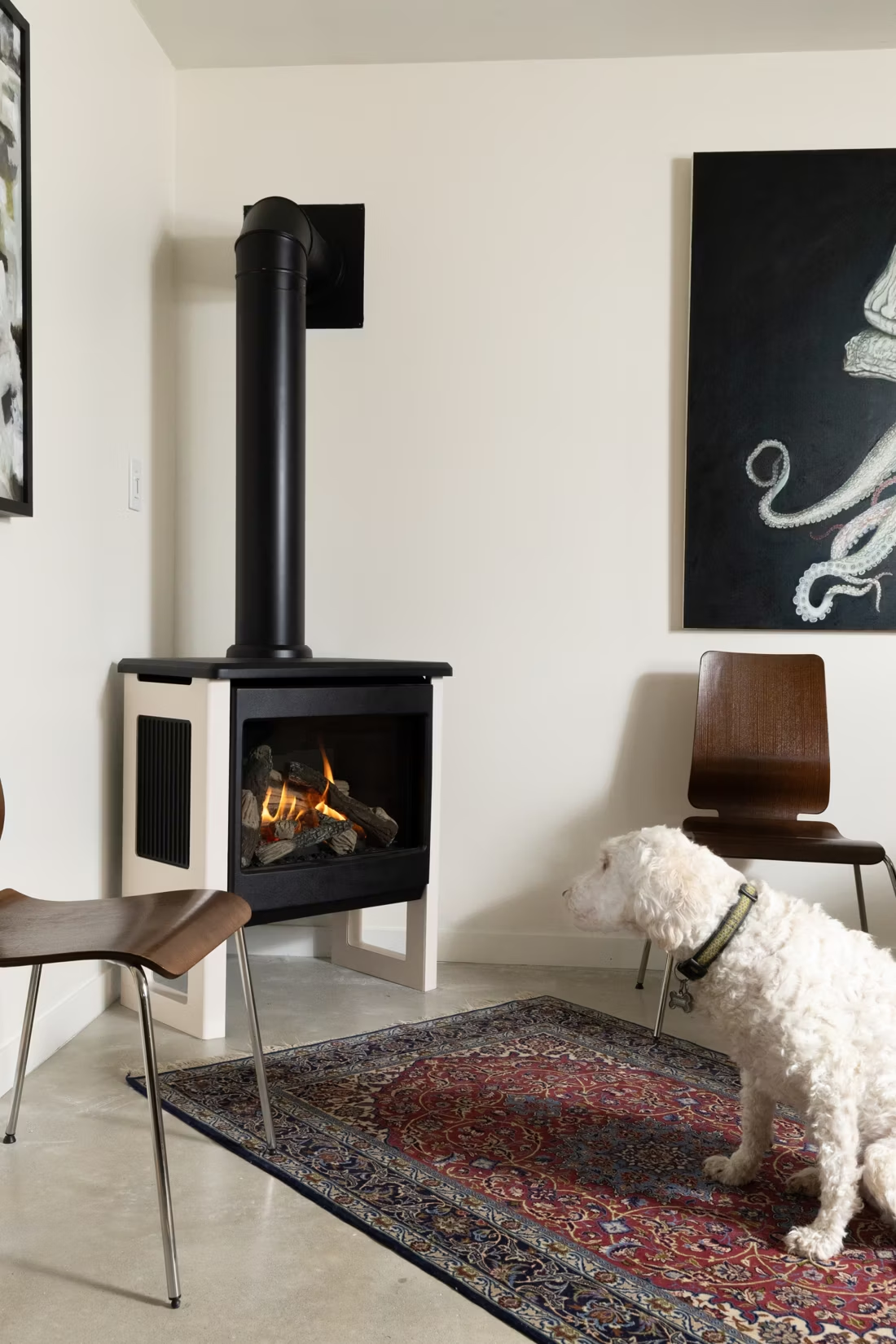
A gas fireplace is a built-in unit, typically framed into a wall during new construction or a remodel—common in Bainbridge's newer builds near Battle Point and Rolling Bay. A gas insert fits into an existing masonry firebox, which suits the island's older homes that already have a fir-burning fireplace and chimney chase in place. A gas stove is freestanding on a hearth pad, running off a propane line instead of cordwood, and works well in smaller cabins or ADUs where a full fireplace doesn't fit. For most existing-home owners here, an insert is the simpler retrofit.
Do I need a permit to install a gas fireplace on Bainbridge Island?
Yes. Bainbridge Island is a single incorporated city, so permitting runs through the City of Bainbridge Island's Planning & Community Development department rather than unincorporated Kitsap County. You'll need a building permit for the unit and venting, plus separate work from a licensed LP-gas fitter for the propane line and tank connection. Established local hearth dealers typically coordinate both pieces as part of the installation so you're not managing two different trades and inspections yourself.
Vented vs. vent-free gas fireplaces—which should I choose here?
Direct-vent units draw combustion air from outside and exhaust it back outside through sealed venting, and they're the standard, code-compliant choice everywhere including Washington. Vent-free units burn into the room and carry stricter room-size and ventilation requirements. Given how tightly built and well-insulated a lot of newer Bainbridge homes are for energy efficiency, most local dealers steer homeowners toward direct-vent models—better indoor air quality matters even more in a well-sealed house, and it avoids adding moisture to an already damp Puget Sound climate.
How often should a gas fireplace be serviced on Bainbridge Island?
An annual inspection, ideally in early fall before the wet season sets in around October, is the standard recommendation. A technician checks the burner, pilot or ignition system, gas connections at the propane tank, and venting, and cleans the glass. Because propane systems have an extra connection point at the tank compared to natural gas, it's worth having that line checked too. Expect to pay around $150-$250 for a standard visit—cheap insurance against an ignition failure during the next windstorm-driven outage.
Gas vs. wood—which makes more sense for a Bainbridge Island home?
Wood—split from douglas fir, red alder, or lodgepole pine, with cutting permits from Olympic National Forest or Mt. Baker-Snoqualmie National Forest running just $5 to $20 a cord—still appeals to islanders who want a heat source that doesn't depend on the grid or a propane delivery truck making the ferry crossing. Gas wins on convenience and cleaner air, especially during the wildfire-smoke stretches of late summer when adding more smoke to the air feels like the wrong move. Given the island's mild but long, damp heating season, a lot of households run a propane gas fireplace or insert for daily zone heat and keep wood as a backup for extended power outages.
Can I put a TV above my fireplace?
Yes—with an asterisk. Fireplaces are hot and TVs don't like heat. Either put a mantel between them to deflect rising warmth, or choose a fireplace with heat-management technology that creates a cool zone on the wall above—the wall stays around 125 degrees, barely warm, while the room still gets full heat. If you like clean lines and don't want a mantel, heat management is the answer.
Why is my open fireplace making my house colder?
Open fireplaces suck—literally. As the fire burns, it consumes air your furnace already paid to heat and pulls it out through the chimney, so the house is actually colder after the fire goes out than before you lit it. An insert fixes this: it seals the chimney, puts fixed glass across the front, and turns that hole in your house into a real heat source.
Can I install a fireplace myself?
If you're putting a fire in your house on purpose, it's best to work with an expert. Unless you're genuinely experienced in framing, gas line, vent pipe, and the national code on clearances to combustibles, have a professional do it—and ideally the same company that sells you the fireplace, so warranty, service, and liability all live under one roof.
How much should I budget for a fireplace?
For an average home—covering the fireplace, the vent pipe, and basic installation—a budget between $3,900 and $5,500 gives you a lot of options across wood, gas, and pellet. By the time you add finish work, gas line, and electrical, the average complete installation lands between $5,000 and $12,000 all-in. In a remodel or new build, a good rule is to put about 2.5% of the total project cost toward the fireplace.
Nearby Dealers
Hearth shops serving Bainbridge Island and the surrounding area.
Rich's Stoves & Spa
Get your free Project Guide & Parts List for a Bainbridge Island gas fireplace.
Tell me about your home and your propane setup, and I'll match you with a trusted local dealer familiar with island logistics—plus send a free Project Guide & Parts List with the exact vent kit and parts your project needs.
Find Your Fireplace →