
Find the right gas fireplace for your Wise County home.
Clean, on-demand heat for the ridges and hollows of Wise County—from Wise and Big Stone Gap to Coeburn and Pound. I'll match you with a trusted local dealer who can size, permit, and install it right.
Every Project Starts From One of These Five Situations
Steady heat for a mountain winter, without the wood pile.
Wise County sits in the far southwestern corner of Virginia, tucked into the Cumberland Plateau with terrain that runs from valley towns like Wise and Big Stone Gap up into ridge country toward Pound and Appalachia. Climate zone 4A and roughly 4,663 heating degree days put winters here on par with places like Madison, Wisconsin in terms of season length, even if single-digit lows are less frequent—average winter lows hover around 24°F, but cold snaps off the plateau can push well below that for days at a time. A gas fireplace or insert gives homeowners consistent, thermostat-controlled heat through that stretch without hauling and stacking cordwood, which still matters in a county where oak and hickory heat plenty of homes but not every household wants the daily upkeep.
Much of Wise County runs on propane rather than piped natural gas, since municipal gas infrastructure is limited outside the more built-up parts of town. That doesn't change what's possible—most gas fireplace and insert models install just as well on propane as on natural gas, with a local dealer setting the correct orifice and regulator for your fuel source. What it does mean is that your propane tank situation (existing tank, new tank, or tank size) is one of the first things a local installer will ask about, right alongside your home's layout and venting path.
Three steps. No salesperson until you're ready.
Tell us about your project
Your zip code, your situation, and the fuel you're leaning toward—or let the answers point you to one.
See what's actually available
The brands dealers within 100 miles genuinely carry—real options, never a catalog mirage.
Get your dealer & Project Guide
A trusted local dealer, plus the free Project Guide & Parts List that names every component of the job.
Frequently Asked Questions
How much does a gas fireplace installation cost in Wise County?
Most gas fireplace and insert installations in Wise County run in the range typical for the region—generally $4,000 to $10,000 depending on the unit, whether you're converting an existing wood fireplace or building new, and whether propane tank or gas line work is required. A gas insert going into an existing masonry fireplace with a nearby propane line is usually on the lower end. New construction or homes needing a fresh propane tank installation and longer line runs land higher. A local dealer will give you a firm number after seeing your home, but the free Project Guide & Parts List I put together gives you a realistic starting point before that visit.
Can I convert my existing wood fireplace to gas in Wise County?
Yes, and it's a common project here given how many Wise County homes were built with a wood-burning masonry fireplace as the original heat source. A gas insert typically slides into that existing firebox and uses a stainless liner run up the same chimney, so you keep the look of the fireplace while gaining push-button heat. The main variable locally is fuel supply—since much of the county runs on propane rather than piped gas, your installer will need to confirm tank access or run a new line, which affects both cost and timeline.
Is natural gas available in Wise County, or is it mostly propane?
It varies by location. Some areas within the towns of Wise and Big Stone Gap have access to piped natural gas, but a large share of the county—particularly outlying communities like Pound, Appalachia, and Coeburn—relies on propane for fireplace and heating appliances. Either fuel works fine in a modern gas fireplace or insert; the unit is simply configured for the fuel you have. If you're not sure which service is available at your address, a local dealer can confirm during the initial consultation.
Will my gas fireplace still work if the power goes out?
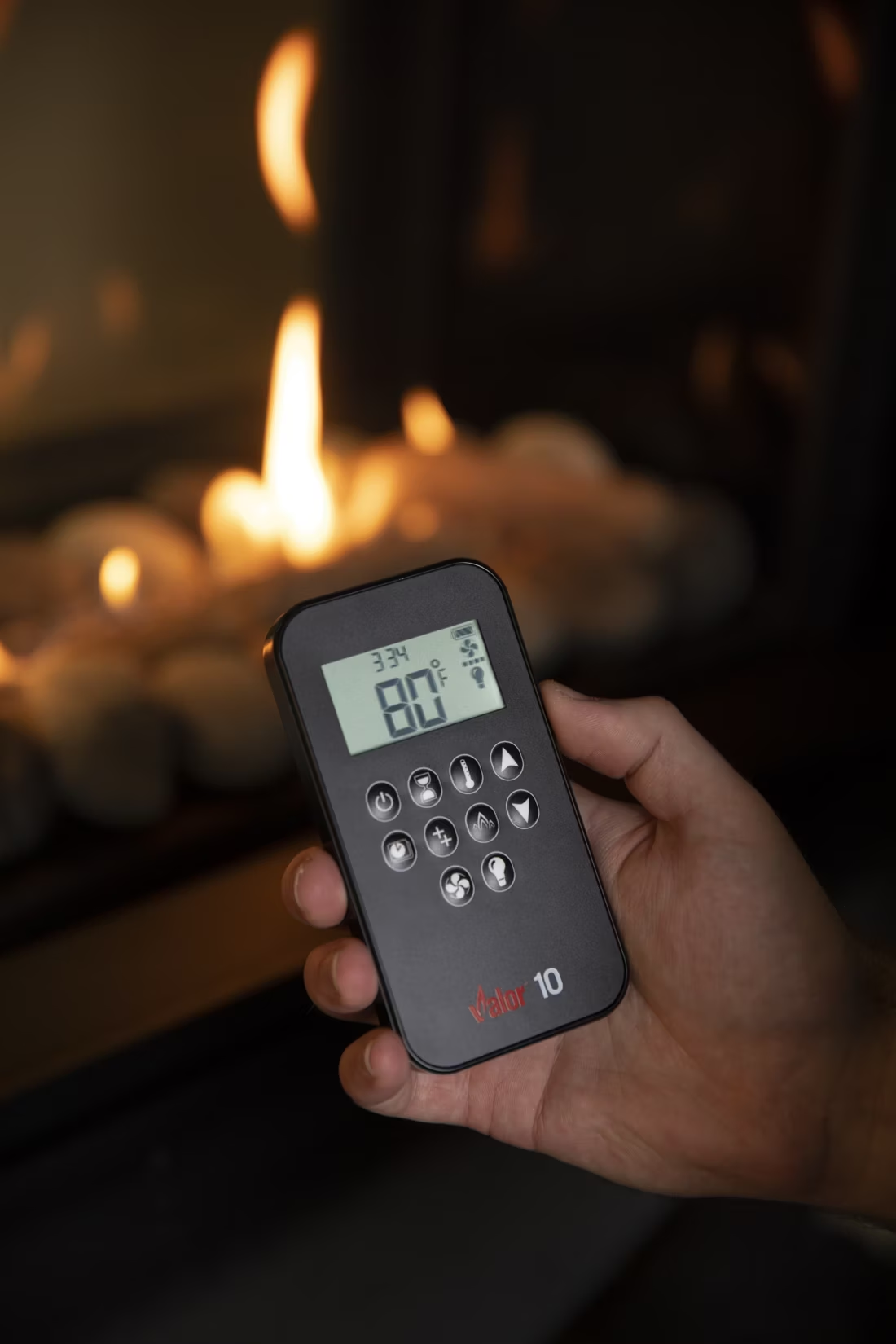
Most will, with the right ignition system. Units with IPI (intermittent pilot ignition) include a battery backup that keeps the fireplace operating normally during an outage—useful in Wise County, where mountain terrain and ice or wind events can knock out power for stretches at a time. Valor fireplaces take a different approach: the pilot's thermocouple generates the electricity needed to run the unit, so there's no battery to remember or replace. Either option gives you real backup heat during a plateau ice storm, which is worth asking about when comparing models.
What's the difference between a gas fireplace, insert, and stove?
A gas fireplace is a built-in unit framed into a wall, typically chosen for new construction or a remodel where there's no existing firebox. A gas insert is sized to slide into an existing masonry fireplace opening, converting it to sealed, efficient gas heat while venting through the existing chimney with a liner. A gas stove is freestanding, sitting on the floor with its own base like a wood stove, and works well in a room without any existing fireplace. Given how many Wise County homes have an original masonry fireplace, an insert is often the natural fit—but a dealer can walk through all three depending on the room.
Do I need a permit to install a gas fireplace in Wise County?
Generally yes—gas fireplace installations typically require a building permit and, when new gas or propane line work is involved, additional sign-off from a licensed gas-fitter. Requirements and the exact permitting office depend on whether the property sits within town limits (Wise, Big Stone Gap, Coeburn, Appalachia, or Pound) or in unincorporated Wise County. Most established local dealers handle this paperwork as part of the installation, so you're not stuck tracking down the right office yourself.
What's the difference between vented and vent-free gas fireplaces?
Vented (direct-vent) gas fireplaces draw combustion air from outside and exhaust it back outside through sealed venting—they're the most widely recommended option and produce real, substantial heat. Vent-free units burn without external venting, releasing some combustion byproducts into the room, and are subject to strict room-sizing and ventilation rules where allowed. Virginia permits vent-free installations under certain conditions, but for Wise County homes—especially smaller rooms or additions—direct-vent units remain the more common and generally preferred choice among local dealers, since they don't require any compromise on indoor air quality.
How often should a gas fireplace be serviced?
Plan on an annual inspection, ideally before the start of the heating season each fall. A technician checks the burner, pilot assembly, venting, and any gas or propane connections, and cleans the glass and interior components. This is a much smaller job than wood chimney sweeping but still important, particularly for propane-fed units in Wise County where tank connections and regulators should be checked along with the fireplace itself. Local hearth and propane service providers typically charge in the $150–$250 range for this visit.
Gas vs. wood—which makes more sense for a Wise County home?
Wood remains a strong choice here—oak, hickory, and maple are all locally abundant, burn hot, and many Wise County households already have a supply chain sorted through family land or local sellers. Wood also keeps working with no electricity, which matters during plateau-area outages. Gas trades that self-sufficiency for convenience: instant on-off heat, no ash or creosote, and a cleaner look, though propane-fed units do depend on tank refills rather than a stack of cordwood. Plenty of homes here run both—a gas unit in the main living space for daily use, and a wood stove or fireplace elsewhere as backup and for the ambiance wood heat still holds in this part of Virginia.
Can I put a TV above my fireplace?
Yes—with an asterisk. Fireplaces are hot and TVs don't like heat. Either put a mantel between them to deflect rising warmth, or choose a fireplace with heat-management technology that creates a cool zone on the wall above—the wall stays around 125 degrees, barely warm, while the room still gets full heat. If you like clean lines and don't want a mantel, heat management is the answer.
What's the difference between an insert and a zero-clearance fireplace?
An insert is a fireplace that slides into a pre-existing wood-burning fireplace—if you don't have one, there's nothing to insert it into. A zero-clearance fireplace is built into a framed wall, which makes it the answer for remodels and new construction. Simple test: existing masonry fireplace means insert; blank or framed wall means zero-clearance.
How much should I budget for a fireplace?
For an average home—covering the fireplace, the vent pipe, and basic installation—a budget between $3,900 and $5,500 gives you a lot of options across wood, gas, and pellet. By the time you add finish work, gas line, and electrical, the average complete installation lands between $5,000 and $12,000 all-in. In a remodel or new build, a good rule is to put about 2.5% of the total project cost toward the fireplace.
Can I install a fireplace myself?
If you're putting a fire in your house on purpose, it's best to work with an expert. Unless you're genuinely experienced in framing, gas line, vent pipe, and the national code on clearances to combustibles, have a professional do it—and ideally the same company that sells you the fireplace, so warranty, service, and liability all live under one roof.
Stove and Fireplace Dealers in Wise County
Listings include WhyFire partner dealers, dealers we have verified as authorized for the brands we recommend, and established local businesses that carry hearth products. Every listing shows which one it is. The ones marked Preferred run on WhyFire's software, so they can show you real pricing and book your appointment right here. No manufacturer pays for placement. How we verify dealers →
Hce Systems Inc.
Suburban Propane
Clintwood Lumber & Supply
Quality Parts Inc.
Modern Hardware
Lee Propane
Southwest Heating & Air
Get matched with a Wise County gas fireplace dealer.
Tell me about your home and fuel setup, and I'll send you a free Project Guide & Parts List—the exact parts, vent kit, and a recommended local dealer for your gas fireplace project in Wise County.
Find Your Fireplace →