
Electric Heat That Fits Any Room in West Point.
No chimney, no venting, no gas line—just plug-in or hardwired warmth for a mild river-town climate. Find the right unit and connect with a trusted local dealer.
Every Project Starts From One of These Five Situations
Simple heat for a mild river-town climate.
West Point sits at just 7 feet of elevation, right where the Mattaponi and Pamunkey Rivers meet to form the York River. Winters here are mild by national standards—an average low around 28°F and only a light winter heating load each year, a fraction of what a place like Burlington, Vermont sees. That milder climate math changes the calculus on heating: most West Point homes don't need a whole-home wood or gas system running all winter, they need supplemental, room-by-room warmth for the handful of genuinely cold nights and the everyday chill of a riverside home.
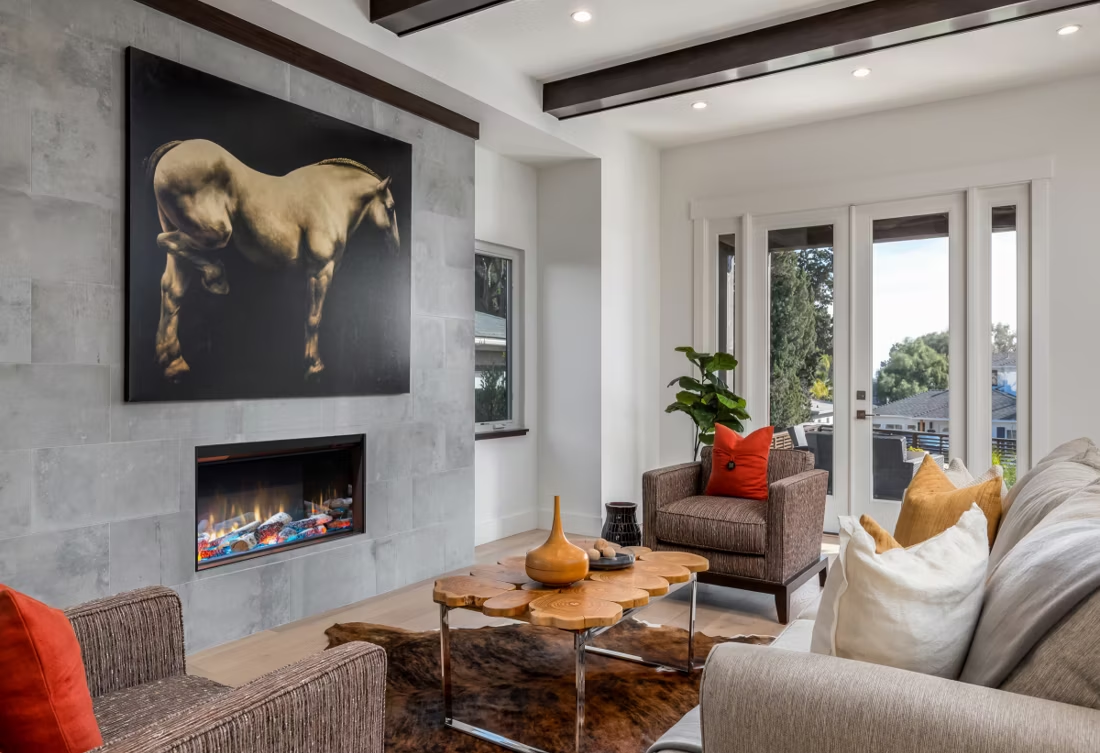
Electric fireplaces fit that need well. There's no chimney to build, no gas line to run, and no combustion byproducts to worry about—a real advantage in a town with no air quality non-attainment issues where residents care about keeping it that way. Dominion Energy (listed on utility records as Virginia Electric & Power Co) serves West Point at a residential rate of about 14.09 cents per kWh, making a single electric unit an affordable way to take the edge off a chilly evening in an older downtown home or a newer build along the waterfront, without touching the county's building codes for combustion appliances.
Three steps. No salesperson until you're ready.
Tell us about your project
Your zip code, your situation, and the fuel you're leaning toward—or let the answers point you to one.
See what's actually available
The brands dealers within 100 miles genuinely carry—real options, never a catalog mirage.
Get your dealer & Project Guide
A trusted local dealer, plus the free Project Guide & Parts List that names every component of the job.
Frequently Asked Questions
How much does an electric fireplace installation cost in West Point?
Costs vary widely because electric units span such a range of products. A plug-in freestanding electric stove or a simple insert that slots into an existing firebox typically runs $300 to $1,000 installed, since no electrical or structural work is usually needed. A built-in wall unit or a linear electric fireplace set into new framing with a dedicated 20-amp circuit runs higher, often $1,500 to $2,500, once an electrician is involved. Because King William County doesn't require special venting or clearance-to-combustible inspections for most electric units, labor costs stay lower here than for wood or gas projects in the same home.
Do I need a permit to install an electric fireplace in West Point?
In most cases, no. A plug-in electric fireplace or insert that uses a standard household outlet doesn't trigger a building permit. If you're having a built-in unit hardwired with a new dedicated circuit, that electrical work typically does require a permit through the King William County Building Department, since West Point falls under county building jurisdiction. A licensed electrician pulling the permit as part of the install is the normal path, and most local dealers can recommend one they already work with.
How much does it cost to run an electric fireplace in West Point?
At Dominion Energy's residential rate of roughly 14.09 cents per kWh, a typical 1,500-watt electric fireplace costs about 21 cents an hour to run on high heat. Used for a few hours each evening—say five hours a day through the cooler months—that works out to roughly $30 to $35 a month. Because West Point's winters are mild (an average low near 28°F), most homeowners here use electric units for zone heating a den or bedroom rather than running one continuously, which keeps the operating cost well below what a central heat pump would spend heating the whole house for the same comfort.
What size electric fireplace do I need for my home?
Sizing an electric unit is less about BTU output and more about the room and the look you want, since most electric fireplaces are supplemental heat rather than a home's primary heat source in a climate as mild as West Point's. A compact 26- to 40-inch insert or wall-mount handles a bedroom or den. A 50- to 60-inch linear unit works well as a focal point in an open living or dining area. Given the town's modest winter heating load, even the largest electric units are typically sized for ambiance and supplemental comfort rather than trying to heat an entire older home along Main Street or a larger waterfront build.
Electric vs. wood—which is right for my West Point home?
Wood remains popular in King William County, where oak, hickory, and maple are the common local species for a real fire, and a wood stove or insert keeps working even when the power goes out—a genuine consideration for a low-lying river town where storms occasionally knock out service. Electric fireplaces can't provide backup heat during an outage, but they require no chimney, no ash cleanup, and no wood storage, and they produce zero combustion byproducts, which matters in a town with no current air quality concerns that residents want to keep that way. For a primary living space where convenience matters most, electric wins; for storm-season backup heat, wood still has the edge.
Will my electric fireplace work if the power goes out?
No—and this is worth being direct about. Electric fireplaces run entirely on household current, so a power outage shuts them off along with everything else in the house. For a town at 7 feet of elevation near tidal rivers, where nor'easters and hurricane remnants can knock out power for a day or more, an electric-only heating plan leaves you without backup. Many West Point homeowners pair an electric fireplace for everyday convenience with a wood stove or a battery-backed gas unit elsewhere in the house for the nights when the grid goes down.
What's the difference between an electric insert, a built-in, and a mantel package?
An electric insert is sized to slot into an existing masonry firebox, letting you keep a wood-burning fireplace's brick surround while swapping in flameless, ash-free heat—a common upgrade for West Point's older homes near downtown. A built-in electric fireplace is installed into new framing, typically flush with the wall for a modern linear look, and usually gets wired on its own circuit. A mantel package pairs a freestanding or recessed electric unit with a manufactured mantel surround—the simplest option for a room with no existing fireplace, since it just needs a nearby outlet.
Are electric fireplaces safe for older or waterfront homes in West Point?
Yes, and in some ways they're a better fit than combustion appliances for the town's older housing stock and low-lying waterfront lots. Because there's no flue, no chimney chase, and no clearance-to-combustible requirements to work around, electric units avoid the structural questions that come up with wood or gas installs in a historic home with settled foundations. They also don't introduce any new penetration through the roof or wall, which matters on properties near the Mattaponi and Pamunkey Rivers where moisture management is already a consideration.
What brands of electric fireplaces should I consider?
Widely available brands like Napoleon, Dimplex, and Touchstone cover most of what local dealers install in this region, ranging from simple plug-in inserts to full linear built-ins with realistic flame technology. There isn't a regional electric fireplace manufacturer the way there is for pellet fuel locally—brands like Energex and Hamer Pellet Fuel are regional pellet suppliers, not fireplace makers—so electric selection comes down more to matching the unit's size and features to your room than to sourcing something local. A trusted dealer can walk you through which models perform well for the heat output and flame realism you're after.
Does an electric fireplace need a vent or chimney?
No—that's its superpower. An electric fireplace needs a wall and an outlet, period. No vent pipe, no gas line, no clearances to design around, which is why it works in bedrooms, offices, apartments, and walls where venting a gas or wood unit would be impractical or impossible. Installation is typically the simplest and least expensive of any fireplace type.
Can I put a TV above my fireplace?
Yes—with an asterisk. Fireplaces are hot and TVs don't like heat. Either put a mantel between them to deflect rising warmth, or choose a fireplace with heat-management technology that creates a cool zone on the wall above—the wall stays around 125 degrees, barely warm, while the room still gets full heat. If you like clean lines and don't want a mantel, heat management is the answer.
How much should I budget for a fireplace?
For an average home—covering the fireplace, the vent pipe, and basic installation—a budget between $3,900 and $5,500 gives you a lot of options across wood, gas, and pellet. By the time you add finish work, gas line, and electrical, the average complete installation lands between $5,000 and $12,000 all-in. In a remodel or new build, a good rule is to put about 2.5% of the total project cost toward the fireplace.
Does a fireplace add value to my home?
On average, a fireplace adds back to the home about the same amount you spent installing it. Add the monthly savings from heating the rooms you actually use instead of the whole house—often hundreds of dollars a year—and the value case is strong before you even count what a fire does for how your family uses the room.
Nearby Dealers
Hearth shops serving West Point and the surrounding area. Every listing shows whether it is a WhyFire partner, a dealer we have verified as authorized for the brands we recommend, or a local business carrying hearth products. No manufacturer pays for placement. How we verify dealers →
Old Town Stove & Hearth
Phillips Energy,Inc - Providence Forge
Electric Service in West Point
An electric fireplace's heater draws about 1,500 watts—pennies per hour at local rates.
Virginia Electric & Power Co
Find your electric fireplace in West Point.
Tell us about your home and we'll put together a free Project Guide & Parts List for your West Point electric fireplace project—the right unit, the exact parts, and a trusted local dealer to install it.
Find Your Fireplace →