
Instant heat for Shenandoah Valley winters—no wood pile required.
Waynesboro sits where the Blue Ridge meets the valley floor, and winters here are real but not brutal—cold enough for consistent heat, mild enough that convenience often wins. Find the right gas fireplace, insert, or stove, and get matched with a trusted local dealer.
Every Project Starts From One of These Five Situations
Clean, reliable heat that matches Waynesboro's real but manageable winters.
Waynesboro sits along the South River at the foot of the Blue Ridge, with a winter heating season comparable to much of central Virginia and average winter lows around 23°F—cold enough to need consistent heat from November through March, but nowhere near the extremes of the upper Midwest. That combination of a real heating season without brutal cold is exactly where gas fireplaces earn their keep: enough demand to justify the install, without the wood-splitting commitment some households in colder climates take on out of necessity.
Natural gas service inside Waynesboro is provided through the city's own utility system, while propane is the more common fuel choice out in the surrounding Augusta County countryside—Fishersville, Stuarts Draft, Crimora, and the farms and hollows along Route 340. Either way, a modern gas fireplace or insert gives Waynesboro homeowners heat at the flip of a switch, no ash or creosote to manage, and—with the right ignition system—the ability to keep running when a Blue Ridge winter storm knocks the power out.
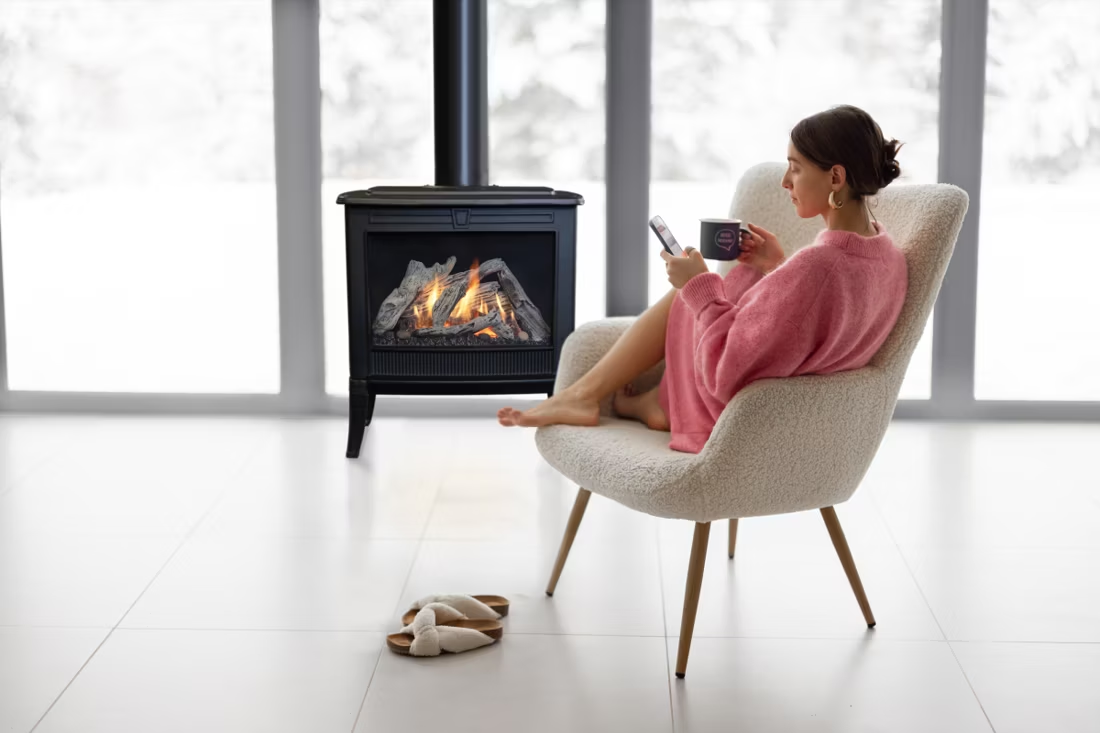
Three steps. No salesperson until you're ready.
Tell us about your project
Your zip code, your situation, and the fuel you're leaning toward—or let the answers point you to one.
See what's actually available
The brands dealers within 100 miles genuinely carry—real options, never a catalog mirage.
Get your dealer & Project Guide
A trusted local dealer, plus the free Project Guide & Parts List that names every component of the job.
Frequently Asked Questions
How much does a gas fireplace installation cost in Waynesboro?
Cost depends heavily on three things: the unit itself, whether you're venting through an existing masonry chimney or running new venting, and whether a gas line already reaches the install location. A gas insert going into an existing fireplace with gas already nearby is usually the least expensive path; a new direct-vent fireplace built into a wall during a remodel, with fresh gas line and venting, runs higher. Rather than guess at a number that doesn't account for your specific home, we match Waynesboro homeowners with a trusted local dealer who provides a firm, itemized quote—and it's included in the free Project Guide & Parts List you get through Find My Fireplace.
Can I convert my existing wood fireplace to gas in Waynesboro?
Yes, and it's a common project for older Waynesboro homes with masonry fireplaces built decades ago for wood burning oak, hickory, or maple. A gas insert typically slides into that existing firebox, using a stainless liner run through your current chimney as the vent path. If your home already has natural gas from the city utility or a propane tank on the property, the conversion is more straightforward; if not, running a new gas line is part of the project. The result keeps your existing masonry look while trading ash, smoke, and wood hauling for on-demand heat.
Do I need natural gas, or can I use propane in Waynesboro?
Both are common depending on where in the area you live. Inside city limits, natural gas service reaches most established neighborhoods through Waynesboro's municipal utility system, so a home with existing gas appliances can usually add a fireplace without much extra infrastructure work. Out in the surrounding Augusta County countryside—where Waynesboro city gas doesn't reach—propane from a local supplier and a tank on the property is the standard setup. Most gas fireplace models are available in either configuration; your installer sets the correct orifice and regulator for whichever fuel you're running.
Will my gas fireplace still work if the power goes out?
It can, depending on the ignition system. Gas fireplaces with IPI (intermittent pilot ignition) typically include a battery backup that kicks in when the power drops, so the unit still lights and runs on demand—just remember to keep fresh batteries in the unit, since it's easy to forget until a storm hits. Valor fireplaces take a different approach: their pilot generates its own electricity through the thermocouple, so there's no battery to maintain at all. For Waynesboro homes on the edge of the Blue Ridge, where ice storms occasionally take out power for a day or two, that kind of built-in backup heat is worth asking about when you talk to a local dealer.
What's the difference between a gas fireplace, insert, and stove?
A gas fireplace is a fully built-in unit framed into a wall—the right choice for new construction or a remodel without an existing hearth. A gas insert is built to slide into an existing masonry firebox, turning an old wood-burning fireplace into a sealed, efficient heat source that vents through the chimney you already have. A gas stove is freestanding, sitting on its own hearth pad rather than built into a wall, and works well in a room without any existing fireplace opening. For Waynesboro's older housing stock with existing masonry fireplaces, an insert is usually the simplest upgrade; newer construction more often calls for a built-in fireplace.
Do I need a permit to install a gas fireplace in Waynesboro?
Yes—installing a gas fireplace typically requires both a building permit and a gas line permit through the city's permitting office, and any new gas line work needs to be done by a licensed gas fitter. In practice, most homeowners never deal with this directly: the local dealer you're matched with pulls the permits, coordinates the inspection, and handles the gas-fitter work as part of the installation, so you're not stuck managing multiple trades yourself.
What's the difference between vented and vent-free gas fireplaces?
Vented (direct-vent) gas fireplaces pull combustion air from outside and exhaust the byproducts back outside through a sealed vent—they're the cleanest, safest, and most universally code-compliant option, and what most Waynesboro dealers install by default. Vent-free units burn gas directly into the room with no outside venting; they're legal in Virginia but come with strict room-sizing rules and an oxygen depletion sensor, since combustion byproducts stay indoors. Waynesboro doesn't carry any special air quality restrictions that would push you toward one or the other, so the decision usually comes down to whether you have a viable path to the outside for venting. Most homeowners end up with direct-vent for the better heat output and peace of mind.
How often should a gas fireplace be serviced?
Plan on an annual inspection, ideally before the heating season starts in the fall. A technician checks the burner, pilot assembly, venting, and gas connections, and cleans the glass and interior—a much smaller job than sweeping a wood chimney, but just as important for safe operation. Local hearth dealers and gas service techs serving Waynesboro and the surrounding Augusta County area typically handle this as a standard maintenance visit.
Gas vs. wood—which makes more sense for a Waynesboro home?
Wood—burned as oak, hickory, or maple, the species most common on Blue Ridge and valley woodlots—offers real fire, no reliance on gas lines or propane deliveries, and heat that keeps going during an extended outage as long as you're willing to tend it. Gas offers instant on-off convenience, no ash or creosote, and steady output without splitting or stacking anything. With Waynesboro's moderate winter heating needs and no air quality burn restrictions in the area, either fuel works fine on its own merits—the choice comes down to how much hands-on fire-tending appeals to you versus flipping a switch. Plenty of local homes run gas in the main living space and keep a wood-burning unit elsewhere for backup and ambiance.
Can I put a TV above my fireplace?
Yes—with an asterisk. Fireplaces are hot and TVs don't like heat. Either put a mantel between them to deflect rising warmth, or choose a fireplace with heat-management technology that creates a cool zone on the wall above—the wall stays around 125 degrees, barely warm, while the room still gets full heat. If you like clean lines and don't want a mantel, heat management is the answer.
What does it take to replace an existing fireplace?
Fireplaces are like icebergs—bigger behind the wall than in front of it. Replacement means removing the surrounding tile or stone (the finish material laps onto the fireplace face), pulling the old unit, setting the new one in the same enclosure, and re-finishing the wall. A hearth professional can determine what's behind your wall without demolition during an in-home preview.
Can I install a fireplace myself?
If you're putting a fire in your house on purpose, it's best to work with an expert. Unless you're genuinely experienced in framing, gas line, vent pipe, and the national code on clearances to combustibles, have a professional do it—and ideally the same company that sells you the fireplace, so warranty, service, and liability all live under one roof.
Does a fireplace add value to my home?
On average, a fireplace adds back to the home about the same amount you spent installing it. Add the monthly savings from heating the rooms you actually use instead of the whole house—often hundreds of dollars a year—and the value case is strong before you even count what a fire does for how your family uses the room.
Stove and Fireplace Dealers in Waynesboro County
Listings include WhyFire partner dealers, dealers we have verified as authorized for the brands we recommend, and established local businesses that carry hearth products. Every listing shows which one it is. The ones marked Preferred run on WhyFire's software, so they can show you real pricing and book your appointment right here. No manufacturer pays for placement. How we verify dealers →
Valley Filter & Maintenance
Clines Heating And Cooling
Holtzman Propane
Blossman Gas And Appliance
Acme Stoves Of Charlottesville
Find your gas fireplace in Waynesboro, Virginia.
Tell us a bit about your home and we'll match you with a trusted local dealer and send over your free Project Guide & Parts List—the exact parts, vent kit included, for your Waynesboro gas fireplace project.
Find Your Fireplace →