
Real heat, no chimney required, for Tysons homes.
From Tysons Corner high-rises to townhomes near the Beltway, direct-vent gas delivers real warmth without masonry work. Find the right unit and connect with a trusted local dealer.
Every Project Starts From One of These Five Situations
Built for high-rises, townhomes, and modern construction.
Tysons has grown from a highway interchange into one of the densest urban cores in Fairfax County, and most of that growth is recent: glass condo towers, luxury townhomes, and mixed-use buildings that came online with gas already plumbed to the unit. Winters here are moderate by national standards—average lows around 23°F, with a heating season on par with places like Louisville, KY, and nothing like the deep-freeze stretches in Minneapolis or Madison, WI—but a gas fireplace still earns its keep on the cold, damp nights common to the DC region from December through February.
Washington Gas serves nearly all of Tysons, which is a big part of why gas is the default hearth fuel here rather than wood—wood-burning stoves are effectively absent from the market, ruled out by condo association bylaws, high-rise fire codes, and the simple fact that there's no cutting or storage culture in a neighborhood built around office towers and metro stops. Pellet stoves face the same practical barriers. Electric fireplaces, billed through Dominion Energy at roughly 14 cents per kWh, fill in where venting isn't possible at all—think interior condo walls—but for anyone with an exterior wall or existing masonry, a direct-vent gas unit remains the strongest combination of real heat and clean installation.
Three steps. No salesperson until you're ready.
Tell us about your project
Your zip code, your situation, and the fuel you're leaning toward—or let the answers point you to one.
See what's actually available
The brands dealers within 100 miles genuinely carry—real options, never a catalog mirage.
Get your dealer & Project Guide
A trusted local dealer, plus the free Project Guide & Parts List that names every component of the job.
Frequently Asked Questions
How much does a gas fireplace installation cost in Tysons?
Most gas fireplace installations in Tysons run $4,500 to $12,000, with labor costs on the higher end of national averages given the DC-metro market. A direct-vent insert into an existing masonry fireplace with a Washington Gas line already nearby sits toward the bottom of that range. New construction or a remodel requiring a fresh gas line run through a townhome wall or condo unit, plus new venting, lands in the middle to upper end. High-rise installations sometimes carry additional costs for building-management coordination and fire-stopping requirements at floor penetrations—your local dealer will flag that during the site visit.
Can I convert an older wood fireplace to gas in Tysons?
Yes, and it's a common project in the older single-family neighborhoods around Tysons that still have masonry fireplaces originally built for oak, hickory, or maple firewood. A gas insert typically drops into the existing firebox, using a stainless liner run through the original chimney. Costs usually land between $4,500 and $9,000 depending on whether the home already has a gas line nearby. Wood-burning itself has largely fallen out of use in this part of Fairfax County—there's no local cutting-permit culture the way there is in more rural or forested regions—so most homeowners with an old wood fireplace are converting to gas rather than maintaining wood as a fuel source.
Is natural gas available throughout Tysons, or do I need propane?
Natural gas from Washington Gas covers essentially all of Tysons, including the 22102 and 22182 zip codes, so propane is rarely necessary here. If you already have a gas water heater, range, or furnace, adding a fireplace usually means tapping an existing line rather than running new service from the street. Propane only comes into play for a small number of properties outside the utility's service footprint, and even then it's uncommon in this immediate area.
Will my gas fireplace still work if the power goes out?
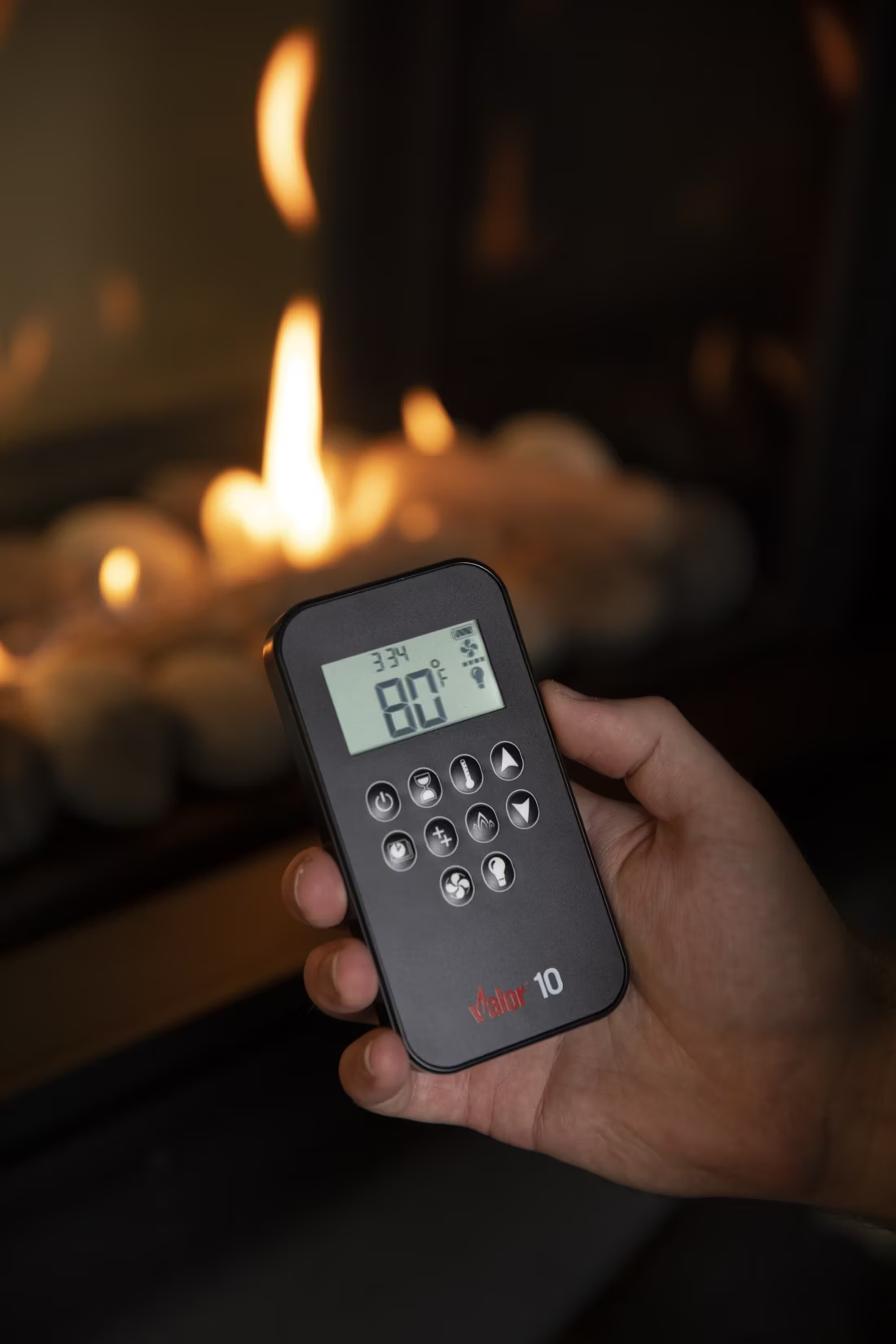
Most direct-vent gas fireplaces will, provided they use an IPI (intermittent pilot ignition) system with battery backup—a small set of AA or C batteries inside the unit keeps the igniter working when Dominion Energy power drops during a storm. Valor fireplaces take a different approach: they generate their own electricity from the pilot's thermocouple, so there's no battery to maintain at all. Given how often ice storms and thunderstorm outages hit Northern Virginia in winter and summer alike, ask your local dealer about the ignition system before you buy—it's a meaningful difference for a townhome or single-family home that loses power more than a well-insulated high-rise unit would.
What's the difference between a gas fireplace, insert, and stove?
A gas fireplace is a fully built-in unit framed into a wall, common in new-construction Tysons condos and townhomes. A gas insert fits into an existing masonry firebox—the right choice for older homes in the surrounding McLean and Vienna areas that already have a chimney. A gas stove is a freestanding cast-iron or steel unit that sits on the floor, which works well in a great room or basement where there's no existing fireplace opening. For most Tysons buyers in newer construction, a built-in direct-vent fireplace is the standard pick; for older homes with an existing chimney, an insert is usually more cost-effective.
Do I need a permit to install a gas fireplace in Tysons?
Yes. Fairfax County's Department of Land Development Services requires both a building permit and a mechanical/gas permit for new gas fireplace installations, and the gas line work must be done by a licensed gas-fitter. If your property is in a condo building or an HOA-governed townhome community, you'll also need sign-off from the building or association before work starts—that step trips up more Tysons projects than the county permit itself. A certified local dealer typically manages the county permitting and can tell you upfront whether your building has additional review requirements.
Can I install a vent-free gas fireplace in a Tysons condo or townhome?
Vent-free units are legal in Virginia under state code, but they're a harder sell in Tysons specifically. Condo and high-rise buildings governed by the Virginia Mechanical Code for multi-family construction often restrict or prohibit unvented appliances, and many HOAs add their own rules on top of that. Direct-vent gas fireplaces—which draw combustion air from outside and exhaust it back outside through a sealed vent—are the far more common and reliably approved choice across Tysons' condo towers, townhomes, and single-family homes alike. Confirm with your building management or HOA before assuming a vent-free unit is an option.
How often does a gas fireplace need to be serviced?
An annual inspection is the standard recommendation for any gas appliance, including direct-vent fireplaces and inserts. A technician checks the burner, pilot assembly, venting, and gas connections, and cleans the glass and interior—usually a $150 to $250 visit in the Tysons/Fairfax County market. Units in condo high-rises with longer horizontal vent runs sometimes need closer attention to venting clearances, since airflow around building exteriors can differ from a standalone house.
Gas vs. electric fireplace—which makes more sense for my Tysons home?
Gas delivers real, sustained heat—enough to meaningfully offset a furnace on a 23°F night—and most Tysons properties already have a Washington Gas line nearby, which keeps installation straightforward. Electric fireplaces need no venting at all, which makes them the go-to option for interior condo walls or units where running a flue simply isn't possible, and running one costs whatever Dominion Energy charges per kWh (currently around 14 cents) rather than a gas bill. If you have an exterior wall or an existing chimney, gas is almost always the better performer. If you're in an interior room of a high-rise with no path to the outside, electric is often the only realistic option—and a local dealer can tell you which situation you're in within a few minutes of looking at your floor plan.
Why is a fireplace insert so efficient?
An insert does two things: it seals the chimney completely, so you stop losing air you already paid to heat, and it radiates warmth into the room through the firebox and glass. Most add a heat-exchange fan that pulls cool room air underneath, wraps it around the hot firebox, and pushes it back out warm. Your home is more efficient before you've even lit the first fire.
Why is my open fireplace making my house colder?
Open fireplaces suck—literally. As the fire burns, it consumes air your furnace already paid to heat and pulls it out through the chimney, so the house is actually colder after the fire goes out than before you lit it. An insert fixes this: it seals the chimney, puts fixed glass across the front, and turns that hole in your house into a real heat source.
Can a fireplace actually lower my heating bill?
Yes—by creating a comfort zone. A furnace heats every square foot of the house just to warm the one room you're in; a gas fireplace on low burns roughly a sixth of the gas a typical furnace does. Set the furnace around 55–60 degrees as a baseline, then heat the rooms your family actually uses. Families who heat this way commonly save $20–$60 a month.
Does a fireplace add value to my home?
On average, a fireplace adds back to the home about the same amount you spent installing it. Add the monthly savings from heating the rooms you actually use instead of the whole house—often hundreds of dollars a year—and the value case is strong before you even count what a fire does for how your family uses the room.
Nearby Dealers
Hearth shops serving Tysons and the surrounding area.
Find your gas fireplace in Tysons.
Tell us a bit about your home—condo, townhome, or single-family—and we'll match you with the right gas fireplace, insert, or stove, plus a free Project Guide & Parts List and a trusted local dealer to install it.
Find Your Fireplace →