
Warm, Instant Heat for Tazewell's Mountain Homes.
Propane-fired gas fireplaces built for the ridges and hollows of Tazewell County. Find the right unit and a local dealer who installs it correctly.
Every Project Starts From One of These Five Situations
Clean, on-demand heat for Tazewell's mountain terrain.
At 2,430 feet in the Appalachian coalfields of southwest Virginia, Tazewell sits in a landscape of steep ridges and narrow hollows where winter temperatures average in the low 20s and the winter heating load runs about on par with Buffalo, New York, minus the lake-effect snow. Wood heat has deep roots here thanks to the oak, hickory, and maple stands that cover the surrounding county forestland, but for homes on steep gravel drives or with owners who'd rather not haul and split cordwood every winter, gas offers heat at the flip of a switch.
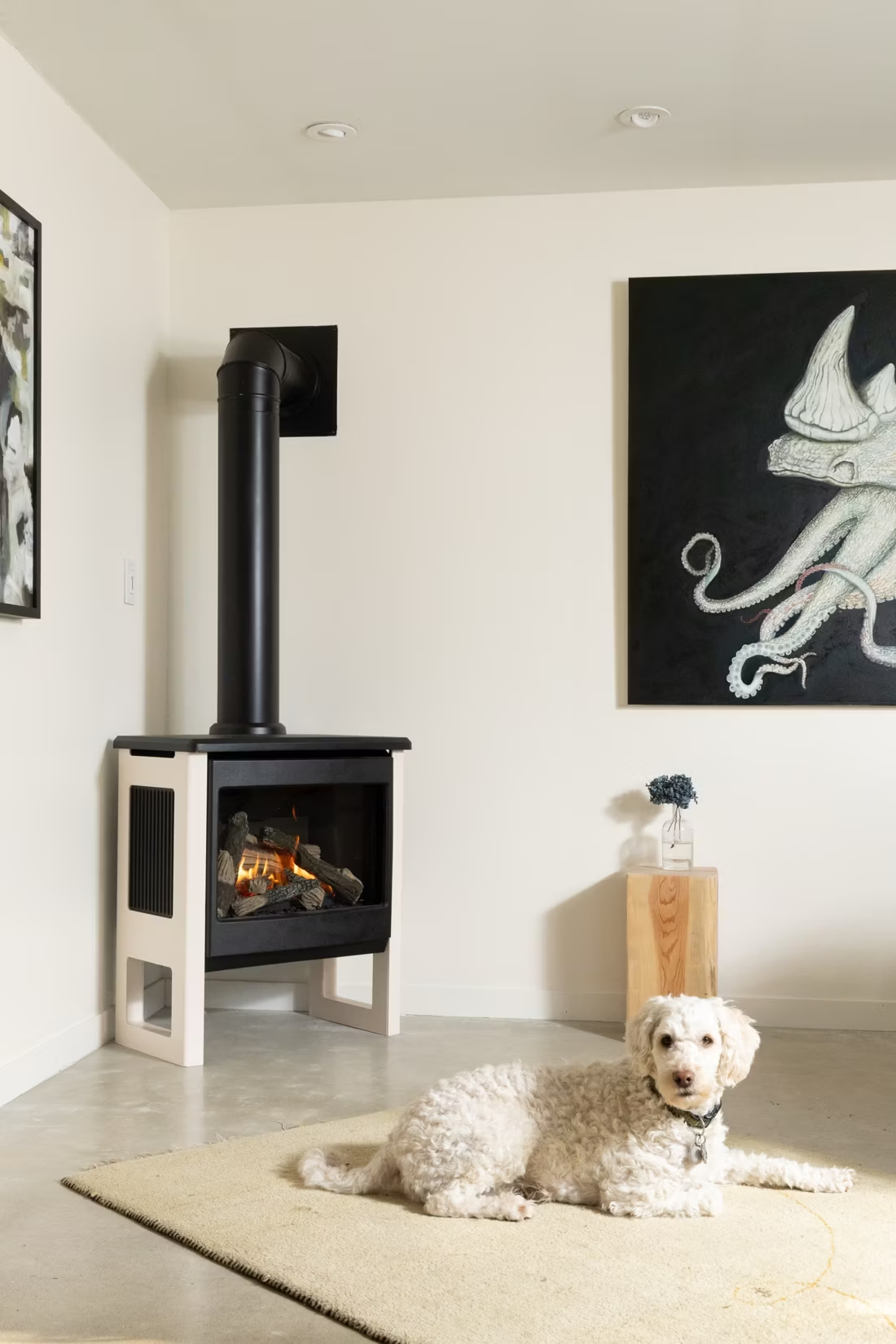
One thing worth knowing before you shop: piped natural gas doesn't reach most of Tazewell County. Virginia Electric & Power Co and Appalachian Power Co serve the area's electric needs, but there's no natural gas utility footprint here, which means a 'gas fireplace' in Tazewell is almost always running on propane from a local delivered-fuel supplier rather than a municipal gas line. That's a normal setup in this part of the Appalachians, and it doesn't change how the fireplace performs—it just changes what's behind the wall.
Three steps. No salesperson until you're ready.
Tell us about your project
Your zip code, your situation, and the fuel you're leaning toward—or let the answers point you to one.
See what's actually available
The brands dealers within 100 miles genuinely carry—real options, never a catalog mirage.
Get your dealer & Project Guide
A trusted local dealer, plus the free Project Guide & Parts List that names every component of the job.
Frequently Asked Questions
How much does a gas fireplace installation cost in Tazewell?
Most propane fireplace and insert installations in Tazewell run between $3,500 and $8,500, depending on the unit, whether you already have a propane tank and line in place, and the venting path. Converting an existing wood-burning fireplace to a direct-vent propane insert using your current chimney sits toward the lower end. New construction or additions that require a fresh propane line run, a new tank set, and full venting through an exterior wall land toward the higher end. A local dealer will confirm the number after seeing your home and your existing propane setup, if any.
Can I convert my wood fireplace to gas in a Tazewell home?
Yes, and it's a common project for older homes in the county built with masonry fireplaces meant for oak or hickory cordwood. A direct-vent propane insert typically slides into the existing firebox with a stainless liner run up the current chimney, which keeps the exterior look of your fireplace while eliminating ash, creosote buildup, and the need to keep cordwood stacked and dry through the winter. Expect $4,000 to $8,000 for the conversion in most cases, with the final number driven by whether a new propane line and regulator need to be run from the tank.
Do I need natural gas, or does Tazewell run on propane?
Propane. There's no natural gas utility serving Tazewell or the surrounding county, so every gas fireplace installed here draws from a propane tank rather than a municipal line. Homeowners either lease or purchase a tank—buried or aboveground—from a regional propane supplier, and the fireplace is set up with a propane-specific orifice and regulator rather than a natural gas one. If you're comparing quotes, make sure the installer is pricing the tank and delivery setup, not assuming a gas main that isn't there.
Will my gas fireplace still work if the power goes out?
Most modern propane fireplaces are built to run through a power outage, which matters in Tazewell given how ice and downed lines on mountain roads can knock out power for days at a time. Units with IPI (intermittent pilot ignition) hold a battery backup—usually a few AA batteries inside the unit—that keeps the fireplace lighting on demand with no wall power at all. Some manufacturers, including Valor, skip batteries entirely and generate the small current needed straight from the pilot flame's thermocouple, so there's nothing to remember to replace. Either way, ask your dealer how the specific model you're considering handles a power outage before you buy.
What's the difference between a gas fireplace, insert, and stove?
A gas fireplace is a fully built-in unit framed into a wall, typically chosen for new construction or a remodel. A gas insert slides into an existing masonry firebox and vents up the current chimney with a liner—the right call for most older Tazewell homes with a fireplace already in place. A gas stove is a freestanding cabinet unit that sits on the floor like a wood stove but burns propane, which works well in a room without any existing fireplace or chimney. For a house with an old wood-burning hearth that oak and hickory built up creosote in over the years, an insert is usually the simplest upgrade.
Do I need a permit to install a gas fireplace in Tazewell County?
Yes. Installations fall under the Virginia Uniform Statewide Building Code, and permits are handled through the Tazewell County Building Inspections Department. Because propane line work requires a licensed gas fitter, most homeowners let their hearth dealer coordinate the permit, the line hookup, and the final inspection together rather than juggling separate trades themselves. If your project also involves setting a new propane tank, your propane supplier will typically handle that portion's requirements directly.
Are vent-free gas fireplaces allowed in Virginia?
Yes—Virginia permits vent-free (unvented) propane fireplaces under the state building code, provided the room meets minimum size requirements and the unit includes an oxygen depletion sensor, unlike states such as California or Colorado that restrict or ban them outright. That said, vented direct-vent units remain the more common choice in Tazewell because they exhaust combustion byproducts outside rather than into the living space, and they don't come with the room-size restrictions vent-free units carry. Ask your local dealer to walk through both options for your specific room.
How often does a propane fireplace need to be serviced?
Plan on an annual inspection, ideally before the coldest stretch of winter sets in. A technician checks the burner, pilot assembly, venting, and the propane line connections, and cleans the glass and firebox interior. This runs $125 to $200 in most cases and is a lot less involved than sweeping a wood chimney, but skipping it is the most common reason propane fireplaces develop pilot or ignition problems mid-winter.
Gas vs. wood—which makes more sense for a Tazewell home?
Wood has the longer history here, and with oak, hickory, and maple readily available across the county, plenty of homes still burn cordwood for primary or backup heat—it works with no electricity, which matters when ice storms take down power on the ridges. Propane trades that self-sufficiency for convenience: no splitting, stacking, or hauling wood up a steep driveway, plus consistent heat at the turn of a knob. Many households in Tazewell run both—propane in the main living space for daily use, and a wood stove or fireplace elsewhere for backup heat when the power's out for more than a day or two.
Why is a fireplace insert so efficient?
An insert does two things: it seals the chimney completely, so you stop losing air you already paid to heat, and it radiates warmth into the room through the firebox and glass. Most add a heat-exchange fan that pulls cool room air underneath, wraps it around the hot firebox, and pushes it back out warm. Your home is more efficient before you've even lit the first fire.
Why is my open fireplace making my house colder?
Open fireplaces suck—literally. As the fire burns, it consumes air your furnace already paid to heat and pulls it out through the chimney, so the house is actually colder after the fire goes out than before you lit it. An insert fixes this: it seals the chimney, puts fixed glass across the front, and turns that hole in your house into a real heat source.
What is an in-home preview and do I need one?
It's a visit where a hearth professional measures your space, confirms the model you picked actually works in your home, and walks the specs—framing, gas line, venting, finish work—before anything is ordered. Some details you just can't know until you see the house. Never make a down payment without one; it's the single most-skipped step that burns buyers.
Can I install a fireplace myself?
If you're putting a fire in your house on purpose, it's best to work with an expert. Unless you're genuinely experienced in framing, gas line, vent pipe, and the national code on clearances to combustibles, have a professional do it—and ideally the same company that sells you the fireplace, so warranty, service, and liability all live under one roof.
Nearby Dealers
Hearth shops serving Tazewell and the surrounding area. Every listing shows whether it is a WhyFire partner, a dealer we have verified as authorized for the brands we recommend, or a local business carrying hearth products. No manufacturer pays for placement. How we verify dealers →
Country Power Equipment
Marsh Lp Gas Company
Cline Lumber Company
New-Bos, Inc
Alfresco Lifestyles
Marsh Lp Gas
Find your gas fireplace in Tazewell.
Tell us about your home and we'll put together your Project Guide & Parts List—the exact parts, including the vent kit, and the local Tazewell-area dealer we recommend for the install.
Find Your Fireplace →