
Add fireplace warmth to your Short Pump home—no chimney required.
A clean, code-simple way to add real fireplace ambiance and zone heat to Henrico County's newer subdivisions and condos. Find the right unit and connect with a trusted local dealer.
Every Project Starts From One of These Five Situations
Built for supplemental warmth, not survival heat.
Short Pump grew up fast—most of the subdivisions around West Broad Street and the Town Center corridor were built from the 1990s onward, largely in HOA-governed communities like Wyndham and Wellesley. That construction era means most homes here were never built with a masonry chimney, and Henrico County's lot sizes leave little room for firewood storage anyway. With a Climate Zone 4A profile, winter lows averaging 27°F, and roughly 3,995 heating degree days a year—far milder than a place like Burlington, VT or Duluth, MN where a wood stove might run around the clock—Short Pump homeowners generally aren't looking for a primary heat source. They're looking for fireplace ambiance and a little extra warmth in a family room, bonus room, or finished basement, and that's exactly the job an electric fireplace is built for.
Virginia Electric & Power Co. (Dominion Energy) serves the area at a residential rate around $0.1409 per kWh, which keeps the cost of running a supplemental electric unit modest even on the coldest nights of a Richmond winter. Electric fireplaces also sidestep two things that complicate projects elsewhere in Henrico County: gas line work and exterior venting. That makes them a practical fit for condos and townhomes near the Town Center, rental properties, and any homeowner in an HOA community who wants to avoid the exterior modification approvals that a vented gas or wood-burning unit would require.
Three steps. No salesperson until you're ready.
Tell us about your project
Your zip code, your situation, and the fuel you're leaning toward—or let the answers point you to one.
See what's actually available
The brands dealers within 100 miles genuinely carry—real options, never a catalog mirage.
Get your dealer & Project Guide
A trusted local dealer, plus the free Project Guide & Parts List that names every component of the job.
Frequently Asked Questions
How much does it cost to install an electric fireplace in Short Pump?
It depends heavily on the unit type. A freestanding or wall-mounted plug-in electric fireplace can run as little as $300 to $800 installed, since it just needs a standard outlet. A built-in electric fireplace or an electric insert going into an existing firebox typically runs $800 to $2,500, and that range climbs toward $3,000 to $3,500 if a licensed electrician needs to run a new dedicated 20-amp circuit for a larger unit or the installer is framing custom cabinetry around it. Compared to gas or wood projects, there's no venting or chimney work to budget for, which is the single biggest reason electric installs come in lower.
Do I need a permit to install an electric fireplace in Henrico County?
A plug-in unit that uses an existing outlet typically doesn't require a permit. If your installer is adding a new dedicated circuit or doing any panel work for a larger built-in unit, that electrical work falls under Henrico County's Building Inspections Division and does require an electrical permit, usually pulled by the licensed electrician doing the work. There's no combustion venting or chimney inspection to worry about, which is one of the reasons electric projects move faster than gas or wood installs in this area.
Will an electric fireplace actually heat a room, or is it mostly for looks?
Most electric fireplaces put out somewhere between 4,600 and 9,000 BTUs, roughly equivalent to a good space heater, and that's genuinely useful supplemental heat given Short Pump's mild winters—average lows only dip to around 27°F here. It won't replace your central HVAC system on a January cold snap, but it can comfortably take the edge off a family room or bonus room and let you turn the thermostat down a few degrees in the space you're actually using. If you want visual flame without much heat output for milder shoulder-season evenings, most units let you run the flame effect with the heater switched off.
What does it cost to run an electric fireplace on Dominion Energy rates?
At Dominion Energy's residential rate of about $0.1409 per kWh, a typical 1,500-watt electric fireplace costs roughly 21 cents per hour to run on full heat. Used a few hours a night through a Richmond winter—say five hours a day—that's around $1.05 a day, or about $30 to $35 a month of supplemental use. That's meaningfully cheaper to operate than most people expect, and it's one reason electric units are popular as a secondary heat source rather than a primary one in this climate.
Can I convert an existing wood or gas fireplace to electric?
Yes, and it's a common project in the older, pre-1990s pockets of Henrico County near Short Pump that still have a masonry firebox. An electric insert slides into the existing opening, and since there's no combustion, you don't need to worry about your chimney's condition or liner—it just needs power routed to the firebox. This is often the fastest and least invasive way to get fireplace ambiance back into a fireplace that's gone unused because the chimney needs expensive repair or the homeowner doesn't want to deal with wood or a gas line.
Electric vs. gas fireplace—which is right for my Short Pump home?
Gas fireplaces put out more heat and can serve as a real zone-heating source, but they require a gas line and, in most cases, direct venting through a wall or roof—work that can trigger HOA exterior-modification approval in communities like Wyndham or Wellesley. Electric fireplaces skip the gas line and venting entirely, install faster, and cost less up front, but they produce less heat and won't run during a power outage. For a Short Pump home that already has gas service and wants a stronger secondary heat source in a main living area, gas is often worth the extra investment. For a condo, a rental, a bonus room, or any homeowner who wants to avoid HOA venting approvals altogether, electric is usually the simpler answer.
Are electric fireplaces easier to get approved in HOA communities like Wyndham or Wellesley?
Generally, yes. Most electric fireplace installations don't touch the exterior of the home at all—no venting, no chimney, no roof penetration—which means they typically fall outside the architectural review process that governs exterior changes in Short Pump's HOA-managed subdivisions. A built-in unit that involves new cabinetry or a mantel surround visible from outside may still need a quick architectural committee sign-off depending on your specific HOA's covenants, so it's worth a fast check with your community's ARC before ordering custom millwork, but the appliance itself rarely raises red flags the way a chimney or vent termination would.
What size electric fireplace do I need for my room?
For most Short Pump living rooms and family rooms in the 250 to 400 square foot range, a 40- to 50-inch electric unit with the heater engaged handles both the visual impact and a reasonable amount of supplemental heat. Smaller bedrooms, home offices, or sunrooms typically do fine with a 30- to 36-inch unit. Larger open-concept great rooms common in newer Short Pump construction may call for a 60-inch-plus linear unit, sized more for visual scale across the wall than for heat output, since one unit can't realistically heat a large open floor plan on its own. A local dealer can walk your specific room and give you an exact recommendation.
Are there any rebates available for installing an electric fireplace in Short Pump?
Dominion Energy periodically runs efficiency and demand-response rebate programs, but these are generally aimed at whole-home heating and cooling equipment, insulation, and smart thermostats rather than supplemental electric fireplaces specifically, since a fireplace isn't classified as a primary heating system. It's still worth checking Dominion Energy's current residential rebate offerings before you buy, particularly if you're bundling the fireplace purchase with other electrical or efficiency work in the same project, but don't count on a fireplace-specific incentive to offset the cost.
Can I put a TV above my fireplace?
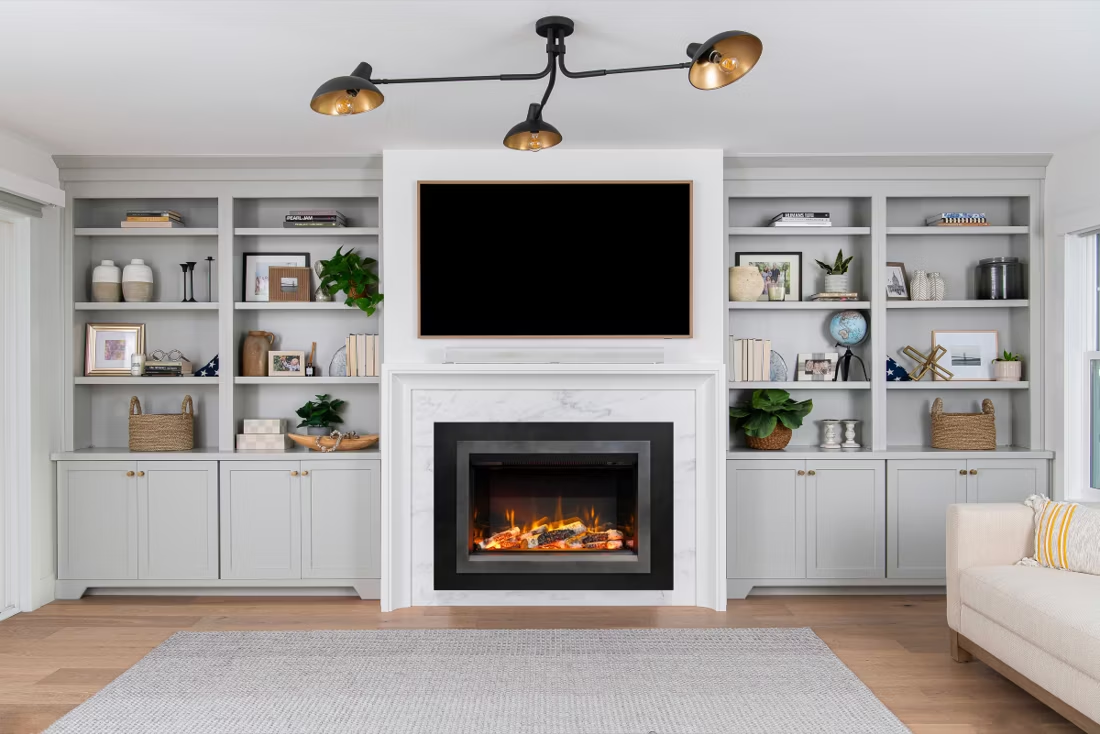
Yes—with an asterisk. Fireplaces are hot and TVs don't like heat. Either put a mantel between them to deflect rising warmth, or choose a fireplace with heat-management technology that creates a cool zone on the wall above—the wall stays around 125 degrees, barely warm, while the room still gets full heat. If you like clean lines and don't want a mantel, heat management is the answer.
Does an electric fireplace need a vent or chimney?
No—that's its superpower. An electric fireplace needs a wall and an outlet, period. No vent pipe, no gas line, no clearances to design around, which is why it works in bedrooms, offices, apartments, and walls where venting a gas or wood unit would be impractical or impossible. Installation is typically the simplest and least expensive of any fireplace type.
Does a fireplace add value to my home?
On average, a fireplace adds back to the home about the same amount you spent installing it. Add the monthly savings from heating the rooms you actually use instead of the whole house—often hundreds of dollars a year—and the value case is strong before you even count what a fire does for how your family uses the room.
How much should I budget for a fireplace?
For an average home—covering the fireplace, the vent pipe, and basic installation—a budget between $3,900 and $5,500 gives you a lot of options across wood, gas, and pellet. By the time you add finish work, gas line, and electrical, the average complete installation lands between $5,000 and $12,000 all-in. In a remodel or new build, a good rule is to put about 2.5% of the total project cost toward the fireplace.
Nearby Dealers
Hearth shops serving Short Pump and the surrounding area.
Electric Service in Short Pump
An electric fireplace's heater draws about 1,500 watts—pennies per hour at local rates.
Virginia Electric & Power Co
Find your electric fireplace in Short Pump.
Tell us a bit about your home and we'll match you with the right electric fireplace or insert, plus a free Project Guide & Parts List and a trusted local Short Pump dealer to install it.
Find Your Fireplace →