
Reliable Warmth for Rockwood's Mixed-Humid Winters.
Instant, clean heat for Chesterfield County homes near Richmond—find the right gas fireplace or insert and connect with a trusted local dealer.
Every Project Starts From One of These Five Situations
Convenient heat built for a mild climate.
Rockwood sits at about 239 feet of elevation in Chesterfield County, just south of Richmond, in a mixed-humid climate zone (4A) where winter lows average around 29°F and the heating season is a relatively short, mild stretch. That's a fraction of the winter heating load a place like Duluth, MN or Burlington, VT racks up—Rockwood doesn't need a furnace-grade wood stove running around the clock. What it does need is dependable spot heat for the genuinely cold snaps and ice storms that hit central Virginia most winters.
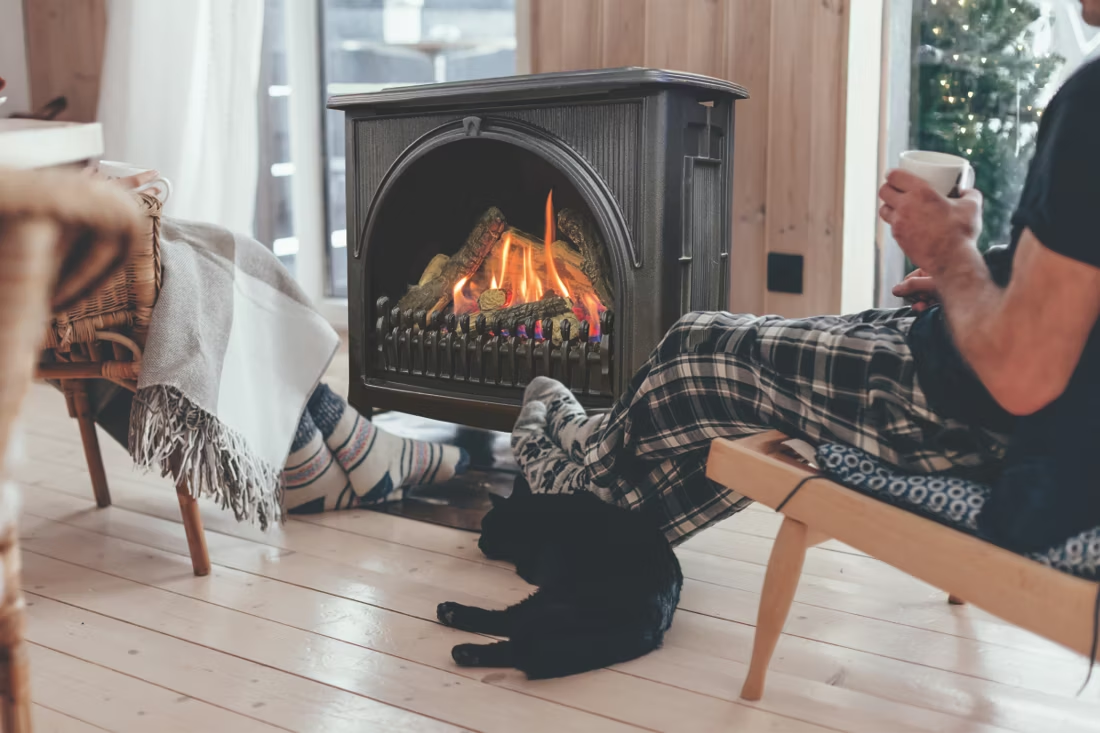
That's exactly the gap a gas fireplace fills. With no wood-smoke air quality restrictions in this part of Chesterfield County, homeowners have a clear path to install a vented gas unit without the curtailment rules some western states impose. Most newer subdivisions around Rockwood were built without masonry chimneys, so a direct-vent gas fireplace or freestanding gas stove is often simpler to add than a wood-burning setup—and it pairs naturally with a home already on Dominion's electric grid (Virginia Electric & Power Co, at roughly $0.1409/kWh) for everyday heating, giving you a warm, cozy backup for the coldest nights without leaning on firewood storage or chimney maintenance.
Three steps. No salesperson until you're ready.
Tell us about your project
Your zip code, your situation, and the fuel you're leaning toward—or let the answers point you to one.
See what's actually available
The brands dealers within 100 miles genuinely carry—real options, never a catalog mirage.
Get your dealer & Project Guide
A trusted local dealer, plus the free Project Guide & Parts List that names every component of the job.
Frequently Asked Questions
How much does a gas fireplace installation cost in Rockwood?
In the Richmond metro area, a gas fireplace or insert installation typically runs $3,500 to $9,000. A gas insert going into an existing masonry fireplace with a gas line already nearby lands on the lower end. A new direct-vent gas fireplace for a remodel or a room without an existing chimney—where a fresh gas line, framing, and exterior venting all have to be run—pushes toward the higher end. Chesterfield County requires a permit for the work, and most local dealers fold that into the installation quote so you're not chasing paperwork separately.
Can I convert my existing wood fireplace to gas?
Yes, and it's a common project in this part of Chesterfield County, where plenty of homes built from the 1970s through the 1990s have an open masonry fireplace that rarely gets used for a real wood fire. A gas insert slides into that existing firebox and vents through a stainless liner run up the same chimney, typically for $4,000 to $7,500 depending on the model and whether a new gas line needs to be run to the hearth. It keeps the look of your existing fireplace while giving you heat you'll actually use on a cold January night.
Do I need natural gas, or can I run a fireplace on propane?
Either works fine. Parts of Rockwood and the surrounding Chesterfield County suburbs are served by natural gas through Columbia Gas of Virginia, and if your home already has a gas range, water heater, or furnace, adding a fireplace is usually a straightforward tap into the existing line. In pockets without gas mains—including some newer developments—propane is the standard fallback, using either a buried tank or an above-ground unit from a local propane supplier. Most gas fireplace models can be set up for either fuel; your installer sets the correct orifice and regulator for whichever you have.
Will my gas fireplace still work if the power goes out?
Most will, with the right ignition system. Units with IPI (intermittent pilot ignition) run on a battery backup that kicks in automatically when the power drops, so the fireplace lights on demand just like normal. Central Virginia sees its share of ice storms and the occasional remnants of a tropical system moving up from the coast, both of which can knock out power for a day or more—worth planning for. Valor fireplaces take a different approach: their pilot assembly generates its own electricity through the thermocouple, so there's no battery to remember or replace. Ask your local dealer which ignition system a given unit uses before you buy.
What's the difference between a gas fireplace, gas insert, and gas stove?
A gas fireplace is a fully built-in unit, framed into a wall—the right call for new construction or a remodel where there's no existing hearth. A gas insert is built to drop into an existing masonry firebox, using your current chimney as the vent path with a liner. A gas stove is a freestanding cast-iron or steel unit that sits on the floor on its own hearth pad, similar in footprint to a wood stove but running on gas. For most Rockwood homes with an older brick fireplace that's more decorative than functional, an insert is the natural upgrade. Homes without any existing fireplace do better with a built-in unit or a freestanding stove.
Do I need a permit to install a gas fireplace in Rockwood?
Yes. Chesterfield County's Building Inspection Department requires a building permit for the fireplace installation and a separate gas permit for any new or modified gas line, and the gas line work itself has to be done by a licensed gas fitter. Most established local hearth dealers coordinate all of this as part of the job—permit, inspection, and gas line—so you're dealing with one point of contact rather than juggling separate trades.
Should I get a vented or vent-free gas fireplace?
Vented (direct-vent) gas fireplaces pull combustion air from outside and exhaust the exhaust gases back outside through a sealed pipe—they're the cleanest, safest, and most universally code-compliant option. Vent-free units burn gas directly into the room air with no external venting; they're legal in Virginia but come with strict room-size and ventilation requirements, and they release some water vapor and combustion byproducts into your living space. For Rockwood's well-sealed, modern suburban homes, direct-vent units are the more common choice among local installers—they put out real heat without any tradeoff on indoor air quality, and they don't have the same room-size restrictions vent-free units carry.
How often does a gas fireplace need to be serviced?
Plan on an annual inspection, ideally before the first cold snap each fall. A technician checks the burner, pilot assembly, venting, and gas connections, and cleans the glass and interior—a much lighter job than sweeping a wood chimney, but still important for safety and efficiency. In the Richmond area, an annual gas fireplace inspection typically runs $125 to $200 through a local hearth or HVAC service company.
Gas vs. wood—which makes more sense for a Rockwood home?
Wood heat is genuinely uncommon here—most Rockwood homes are newer suburban construction without a working chimney, and Chesterfield County's mild winters (averaging 29°F lows, with a relatively short, mild heating season) don't demand the kind of all-night burn a wood stove is built for. Oak, hickory, and maple are the traditional local firewood species if you know someone with acreage, but installing a wood-burning appliance as primary heat is rare in this part of the county. Gas, by contrast, fits the neighborhood: instant on-off operation, no ash or wood storage, consistent heat that pairs cleanly with central HVAC, and—with the right ignition system—heat that still works when an ice storm takes down the power lines.
Why is my open fireplace making my house colder?
Open fireplaces suck—literally. As the fire burns, it consumes air your furnace already paid to heat and pulls it out through the chimney, so the house is actually colder after the fire goes out than before you lit it. An insert fixes this: it seals the chimney, puts fixed glass across the front, and turns that hole in your house into a real heat source.
Why is a fireplace insert so efficient?
An insert does two things: it seals the chimney completely, so you stop losing air you already paid to heat, and it radiates warmth into the room through the firebox and glass. Most add a heat-exchange fan that pulls cool room air underneath, wraps it around the hot firebox, and pushes it back out warm. Your home is more efficient before you've even lit the first fire.
Can a fireplace actually lower my heating bill?
Yes—by creating a comfort zone. A furnace heats every square foot of the house just to warm the one room you're in; a gas fireplace on low burns roughly a sixth of the gas a typical furnace does. Set the furnace around 55–60 degrees as a baseline, then heat the rooms your family actually uses. Families who heat this way commonly save $20–$60 a month.
Should the dealer who sells my fireplace also install it?
Ideally, yes. A fireplace project involves vent pipe, gas line, electrical, and often tile or stone. Hire three or four separate trades and you own the liability and the game of telephone between them. One company selling and installing means one accountable party, start to finish—ask about factory training, on-time completion records, and what happens if an inspection fails.
Nearby Dealers
Hearth shops serving Rockwood and the surrounding area. Every listing shows whether it is a WhyFire partner, a dealer we have verified as authorized for the brands we recommend, or a local business carrying hearth products. No manufacturer pays for placement. How we verify dealers →
Hearth And Patio Shoppe
Fireplace Innovations - Chester Location
Interior 2000
Blossman Gas And Appliance
Acme Stove Company
Studley Stove And Hearth
Adams Propane Company
Find your gas fireplace in Rockwood.
Tell us a bit about your home and we'll match you with a trusted local dealer and a free Project Guide & Parts List—the exact parts, vent kit, and installer recommendation for your Rockwood gas fireplace project.
Find Your Fireplace →