
Pellet stoves are the exception in Richmond, not the rule.
Richmond's mild winters and easy gas access mean most homes skip solid-fuel heat entirely—but for the right property, a pellet stove still earns its keep. We'll help you find out, and connect you with a dealer who actually stocks them.
Every Project Starts From One of These Five Situations
A mild climate points most homeowners toward gas or electric heat.
Richmond sits at just 61 feet elevation in the Virginia Piedmont, with average winter lows near 29°F and only 3,736 heating degree days a year—roughly half the heating load of a place like Burlington, VT. That mild climate, combined with widespread natural gas access across the city and reliable electric service from Virginia Electric and Power Company, means most Richmond homeowners never seriously weigh a dedicated solid-fuel heating appliance. Pellet fuel in particular has never built the kind of regional supply chain and dealer network you'd find in New England or the Pacific Northwest, which is why we flag it as a low-relevance fuel here rather than pretend it's mainstream.
That said, a small number of Richmond-area homeowners do install pellet stoves—usually for supplemental heat in an older Fan District or Church Hill home with single-pane windows and no ductwork to a back room, for a sunroom or den addition, or simply for the look of a real flame without cordwood, ash, and creosote. Regional pellet brands including Energex, Hamer Pellet Fuel, and Greene Team Pellet Fuel do reach the area through specialty hearth dealers and farm-supply retailers, though buyers should expect to special-order bags ahead of winter rather than find pallets stacked at every hardware store the way you would further north.
Three steps. No salesperson until you're ready.
Tell us about your project
Your zip code, your situation, and the fuel you're leaning toward—or let the answers point you to one.
See what's actually available
The brands dealers within 100 miles genuinely carry—real options, never a catalog mirage.
Get your dealer & Project Guide
A trusted local dealer, plus the free Project Guide & Parts List that names every component of the job.
Frequently Asked Questions
Are pellet stoves actually a good fit for a Richmond home?
For most Richmond homes, no—not as a primary heat source. With only 3,736 heating degree days and winter lows averaging 29°F, the heating load simply doesn't justify a dedicated pellet appliance the way it would in a colder climate like Duluth, MN. Where pellet stoves do make sense locally is as targeted supplemental heat: an addition without ductwork, a drafty older home in a historic district, or a homeowner who wants real flame and better efficiency than an open masonry fireplace without dealing with cordwood. A local hearth dealer can tell you honestly whether your specific room and layout justify it.
How much does it cost to install a pellet stove in Richmond?
Because so few Richmond-area dealers stock pellet units—demand is low compared to gas and electric—there isn't a tight local price band the way there is for gas fireplace installs. Nationally, freestanding pellet stove installations typically run $3,000 to $6,500 including venting, and pellet inserts into an existing masonry fireplace often land in a similar range depending on liner length. Expect to get a firm number from an in-home visit rather than a phone quote, since Richmond installers handle these less routinely than gas or electric jobs.
Why is pellet fuel listed as a low-relevance option for Richmond?
A few things stack up against it here. Richmond's climate zone (4A) and modest 3,736 HDD mean the heating need is lower than in regions where pellet stoves are common backup or primary heat. There's also no air quality mandate pushing homeowners toward EPA-certified appliances the way wildfire-smoke regions in the West see, and natural gas and grid electricity are both widely available and standard-rated for the area. Put together, pellet heat just hasn't built the local installer base, fuel distribution, or homeowner habit that it has in New England, the Upper Midwest, or the Pacific Northwest.
Where can I buy pellet fuel near Richmond?
Regional brands like Energex, Hamer Pellet Fuel, and Greene Team Pellet Fuel are the ones most likely to show up at specialty hearth shops and farm-supply retailers serving the Richmond metro. Because local demand is modest, don't expect big-box stores to carry deep stock year-round—plan to buy a season's worth in early fall before cold snaps drive a run on bags. Your hearth dealer can usually point you to whichever brand they've had good luck sourcing consistently.
Will a pellet stove keep my house warm during a Richmond ice storm power outage?
Not without a plan for backup power. Pellet stoves depend on an electric auger to feed fuel and a blower to circulate heat, so a standard unit goes dark the moment the grid does—unlike a wood stove, which keeps burning through an outage. If backup heat during Richmond's occasional winter ice storms is a real priority, ask your dealer about models compatible with a small battery backup or plan to run the unit off a portable generator. Otherwise, treat a pellet stove as a convenience heater, not an outage safety net.
Pellet vs. gas—which makes more sense in Richmond?
For nearly all Richmond homes, gas wins on convenience and fit: natural gas service is common across the city and suburbs, a gas fireplace or insert needs no fuel storage or ash cleanup, and it runs whether or not you're home to feed it. Pellet stoves require you to load a hopper and manage bag storage, and they draw continuous electricity—at Richmond's residential rate of about $0.1409 per kWh, the auger and blower typically add only pennies per hour, but it's still a dependency gas heat doesn't have. Pellet only pulls ahead in situations without a nearby gas line and where the homeowner specifically wants the look and feel of a real, visible flame with hopper-fed convenience.
What's the difference between pellet and wood heat, and why are both uncommon in Richmond?
Wood stoves burn cordwood—locally, oak, hickory, and maple are the common species—and need no electricity to run, but they require chimney maintenance, ash cleanup, and a fuel supply chain that Richmond's urban and suburban density doesn't really support. Pellet stoves burn compressed sawdust pellets, load more like a small hopper-fed furnace, and burn cleaner, but they need power to operate. Both are flagged low-relevance for Richmond for similar reasons: mild heating demand, widespread gas and electric infrastructure, and a metro housing stock—rowhouses, townhomes, and suburban lots—that generally isn't built around solid-fuel heating the way rural or mountain properties are.
Do I need a permit to install a pellet stove in Richmond?
Yes—a new pellet stove installation typically requires a building permit through your local jurisdiction (in the City of Richmond, that's handled through Permits and Inspections under the Department of Planning and Development Review; surrounding counties have their own building departments). The permit process checks that venting, clearances, and hearth pad requirements meet code. Because pellet installs are less common here than gas or electric work, it's worth confirming your installer has pulled a pellet-specific permit before, not just a general wood-stove or gas permit.
Does a pellet stove make sense for supplemental heat in Richmond's mild winters?
It can, in the right situation. With only 3,736 heating degree days a year, Richmond's climate doesn't demand it—but for a specific problem, like an addition without ductwork, a historic Church Hill or Fan District home with poor insulation, or a homeowner who simply wants a real-flame appliance that's cleaner than an old masonry fireplace, a pellet stove solves a real need. The honest answer depends entirely on your specific room and home, which is exactly the kind of judgment call a local dealer who's actually installed a few of these in the area can make better than a national price chart.
How often does a pellet stove need cleaning?
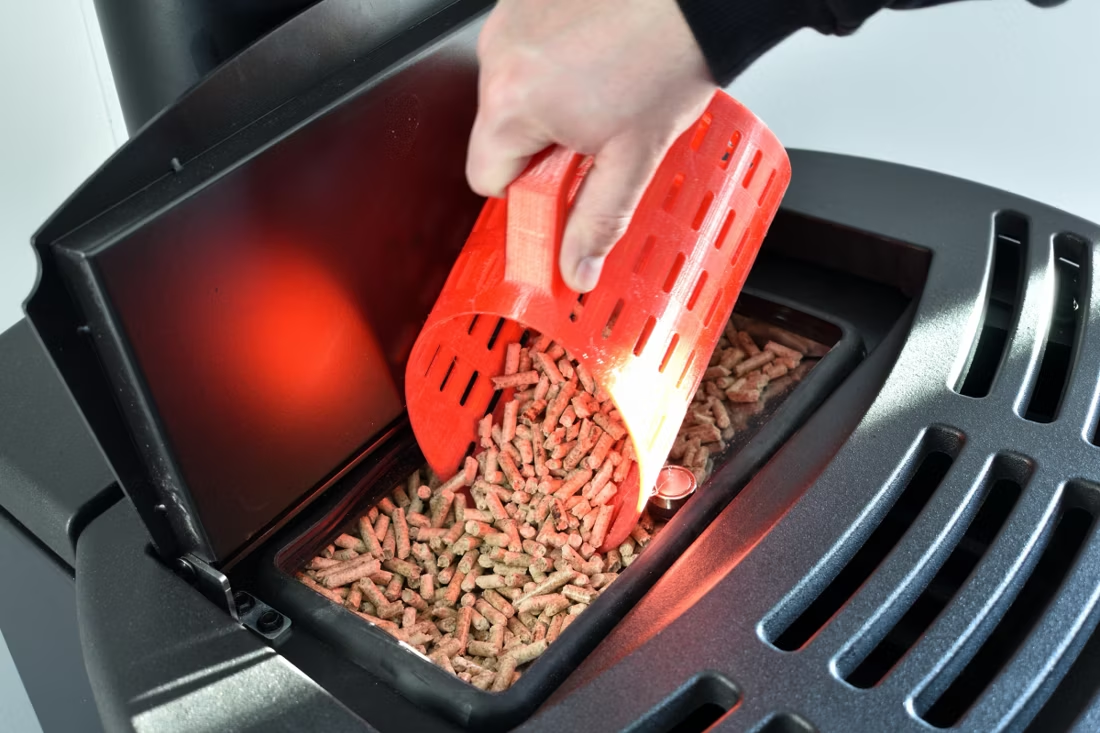
A clean pellet stove is a happy pellet stove. Plan on cleaning the burn pot about once a week when you're burning regularly—ash and clinkers gum up the air holes just like a pellet barbecue. Most pellet stove problems trace back to skipped cleaning that nobody explained up front. Some designs make it easy with a trapdoor burn pot: pull a lever and the gunk drops into the ash pan.
Why is my open fireplace making my house colder?
Open fireplaces suck—literally. As the fire burns, it consumes air your furnace already paid to heat and pulls it out through the chimney, so the house is actually colder after the fire goes out than before you lit it. An insert fixes this: it seals the chimney, puts fixed glass across the front, and turns that hole in your house into a real heat source.
Can a fireplace actually lower my heating bill?
Yes—by creating a comfort zone. A furnace heats every square foot of the house just to warm the one room you're in; a gas fireplace on low burns roughly a sixth of the gas a typical furnace does. Set the furnace around 55–60 degrees as a baseline, then heat the rooms your family actually uses. Families who heat this way commonly save $20–$60 a month.
Can I install a fireplace myself?
If you're putting a fire in your house on purpose, it's best to work with an expert. Unless you're genuinely experienced in framing, gas line, vent pipe, and the national code on clearances to combustibles, have a professional do it—and ideally the same company that sells you the fireplace, so warranty, service, and liability all live under one roof.
Nearby Dealers
Hearth shops serving Richmond and the surrounding area. Every listing shows whether it is a WhyFire partner, a dealer we have verified as authorized for the brands we recommend, or a local business carrying hearth products. No manufacturer pays for placement. How we verify dealers →
Hearth And Patio Shoppe
Studley Stove And Hearth
Fireplace Innovations - Chester Location
Acme Stove Company
Interior 2000
Blossman Gas And Appliance
Phillips Energy,Inc - Providence Forge
Pellet Brands Stocked Around Richmond
Manufacturers will point you to the nearest stocking dealer.
Find your pellet stove fit in Richmond.
Tell us about your home and we'll give it to you straight on whether a pellet stove fits—and if it does, match you with a trusted local dealer and a free Project Guide & Parts List for your Richmond project.
Find Your Fireplace →