
Fireplace Warmth for Every Richmond Home—No Chimney Required.
From Church Hill rowhouses to downtown high-rises, electric fireplaces bring real ambiance and zone heat to Richmond homes without venting, gas lines, or firewood. Find the right unit and connect with a trusted local dealer.
Every Project Starts From One of These Five Situations
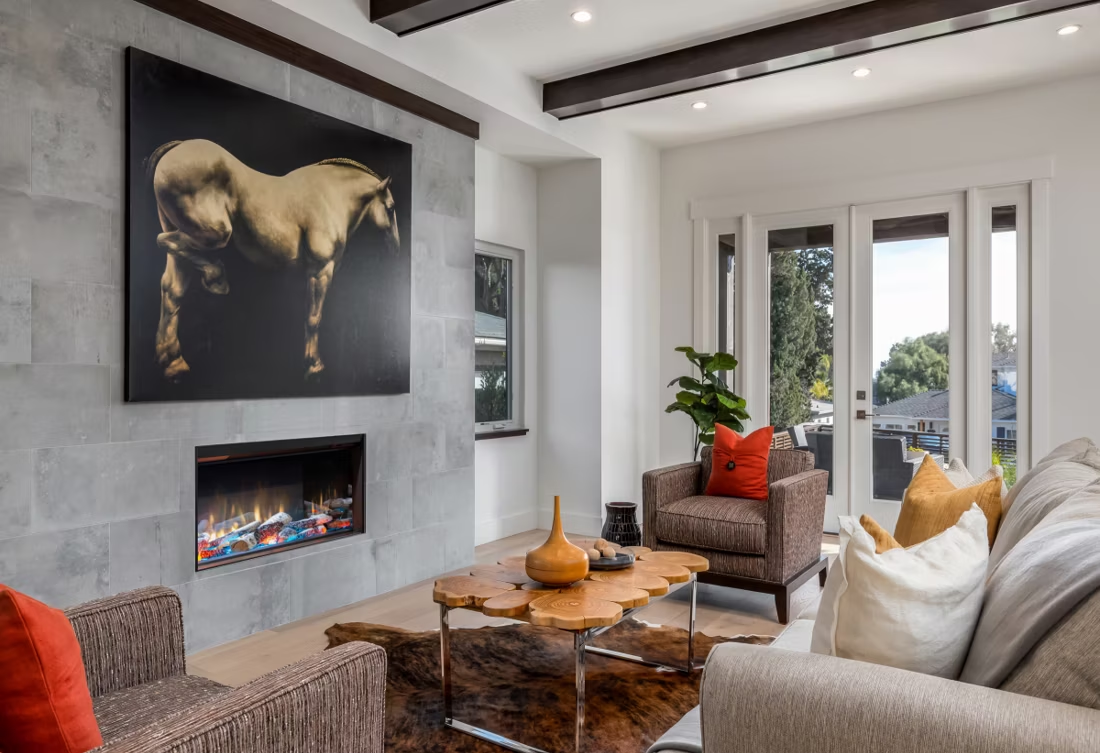
The easiest fireplace upgrade in a city of old chimneys.
Richmond sits low on the James River fall line at just 61 feet of elevation, in climate zone 4A with an average winter low around 29°F and a winter heating season on the milder side—mild compared to a place like Minneapolis or Duluth, where winter is a survival question. That milder profile is part of why electric fireplaces have taken off here: most Richmond homeowners want supplemental warmth and a good-looking focal point, not a whole-house heating strategy. The other part is the housing stock. Neighborhoods like the Fan, Church Hill, and Jackson Ward are full of pre-1930s rowhouses with masonry fireplaces that were capped, bricked over, or condemned for wood burning decades ago. An electric insert drops into that opening and works immediately, with no flue, no liner, and no structural chimney repair required.
Electric service throughout the metro comes from Virginia Electric & Power Co (Dominion Energy), with a residential rate around 14.09 cents per kWh—cheap enough that running a 1,500-watt insert for a few hours most winter evenings adds only a few dollars a month to the bill. Because there's no combustion and no exterior venting, electric fireplaces sidestep the Commission of Architectural Review process that governs exterior changes in Richmond's Old and Historic Districts, and they're the only real fireplace option for renters and condo owners in zip codes like 23219 and 23284 where gas lines and wood storage simply aren't available.
Three steps. No salesperson until you're ready.
Tell us about your project
Your zip code, your situation, and the fuel you're leaning toward—or let the answers point you to one.
See what's actually available
The brands dealers within 100 miles genuinely carry—real options, never a catalog mirage.
Get your dealer & Project Guide
A trusted local dealer, plus the free Project Guide & Parts List that names every component of the job.
Frequently Asked Questions
How much does an electric fireplace installation cost in Richmond?
A plug-in freestanding unit or a basic insert that uses an existing standard 120V outlet typically runs $300 to $1,500 installed, including the unit and any surround work. Built-in linear electric fireplaces with custom millwork—common in Fan District and Museum District renovations—run $2,500 to $5,000 once cabinetry, a dedicated 20-amp circuit, and finish carpentry are factored in. If your home doesn't already have an outlet near the install location, add $150 to $400 for an electrician to run a new line.
Can I put an electric insert into my old, unused fireplace?
In most cases, yes, and it's one of the most common projects local dealers handle in Richmond's older housing stock. Plenty of homes in Church Hill and Jackson Ward have masonry fireplaces with chimneys that were capped, relined incorrectly, or are structurally unsound for burning—but the firebox opening itself is often in fine shape. An electric insert sits in that opening, plugs into a nearby outlet or a new dedicated circuit, and produces heat and flame effect without needing the flue to function at all.
Do I need a permit to install an electric fireplace in Richmond?
A simple plug-in unit on an existing circuit generally doesn't require a permit. If your installation needs a new dedicated electrical circuit—common with larger built-in units—an electrician will need to pull an electrical permit through the City of Richmond Department of Planning and Development Review, or the applicable county building department if you're in the surrounding Henrico or Chesterfield service area. Most local dealers coordinate this as part of the installation rather than leaving you to schedule the inspection yourself.
How much does it cost to run an electric fireplace in Richmond?
At Dominion's residential rate of about 14.09 cents per kWh, a typical 1,500-watt electric fireplace costs roughly 21 cents an hour to run on high heat. Used for three or four hours a night through a mild Richmond winter, that's usually $10 to $20 a month—far less than a comparable amount of propane or firewood, and with none of the ash, smoke, or chimney maintenance.
Electric vs. gas fireplace—which makes more sense for my Richmond home?
Gas fireplaces deliver more real heat output and a more authentic flame, and they're a solid option if your home already has gas service and you're doing a larger renovation. Electric fireplaces cost far less to install, require no gas line or venting at all, and work in condos, apartments, and older rowhouses where running new gas piping isn't practical or allowed. Given Richmond's relatively mild winters, most homeowners here are looking for ambiance and zone heat rather than a primary heat source, which tends to favor electric—especially for secondary rooms, bedrooms, or finished basements.
Why don't more Richmond homes use wood-burning fireplaces?
Plenty of homes in the surrounding countryside still burn oak, hickory, and maple in traditional fireplaces and stoves, but within the city itself, wood burning has become impractical for most homeowners. Narrow city lots leave little room for wood storage, many historic rowhouse chimneys were capped or deemed unsafe for solid-fuel use decades ago, and insurance carriers increasingly ask about active wood-burning appliances in dense urban housing. Electric fills that gap—it delivers the fireplace look and supplemental warmth without needing a working chimney or a woodpile in a Fan District backyard.
What's the best electric fireplace option for an apartment or condo?
For renters and condo owners in zip codes like 23219, 23220, and 23284, a freestanding electric stove or a wall-mounted electric fireplace is usually the right call—both plug into a standard outlet, require no permit, no venting, and no landlord approval for structural changes, and can move with you if you relocate. Built-in units are better suited to homeowners doing a permanent renovation.
Will an electric fireplace cause problems with Richmond's historic district rules?
No—that's actually one of the advantages. Homes in Richmond's Old and Historic Districts, including the Fan and Church Hill, fall under review by the Commission of Architectural Review for exterior changes, and that review typically covers things like new chimney caps, exterior vent terminations, and roof penetrations. Electric fireplaces have no exterior venting at all, so installing one inside an existing fireplace opening or as a built-in unit generally doesn't trigger that review process the way a new gas or wood-burning appliance might.
What size electric fireplace do I need for my Richmond home?
Because Richmond's winters are relatively mild—average lows around 29°F and a winter heating season on the milder side—most homeowners are sizing for supplemental zone heat rather than whole-house warmth. A compact insert or stove (750–1,500 watts) comfortably takes the chill off a single room in the 200–400 square foot range. Larger linear built-ins with higher wattage can supplement a great room, but even the biggest electric units are rated to heat about 400–1,000 square feet—they're not a substitute for central heat on Richmond's coldest nights. A local dealer can size the right unit based on your room and insulation.
Can I put a TV above my fireplace?
Yes—with an asterisk. Fireplaces are hot and TVs don't like heat. Either put a mantel between them to deflect rising warmth, or choose a fireplace with heat-management technology that creates a cool zone on the wall above—the wall stays around 125 degrees, barely warm, while the room still gets full heat. If you like clean lines and don't want a mantel, heat management is the answer.
Do electric fireplaces actually produce heat?
Yes—most put out around 4,800–5,000 BTUs from a standard outlet, which comfortably warms a bedroom, office, or den as a comfort-zone heater. What they won't do is carry a whole house the way wood, gas, or pellet can. Think of electric as ambiance-first with honest supplemental heat: flames on with no heat in July, flames plus warmth in January.
What is an in-home preview and do I need one?
It's a visit where a hearth professional measures your space, confirms the model you picked actually works in your home, and walks the specs—framing, gas line, venting, finish work—before anything is ordered. Some details you just can't know until you see the house. Never make a down payment without one; it's the single most-skipped step that burns buyers.
Can a fireplace actually lower my heating bill?
Yes—by creating a comfort zone. A furnace heats every square foot of the house just to warm the one room you're in; a gas fireplace on low burns roughly a sixth of the gas a typical furnace does. Set the furnace around 55–60 degrees as a baseline, then heat the rooms your family actually uses. Families who heat this way commonly save $20–$60 a month.
Nearby Dealers
Hearth shops serving Richmond and the surrounding area. Every listing shows whether it is a WhyFire partner, a dealer we have verified as authorized for the brands we recommend, or a local business carrying hearth products. No manufacturer pays for placement. How we verify dealers →
Hearth And Patio Shoppe
Studley Stove And Hearth
Fireplace Innovations - Chester Location
Acme Stove Company
Interior 2000
Blossman Gas And Appliance
Phillips Energy,Inc - Providence Forge
Electric Service in Richmond
An electric fireplace's heater draws about 1,500 watts—pennies per hour at local rates.
Virginia Electric & Power Co
Find your electric fireplace in Richmond.
Tell us a bit about your home and we'll match you with the right electric fireplace or insert, plus a free Project Guide & Parts List and a trusted local Richmond dealer to install it.
Find Your Fireplace →