
Add electric fireplace warmth to your Rappahannock County home.
No chimney, no gas line, no wood to split—just plug-in or hardwired warmth for farmhouses, additions, and sunrooms across the county, from Sperryville to Amissville. Find the right unit and connect with a trusted local dealer.
Every Project Starts From One of These Five Situations
Simple heat for a county with no incorporated towns and a lot of rural square footage.
Rappahannock County sits where the Piedmont meets the Blue Ridge—from the low farmland around Amissville and Flint Hill up toward Old Rag Mountain and Shenandoah National Park at the county's western edge. It's classified climate zone 4A, mixed-humid, with real winter cold but nothing like the sustained sub-zero stretches you'd see in a place like Burlington, VT. That's exactly the profile where an electric fireplace makes sense as a room-by-room solution rather than a whole-house furnace replacement—supplemental heat for additions, sunrooms, and outbuildings that the county's older farmhouses and cabins were never built with in mind.
With just a few thousand residents spread across Washington, Sperryville, Flint Hill, and the surrounding countryside, most homes here are served by Rappahannock Electric Cooperative rather than a municipal utility—worth knowing since it shapes how an electrician sizes a circuit for a built-in unit. An electric fireplace won't replace a wood stove during an ice-storm outage, but for day-to-day use it delivers instant, thermostatically controlled heat with none of the venting, chimney sweeping, or cutting-permit logistics that come with burning the oak, hickory, and maple that fill the county's woodlots.
Three steps. No salesperson until you're ready.
Tell us about your project
Your zip code, your situation, and the fuel you're leaning toward—or let the answers point you to one.
See what's actually available
The brands dealers within 100 miles genuinely carry—real options, never a catalog mirage.
Get your dealer & Project Guide
A trusted local dealer, plus the free Project Guide & Parts List that names every component of the job.
Frequently Asked Questions
How much does it cost to install an electric fireplace in Rappahannock County?
Electric fireplaces are the least expensive hearth option to install because there's no chimney, gas line, or venting to run. A basic plug-in insert or freestanding unit typically costs $300 to $1,500 for the appliance itself, with no installation cost beyond setting it in place. A built-in wall unit or mantel package that needs a dedicated 120V or 240V circuit usually runs $2,000 to $4,000 including a licensed electrician's time—a real consideration in a rural county where an electrician may be traveling from Culpeper or Warrenton to reach homes around Sperryville or Amissville. Ask any local dealer whether your chosen unit needs a dedicated circuit before you commit to a spot on the wall.
Will an electric fireplace actually heat a room, or is it just for looks?
Most electric fireplaces are rated for around 1,500 watts, which works out to roughly 5,000 BTUs—enough to comfortably heat a 300 to 400 square foot room, like a sunroom addition or a single bedroom in one of the county's older farmhouses. They won't replace a furnace or a wood stove as primary heat for a whole house, but for zone heating a room that runs cold—a common issue in Rappahannock County's older, under-insulated stone and frame homes—they're an effective, low-cost fix. Look for a unit with a built-in thermostat rather than a simple high/low switch if you want it to actually manage room temperature rather than just run constantly.
Do I need a permit to install an electric fireplace in Rappahannock County?
In most cases, no. A plug-in electric fireplace or insert that uses a standard household outlet doesn't require a permit through Rappahannock County's building and zoning office. If you're installing a built-in wall unit that requires new wiring or a dedicated circuit, the electrical work itself typically needs a permit and inspection, which is one more reason to have a licensed electrician handle that portion rather than a handyman. There's no combustion involved, so none of the EPA emissions or chimney code questions that apply to wood or gas installations come into play here.
Will my electric fireplace still work during a power outage?
No—and this is worth planning around in a rural county served by Rappahannock Electric Cooperative, where storm-related outages can stretch for hours or, after a bad ice storm, days. An electric fireplace is entirely dependent on grid power; when the lines go down, it goes dark along with everything else. If backup heat during outages matters to your household—which it often does for homes tucked into the hollows around Flint Hill or up toward the mountain—pair an electric fireplace for everyday convenience with a wood stove or propane appliance that can run independent of the grid.
What's the difference between an electric fireplace, insert, and wall-mount unit?
An electric insert is built to slide into an existing masonry fireplace opening, instantly converting a cold, unused hearth into a heat source without touching the chimney. A freestanding electric fireplace or stove sits on the floor like a stove and can go almost anywhere near an outlet. A wall-mount or built-in unit is framed into a wall—popular in newer additions and remodels around the county where homeowners want a modern, flush look. For a Rappahannock County farmhouse with an existing but non-functional fireplace, an insert is usually the simplest upgrade; new construction or additions have more flexibility to choose a built-in.
Electric vs. wood—which makes more sense for my Rappahannock County home?
Wood remains a strong choice here—the county's oak, hickory, and maple woodlots supply plenty of firewood, and a wood stove keeps working when Rappahannock Electric Cooperative lines go down in a winter storm. Electric wins on convenience: no cutting, splitting, stacking, or chimney sweeping, and it can go in a room a wood stove never could, like a converted porch or upstairs bedroom. Many homeowners in the county end up with both—wood as backup and primary heat in a main living space, electric for supplemental warmth in a room that's otherwise hard to heat.
Electric vs. pellet stove—which is right for me?
Pellet stoves, using bagged fuel from regional suppliers like Energex, Hamer Pellet Fuel, or Greene Team Pellet Fuel, put out real heat—often 40,000+ BTUs—and can serve as a home's primary heat source, but they still need electricity to run the auger and blower, so they go dark in an outage just like an electric fireplace. If you're choosing between the two purely on outage resilience, neither has an edge over the other; the difference is heat output and fuel handling. Electric fireplaces are essentially maintenance-free and better suited to supplemental or ambiance-focused heat, while pellet stoves are a bigger commitment better suited to whole-room or whole-home heating.
What should I look for in an electric fireplace for Rappahannock County's climate?
Since zone 4A winters bring real cold but not the extreme sub-zero stretches of the upper Midwest, most homeowners here do fine with a mid-range insert or built-in unit rated around 1,500 watts with a digital thermostat rather than a simple heat-setting dial—the thermostat keeps the unit from cycling on full blast in a small, well-insulated room. For drafty older farmhouses common around Sperryville and Washington, look for a unit with a strong fan-forced heater rating and treat it as supplemental to whatever your primary heat source is, rather than a stand-in for it. A local dealer can walk you through wattage and room-size matching during an in-home or virtual consultation.
Can I customize the look of an electric fireplace to match my home?
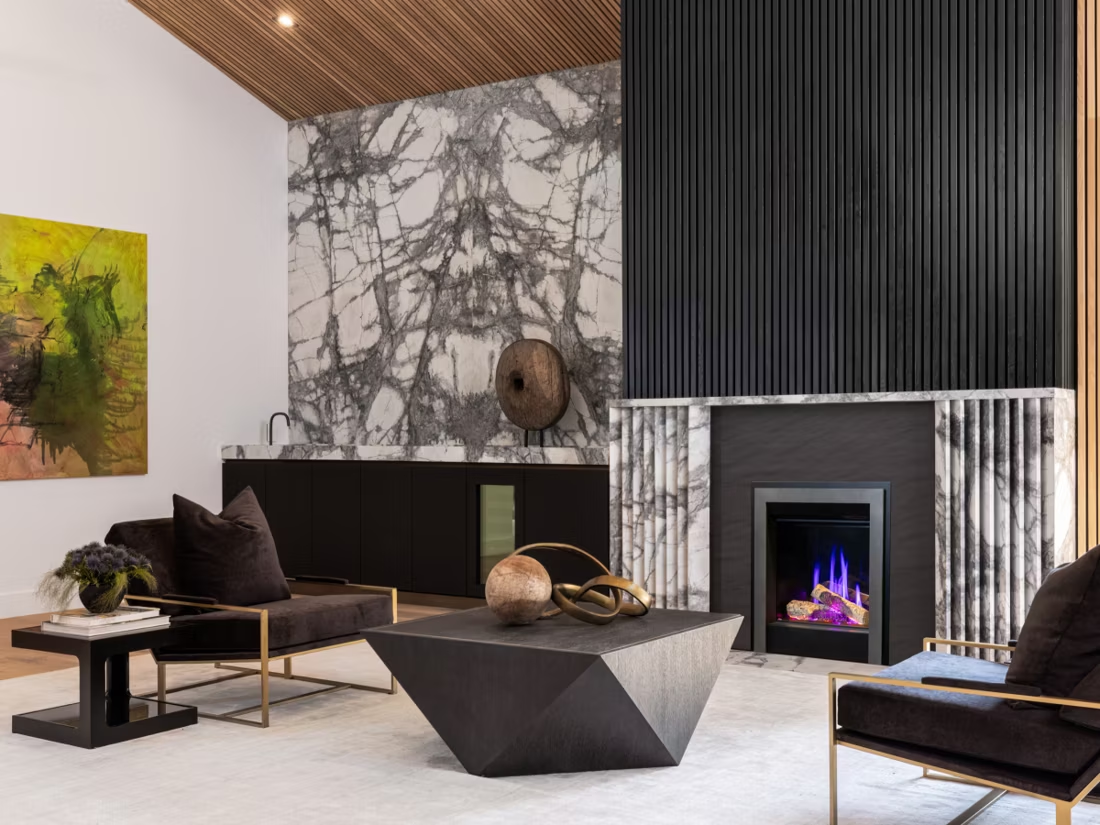
Yes—electric fireplaces come in far more finish options than wood or gas units because there's no need to accommodate venting or clearance-to-combustible rules the same way. Inserts can be trimmed to match an existing mantel and surround, and built-in units can be framed with stone, shiplap, or reclaimed wood to fit anything from a modern addition to a historic stone farmhouse in the county's older housing stock. Because there's no flame or real combustion byproducts, local dealers have more flexibility recommending finishes that wouldn't be code-compliant around an active wood or gas fire.
Can I put a TV above my fireplace?
Yes—with an asterisk. Fireplaces are hot and TVs don't like heat. Either put a mantel between them to deflect rising warmth, or choose a fireplace with heat-management technology that creates a cool zone on the wall above—the wall stays around 125 degrees, barely warm, while the room still gets full heat. If you like clean lines and don't want a mantel, heat management is the answer.
Does an electric fireplace need a vent or chimney?
No—that's its superpower. An electric fireplace needs a wall and an outlet, period. No vent pipe, no gas line, no clearances to design around, which is why it works in bedrooms, offices, apartments, and walls where venting a gas or wood unit would be impractical or impossible. Installation is typically the simplest and least expensive of any fireplace type.
Can I install a fireplace myself?
If you're putting a fire in your house on purpose, it's best to work with an expert. Unless you're genuinely experienced in framing, gas line, vent pipe, and the national code on clearances to combustibles, have a professional do it—and ideally the same company that sells you the fireplace, so warranty, service, and liability all live under one roof.
Does a fireplace add value to my home?
On average, a fireplace adds back to the home about the same amount you spent installing it. Add the monthly savings from heating the rooms you actually use instead of the whole house—often hundreds of dollars a year—and the value case is strong before you even count what a fire does for how your family uses the room.
Stove and Fireplace Dealers in Rappahannock County
Listings include WhyFire partner dealers, dealers we have verified as authorized for the brands we recommend, and established local businesses that carry hearth products. Every listing shows which one it is. The ones marked Preferred run on WhyFire's software, so they can show you real pricing and book your appointment right here. No manufacturer pays for placement. How we verify dealers →
Area – Huntly, Va
Costello's Hearth & Spa - Warrenton
Amazing Flame
Mid-Atlantic Masonry Heat
Holtzman Propane
Nova Fire Design
Find your electric fireplace in Rappahannock County.
Tell us a bit about your home and we'll match you with the right electric fireplace, insert, or built-in unit—and connect you with a trusted local dealer who'll hand you a free Project Guide & Parts List with the exact parts and recommended install.
Find Your Fireplace →