
Find your electric fireplace in Prince George County.
Mild winters and homes without existing chimneys make electric heat an easy fit across Prince George County—from the courthouse area to Disputanta and the neighborhoods around Fort Gregg-Adams. Get matched with a trusted local dealer.
Every Project Starts From One of These Five Situations
Zone heat and real ambiance, without the chimney.
Prince George County sits in climate zone 4A along the James River south of Richmond, with a modest 3,759 heating degree days and winter lows averaging around 28 degrees—nowhere near the sustained cold of a place like Burlington, VT. That milder heating load is exactly why electric fireplaces make sense here: most homeowners aren't trying to carry a whole house through a brutal winter, they're adding supplemental warmth and a focal point to a den, sunroom, or a bedroom in a newer subdivision home near Fort Gregg-Adams or in older housing stock around the town of Prince George itself.
With a population under 11,000 spread across a largely rural county, a lot of homes here were never built with a masonry chimney at all—which rules out wood or a traditional gas fireplace without significant construction. An electric insert or wall unit solves that problem cleanly: no venting, no gas line, and in many cases no permit at all for a plug-in model. Power comes through Prince George Electric Cooperative for much of the county and Dominion Energy in parts closer to Petersburg, and either provider can support a standard 120V unit without any panel work in most homes.
Three steps. No salesperson until you're ready.
Tell us about your project
Your zip code, your situation, and the fuel you're leaning toward—or let the answers point you to one.
See what's actually available
The brands dealers within 100 miles genuinely carry—real options, never a catalog mirage.
Get your dealer & Project Guide
A trusted local dealer, plus the free Project Guide & Parts List that names every component of the job.
Frequently Asked Questions
How much does an electric fireplace installation cost in Prince George County?
A plug-in electric insert or freestanding stove typically runs $300 to $900 installed, since most units simply slide into an existing opening or sit against a wall and plug into a standard outlet. A built-in wall unit or a linear electric fireplace that requires new framing, a dedicated 120V or 240V circuit, and finish carpentry runs higher, typically $1,500 to $3,500 depending on the size of the unit and whether an electrician needs to run new wiring. Homes on Prince George Electric Cooperative service generally don't need panel upgrades for a single fireplace circuit, which keeps costs on the lower end compared to larger electrical projects.
Do I need a permit to install an electric fireplace in Prince George County?
In most cases, no—a plug-in electric fireplace or insert that uses an existing outlet doesn't require a building permit. If your installation involves new electrical wiring, a dedicated circuit, or structural changes such as building a new surround or recessing the unit into a wall, an electrical permit through the Prince George County Community Development department is typically required, and the work should be done by a licensed electrician. Local dealers who install built-in units usually coordinate the permit and inspection as part of the job.
Can an electric fireplace actually heat a room in Prince George County's climate?
Yes, for the room it's in. With only 3,759 heating degree days and winter lows that average around 28 degrees, Prince George County's heating demand is modest compared to colder parts of the country, and most electric units are rated for 400 to 1,500 square feet of supplemental heat—enough to comfortably carry a den, sunroom, or bedroom without running the central system as hard. Electric fireplaces aren't designed to replace whole-home heat, but in this climate they're genuinely useful for zone heating rooms that run cold, like additions or rooms over a crawl space.
What's the difference between an electric insert, a wall-mount unit, and a freestanding electric stove?
An electric insert is built to slide into an existing fireplace opening—a common upgrade for older homes in and around Prince George that have a masonry firebox that's rarely used. A wall-mount or built-in linear unit is recessed into new framing, often as part of a renovation or new construction, and gives the cleanest, most modern look. A freestanding electric stove sits on the floor like a wood stove and can go virtually anywhere there's an outlet, making it the easiest option for renters or homes where no structural changes are wanted.
Will my electric fireplace work during a power outage?
No—electric fireplaces require power to run the heater, blower, and flame effect, so they'll shut down along with everything else during an outage. This matters for rural parts of Prince George County served by Prince George Electric Cooperative, where storm-related outages can take longer to restore than in denser areas closer to Petersburg or Colonial Heights. If backup heat during outages is a priority, a wood or gas unit with battery-backup ignition is worth considering alongside an electric fireplace, rather than instead of it.
Is an electric fireplace a good fit for an older home without a chimney?
It's one of the best options. A lot of the older housing stock in and around the town of Prince George and along Route 156 was never built with a masonry chimney, which makes wood and traditional vented gas impractical without major construction. An electric insert or wall unit sidesteps that entirely—no venting, no gas line, no structural chimney work—and can be added to almost any room with an outlet nearby, which is why it's a common retrofit choice for historic and mid-century homes throughout the county.
Electric vs. gas fireplace—which is right for my home?
Gas delivers more heat output and can serve as genuine supplemental or even primary zone heat, but it requires a gas line or propane tank and, for a vented unit, venting to the outside. Electric requires none of that—just an outlet—and offers instant on/off operation, a realistic flame effect, and lower upfront cost, but it produces less usable heat and won't run without power. For a room where you mainly want ambiance and light supplemental warmth, especially in a home without existing gas service, electric is usually the simpler and more affordable path in Prince George County.
What electric fireplace brands are available through local dealers?
Local hearth dealers serving Prince George County typically carry mainstream electric lines such as Dimplex, Napoleon, and Amantii, spanning everything from compact plug-in inserts to large linear wall units with multi-color flame effects. Availability varies by dealer and by unit size, so it's worth confirming stock and installation timelines directly—a trusted local dealer can also advise on which models fit a given opening size or wall depth before you buy anything.
How long do electric fireplaces last, and what maintenance do they need?
Most electric fireplaces last 10 to 15 years with minimal upkeep—there's no chimney to sweep and no gas line to service. Maintenance is mostly limited to occasionally cleaning the glass front, checking that the fan and heating element are free of dust, and replacing LED components if the flame effect dims over time, which is a straightforward fix on most models. Because there's no combustion involved, annual safety inspections aren't required the way they are for wood or gas units, which is part of why electric appeals to homeowners in Prince George County looking for a low-maintenance option.
Do electric fireplaces actually produce heat?
Yes—most put out around 4,800–5,000 BTUs from a standard outlet, which comfortably warms a bedroom, office, or den as a comfort-zone heater. What they won't do is carry a whole house the way wood, gas, or pellet can. Think of electric as ambiance-first with honest supplemental heat: flames on with no heat in July, flames plus warmth in January.
Can I put a TV above my fireplace?
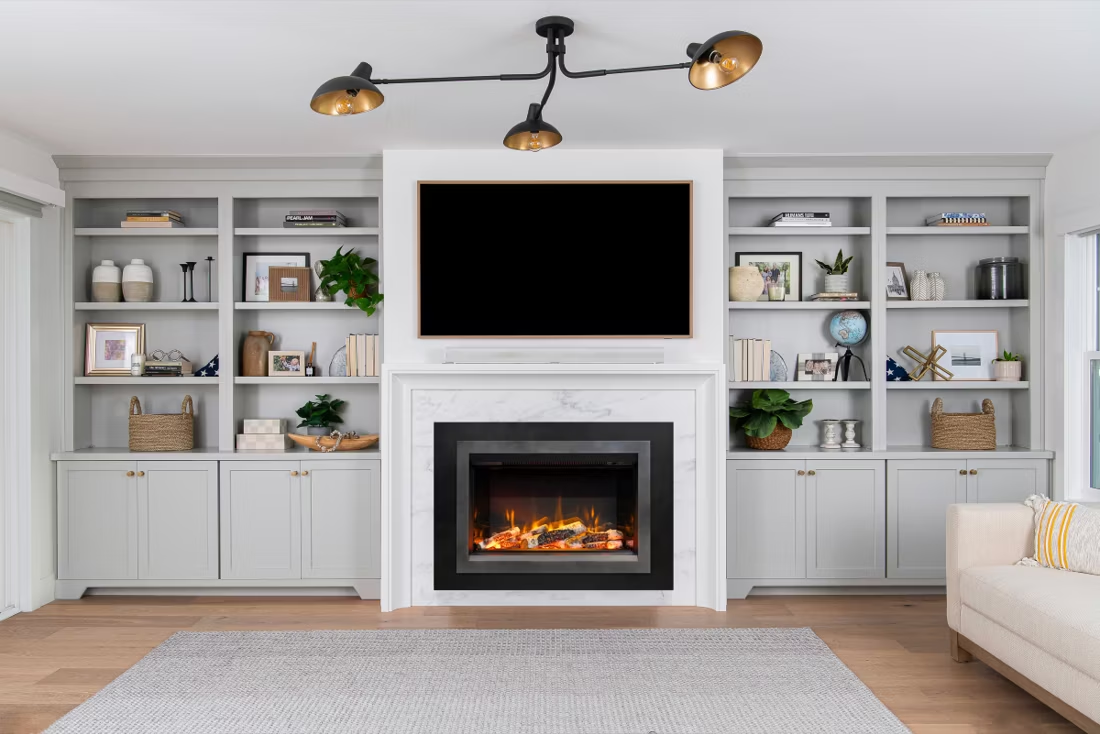
Yes—with an asterisk. Fireplaces are hot and TVs don't like heat. Either put a mantel between them to deflect rising warmth, or choose a fireplace with heat-management technology that creates a cool zone on the wall above—the wall stays around 125 degrees, barely warm, while the room still gets full heat. If you like clean lines and don't want a mantel, heat management is the answer.
What is an in-home preview and do I need one?
It's a visit where a hearth professional measures your space, confirms the model you picked actually works in your home, and walks the specs—framing, gas line, venting, finish work—before anything is ordered. Some details you just can't know until you see the house. Never make a down payment without one; it's the single most-skipped step that burns buyers.
Does a fireplace add value to my home?
On average, a fireplace adds back to the home about the same amount you spent installing it. Add the monthly savings from heating the rooms you actually use instead of the whole house—often hundreds of dollars a year—and the value case is strong before you even count what a fire does for how your family uses the room.
Stove and Fireplace Dealers in Prince George County
Listings include WhyFire partner dealers, dealers we have verified as authorized for the brands we recommend, and established local businesses that carry hearth products. Every listing shows which one it is. The ones marked Preferred run on WhyFire's software, so they can show you real pricing and book your appointment right here. No manufacturer pays for placement. How we verify dealers →
Fireplace Innovations - Chester Location
Phillips Energy,Inc - Providence Forge
Get your Prince George County electric fireplace Project Guide & Parts List.
Tell us about your room and we'll match you with a trusted local dealer and send a free Project Guide & Parts List—the right electric fireplace or insert for your space, with a plan to get it installed.
Find Your Fireplace →