
Add real fireplace warmth to your Powhatan County home—no chimney required.
From farmhouses along Route 60 to newer construction near the courthouse, Powhatan County homeowners are adding electric fireplaces for supplemental warmth and ambiance without masonry work, gas lines, or venting. Find the right unit and connect with a trusted local dealer.
Every Project Starts From One of These Five Situations
Ambiance and supplemental heat without the chimney work.
Powhatan County sits in Virginia's Piedmont, roughly halfway between Richmond and Farmville, in climate zone 4A—a mixed-humid region with real winter cold snaps but nothing like the sustained sub-zero stretches you'd see in Burlington, VT or Fargo, ND. Many of the county's older farmhouses and cabins were built around wood heat, and oak, hickory, and maple still split easily from local woodlots. But for additions, basements, sunrooms, and homes where the owner doesn't want to manage a woodpile or run a gas line, an electric fireplace has become the practical answer.
Most homes in Powhatan County get their power through Dominion Energy, which makes electric fireplaces an easy add almost anywhere in the house—no chimney, no combustion air, no clearance-to-combustibles calculations like you'd need with wood or gas. Simple plug-in units need nothing more than a standard outlet; hardwired 240-volt inserts typically call for a licensed electrician and, depending on the scope of the work, a permit through Powhatan County's Building Inspections Department. With no notable wood-smoke air quality restrictions in the county, electric is also the simplest option for anyone who wants fire-like ambiance in a rental, a historic home under renovation, or a room where running a flue just isn't realistic.
Three steps. No salesperson until you're ready.
Tell us about your project
Your zip code, your situation, and the fuel you're leaning toward—or let the answers point you to one.
See what's actually available
The brands dealers within 100 miles genuinely carry—real options, never a catalog mirage.
Get your dealer & Project Guide
A trusted local dealer, plus the free Project Guide & Parts List that names every component of the job.
Frequently Asked Questions
How much does an electric fireplace installation cost in Powhatan County?
Costs vary widely by unit type. A plug-in electric insert or freestanding unit that drops into an existing opening or mantel can be a same-day, no-permit project—the appliance itself is the main cost. A hardwired 240-volt built-in, which needs a dedicated circuit run by a licensed electrician, adds labor and sometimes a permit through Powhatan County's Building Inspections Department. Local dealers can walk you through both options and give you a firm number after seeing your space, since the biggest cost driver is usually the electrical work, not the fireplace itself.
Plug-in vs. hardwired electric fireplace—which do I need?
A plug-in unit runs on a standard 120-volt outlet, which makes it the simplest option for a mantel package, TV stand insert, or any room with an accessible outlet nearby. A hardwired 240-volt unit typically delivers more consistent heat output and a cleaner installation with no visible cord, but it requires a licensed electrician to run a dedicated circuit. For Powhatan County's older farmhouses with limited existing wiring, a plug-in unit is often the lower-hassle choice; for new construction or a remodel where an electrician is already on-site, hardwiring is worth the modest extra cost.
Will an electric fireplace actually heat a room in Powhatan County's climate?
Most electric fireplaces are built for supplemental heat, not as a whole-home furnace replacement—and that fits Powhatan County's zone 4A climate well. Winters here bring real cold snaps but not the extended deep freezes of the upper Midwest, so a good electric insert can comfortably take the edge off a single room, den, or sunroom on most days. For a drafty older farmhouse or a large open living area, don't expect it to replace your existing heat pump or furnace—think of it as zone heat for the room you're actually sitting in.
Do I need a permit to install an electric fireplace in Powhatan County?
Simple plug-in units generally don't require a permit—you're just adding an appliance to an existing outlet. Hardwired 240-volt units are treated as electrical work, which typically does require a permit through Powhatan County's Building Inspections Department, along with a licensed electrician to pull it. Most local dealers coordinate this directly if they're handling both the fireplace and the electrical hookup, so you're not left managing separate contractors.
Can I install an electric insert into my existing masonry fireplace?
Yes—this is a common project for Powhatan County's older homes with an existing wood-burning fireplace that's no longer used or too costly to bring up to current code. An electric insert slides into the existing firebox opening, uses the mantel and surround you already have, and needs no chimney work at all since there's nothing to vent. It's a straightforward way to get a working fire feature back in a fireplace that's been sitting cold, whether the masonry itself has issues or the owner simply doesn't want to manage wood or gas.
What's the difference between an electric fireplace, insert, and mantel package?
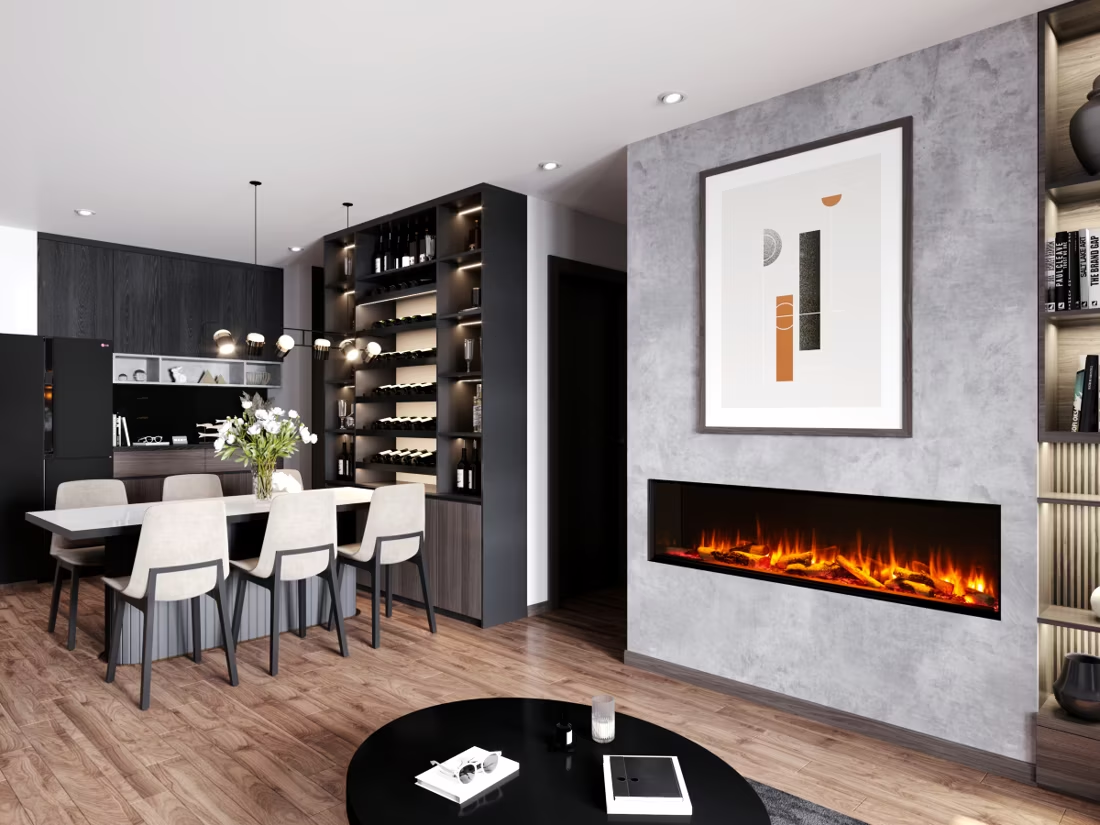
An electric insert is sized to slide into an existing fireplace opening. A mantel package pairs a freestanding electric firebox with a surround, meant for homes with no existing fireplace opening—a den or bedroom, for example. A built-in wall unit is designed to be framed into new construction or a remodel, like a linear fireplace under a mounted TV. All three run on the same basic technology; the right choice comes down to whether you're retrofitting an old fireplace, adding one where none existed, or building new.
Will my electric fireplace work during a power outage?
No—and this is worth planning around in a rural county like Powhatan, where outages from ice storms or summer thunderstorms aren't unusual. An electric fireplace is entirely dependent on grid power (or a generator), so it won't provide backup heat if the lines go down. Homeowners who want both the convenience of electric for everyday use and a real backup heat source often keep a wood stove or a propane heater in reserve—several county residents still split their own oak and hickory for exactly that reason.
What size electric fireplace do I need for my room?
Electric fireplaces are sized by width and BTU output rather than square footage in the way a wood stove is. A 30- to 40-inch insert or mantel unit suits most bedrooms, dens, and additions; a 50-inch or larger linear unit fits open-concept living rooms common in newer Powhatan County construction. Since most units cap out around 5,000–5,500 BTUs regardless of size, bigger units are usually chosen for visual impact on a larger wall rather than for more heat. A local dealer can help match the size to your actual wall and opening dimensions.
Electric vs. wood—which is right for my Powhatan County home?
Wood, split from the oak, hickory, and maple that grow throughout the county, offers real heat output, works without electricity during storm outages, and carries the appeal of a genuine fire for owners with the space and inclination to manage a woodpile. Electric offers push-button convenience, zero maintenance, no chimney or venting, and safe installation in rooms where wood or gas simply isn't practical—a converted sunroom, a rental property, an apartment-style addition. For most Powhatan County homeowners, the decision comes down to whether they want a genuine secondary heat source (wood) or fire-like ambiance with minimal upkeep (electric). Plenty of rural properties in the county end up with both.
Do electric fireplaces actually produce heat?
Yes—most put out around 4,800–5,000 BTUs from a standard outlet, which comfortably warms a bedroom, office, or den as a comfort-zone heater. What they won't do is carry a whole house the way wood, gas, or pellet can. Think of electric as ambiance-first with honest supplemental heat: flames on with no heat in July, flames plus warmth in January.
Can I put a TV above my fireplace?
Yes—with an asterisk. Fireplaces are hot and TVs don't like heat. Either put a mantel between them to deflect rising warmth, or choose a fireplace with heat-management technology that creates a cool zone on the wall above—the wall stays around 125 degrees, barely warm, while the room still gets full heat. If you like clean lines and don't want a mantel, heat management is the answer.
Can I install a fireplace myself?
If you're putting a fire in your house on purpose, it's best to work with an expert. Unless you're genuinely experienced in framing, gas line, vent pipe, and the national code on clearances to combustibles, have a professional do it—and ideally the same company that sells you the fireplace, so warranty, service, and liability all live under one roof.
Should the dealer who sells my fireplace also install it?
Ideally, yes. A fireplace project involves vent pipe, gas line, electrical, and often tile or stone. Hire three or four separate trades and you own the liability and the game of telephone between them. One company selling and installing means one accountable party, start to finish—ask about factory training, on-time completion records, and what happens if an inspection fails.
Stove and Fireplace Dealers in Powhatan County
Listings include WhyFire partner dealers, dealers we have verified as authorized for the brands we recommend, and established local businesses that carry hearth products. Every listing shows which one it is. The ones marked Preferred run on WhyFire's software, so they can show you real pricing and book your appointment right here. No manufacturer pays for placement. How we verify dealers →
Adams Propane Company
Blossman Gas And Appliance
Interior 2000
Acme Stove Company
Hearth And Patio Shoppe
Find your electric fireplace in Powhatan County.
Tell us a bit about your home and we'll match you with the right electric insert, mantel package, or built-in unit—plus a free Project Guide & Parts List with the exact components and your recommended local Powhatan County dealer.
Find Your Fireplace →