
Electric heat that fits Poquoson's flood-zone homes.
No chimney, no gas line, no penetrations through an elevated floor system—just wall power and real warmth for Poquoson's mild Tidewater winters.
Every Project Starts From One of These Five Situations
Built for a city where homes stand on pilings, not basements.
Poquoson sits at 2 feet above sea level, wrapped by the Poquoson River, Back River, and the Chesapeake Bay, and a large share of its homes have been elevated on pilings or piers since Hurricane Isabel reshaped local building codes. Winters here are mild by national standards—an average winter low around 32°F and just 3,461 heating degree days, a fraction of what a place like Burlington, VT logs in a single season. Heat here is mostly about taking the chill off a room, not fighting off sub-zero nights.
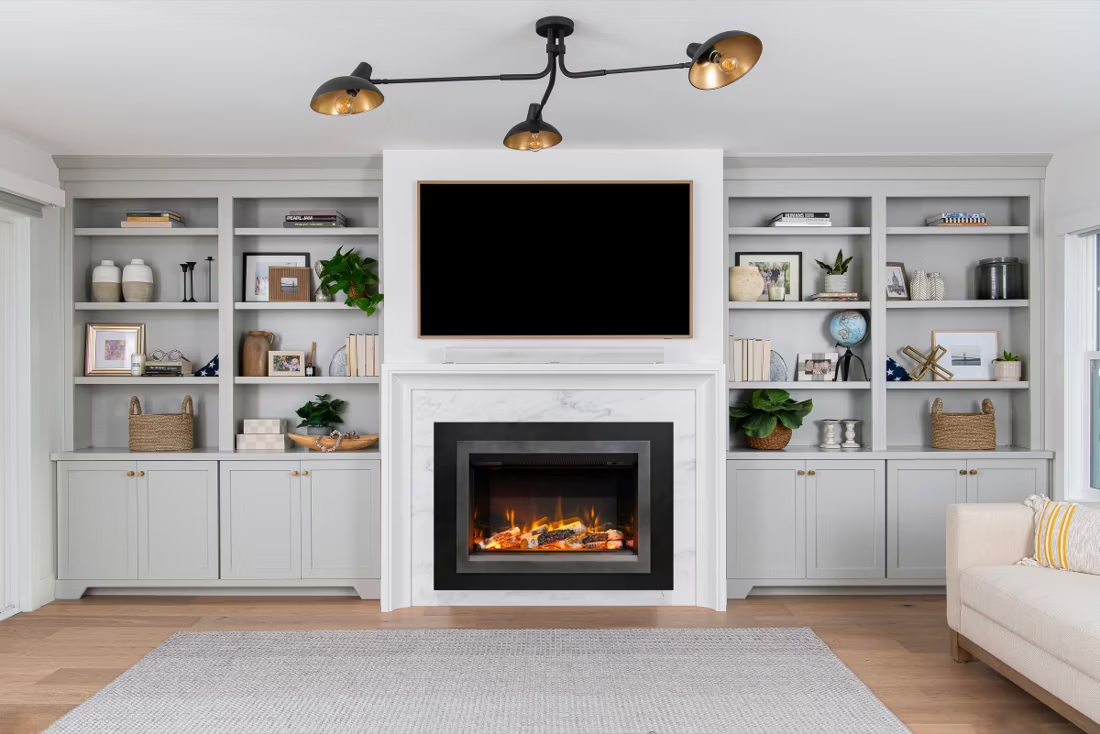
That combination—flood-zone construction and modest heating need—is exactly why electric fireplaces have become a practical go-to in Poquoson. There's no chimney to run through a flood-vented crawlspace, no gas line to trench through tidal soil, and no combustion byproducts to vent at all. Virginia Electric & Power Co. (Dominion Energy) supplies reliable grid power at $0.1409 per kWh, and a plug-in insert or wired wall unit can go into a sunroom, primary bedroom, or den in an afternoon. Wood heat, by contrast, has largely disappeared here—pier-and-beam construction makes masonry chimneys impractical, and the mild climate never demanded it the way it does further inland.
Three steps. No salesperson until you're ready.
Tell us about your project
Your zip code, your situation, and the fuel you're leaning toward—or let the answers point you to one.
See what's actually available
The brands dealers within 100 miles genuinely carry—real options, never a catalog mirage.
Get your dealer & Project Guide
A trusted local dealer, plus the free Project Guide & Parts List that names every component of the job.
Frequently Asked Questions
How much does it cost to install an electric fireplace in Poquoson?
A plug-in electric insert that drops into an existing mantel or opening typically runs $300 to $900 installed, since it just needs a standard outlet. A wired, built-in wall unit—the more common choice in newer Poquoson construction—runs $1,500 to $3,500 once a licensed electrician runs a dedicated 20-amp circuit and the unit is recessed or surface-mounted. Framing a new wall niche or running wiring through a raised floor system on a pier-built home can push costs toward the higher end. Local installers will quote a firm number after seeing the wall and your electrical panel.
Are electric fireplaces a good fit for homes built on pilings or in flood zones?
Yes, and it's a big part of why they've caught on here. Much of Poquoson sits in FEMA Flood Zone AE, and many homes are elevated on pilings with flood-vented crawlspaces below the living area—spaces you don't want to run a gas line or masonry chimney through. An electric fireplace only needs a wall and a circuit above the flood elevation line, so there's nothing to penetrate below grade and nothing that has to be inspected against flood-venting requirements. It's one of the few heat sources that adds zero complexity to a pier-and-beam or slab-on-elevated-fill build.
Will an electric fireplace actually heat a room in Poquoson's climate?
For zone heating, yes. Most electric fireplace inserts and wall units put out around 1,500 watts (roughly 5,100 BTU), which is enough to comfortably warm a sunroom, bedroom, or den during Poquoson's cooler stretches—the average winter low here is only around 32°F, and true hard-freeze nights are the exception rather than the rule. These units aren't sized to replace a central heat pump on the coldest nights of the year, but for the kind of mild, damp Tidewater winter Poquoson actually gets, they're often all the supplemental heat a room needs.
What happens to my electric fireplace during a hurricane power outage?
It stops working—electric fireplaces have no standing pilot or battery backup, and Poquoson's exposure to nor'easters and tropical storms means outages aren't rare. If you're relying on the fireplace for meaningful backup heat during storm season, the honest answer is to wire it into a whole-house or portable generator setup, or to pair it with a propane or natural gas unit elsewhere in the home that can run without grid power. For everyday ambiance and supplemental warmth outside of storm events, though, electric remains the simplest and safest option for most Poquoson homes.
What's the difference between an electric fireplace insert, a wall-mount unit, and an electric log set?
An insert is designed to slide into an existing fireplace opening or mantel surround, often replacing an old wood-burning firebox. A wall-mount (or built-in) unit is a flatter, framed installation set into or hung on a wall—the most common choice in newer Poquoson construction that never had a masonry fireplace to begin with. An electric log set is the simplest option: it drops into an existing wood-burning firebox for the visual of a fire without any heat output or venting change. For homes on pilings without an existing chimney, a wall-mount unit is usually the cleanest install.
Do I need a permit to install an electric fireplace in Poquoson?
A plug-in unit that uses an existing outlet doesn't require a permit. A built-in wall unit that needs a new dedicated circuit does require an electrical permit through the City of Poquoson Building Department, and the wiring should be done by a licensed electrician—especially in homes where the panel or circuit run has to cross an elevated floor system. Most installers who sell wired units in the area coordinate the permit and inspection as part of the job.
Why don't more Poquoson homes use wood stoves for heat?
Two reasons line up here. First, a lot of Poquoson's housing stock is built on pilings or piers rather than a traditional basement or slab, which makes retrofitting a masonry chimney and hearth pad both structurally awkward and expensive. Second, with only 3,461 heating degree days and winter lows that rarely dip far below freezing, there's simply less demand for a heat source built around long, hard winters. Older homes on the peninsula sometimes still have a working fireplace that burns local oak, hickory, or maple, but as a primary or even supplemental heat strategy, wood has largely given way to electric and gas options that fit the area's construction better.
How much does it cost to run an electric fireplace in Poquoson?
At Dominion Energy's residential rate of $0.1409 per kWh, a typical 1,500-watt electric fireplace costs about $0.21 an hour to run on full heat—roughly $5 for a full 24 hours, though most households only run one for a few hours in the evening. That's cheap enough that many Poquoson homeowners use one as their primary evening heat source in a single room rather than running central heat for the whole house on mild nights.
Electric vs. gas fireplace—which is right for my Poquoson home?
Electric is the simpler, lower-cost install with no venting or gas line, and it's the more flood-zone-friendly option for homes on pilings—but it depends entirely on grid power. Gas delivers more heat output and, with a standing-pilot model, can keep running during a power outage, which matters given how often nor'easters and hurricanes knock out electricity on this peninsula. Homes without natural gas service typically run on propane instead. Many Poquoson homeowners end up choosing electric for ambiance and zone heat in bedrooms or sunrooms, and gas for a main living space where storm-season reliability matters more.
Do electric fireplaces actually produce heat?
Yes—most put out around 4,800–5,000 BTUs from a standard outlet, which comfortably warms a bedroom, office, or den as a comfort-zone heater. What they won't do is carry a whole house the way wood, gas, or pellet can. Think of electric as ambiance-first with honest supplemental heat: flames on with no heat in July, flames plus warmth in January.
Can I put a TV above my fireplace?
Yes—with an asterisk. Fireplaces are hot and TVs don't like heat. Either put a mantel between them to deflect rising warmth, or choose a fireplace with heat-management technology that creates a cool zone on the wall above—the wall stays around 125 degrees, barely warm, while the room still gets full heat. If you like clean lines and don't want a mantel, heat management is the answer.
How much should I budget for a fireplace?
For an average home—covering the fireplace, the vent pipe, and basic installation—a budget between $3,900 and $5,500 gives you a lot of options across wood, gas, and pellet. By the time you add finish work, gas line, and electrical, the average complete installation lands between $5,000 and $12,000 all-in. In a remodel or new build, a good rule is to put about 2.5% of the total project cost toward the fireplace.
What is an in-home preview and do I need one?
It's a visit where a hearth professional measures your space, confirms the model you picked actually works in your home, and walks the specs—framing, gas line, venting, finish work—before anything is ordered. Some details you just can't know until you see the house. Never make a down payment without one; it's the single most-skipped step that burns buyers.
Nearby Dealers
Hearth shops serving Poquoson and the surrounding area. Every listing shows whether it is a WhyFire partner, a dealer we have verified as authorized for the brands we recommend, or a local business carrying hearth products. No manufacturer pays for placement. How we verify dealers →
Fireside Hearth & Home - Newport News
Taylor's Do It Center
Ray Johnson's Fireplace Shop
Electric Service in Poquoson
An electric fireplace's heater draws about 1,500 watts—pennies per hour at local rates.
Virginia Electric & Power Co
Find your electric fireplace in Poquoson.
Tell us about your home and we'll match you with a trusted local dealer who can put together your free Project Guide & Parts List—the exact unit, wiring plan, and parts for your Poquoson installation.
Find Your Fireplace →