
Electric heat that fits Orange County's historic homes.
No venting, no chimney work, no gas line—just a warm-looking fire that drops into an existing firebox or mounts on a wall, from the town of Orange to Lake of the Woods. Find the right unit and connect with a trusted local dealer.
Every Project Starts From One of These Five Situations
Simple heat for a Piedmont climate that doesn't demand much of it.
Orange County sits in climate zone 4A with a moderate mid-Atlantic winter and average winter lows around 25°F—nothing like the much harsher, far colder winters of a place like Duluth, MN. That milder profile is exactly why electric fireplaces work so well here: most Orange County homes are already heated by a heat pump or central system, and the fireplace's job is ambiance and supplemental warmth in a single room, not carrying the whole house through January.
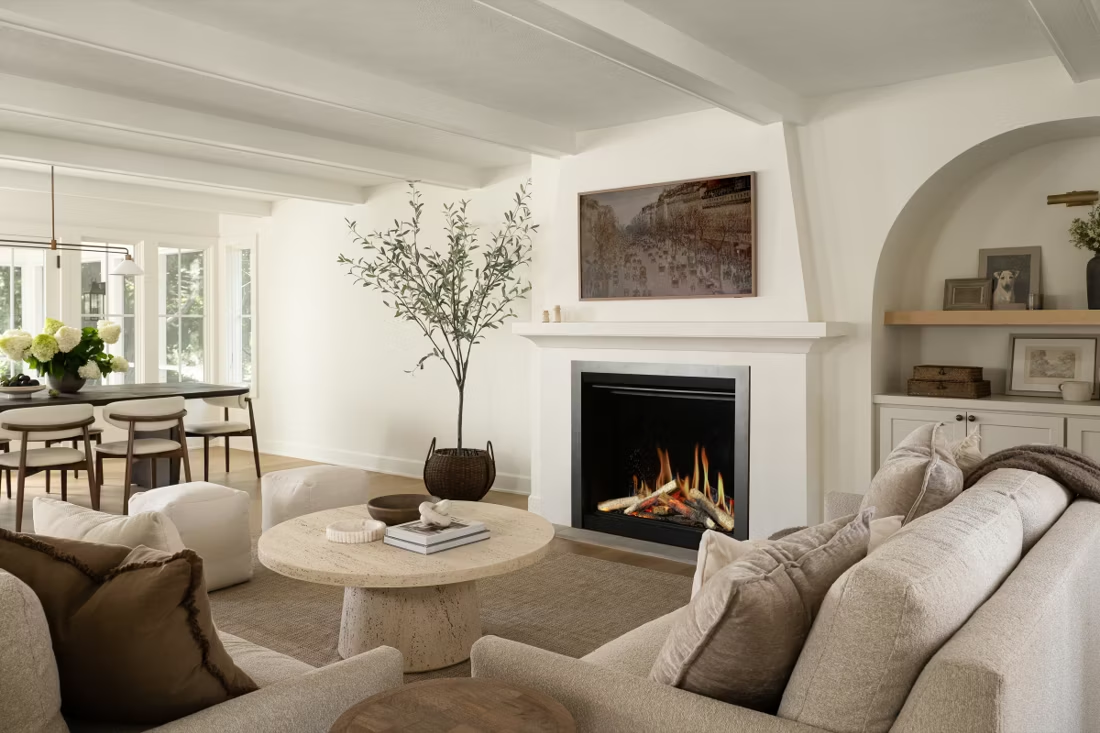
A lot of the county's housing stock is old—colonial and farmhouse construction around the town of Orange, Gordonsville, and the land surrounding Montpelier—with existing masonry fireboxes that owners don't want to alter. An electric insert drops into that opening without touching the chimney or historic brickwork. Out at Lake of the Woods and other newer developments, homeowners often choose electric for the opposite reason: zero-clearance flexibility, no propane tank, and no coordination with Rappahannock Electric Cooperative for a new gas service in a county where natural gas lines mostly stop at the town limits.
Three steps. No salesperson until you're ready.
Tell us about your project
Your zip code, your situation, and the fuel you're leaning toward—or let the answers point you to one.
See what's actually available
The brands dealers within 100 miles genuinely carry—real options, never a catalog mirage.
Get your dealer & Project Guide
A trusted local dealer, plus the free Project Guide & Parts List that names every component of the job.
Frequently Asked Questions
How much does an electric fireplace installation cost in Orange County?
A plug-in electric insert or wall-mount unit typically runs $300 to $1,200 installed, since most models just need a standard outlet and no permit. Built-in electric fireplaces wired to a dedicated 20-amp circuit run higher—usually $800 to $2,500 once you add an electrician's time to run new wire, especially in older Orange County homes near the town of Orange or Gordonsville where panel capacity can be limited. Local dealers will tell you upfront whether your unit needs a dedicated circuit before you buy.
Do I need a permit to install an electric fireplace in Orange County?
Most plug-in electric fireplaces don't require a permit through Orange County Building Inspections because there's no gas line, no venting, and no structural change involved. If you're adding a dedicated electrical circuit for a built-in unit, that work typically does require an electrical permit pulled by a licensed electrician. Because there's no chimney or venting to worry about, electric is usually the fastest fireplace project to get approved in the county.
Is electric a good fit for the historic homes around Montpelier and the town of Orange?
Yes—it's one of the most common reasons homeowners in this area choose electric. Many properties near Montpelier and in the town of Orange's historic core have original masonry fireboxes that owners want to preserve rather than modify with new venting or a liner. An electric insert sits inside that existing opening, uses the outlet already there or a simple circuit addition, and leaves the chimney and brickwork untouched—an easy way to bring back a non-functioning fireplace without triggering a historic-preservation conversation.
What's the difference between an electric fireplace, insert, and stove?
An electric fireplace is often a built-in or wall-mounted unit designed to look like a framed hearth, common in newer construction or remodels. An electric insert is sized to slide into an existing masonry firebox—the right call for older Orange County homes with a fireplace that's currently just for looks. An electric stove is a freestanding cabinet-style unit that mimics a wood stove's footprint without any of the wood, ash, or venting, which some homeowners like for a den or converted outbuilding that never had a chimney to begin with.
Will my electric fireplace work if the power goes out?
No—electric fireplaces need power to run the heater and flame effect, so they go dark along with everything else during an outage. Ice storms and downed lines aren't rare in this part of the Piedmont, and Rappahannock Electric Cooperative crews can take a while to reach the county's more rural stretches. For that reason, a lot of Orange County homeowners treat electric as their everyday, low-fuss fireplace and keep a wood stove as genuine backup heat—oak and hickory are both plentiful on local woodlots and burn well for that purpose.
How much does it cost to run an electric fireplace day to day?
Most electric fireplace heaters draw around 1,500 watts on high, which at typical Virginia electric rates works out to roughly 15 to 20 cents per hour of heater use. Run it a few hours a night through a mild Orange County winter—remember, this is a moderate climate, not a brutal one—and the seasonal cost is modest compared to running electric resistance heat as a whole-house solution. The flame effect alone, with the heater off, costs only a fraction of that.
Electric vs. gas vs. wood—which is right for my Orange County home?
Wood, using local oak, hickory, or maple, delivers real heat output and works without power, which matters if you're out toward the rural edges of the county. Gas offers instant, consistent warmth but depends on either a natural gas line (mostly limited to in-town areas like Orange and Gordonsville) or a propane tank. Electric skips both of those complications entirely—no fuel storage, no venting, no gas line—but it won't function in an outage and isn't meant to be a primary heat source. For most homes here, electric wins for convenience and ease of installation; wood wins when backup heat matters most.
What size electric fireplace do I need?
Electric fireplaces are sized by heater wattage rather than square footage of the whole home, since they're built to supplement—not replace—your existing heat pump or furnace. A 1,500-watt unit comfortably takes the chill off a typical bedroom or den, while larger built-in units with dual heaters suit an open living/dining area. Because Orange County's climate zone 4A winters are moderate, oversizing isn't the concern it would be in a colder region—the bigger question is usually which room gets the most use, not how many BTUs you need to survive a cold snap.
Where can I buy and install an electric fireplace in Orange County?
Skip the big-box units that arrive with generic instructions and no local support—a trusted local dealer will walk your specific firebox or wall space, confirm whether your electrical panel can handle a dedicated circuit if needed, and make sure the unit you pick actually fits an older Orange County chimney opening or a newer Lake of the Woods-style build. That's the matchmaking Find My Fireplace does: we don't sell or ship anything ourselves, we connect you with the right local pro for your project.
Can I put a TV above my fireplace?
Yes—with an asterisk. Fireplaces are hot and TVs don't like heat. Either put a mantel between them to deflect rising warmth, or choose a fireplace with heat-management technology that creates a cool zone on the wall above—the wall stays around 125 degrees, barely warm, while the room still gets full heat. If you like clean lines and don't want a mantel, heat management is the answer.
Does an electric fireplace need a vent or chimney?
No—that's its superpower. An electric fireplace needs a wall and an outlet, period. No vent pipe, no gas line, no clearances to design around, which is why it works in bedrooms, offices, apartments, and walls where venting a gas or wood unit would be impractical or impossible. Installation is typically the simplest and least expensive of any fireplace type.
How much should I budget for a fireplace?
For an average home—covering the fireplace, the vent pipe, and basic installation—a budget between $3,900 and $5,500 gives you a lot of options across wood, gas, and pellet. By the time you add finish work, gas line, and electrical, the average complete installation lands between $5,000 and $12,000 all-in. In a remodel or new build, a good rule is to put about 2.5% of the total project cost toward the fireplace.
Can I install a fireplace myself?
If you're putting a fire in your house on purpose, it's best to work with an expert. Unless you're genuinely experienced in framing, gas line, vent pipe, and the national code on clearances to combustibles, have a professional do it—and ideally the same company that sells you the fireplace, so warranty, service, and liability all live under one roof.
Stove and Fireplace Dealers in Orange County
Listings include WhyFire partner dealers, dealers we have verified as authorized for the brands we recommend, and established local businesses that carry hearth products. Every listing shows which one it is. The ones marked Preferred run on WhyFire's software, so they can show you real pricing and book your appointment right here. No manufacturer pays for placement. How we verify dealers →
Blossman Gas And Appliance
Mid-Atlantic Masonry Heat
The Chimney Guys
Find your electric fireplace in Orange County.
Tell us about your home and your firebox or wall space, and we'll match you with a trusted local dealer and send over a free Project Guide & Parts List—the exact parts and recommended installer for your Orange County electric fireplace project.
Find Your Fireplace →