
Instant heat, zero smoke, no chimney required.
Mild Chesapeake Bay winters and a peninsula full of waterfront cottages and second homes make electric fireplaces a natural fit across Northumberland County. Find the right unit and get matched with a trusted local dealer.
Every Project Starts From One of These Five Situations
A gentle climate that plays to electric's strengths.
Northumberland County sits at the tip of Virginia's Northern Neck, bounded by the Potomac, the Rappahannock, and the Chesapeake Bay—a climate zone 4A setting where winter lows are noticeably milder than the same latitude gets a few hundred miles inland. It's nothing like the deep cold of a place such as Buffalo, NY; most winters here bring frost and the occasional hard freeze rather than sustained sub-zero stretches. County records point to a very small year-round population core—some counts put it at just over a hundred residents in the most sparsely settled stretches—though that number swells considerably with the seasonal and weekend homeowners drawn to the county's rivers and bay frontage.
That mix of mild heating demand and a high share of vacation, rental, and part-time-occupied homes is exactly where electric fireplaces earn their keep. There's no natural gas main running through most of rural Northumberland County, so propane delivery has traditionally filled the gap for full-house heat—but for a family room, a screened porch conversion, or a Reedville cottage that sits empty half the month, an electric fireplace or insert delivers real ambiance and supplemental warmth from Northern Neck Electric Cooperative service without a flue, a gas line, or a stack of oak and hickory to split and stack.
Three steps. No salesperson until you're ready.
Tell us about your project
Your zip code, your situation, and the fuel you're leaning toward—or let the answers point you to one.
See what's actually available
The brands dealers within 100 miles genuinely carry—real options, never a catalog mirage.
Get your dealer & Project Guide
A trusted local dealer, plus the free Project Guide & Parts List that names every component of the job.
Frequently Asked Questions
How much does an electric fireplace installation cost in Northumberland County?
Plug-in electric fireplaces and freestanding stoves are the least expensive option—often $300 to $900 installed, since most just need a standard 120V outlet and a mounting bracket. Built-in electric fireplaces or inserts that require a dedicated circuit, wall recessing, or custom surround work typically run $1,000 to $2,500 once an electrician is involved. Northumberland County's older farmhouses and Bay-front cottages sometimes need panel or wiring upgrades before a larger unit can be added, which local dealers will flag during an in-home look at the space.
Will an electric fireplace actually heat my home in this climate?
It depends on the room and your expectations. Northumberland County's zone 4A winters are moderate compared to inland Virginia or points further north, so a good electric insert rated for 400-1,500 square feet can genuinely take the chill off a living room, sunroom, or bedroom as supplemental heat. What it won't do is replace whole-house heating on the coldest nights of the year—most homeowners here pair an electric fireplace with existing propane or heat-pump service rather than relying on it as a primary source.
Do I need a permit to install an electric fireplace in Northumberland County?
A plug-in unit that simply plugs into an existing outlet generally doesn't require a permit. A built-in or wall-mounted unit that needs new wiring, a dedicated circuit, or work inside a wall cavity does require an electrical permit through the Northumberland County building department based in Heathsville. Most licensed electricians who install these units pull the permit as part of the job, so it's worth confirming that's included in your quote up front.
What happens to my electric fireplace during a power outage?
It goes dark—electric units have no battery backup and won't run without power from Northern Neck Electric Cooperative. That's a real consideration on a peninsula that sees its share of nor'easters and tropical remnants blowing off the Bay. Homeowners who want fire-based backup heat for outage season often keep a small wood stove or propane heater as a secondary source, using the electric fireplace for everyday ambiance and reserving the backup fuel for storm season.
Electric vs. wood—which makes more sense for a Northern Neck home?
Wood has deep roots here—oak, hickory, and maple are all common in the county's woodlots, and a traditional wood stove or fireplace still works without power, which matters during Bay-area storms. But for a weekend cottage in Reedville or Callao that sits unattended much of the month, an electric fireplace is far more practical: no ash, no creosote buildup to inspect between visits, and no fire left unattended in an empty house. Full-time residents who want real cold-weather output tend to still lean wood or propane; part-time and rental owners tend to lean electric.
Electric vs. propane—which is the better fit?
With no natural gas mains reaching most of rural Northumberland County, propane is the default for homeowners who want real, gas-fired heat output and are willing to manage a tank and delivery schedule. Electric skips the tank, the delivery truck, and the combustion byproducts entirely, but tops out at lower heat output and depends entirely on grid power. For a primary heat source in a full-time home, propane usually wins on raw output; for supplemental warmth and easy install in a cottage or converted porch, electric is simpler and cheaper to add.
Where does an electric fireplace make the most sense in a Northumberland County home?
The best fits tend to be rooms without existing chimney access—sunrooms, converted porches, bedrooms, or bonus rooms in the county's many waterfront and second-home properties. They're also a strong choice for rental cottages around Reedville and the Bay shoreline, where owners want a cozy focal point without worrying about a tenant managing a wood fire or a gas valve while they're away.
Where can I find a dealer who installs electric fireplaces near Northumberland County?
Given the county's small population base, most hearth dealers serving Northumberland County residents are based in the nearby Northern Neck towns of Kilmarnock or White Stone in Lancaster County, with some installers also working out of Warsaw in Richmond County. They regularly service Heathsville, Reedville, Callao, Burgess, and Lottsburg. A trusted local dealer will look at your electrical panel, room size, and whether you want a plug-in or built-in unit before recommending a specific model.
Electric vs. pellet stove—which is right for my home?
Pellet stoves from regional suppliers like Energex, Hamer Pellet Fuel, and Greene Team Pellet Fuel deliver genuine BTU output and can serve as a real heat source for a Northumberland County home, but they need a hopper refilled with bagged pellets, venting, and electricity to run the auger and blower. Electric fireplaces need none of that—just an outlet or a dedicated circuit—but they're built for ambiance and supplemental warmth rather than carrying a house through winter. For a full-time home wanting a meaningful backup heat source, pellet is the stronger pick; for a low-maintenance focal point in a part-time or rental property, electric wins on simplicity.
Can I put a TV above my fireplace?
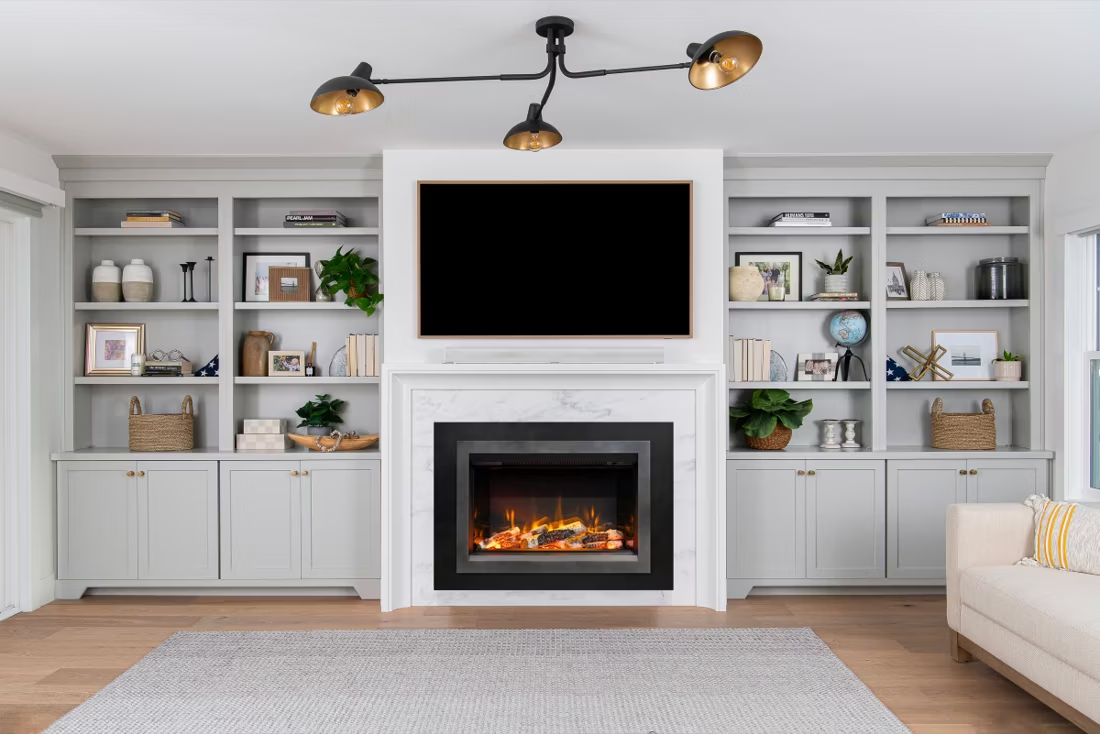
Yes—with an asterisk. Fireplaces are hot and TVs don't like heat. Either put a mantel between them to deflect rising warmth, or choose a fireplace with heat-management technology that creates a cool zone on the wall above—the wall stays around 125 degrees, barely warm, while the room still gets full heat. If you like clean lines and don't want a mantel, heat management is the answer.
Do electric fireplaces actually produce heat?
Yes—most put out around 4,800–5,000 BTUs from a standard outlet, which comfortably warms a bedroom, office, or den as a comfort-zone heater. What they won't do is carry a whole house the way wood, gas, or pellet can. Think of electric as ambiance-first with honest supplemental heat: flames on with no heat in July, flames plus warmth in January.
Does a fireplace add value to my home?
On average, a fireplace adds back to the home about the same amount you spent installing it. Add the monthly savings from heating the rooms you actually use instead of the whole house—often hundreds of dollars a year—and the value case is strong before you even count what a fire does for how your family uses the room.
How much should I budget for a fireplace?
For an average home—covering the fireplace, the vent pipe, and basic installation—a budget between $3,900 and $5,500 gives you a lot of options across wood, gas, and pellet. By the time you add finish work, gas line, and electrical, the average complete installation lands between $5,000 and $12,000 all-in. In a remodel or new build, a good rule is to put about 2.5% of the total project cost toward the fireplace.
Stove and Fireplace Dealers in Northumberland County
Listings include WhyFire partner dealers, dealers we have verified as authorized for the brands we recommend, and established local businesses that carry hearth products. Every listing shows which one it is. The ones marked Preferred run on WhyFire's software, so they can show you real pricing and book your appointment right here. No manufacturer pays for placement. How we verify dealers →
Nwp Energy
Old Town Stove & Hearth
Holtzman Propane
Taylors Gas Company
Harris Gas Service
Shore Pellet Stoves
Hearth & Home Shoppe
Find your electric fireplace in Northumberland County.
Tell us a bit about your home and we'll put together a free Project Guide & Parts List—the exact parts your electric fireplace or insert project needs, plus a match with a trusted local dealer serving the Northern Neck.We will not spam you, and it takes about 90 seconds.We'll never sell your information.We're a neutral matchmaker, not a manufacturer or retailer, so the recommendation is based on what actually fits your home.We help homeowners across Northumberland County find electric fireplaces that work.We do not stock or ship product ourselves.We connect you with a trusted local pro.We do not accept payment from manufacturers to favor their brands.We match you with what's genuinely available and installable near you.copy_cta_eyebrow_end
Find Your Fireplace →