
Electric Heat That Fits Coastal Virginia Living.
No chimney, no gas line, no permit headaches—just clean, controllable warmth for Newport News homes, condos, and rentals along the James River. Find the right unit and connect with a trusted local dealer.
Every Project Starts From One of These Five Situations
Mild winters, real comfort—without the vent.
Newport News sits on the James River in the heart of Hampton Roads, with a humid subtropical climate that keeps winters relatively mild—an average winter low around 31°F and a fairly short, mild heating season overall, a fraction of what colder inland states see. That's not a climate that demands a cast-iron wood stove burning oak and hickory around the clock. It's a climate where a lot of homeowners in neighborhoods like Denbigh, Hilton Village, and Oyster Point want supplemental warmth and fireplace ambiance without committing to a masonry chimney or a gas line run.
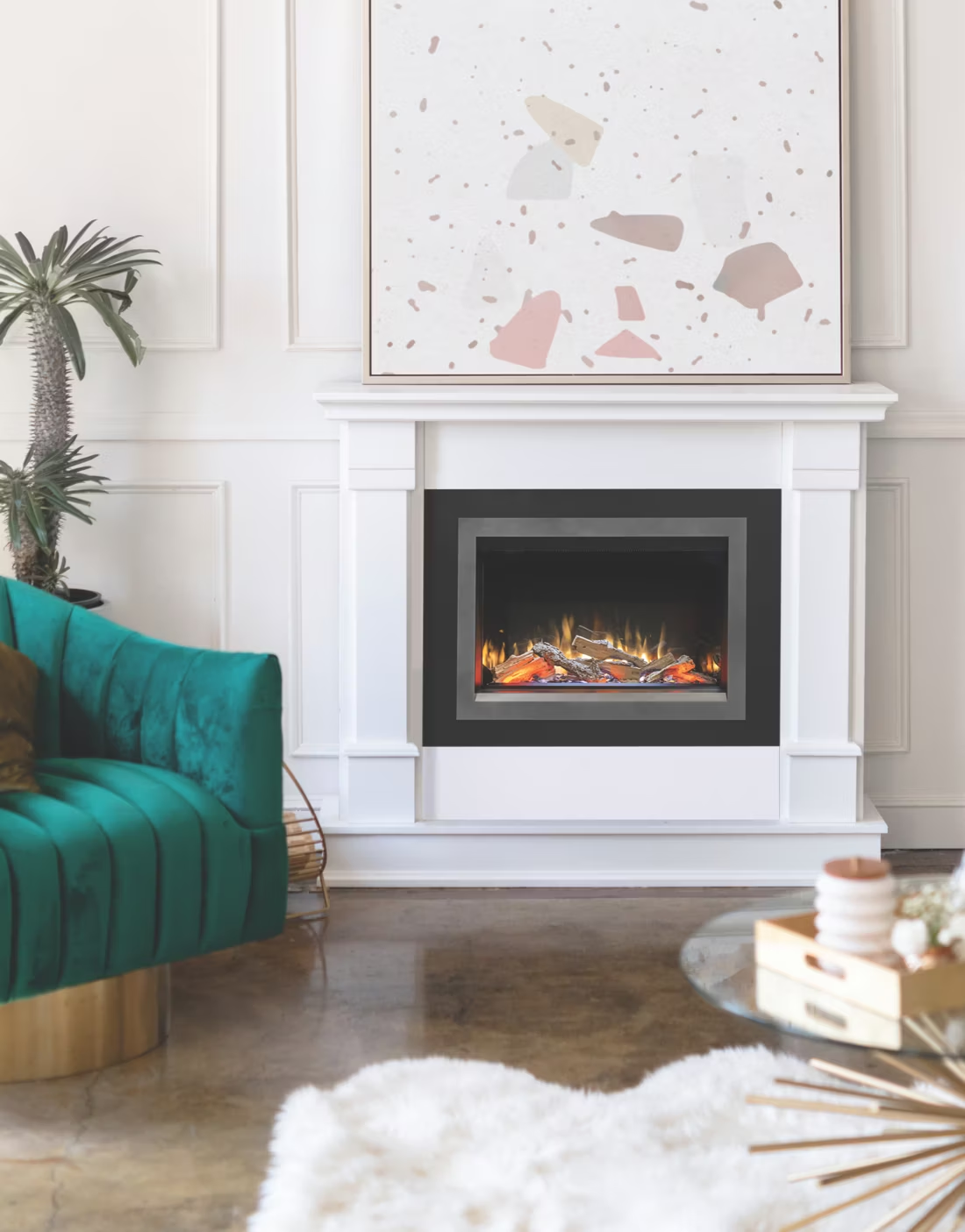
That's where electric fireplaces have carved out a real niche here. With no combustion, no venting, and no local air quality restrictions to navigate—Newport News has none of the wood-smoke or non-attainment concerns some inland Virginia counties deal with—an electric insert or built-in unit can go into a condo near City Center, a rental near the Shipyard, or a 1960s ranch in Denbigh with a simple 120V or 240V circuit. It won't replace a furnace on a rare hard freeze, but paired with the home's existing HVAC, it delivers zone heat to the room people actually live in, plus the visual of a real flame effect, at a fraction of the install complexity of wood or gas.
Three steps. No salesperson until you're ready.
Tell us about your project
Your zip code, your situation, and the fuel you're leaning toward—or let the answers point you to one.
See what's actually available
The brands dealers within 100 miles genuinely carry—real options, never a catalog mirage.
Get your dealer & Project Guide
A trusted local dealer, plus the free Project Guide & Parts List that names every component of the job.
Frequently Asked Questions
How much does an electric fireplace installation cost in Newport News?
Most electric fireplace and insert installations in Newport News run $400 to $2,500. A plug-in insert that drops into an existing fireplace opening or a wall-mounted unit on a dedicated 120V outlet sits at the low end. Larger built-in electric fireplaces that require a new 240V circuit, wall framing, or a mantel surround push toward the higher end, particularly in older Hilton Village or Newport News homes where an electrician needs to add circuit capacity. Because there's no venting or gas work involved, electric installs are typically the fastest and least invasive of any fuel type—often a single-day job.
Do I need a permit to install an electric fireplace in Newport News?
In most cases, a plug-in electric fireplace or insert doesn't require a permit since no structural, gas, or venting work is involved. If your installer is adding a new dedicated circuit or doing any wiring work, that electrical work typically does require a permit through the Newport News building and code enforcement office, and should be pulled by a licensed electrician. Built-in units set into a wall cavity may also trigger a permit if framing is altered. A local dealer handling the install will know exactly which projects need a permit and which don't.
What size electric fireplace do I need for my home?
Sizing an electric fireplace is less about BTU output for whole-home heat and more about matching the unit to the room and how much supplemental warmth you actually want. A 750–1,500 watt unit comfortably takes the chill off a bedroom or home office in the mild Newport News climate, while a larger 1,500–4,600 watt insert can noticeably supplement heat in an open living or dining area during a cold snap. Since winters here rarely demand a fireplace as primary heat, most homeowners size for ambiance and comfort rather than trying to replace a furnace—a local retailer can walk you through wattage against your specific room.
Will an electric fireplace actually lower my heating bill?
An electric fireplace won't replace central heat, but it can reduce your overall energy use if you use it for zone heating—running the fireplace in the room you're occupying and turning the thermostat down elsewhere. Given Newport News's mild, fairly short heating season, many homeowners find that a well-placed electric unit covers most of the supplemental heat they need on the coldest nights, keeping the main HVAC system from working as hard. Dominion Energy customers should check current electricity rates when comparing running costs against a space heater—most electric fireplaces use similar wattage but distribute heat more evenly across a room.
Can I install an electric fireplace in a condo or rental in Newport News?
Yes—this is one of the biggest reasons electric fireplaces are popular in Newport News's condo and apartment communities around City Center and Oyster Point. Because there's no venting, gas line, or chimney required, most electric units are landlord- and HOA-friendly, and many plug directly into a standard outlet with no permanent modification to the unit. Renters should still confirm with their landlord or HOA before any wall-mounted or built-in installation, but a freestanding or insert-style electric fireplace is often the easiest fireplace upgrade available for anyone who doesn't own the structure outright.
What's the difference between an electric fireplace, insert, and stove?
An electric fireplace is typically a built-in or wall-mounted unit designed to look like a framed fireplace, often used in new construction or remodels. An electric insert is sized to slide into an existing wood or masonry fireplace opening, giving old fireplaces in Newport News's older Hilton Village and Aberdeen Gardens homes a second life without chimney repairs. An electric stove is a freestanding cabinet-style unit that can sit anywhere near an outlet, similar in footprint to a wood stove but without any venting requirement. For most Newport News homeowners with an existing, unused fireplace, an insert is the simplest upgrade; for homes without one, a wall-mounted fireplace or stove works just as well.
Are electric fireplaces safe for older Newport News homes?
Electric fireplaces are generally considered one of the safest hearth options for older homes because there's no open flame, no combustion byproducts, and no chimney or flue to maintain or inspect. That matters in a city with a lot of housing stock from the mid-20th century, where masonry chimneys in neighborhoods like Hilton Village or Aberdeen Gardens may need costly repair before they could safely support a wood or gas appliance. An electric unit sidesteps that entirely—the main safety consideration is making sure the circuit is properly sized and, for higher-wattage units, that a licensed electrician confirms the home's panel has capacity.
Electric vs. gas fireplace—which makes more sense in Newport News?
Gas fireplaces offer higher heat output and a more realistic flame, and natural gas service is available through much of Newport News for homes already connected. But gas installs mean venting work, a gas line, and typically a higher project cost and longer install timeline. Electric fireplaces cost less to install, need no venting or gas connection, and can go into almost any room on a simple circuit—which is why they're often the better fit for condos, rentals, secondary rooms, or homeowners who want fireplace ambiance without a full renovation. Given the region's mild winters, many Newport News homeowners choose electric specifically because they don't need the higher heat output gas can provide.
Do electric fireplaces work during a power outage?
No—electric fireplaces require power to operate, so they won't provide heat or flame effect during an outage, which is worth keeping in mind given that Hampton Roads occasionally sees storm-related outages from nor'easters or tropical systems moving up the James River. For homeowners who want a backup heat source specifically for outage scenarios, a wood-burning unit or a battery-backed gas fireplace is a better fit alongside an electric fireplace used for everyday convenience and ambiance.
Can I put a TV above my fireplace?
Yes—with an asterisk. Fireplaces are hot and TVs don't like heat. Either put a mantel between them to deflect rising warmth, or choose a fireplace with heat-management technology that creates a cool zone on the wall above—the wall stays around 125 degrees, barely warm, while the room still gets full heat. If you like clean lines and don't want a mantel, heat management is the answer.
Do electric fireplaces actually produce heat?
Yes—most put out around 4,800–5,000 BTUs from a standard outlet, which comfortably warms a bedroom, office, or den as a comfort-zone heater. What they won't do is carry a whole house the way wood, gas, or pellet can. Think of electric as ambiance-first with honest supplemental heat: flames on with no heat in July, flames plus warmth in January.
Can a fireplace actually lower my heating bill?
Yes—by creating a comfort zone. A furnace heats every square foot of the house just to warm the one room you're in; a gas fireplace on low burns roughly a sixth of the gas a typical furnace does. Set the furnace around 55–60 degrees as a baseline, then heat the rooms your family actually uses. Families who heat this way commonly save $20–$60 a month.
Can I install a fireplace myself?
If you're putting a fire in your house on purpose, it's best to work with an expert. Unless you're genuinely experienced in framing, gas line, vent pipe, and the national code on clearances to combustibles, have a professional do it—and ideally the same company that sells you the fireplace, so warranty, service, and liability all live under one roof.
Stove and Fireplace Dealers in Newport News County
Listings include WhyFire partner dealers, dealers we have verified as authorized for the brands we recommend, and established local businesses that carry hearth products. Every listing shows which one it is. The ones marked Preferred run on WhyFire's software, so they can show you real pricing and book your appointment right here. No manufacturer pays for placement. How we verify dealers →
Fireside Hearth & Home - Newport News
Taylor's Do It Center
Chesapeake Hearth & Stone
Find your electric fireplace in Newport News.
Tell us a bit about your home and we'll match you with the right electric fireplace or insert—plus a free Project Guide & Parts List and a trusted local dealer to install it.
Find Your Fireplace →